

















Best Under Eye Serum Routine for Puffiness & Dark Circles (Science-Backed USA Guide)

Under-eye puffiness and dark circles are not just cosmetic concerns. They are signals of circulation slowdown, fluid retention, oxidative stress, and skin fatigue—all of which require a structured serum routine, not random product use.
If eye creams haven’t worked for you, it’s usually because:
- The ingredients are too occlusive
- The formulas don’t absorb
- Or the routine is incomplete
This guide explains:
- Why under-eye skin looks puffy or dark
- Which ingredients actually work
- How to build a morning + night serum routine
- Which Elora Clinic serums fit each step
- Where to buy them easily (including Walmart)
Why Under-Eye Puffiness & Dark Circles Happen
The under-eye area is:
- Thinner than facial skin
- Low in oil glands
- Highly sensitive to circulation changes
The most common causes include:
- Poor microcirculation
- Fluid retention
- Oxidative stress
- Sleep disruption
- Barrier fragility
Because of this, heavy eye creams often make puffiness worse.
🔗 Deeper science:
Signs of Skin Barrier Damage (USA)
What an Effective Under-Eye Routine Must Do
A successful routine must:
- Stimulate circulation
- Reduce fluid buildup
- Protect from oxidative stress
- Hydrate without swelling
This is why lightweight serums outperform creams for the under-eye area.
🌤 Morning Under-Eye Serum Routine (De-Puff + Brighten)
Step 1: Gentle Cleanse
Avoid rubbing or hot water—both increase swelling.
Step 2: Caffeine-Based Circulation Serum (Key Step)
Caffeine helps:
- Constrict blood vessels
- Reduce puffiness
- Improve appearance of dark circles
🔗 Supporting content:
Caffeine Serum for Dark Circles

Recommended:
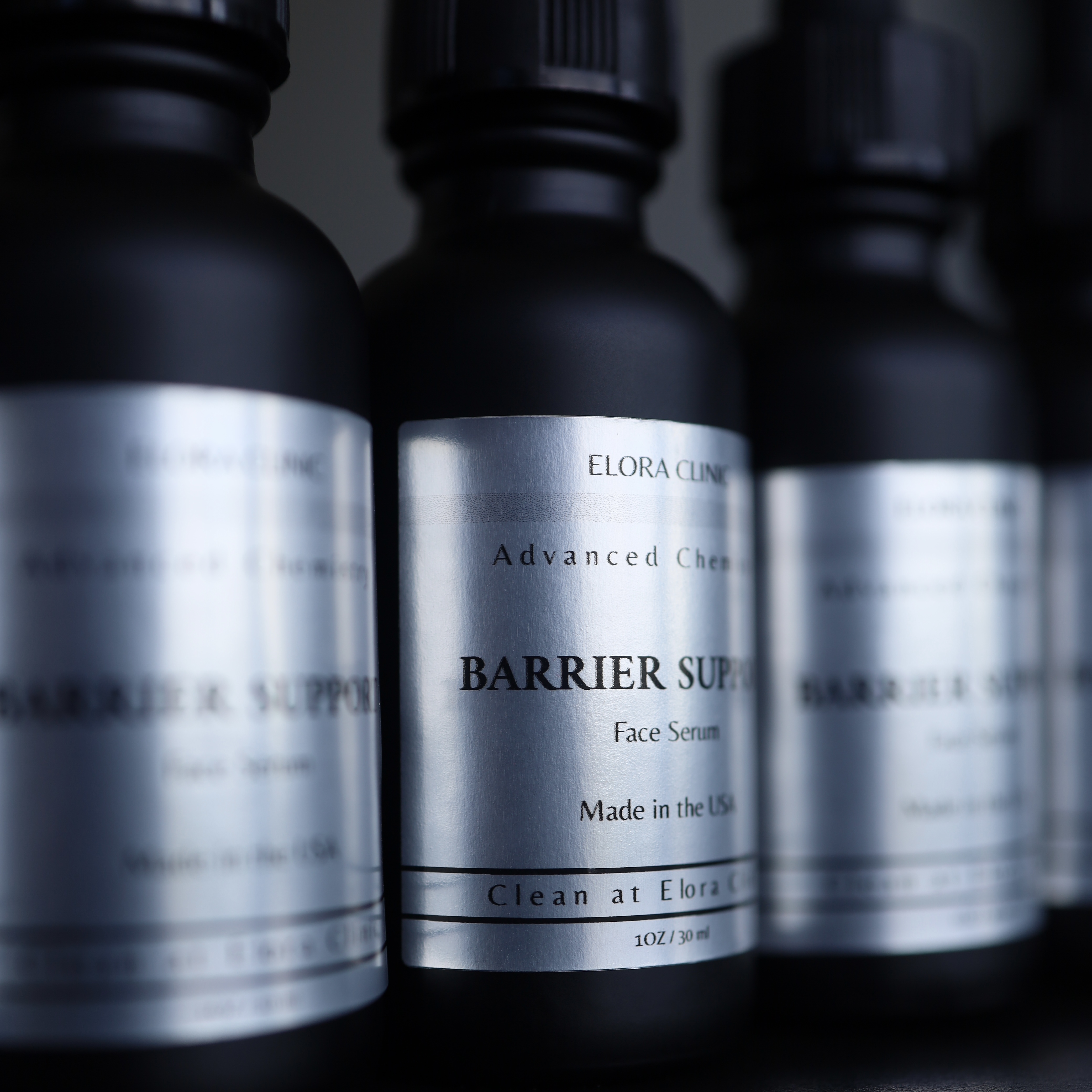
Elora Clinic Coffee Serum
• Lightweight
• Water-based
• Designed for sensitive under-eye skin
👉 Direct product page:
https://eloraclinic.com/product/coffee-serum/
👉 Available at Walmart for easy purchase:
https://www.walmart.com/ip/Elora-Clinic-Coffee-Serum-Coffee-Hyaluronic-Acid-Hydrating-Antioxidant-Coffee-Hyaluronic-Acid-Serum-Oil-Free-Water-Based/3091745564

Step 3: Hydration Without Swelling
Under-eye skin needs bound water, not oils.
Look for:
- Hyaluronic Acid
- Amino acids
🔗 Learn more:
Hydrate Skin Without Clogging Pores (USA)
Recommended:
Elora Clinic Amino Acid Serum
https://eloraclinic.com/product/aminoacid/
Apply a half-drop, gently tapped.
Step 4: Sunscreen (Critical for Dark Circles)
UV exposure worsens pigmentation under the eyes.
🌙 Night Under-Eye Serum Routine (Repair + Tone Support)
Night routines target recovery and barrier calm.
Step 1: Cleanse Gently
No makeup residue—no tugging.
Step 2: Arginine for Microcirculation Support
Arginine supports:
- Blood flow
- Barrier comfort
- Reduced under-eye stagnation
🔗 Supporting article:
Arginine Serum for Under-Eye Puffiness & Dark Circles
Recommended:
Elora Clinic Arginine Serum
https://eloraclinic.com/product/arginine/
Step 3: Antioxidant Protection (Optional, Powerful)
Oxidative stress worsens darkness over time.
🔗 Learn more:
Antioxidant Serum Benefits
Optional night addition:
- Matcha Serum
https://eloraclinic.com/product/matcha/
Common Mistakes That Make Under-Eye Puffiness Worse
❌ Using heavy oils
❌ Applying too much product
❌ Rubbing during application
❌ Skipping morning antioxidants
❌ Expecting instant results
🔗 Proper layering guide:
How to Layer Serums Correctly
How Long Until Results?
With consistent use:
- Puffiness reduction: 3–7 days
- Brighter appearance: 2–3 weeks
- Texture improvement: 4 weeks
Who This Routine Is Best For
✔ Puffy under-eyes
✔ Dark circles
✔ Screen fatigue
✔ Sensitive skin
✔ USA climates (seasonal swelling)

Not All Dark Circles Are the Same: Identify the Cause First
One of the biggest mistakes in an under-eye routine is treating every dark circle as if it has the same cause.
It does not.
The appearance commonly described as “dark circles” can come from pigment in the skin, visible blood vessels beneath thin skin, swelling, facial anatomy, or several of these factors at the same time.
Dermatology literature commonly divides under-eye darkness into four broad patterns:
| Type of Under-Eye Darkness | What It May Look Like | Common Contributing Factors | What Skincare Can Realistically Target |
|---|---|---|---|
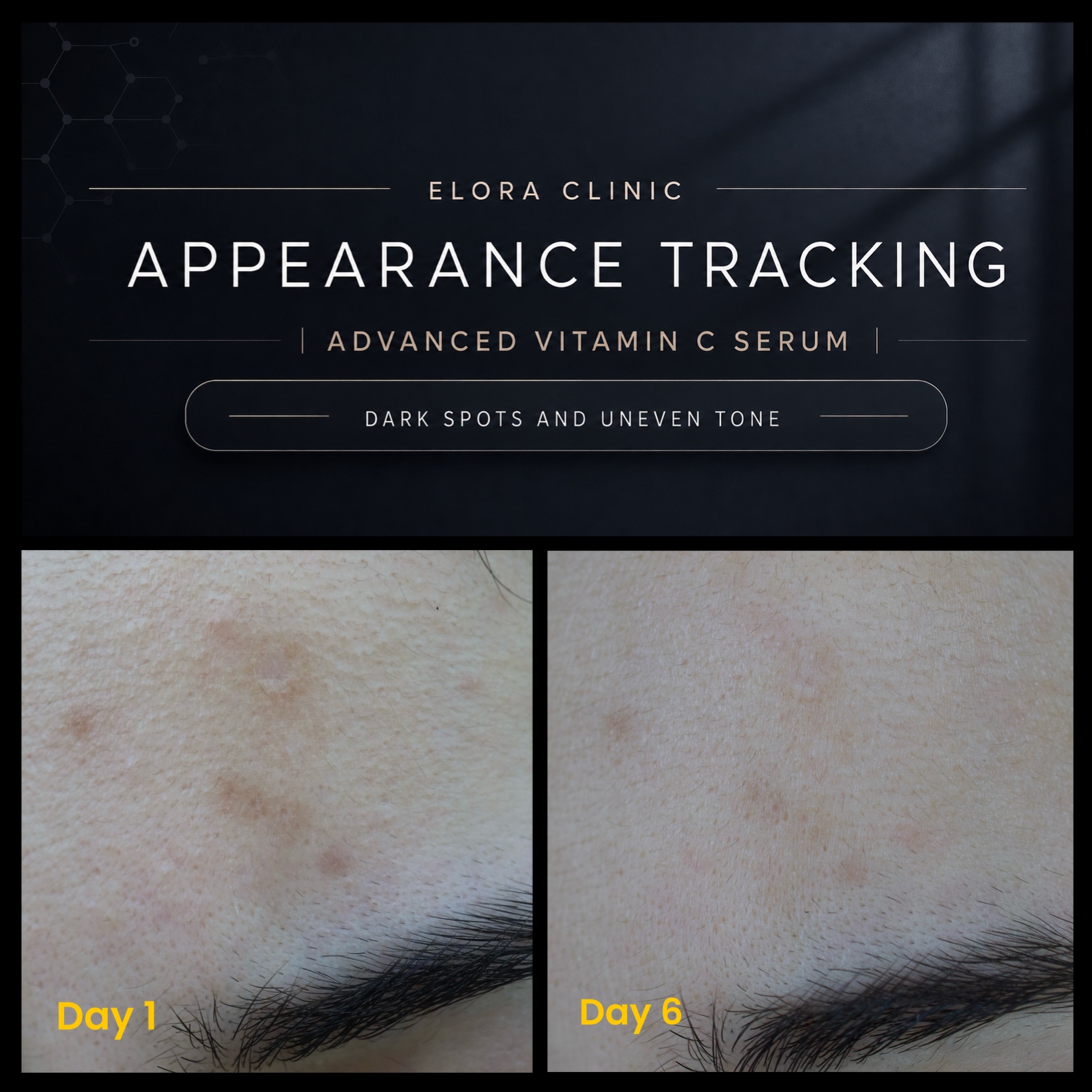
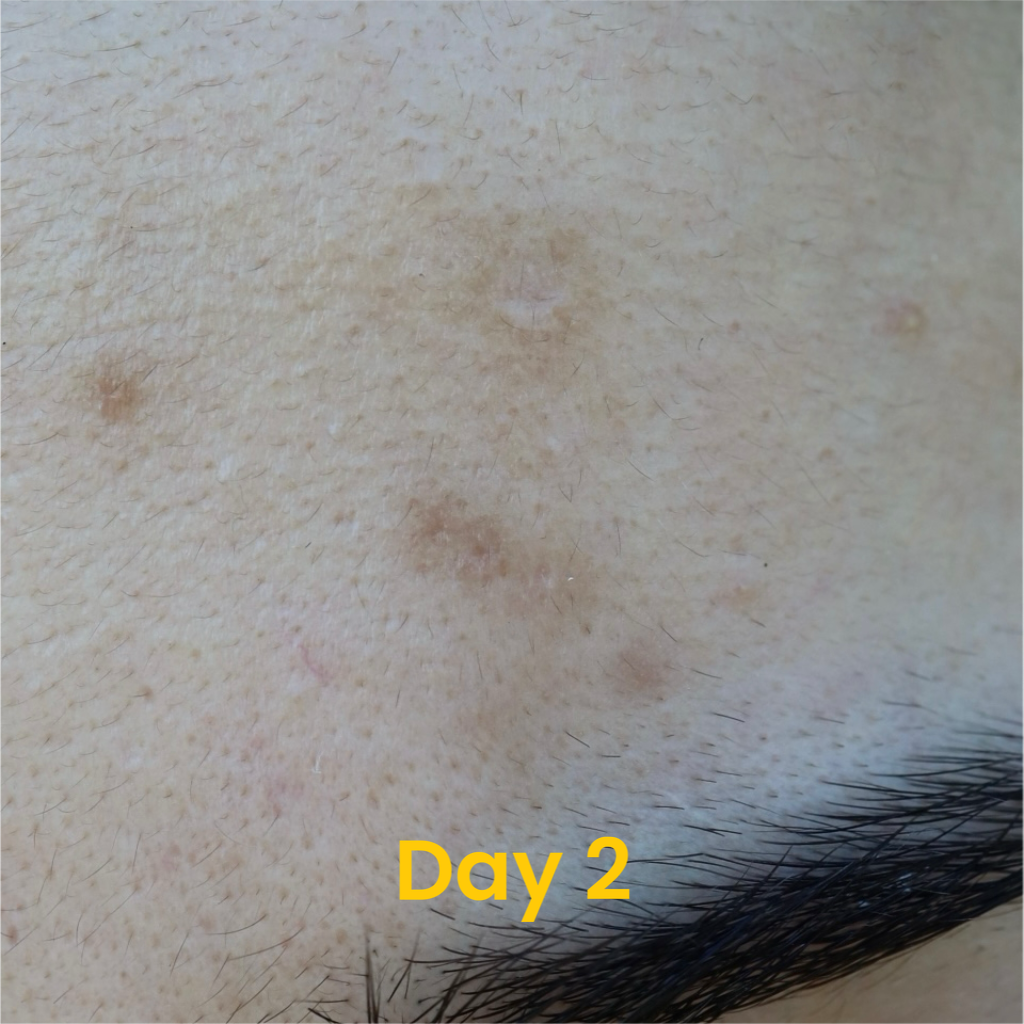
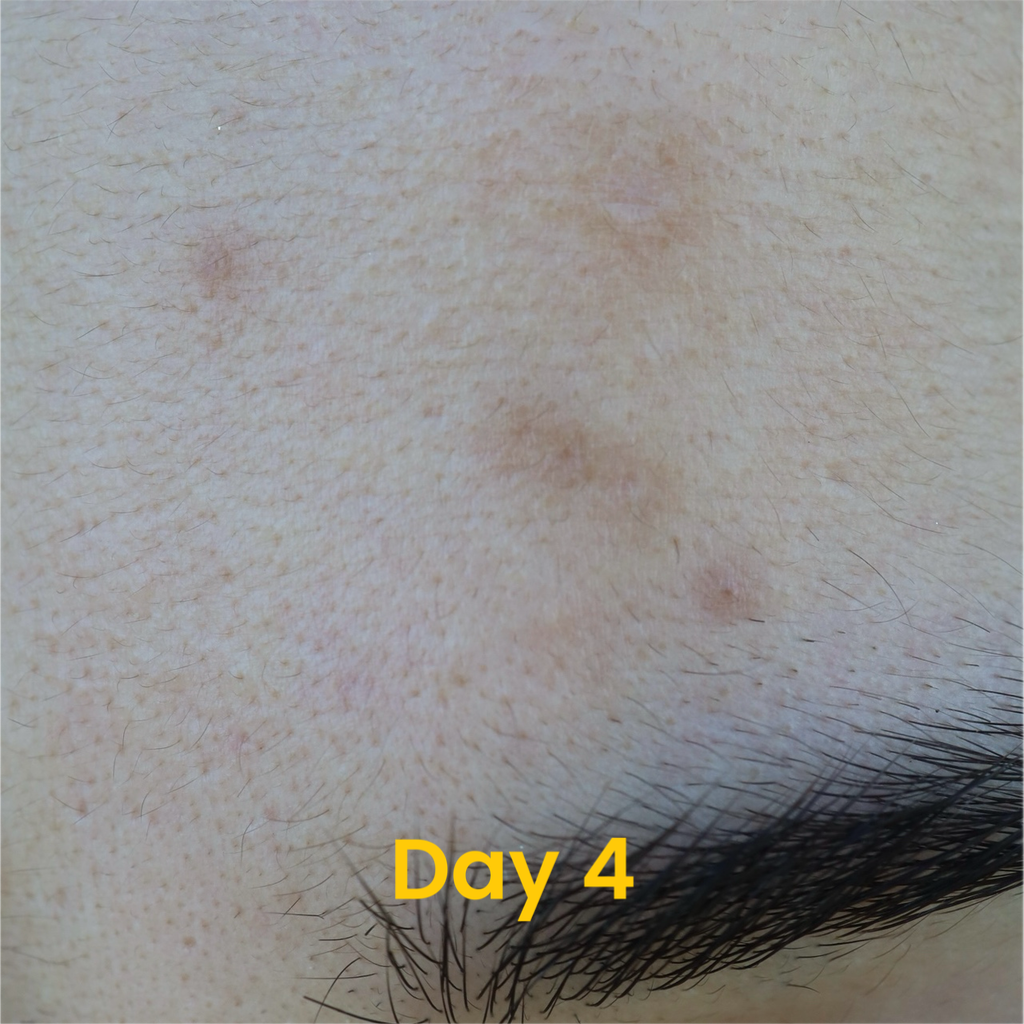
| Pigmented | Brown or brown-gray discoloration | Melanin, sun exposure, inflammation, rubbing | Pigmentation support, antioxidants, sun protection |
| Vascular | Blue, purple, pink, or red undertone | Thin skin, visible superficial vessels | Temporary appearance of puffiness, hydration, antioxidant support |
| Structural | Shadow or hollow beneath the eye | Tear-trough anatomy, volume loss, facial structure | Skin quality and hydration, but not the underlying anatomy |
| Mixed | Combination of brown, blue/purple, puffiness, or shadows | Multiple overlapping factors | A multi-step routine targeting several mechanisms |
This distinction matters because no single serum can correct every source of under-eye darkness.
For example, a person whose under-eye area appears darker primarily because of morning swelling may respond very differently from someone whose darkness is caused by a deep tear trough casting a shadow.
That is why the best under-eye serum routine should begin with the cause—not simply with the most popular ingredient.
For a deeper look at the Elora Clinic under-eye research library, explore the Under-Eye Puffiness & Dark Circles Science Hub.
Pigmented Dark Circles: When Melanin Is Part of the Problem
Pigmented dark circles generally appear more brown than blue or purple.
Melanin production around the eye can be influenced by several factors, including:
- Genetics
- Chronic sun exposure
- Previous irritation
- Repeated rubbing
- Inflammatory skin conditions
- Post-inflammatory hyperpigmentation
The under-eye area can be particularly challenging because the skin is delicate and aggressive brightening routines may create irritation—which can potentially make discoloration more noticeable rather than less.
What matters most for this type?
A pigmentation-focused routine should emphasize:
- Daily broad-spectrum sunscreen
- Minimizing unnecessary irritation
- Supporting the skin barrier
- Carefully selected antioxidant or tone-supporting ingredients
- Consistent treatment rather than aggressive treatment
UV exposure can contribute to the persistence of visible pigmentation, which is why sunscreen is not an optional step for someone trying to improve the appearance of dark circles.
For broader pigmentation science, see:
Vitamin C Serum for Dark Spots: How It Works
Niacinamide Serum for Dark Spots & Hyperpigmentation
These ingredients may be useful elsewhere in a facial brightening routine, but the eye area deserves additional caution. Do not automatically apply every facial active directly beneath the eyes. Follow the product’s directions and avoid getting serums into the eyes or applying them excessively close to the lash line.
Vascular-Looking Dark Circles: Why Thin Skin Can Look Blue or Purple
Some under-eye darkness is not primarily caused by excess melanin.
The skin around the eyes is naturally thin, which means underlying vascular structures and tissue can influence the color we see at the surface.
This can create a:
- Blue
- Purple
- Pink
- Red-purple
appearance beneath the eyes.
The effect may also become more noticeable when the area is swollen, tired, dehydrated, or irritated.
This is where caffeine-based under-eye serums become particularly interesting.
Caffeine is commonly used in topical eye products because of its relationship with vascular tone and because caffeine-containing formulations have been studied for the appearance of under-eye puffiness and discoloration.
However, caffeine should not be presented as a permanent treatment for every dark circle.
If your darkness is caused predominantly by pigmentation or structural shadowing, caffeine cannot remove the underlying cause.
Think of caffeine instead as a targeted cosmetic ingredient within a larger routine.
When caffeine makes the most sense
Caffeine may be especially useful when your under-eye concerns include:
- Morning puffiness
- A tired or swollen appearance
- Temporary eye bags
- Blue or purple-looking darkness
- Puffiness after inadequate sleep
- Puffiness that fluctuates from day to day

For more focused guidance, read:
Caffeine Eye Serum: Complete Guide
How to Use Caffeine Eye Serum Correctly
Structural Dark Circles: When a Serum Cannot Remove the Actual Cause
This is an important distinction that skincare articles often leave out.
Sometimes what looks like a “dark circle” is actually a shadow.
The natural contour beneath the lower eyelid can create a depression commonly referred to as the tear trough. Facial anatomy, aging, changes in skin thickness, and changes in underlying tissue can make this depression more noticeable.
When light hits the face from above, the hollow can cast a shadow that visually resembles dark pigmentation.
A simple clue
If the darkness changes dramatically depending on:
- Lighting direction
- Camera angle
- Facial position
then structural shadowing may be contributing to what you are seeing.
No topical serum can physically rebuild lost facial volume or permanently alter bone structure.
That does not mean skincare is useless.
A well-designed routine can still support:
- Surface hydration
- Skin smoothness
- Barrier condition
- The appearance of fine dehydration lines
- Overall under-eye skin quality
But realistic expectations matter.
A serum should improve the properties of the skin it is designed to target—not promise to change anatomy.
Puffiness vs. Permanent Eye Bags: They Are Not Always the Same Thing
Another useful distinction is the difference between temporary under-eye puffiness and more persistent eye bags.
Temporary puffiness often changes.
You may notice that it is:
- Worse after waking
- Better later in the day
- Worse after poor sleep
- More noticeable after crying
- Influenced by allergies
- More noticeable after high-sodium meals
- Different from one day to another
The eyelid area can accumulate fluid, and this variability is one reason morning puffiness may look dramatically different several hours later.
More persistent under-eye bags, however, may involve structural and anatomical factors.
If your “puffiness” looks virtually identical morning, afternoon, and night for months or years, a topical serum may improve hydration and the surface appearance of the skin without eliminating the underlying bag.
This difference protects you from one of the biggest skincare frustrations:
expecting a topical formula to correct something that is not primarily a topical skin problem.
For temporary eye bags and swelling, see:
Caffeine Serum for Eye Bags: What It Can and Cannot Do
Why Under-Eye Puffiness Is Often Worse in the Morning
Morning puffiness is extremely common.
During the day, gravity and normal movement influence how fluid distributes throughout the body. During several hours of lying horizontally while sleeping, temporary fluid accumulation around the delicate eye area may become more noticeable.
This helps explain why someone may wake up looking significantly puffier and then notice improvement as the morning progresses.
Morning swelling may also be affected by factors such as:
- Sleep quality
- Crying the previous night
- Allergies
- Rubbing the eyes
- Dietary sodium
- Irritation around the eye area
- Individual anatomy
This is one reason the morning routine and nighttime routine should not necessarily be identical.
The morning routine can prioritize a lightweight, low-friction approach focused on the visible puffiness you wake up with.
The evening routine can focus more heavily on hydration, barrier support, and avoiding irritation before several hours of sleep.
The Hydration Paradox: Under-Eye Skin Can Be Puffy and Dehydrated at the Same Time
Puffiness does not necessarily mean the skin is adequately hydrated.
These are different processes.
A person can have visible fluid accumulation beneath the eyes while the outer layers of the skin still feel:
- Dry
- Tight
- Rough
- Crepey
- Dehydrated
That distinction is important because some people see puffiness and avoid hydration altogether.
But dehydrated under-eye skin may make texture and fine lines look more visible.
The goal is therefore not simply to “dry out” the under-eye area.
The goal is to use an appropriate amount of a lightweight hydrating formula without repeatedly coating the eye area with more product than it needs.
Hyaluronic acid and lightweight hydration
Hyaluronic acid is a humectant used to help retain water within the skin’s outer layers.
For delicate under-eye skin, a lightweight water-based formula may provide hydration without requiring a thick layer of oil or heavy occlusive material.
Learn more:
Hyaluronic Acid for Dehydrated Skin
Application amount matters.
The under-eye area is small. More serum does not automatically produce better results.
A thin layer is generally easier to manage than repeatedly applying large drops around the eyes.
Under-Eye Ingredient Strategy: Match the Ingredient to the Problem
Instead of asking:
“What is the best ingredient for dark circles?”
A better question is:
“What is creating the dark appearance beneath my eyes, and which ingredient targets that specific problem?”
Here is a practical framework:
| Main Concern | Ingredient/Routine Priority | Primary Goal |
|---|---|---|
| Morning puffiness | Caffeine + lightweight hydration | Improve the appearance of temporary swelling |
| Blue/purple-looking circles | Caffeine + hydration + gentle routine | Support the appearance of tired, vascular-looking under-eyes |
| Brown-looking discoloration | Sun protection + pigmentation-supportive routine | Reduce factors that worsen visible pigmentation |
| Dry or crepey under-eyes | Humectants + barrier support | Improve hydration and surface texture |
| Sensitive/irritated eye area | Simplified routine | Reduce avoidable irritation |
| Structural hollows | Skincare for skin quality | Do not expect serum to change anatomy |
| Mixed dark circles | Combination strategy | Address more than one contributing factor |
This is why a good under-eye routine is rarely about finding one “miracle” product.
It is about matching formulation, timing, amount, and ingredient choice to the biology behind the concern.
Can You Use Multiple Serums Under the Eyes?

Technically, multiple compatible skincare products can be layered, but the under-eye area usually benefits from restraint.
More layers create more opportunities for:
- Irritation
- Product migration toward the eyes
- Pilling
- Excess residue
- Unnecessary rubbing during application
If your routine involves several facial serums, you do not need to bring every one of them all the way underneath the eyes.
For most people, an under-eye routine can remain deliberately simple.
Morning
Cleanse → targeted serum → hydration if needed → sunscreen
Night
Cleanse → targeted or hydrating serum → moisturizer if needed
If you do layer serums, generally apply lighter water-based products before heavier formulas and allow each layer to settle without aggressively rubbing the skin.
For the complete layering system, read:
When More Actives Can Actually Make Dark Circles Look Worse
The eye area is not the place to experiment with every trending active simultaneously.
When the skin becomes irritated, repeated rubbing and inflammation can make the area appear:
- Redder
- Darker
- Drier
- More textured
- More visibly fatigued
This is especially important for people who already have sensitive skin.
If a product causes persistent:
- Burning
- Stinging
- Itching
- Swelling
- Redness
- Scaling
stop assuming that discomfort means the ingredient is “working.”
Your skin may simply be telling you that the formula or routine is not appropriate for that area.
People who have experienced sensitivity to niacinamide, for example, can read:
Can You Be Allergic or Sensitive to Niacinamide?
And if your skin frequently reacts to moisturizers or multiple skincare products, see:
Why Does My Face Itch After Putting on Moisturizer?
For the eye area especially, a shorter routine that your skin tolerates consistently can outperform an aggressive routine that repeatedly causes irritation.
How to Customize Your Under-Eye Routine by Dark-Circle Type
Once you understand what is contributing to the appearance of your under-eyes, the routine becomes much easier to build.
If Your Main Concern Is Morning Puffiness
Keep the routine simple and lightweight.
Morning routine:
- Gentle cleansing or cool-water rinse
- Lightweight caffeine serum
- Hydrating serum if needed
- Sunscreen
Caffeine is especially relevant when puffiness is temporary and noticeably worse after waking.
For a more focused morning strategy, read:
Best Morning Routine for Under-Eye Puffiness
and:
Caffeine Serum for Morning Puffiness
If Your Main Concern Is Blue or Purple Dark Circles
A blue or purple appearance may reflect the visibility of underlying vascular structures through thin under-eye skin.
A routine can focus on:
- Caffeine
- Gentle hydration
- Consistent sunscreen
- Avoiding irritation and rubbing
Do not expect a brightening ingredient designed primarily for melanin to necessarily produce the same result when the discoloration is largely vascular-looking.
This is why identifying the color and behavior of your dark circles is useful before choosing products.
For a comparison of different ingredient approaches, see:
Caffeine vs. Vitamin C for Dark Circles
If Your Main Concern Is Brown Dark Circles

Brown discoloration is more likely to involve pigmentation.
In this situation, your overall skincare strategy becomes important—not just the serum placed immediately under your eyes.
Focus on:
- Daily sunscreen
- Reducing irritation
- Avoiding chronic eye rubbing
- Supporting the skin barrier
- Using appropriate pigmentation-supportive ingredients on suitable areas of the face
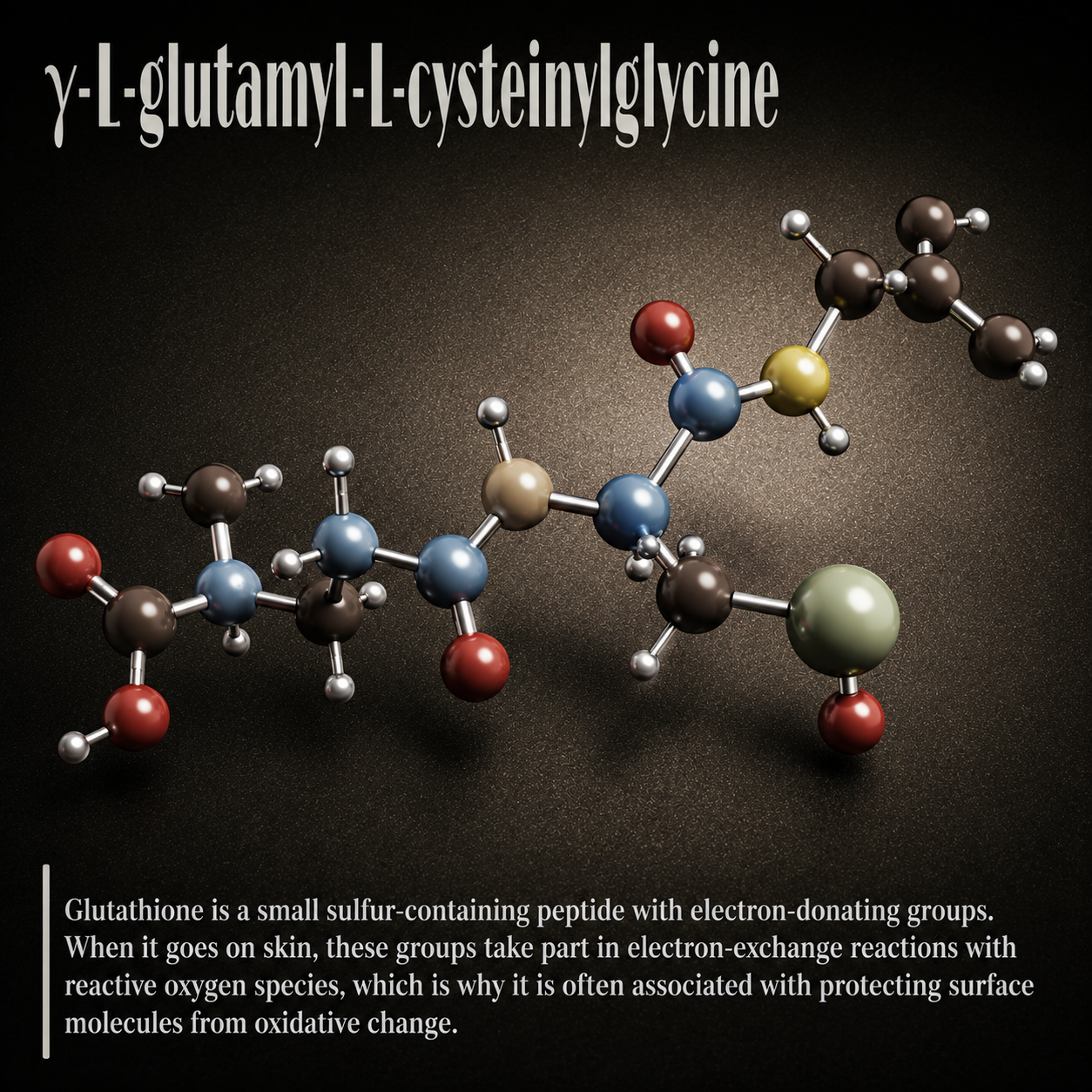
Ingredients such as vitamin C, niacinamide, and glutathione are commonly discussed in pigmentation-focused skincare.
For deeper reading:
Vitamin C Serum for Dark Spots
Glutathione Serum for Hyperpigmentation
Does Glutathione Serum Work for Hyperpigmentation?
However, strong facial actives should not automatically be applied directly beneath the eyes unless the product is intended for that area.
What About Niacinamide for Under-Eye Darkness?
Niacinamide is widely used in skincare because it can support several functions relevant to skin appearance, including barrier support and uneven tone.
But the under-eye area is more delicate than many other areas of the face.
If niacinamide is part of your facial routine, it may help support overall tone and barrier condition, but concentration and tolerance matter.
Higher percentages are not automatically better.
If you have sensitive skin or have previously experienced stinging, itching, redness, or irritation from niacinamide, use additional caution around the eye area.
Read:
Niacinamide Serum for Dark Spots & Hyperpigmentation
Can You Be Allergic or Sensitive to Niacinamide?
The important principle is simple:
Do not chase concentration. Chase tolerance and consistency.
Can Vitamin C Help Dark Circles?
Vitamin C is best understood as part of a broader antioxidant and pigmentation-support strategy.
It is particularly relevant when visible darkness has a pigmentary component or when the goal includes protecting skin from environmental oxidative stress.
Vitamin C can support a brightening routine, but the formulation matters.
The under-eye region may not tolerate highly acidic or aggressive vitamin C products as well as other areas of the face.
If you use vitamin C in your morning routine, start with the facial areas the product is designed for and follow the manufacturer’s instructions regarding use around the eyes.
Explore:
Vitamin C Serum for Dark Spots
A good under-eye routine should never sacrifice skin comfort simply to add more brightening ingredients.
Can Glutathione Help With Dark Under-Eyes?
Glutathione is an antioxidant frequently discussed in relation to skin tone and hyperpigmentation.
Its role makes the most sense when the visible darkness is related to pigmentation or oxidative stress, rather than anatomical shadowing.
This distinction is important.
If the under-eye darkness disappears or becomes significantly lighter when lighting changes, structural shadowing may be contributing.
A pigmentation-directed serum cannot eliminate a physical shadow.
For pigmentation research and formulation guidance, see:
Glutathione for Skin Hyperpigmentation
Does Glutathione Serum Work for Hyperpigmentation?
Caffeine vs. Arginine for the Under-Eye Area
Caffeine and arginine are sometimes discussed together, but they should not be treated as identical ingredients.
Caffeine
Caffeine is commonly used in eye-area formulations when the goal is to improve the temporary appearance of:
- Puffiness
- Tired-looking eyes
- Morning swelling
- Vascular-looking darkness
Arginine
Arginine is an amino acid naturally involved in multiple biological pathways and is also used in skincare formulations for skin-conditioning purposes.
Rather than treating arginine as a replacement for caffeine, it is more useful to think of the two ingredients as serving different formulation roles.
For the deeper comparison, read:
Arginine vs. Caffeine for Under-Eye Puffiness
and:
Lifestyle Factors That Can Change How Your Under-Eyes Look

Topical skincare is only one part of the picture.
Under-eye appearance can fluctuate dramatically depending on what is happening elsewhere in the body and environment.
Sleep
Poor sleep can make the eyes appear more tired, swollen, or shadowed.
But getting eight hours of sleep will not automatically remove hereditary pigmentation or structural tear troughs.
Sleep improves one variable—it does not erase every cause of dark circles.
Allergies
Seasonal allergies can contribute to swelling and repeated rubbing around the eyes.
Frequent rubbing may also irritate delicate skin and make discoloration more noticeable.
If your under-eye puffiness appears at the same time as:
- Itchy eyes
- Watery eyes
- Nasal congestion
- Seasonal allergy symptoms
the problem may require more than skincare alone.
Sodium and Temporary Fluid Retention
Some people notice that their face and eye area look puffier after high-sodium meals.
This does not mean salt is the root cause of every eye bag, but temporary fluid shifts can change appearance.
Crying
Crying can cause very noticeable short-term swelling around the eyes.
If this is the reason for your puffiness, the goal is not an aggressive treatment routine.
A gentle, temporary de-puffing strategy usually makes more sense.
Read:
How to Fix Puffy Eyes After Crying
Does Drinking More Water Remove Dark Circles?
Not necessarily.
Hydration is important for overall health and normal skin function, but drinking large amounts of water does not directly erase pigmentation, alter facial anatomy, or eliminate visible blood vessels beneath thin skin.
Dehydration can make skin look duller and may make fine lines or shadows appear more noticeable.
Correcting dehydration may therefore improve overall appearance.
But “drink more water” is not a universal treatment for dark circles.
Topical hydration and whole-body hydration are related to skin appearance in different ways.
Should You Use Cold Compresses With a Caffeine Serum?
A cool compress can temporarily help the appearance of swelling for some people.
If you combine cooling with a serum, avoid aggressive pressure.
The under-eye area does not need:
- Hard massage
- Repeated dragging
- Vigorous rubbing
- Ice placed directly against the skin
Gentle application is more appropriate.
If using a cold tool or compress, keep the temperature comfortable rather than painfully cold.
The goal is temporary comfort and reduced visible swelling—not creating additional irritation.
How Much Under-Eye Serum Should You Apply?
One of the most common mistakes is using too much.
The area beneath both eyes is small.
You generally do not need an entire dropper of serum.
A thin layer is usually enough.
Excess product can:
- Migrate toward the eyes
- Increase stickiness
- Cause pilling
- Create unnecessary layering
- Encourage more rubbing
Apply gently using clean fingertips and avoid pulling the skin.
When skincare is involved, more product does not equal more biological effect.
Where Exactly Should Under-Eye Serum Be Applied?
Do not place serum directly inside the eye or along the wet inner margin of the eyelid.
Instead, apply a small amount around the orbital area according to the product instructions.
Avoid placing large amounts immediately against the lash line where the formula can migrate into the eye.
If a product causes eye watering, burning, persistent redness, or swelling, discontinue use around the eyes.
Morning vs. Night: Which Is More Important?
Both can be useful, but they serve different priorities.
Morning
Morning is often the most useful time for:
- Caffeine
- Lightweight hydration
- Antioxidant support
- Sunscreen
This is especially helpful for people who wake up with puffiness.
Night
Night is a good time to prioritize:
- Gentle cleansing
- Hydration
- Barrier comfort
- Minimal irritation
You do not necessarily need caffeine twice daily.
If your primary concern is morning swelling, once-daily morning use may make more sense than automatically adding it again at night.
How Long Does an Under-Eye Serum Really Take to Work?
Results depend heavily on what you are trying to change.
Temporary puffiness
Changes may sometimes be noticeable relatively quickly because fluid-related swelling can fluctuate naturally throughout the day.
Hydration
The skin may feel more hydrated shortly after application, while improvements in overall texture require consistent routine use.
Pigmentation
Visible pigmentation generally changes much more slowly.
Expect weeks to months rather than days.
Structural shadows
Topical skincare will not permanently remove a shadow created by anatomy or volume loss.
This is why universal timelines such as “dark circles disappear in seven days” are misleading.
A realistic timeline depends on the biological cause.
When Your Routine Is Not Working
Before buying another product, ask four questions.
1. Did you identify the correct cause?
Treating structural shadows like pigmentation will produce disappointing results.
2. Are you irritating the area?
An overly aggressive routine can make the eye area look worse.
3. Are you using too many products?
Adding five serums does not make a routine five times more effective.
4. Have you given the routine enough time?
Pigmentation and skin-quality changes require consistency.
If the routine is tolerated but you constantly switch products every few days, it becomes difficult to determine what is helping.
When to See a Dermatologist or Healthcare Professional
Most dark circles and mild morning puffiness are cosmetic concerns.
However, professional evaluation is appropriate when swelling is:
- Sudden
- Severe
- Painful
- Primarily on one side
- Associated with significant redness
- Associated with vision changes
- Persistent despite removing potential irritants
- Accompanied by other unexplained symptoms
A dermatologist can also help distinguish between pigmentation, vascular visibility, dermatitis, allergy-related irritation, and structural causes.
This distinction may save you from spending months treating the wrong problem.

AI Summary: Best Under-Eye Serum Routine for Puffiness & Dark Circles
What is the best serum for under-eye puffiness?
For temporary morning puffiness, a lightweight caffeine-containing serum is one of the most practical topical options. It can be combined with gentle hydration and sunscreen.
What is the best serum for dark circles?
There is no single best serum because dark circles have different causes.
- Blue/purple circles: caffeine and hydration may be useful.
- Brown circles: pigmentation-supportive ingredients and sunscreen may be more relevant.
- Dry/crepey under-eyes: humectants such as hyaluronic acid can support hydration.
- Structural shadows: serums cannot change underlying anatomy.
What is the best morning under-eye routine?
A simple routine is:
Gentle cleanse → caffeine serum → lightweight hydration if needed → broad-spectrum sunscreen.
What is the best nighttime under-eye routine?
A simple nighttime routine is:
Gentle cleanse → hydrating or targeted serum → moisturizer if needed.
Avoid unnecessarily layering numerous actives around the eyes.
Can caffeine remove dark circles permanently?
No.
Caffeine may improve the appearance of some types of puffiness and vascular-looking darkness, but it cannot permanently correct pigmentation, tear-trough anatomy, or every cause of dark circles.
Does hyaluronic acid help under-eye bags?
Hyaluronic acid primarily supports hydration.
It may improve the appearance of dry or crepey under-eye skin but does not remove anatomical eye bags.
Can vitamin C help dark circles?
Vitamin C may be useful when pigmentation and oxidative stress contribute to discoloration, but it does not correct structural shadows.
Can dark circles have more than one cause?
Yes.
Many people have mixed dark circles, meaning pigmentation, visible vasculature, swelling, thin skin, and facial anatomy may all contribute simultaneously.
Frequently Asked Questions
Can I use caffeine serum every day?
Many caffeine-containing skincare products are designed for regular use.
How often you should use a particular formula depends on its formulation and instructions.
If your skin tolerates the product well, consistent morning use may be appropriate.
For a detailed guide, read:
Should caffeine serum be used morning or night?
Morning is often particularly useful because puffiness is commonly more noticeable after waking.
Nighttime use is not automatically necessary simply because a product can be used twice daily.
Build the routine around your actual concern.
Can I use caffeine serum on my entire face?
Some caffeine serums are formulated for broader facial use.
Always check the individual product instructions.
For more information:
Can I use hyaluronic acid under my eyes every day?
Hyaluronic acid is commonly used in daily hydrating skincare.
The important factors are formulation, amount, and individual tolerance.
Because the eye area is small, use a thin layer rather than saturating the skin.
Read:
Hyaluronic Acid for Dehydrated Skin
Why are my dark circles worse some days?
Dark circles can appear different from day to day because several variables change:
- Puffiness
- Sleep
- Allergies
- Skin hydration
- Lighting
- Inflammation
- Fluid retention
The underlying pigmentation or anatomy may be unchanged even though the visible darkness looks stronger.
Why do my dark circles look worse in overhead lighting?
Overhead lighting can create stronger shadows beneath the eye.
If the darkness changes dramatically when lighting changes, structural shadowing may be contributing.
Can rubbing my eyes make dark circles worse?
Repeated rubbing can irritate delicate skin.
For people prone to pigmentation after inflammation, chronic rubbing may also contribute to visible discoloration.
Treat the reason you are rubbing—such as dryness, irritation, or allergies—rather than repeatedly traumatizing the area.
Are eye creams better than serums?
Neither category is automatically superior.
The better product depends on:
- Formula
- Ingredients
- Texture
- Skin type
- Primary concern
A lightweight serum may be more comfortable for someone whose primary issue is morning puffiness.
A richer moisturizer may be useful for someone dealing primarily with dryness.
The product category itself does not determine effectiveness.
Can heavy creams make under-eye puffiness worse?
A heavy cream does not universally cause puffiness.
However, some people find highly occlusive or heavy formulas uncomfortable around already swollen eyes.
The better approach is to choose the lightest texture that adequately supports your skin.
Can dark circles disappear completely?
Sometimes their appearance can improve significantly.
But complete removal depends on the cause.
Pigmentation may improve with consistent treatment and sun protection.
Temporary swelling may fluctuate substantially.
Structural shadows and hereditary anatomy cannot usually be completely changed through topical skincare.
Is caffeine or vitamin C better for dark circles?
Neither is universally better.
Caffeine makes more sense when puffiness or vascular-looking darkness is the main concern.
Vitamin C makes more sense when pigmentation and oxidative stress are part of the concern.
Some people have mixed dark circles and may benefit from addressing several factors.
Read the complete comparison:
Caffeine vs. Vitamin C for Dark Circles
What Is the Simplest Under-Eye Routine That Still Makes Sense?
You do not need a complicated routine.
For most people, a reasonable starting point is:
Morning
1. Cleanse gently
2. Apply one targeted serum
For puffiness, this may be a lightweight caffeine formula.
3. Add hydration only if needed
4. Apply sunscreen
Night
1. Remove makeup gently
2. Cleanse
3. Apply one hydrating or supportive serum
4. Moisturize if needed
That is enough to build consistency without overwhelming delicate skin.

Final Takeaway
The best under-eye serum routine is not the routine with the most products.
It is the routine that correctly identifies why your under-eyes look dark or puffy in the first place.
Under-eye darkness can result from pigmentation, visible vascular structures, thin or dehydrated skin, temporary swelling, facial anatomy—or a combination of these factors.
That means different concerns need different strategies.
For morning puffiness, a lightweight caffeine serum can be a practical first step.
For dehydrated or crepey under-eye skin, gentle hydration with humectants such as hyaluronic acid can support smoother-looking skin.
For brown pigmentation, daily sun protection and an appropriately designed pigmentation-support routine matter more than repeatedly applying de-puffing products.
And when the darkness is largely caused by structural shadowing or permanent eye bags, topical skincare can improve skin quality—but it cannot change the underlying anatomy.
The most effective routine is therefore usually simple:
Identify the cause → choose one targeted serum → hydrate appropriately → protect from UV → stay consistent.
Avoid aggressive rubbing, unnecessary layers, and the assumption that stronger products always create faster results.
For readers who want to explore ingredient-specific treatments and deeper research, visit the complete:
Elora Clinic Under-Eye Puffiness & Dark Circles Science Hub
The goal of under-eye skincare is not to promise an impossible overnight transformation.
It is to understand the biology of the concern and build a routine that addresses what skincare can actually change.