















Vitamin C Serum for Dark Spots: How It Works on Hyperpigmentation and Uneven Skin Tone

A vitamin C serum for dark spots can be useful because vitamin C interacts with several biological processes involved in uneven pigmentation, including oxidative stress and melanogenesis.
But vitamin C skincare is more complicated than the familiar phrase “brightens skin.”
Vitamin C exists in multiple chemical forms. Some are highly active but chemically unstable. Others are modified derivatives designed to improve stability or formulation flexibility. Different forms may behave differently in water, oil, at different pH levels, and after they reach the skin.
That means the phrase “vitamin C serum” does not describe one standardized type of product.
Two serums may both display vitamin C on the front label while containing completely different vitamin C systems.
Understanding those differences is especially important when the goal is improving the appearance of dark spots.
Does Vitamin C Serum Help Dark Spots?
Topical vitamin C has meaningful scientific support for improving the appearance of uneven pigmentation, although results depend heavily on formulation and consistent use.

Human clinical research and systematic reviews have found improvements in pigmentation-related outcomes with topical vitamin C formulations. A systematic review of randomized controlled trials involving topical vitamin C for melasma and photoaging reported significant lightening in objectively measured pigmentation in the included studies.
At the same time, researchers have emphasized that the number of well-controlled clinical studies remains limited and that visible results may require prolonged use.
That makes the scientifically responsible answer straightforward:
Vitamin C can support a more even-looking skin tone and has evidence relevant to hyperpigmentation, but it should not be presented as an instant or universal dark-spot remover.
The type of vitamin C, formulation stability, concentration, skin penetration, sun exposure, and cause of the pigmentation all influence the final outcome.
What Are Dark Spots?
“Dark spot” is a cosmetic description rather than a precise diagnosis.
It generally refers to an area that appears darker than surrounding skin because of increased melanin production, altered pigment distribution, or both.
Common examples include:
Post-Inflammatory Hyperpigmentation
Post-inflammatory hyperpigmentation, or PIH, can develop after inflammation or injury.
Acne lesions are a common trigger.
The original inflammatory event activates signaling pathways that can increase melanocyte activity. After the acne lesion heals, excess pigment may remain behind as a brown or gray-brown mark.
The same process can occur after irritation, scratching, burns, eczema, cosmetic procedures, or other inflammatory events.
This is why one of the most important rules in pigment-focused skincare is:
Do not repeatedly create new inflammation while trying to correct old pigmentation.
Sun-Associated Dark Spots
Ultraviolet radiation stimulates melanogenesis.
Repeated UV exposure can contribute to uneven pigmentation over time, especially in chronically exposed areas of the face.
Vitamin C becomes particularly interesting here because it intersects with both antioxidant defense and pigmentation biology.
Still, antioxidant skincare cannot replace sunscreen.
Melasma
Melasma is more biologically complex than an isolated dark spot.
Hormonal influences, UV radiation, visible light, genetics, vascular factors, and melanocyte signaling may all contribute.
Topical vitamin C has been investigated in melasma, including controlled clinical research, but melasma should not be reduced to a condition that an over-the-counter vitamin C serum can simply cure.
Persistent melasma may require professional dermatologic management.
How Vitamin C Affects Melanin Production
To understand why vitamin C is relevant to dark spots, it helps to understand melanogenesis.
Melanin is produced by melanocytes within specialized organelles called melanosomes.
One of the most important enzymes involved in this process is tyrosinase.
Tyrosinase participates in early reactions that convert the amino acid tyrosine into intermediates that eventually contribute to melanin formation.

The pathway can be simplified conceptually as:
Tyrosine → L-DOPA → Dopaquinone → Melanin
This pathway is much more complex in living skin, but tyrosinase remains a critical regulatory point.
Vitamin C is interesting because it can interfere with melanogenesis through chemical mechanisms involving oxidation-reduction reactions and tyrosinase-associated processes.
Vitamin C and Tyrosinase
Tyrosinase is a copper-containing enzyme.
Its activity depends partly on copper ions within the active site.
Vitamin C is a reducing agent, meaning it can donate electrons in oxidation-reduction reactions.
Research has suggested that ascorbic acid can interfere with melanogenesis partly by interacting with copper-related enzymatic activity and by reducing oxidized melanogenic intermediates.
This helps explain why vitamin C is often described as an antipigmentary ingredient.
However, the common phrase “vitamin C blocks tyrosinase” is somewhat oversimplified.
Melanogenesis is not controlled by one on/off switch.
Multiple enzymes, signaling pathways, transcription factors, inflammatory mediators, hormonal factors, oxidative signals, and environmental exposures influence pigment production.
Vitamin C should therefore be understood as one ingredient acting within a much larger biological system.
Dopaquinone and Oxidation Chemistry
Vitamin C’s antioxidant chemistry becomes particularly relevant during melanogenesis because pigment production itself involves oxidation reactions.
Tyrosinase contributes to the oxidation of L-DOPA into dopaquinone.
From there, the chemical pathway can proceed toward different melanin products.
Ascorbic acid can act as a reducing agent in these oxidative reactions.
That does not mean topical vitamin C simply erases existing melanin.
Instead, the molecule can influence chemical environments associated with new pigment formation.
This distinction is important.
A dark spot that is already visible contains pigment distributed within skin cells.
Changing future melanogenesis and physically removing already-deposited pigment are not the same process.
Existing epidermal pigment generally becomes less visible gradually as normal epidermal turnover occurs and pigment production becomes better controlled.
That is one reason dark-spot improvement takes time.
Vitamin C Is More Than a Pigmentation Ingredient
Vitamin C is a biologically important molecule in skin for reasons that extend far beyond dark spots.
It functions as an antioxidant.
It participates in collagen biology.
It contributes to cellular defense against oxidative stress.
It also interacts with vitamin E within antioxidant networks.
These overlapping functions are why vitamin C has remained one of the most extensively discussed ingredients in dermatologic skincare.
The molecule’s scientific importance is not the problem.
The challenge is delivering it effectively through a topical formulation.
L-Ascorbic Acid: The Classic Form of Vitamin C
L-ascorbic acid is the biologically active form most directly associated with vitamin C.
From a skincare perspective, it is also one of the most technically challenging.
L-ascorbic acid is highly water-soluble and chemically unstable.
It can oxidize when exposed to conditions such as:
- Oxygen
- Light
- Heat
- Water
- Certain pH environments
- Trace metal contamination
Once oxidation progresses, the chemical composition of the formulation changes.
This is why vitamin C serum formulation cannot be judged solely by concentration.

A bottle containing a large percentage of poorly stabilized ascorbic acid is not automatically superior to a thoughtfully designed lower-concentration system.
Why L-Ascorbic Acid Serums Are Usually Acidic
Skin penetration is another major challenge.
Ascorbic acid is a charged, water-soluble molecule under many physiological conditions, while the outer skin barrier is relatively lipid-rich.
This creates a delivery problem.
Classic L-ascorbic acid formulas are often designed at an acidic pH because lowering the pH increases the proportion of ascorbic acid in its protonated, uncharged form, which can improve its ability to cross the stratum corneum.
This is one reason traditional L-ascorbic acid serums can have relatively low pH values.
The chemistry makes sense.
The tradeoff is tolerability.
Highly acidic serums can sting, especially on:
- Sensitive skin
- Recently exfoliated skin
- Barrier-damaged skin
- Skin already using retinoids or exfoliating acids
Formulation is therefore always a balance between delivery, stability, efficacy, and user experience.
Why Vitamin C Derivatives Exist
Because L-ascorbic acid is difficult to stabilize, cosmetic chemists have developed numerous vitamin C derivatives.
These molecules chemically modify ascorbic acid in ways designed to improve properties such as:
- Stability
- Solubility
- Compatibility
- Skin tolerance
- Formulation flexibility
Examples commonly encountered in skincare include:
Sodium Ascorbyl Phosphate
A water-soluble phosphorylated derivative.
Magnesium Ascorbyl Phosphate
Another phosphorylated, water-compatible form.
Ascorbyl Glucoside
A glucose-linked vitamin C derivative designed for improved stability.
3-O-Ethyl Ascorbic Acid
A modified form designed to improve stability while retaining useful vitamin C-related properties.
Tetrahexyldecyl Ascorbate
A lipid-soluble derivative often used in oil-containing formulations.
3-Glyceryl Ascorbate
A glycerin-linked vitamin C derivative that can be incorporated into water-based cosmetic systems.
These forms should not automatically be treated as biologically identical.
L-Ascorbic Acid vs. Vitamin C Derivatives
A useful way to compare them is:
| Vitamin C Form | General Formulation Character | Main Advantage | Main Challenge |
| L-Ascorbic Acid | Water-soluble, commonly acidic | Strongest historical research base | Highly unstable and can be irritating |
| Sodium Ascorbyl Phosphate | Water-soluble derivative | Improved stability | Requires biological conversion and has less direct clinical evidence |
| Magnesium Ascorbyl Phosphate | Water-soluble derivative | Stable and generally formulation-friendly | Skin delivery and conversion influence activity |
| Ascorbyl Glucoside | Water-soluble stabilized derivative | Improved formulation stability | Must be converted to active ascorbic acid |
| 3-O-Ethyl Ascorbic Acid | Modified vitamin C | Better stability than free ascorbic acid | Evidence differs from classic L-ascorbic acid |
| Tetrahexyldecyl Ascorbate | Lipid-soluble | Useful in oil/lipid systems | Finished-product evidence matters |
| 3-Glyceryl Ascorbate | Water-compatible derivative | Useful for stable aqueous cosmetic design | Research base is smaller than L-ascorbic acid |
The important takeaway is not that one form always wins.
It is that the vitamin C form determines much of the formulation strategy.
Does a Vitamin C Derivative Have to Become L-Ascorbic Acid?
Many vitamin C derivatives are designed to function partly through conversion into ascorbic acid after application.
The efficiency of that conversion can vary depending on:
- Chemical structure
- Enzymatic activity in skin
- Delivery
- Concentration
- Formulation
- Location within the skin
That means the percentage displayed on a derivative-containing serum should not be interpreted as though it were directly equivalent to the same percentage of free L-ascorbic acid.
For example, a 10% derivative formulation is not automatically equivalent to a 10% L-ascorbic acid formulation in biological exposure.
This is one of the most commonly misunderstood aspects of vitamin C skincare.
Why Stability Matters for Dark-Spot Results
A vitamin C serum for dark spots must remain chemically functional long enough to be used consistently.
If a vitamin C system degrades rapidly during storage, the impressive percentage on the label becomes much less meaningful.
Stability is affected by:
- Vitamin C form
- Water activity
- pH
- Oxygen exposure
- Light exposure
- Temperature
- Packaging
- Metal ions
- Antioxidant partners
- Preservative system
- Other ingredients in the formula
This is why vitamin C is a formulation problem as much as an ingredient problem.
Successful product development requires thinking about the entire chemical environment.
Why Antioxidant Biology Matters for Hyperpigmentation
Ultraviolet exposure creates reactive oxygen species within skin.
These reactive species can influence inflammatory signaling, cellular stress responses, photoaging, and melanogenesis.
Vitamin C can donate electrons to reactive oxidants and participate in antioxidant defense.
This provides another biological connection between vitamin C and uneven pigmentation.
The pigment-related benefit therefore does not have to rely solely on tyrosinase.
Vitamin C sits at the intersection of:
Melanogenesis + oxidative stress + environmental exposure + collagen biology.
That combination helps explain why it remains so relevant to both pigmentation and photoaging research.
Vitamin C Cannot Replace Sunscreen
This point is non-negotiable.

Vitamin C is not sunscreen.
Antioxidant activity does not prevent ultraviolet photons from reaching the skin in the way a properly formulated sunscreen is designed to do.
A morning pigment-focused routine might therefore look like:
Cleanser → Vitamin C serum → Moisturizer → Broad-spectrum sunscreen
The serum and sunscreen serve different purposes.
For someone trying to improve dark spots, using vitamin C while repeatedly allowing unprotected UV exposure is counterproductive because ultraviolet radiation can continue stimulating melanogenesis.
Photoprotection is part of the pigmentation strategy, not an optional extra.
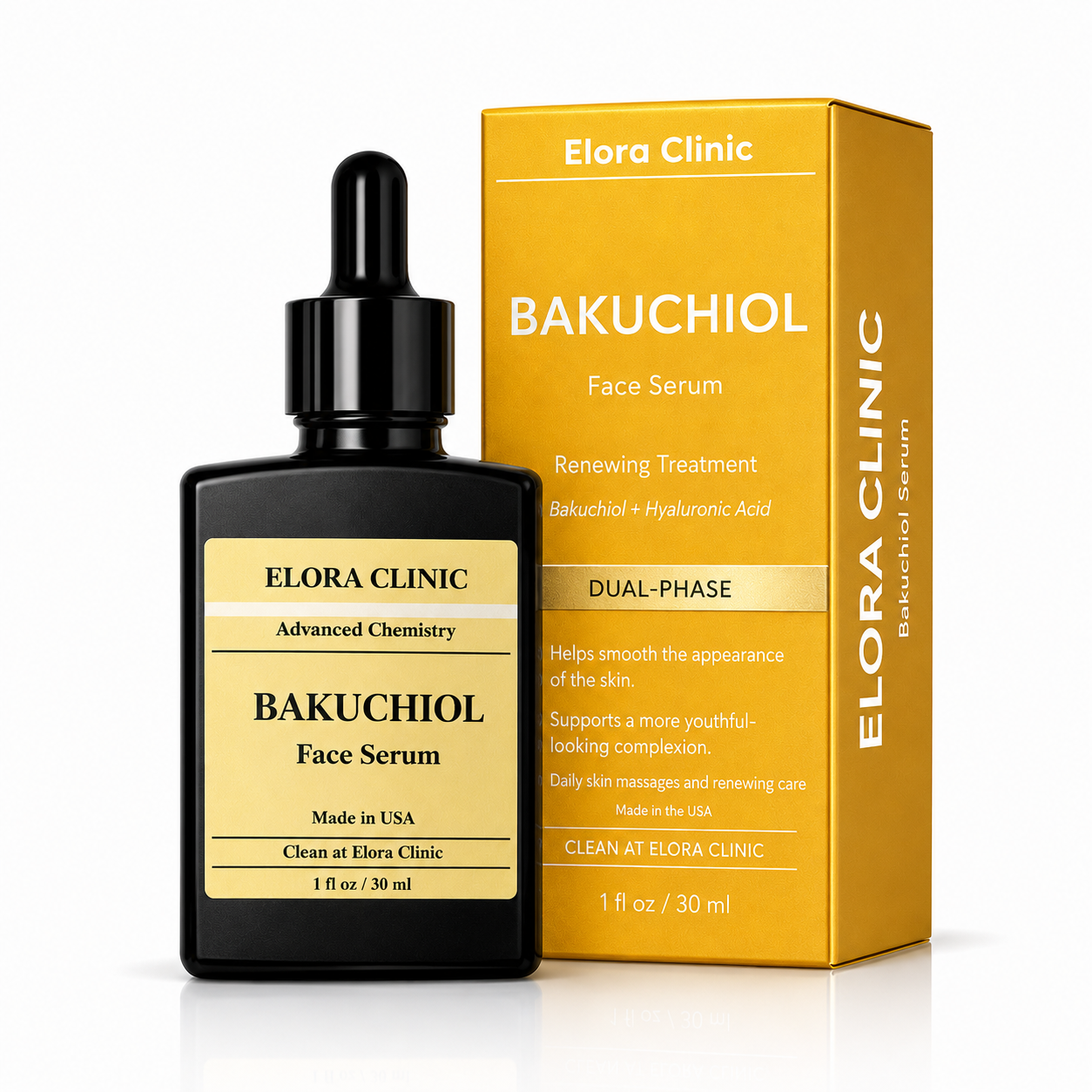
Where Elora Clinic Vitamin C Serum Fits
The Elora Clinic Vitamin C Serum is best discussed through its formulation architecture, not through drug-style treatment claims.
The Elora Clinic formula uses a water-based vitamin C system rather than relying exclusively on the classic low-pH L-ascorbic-acid model.
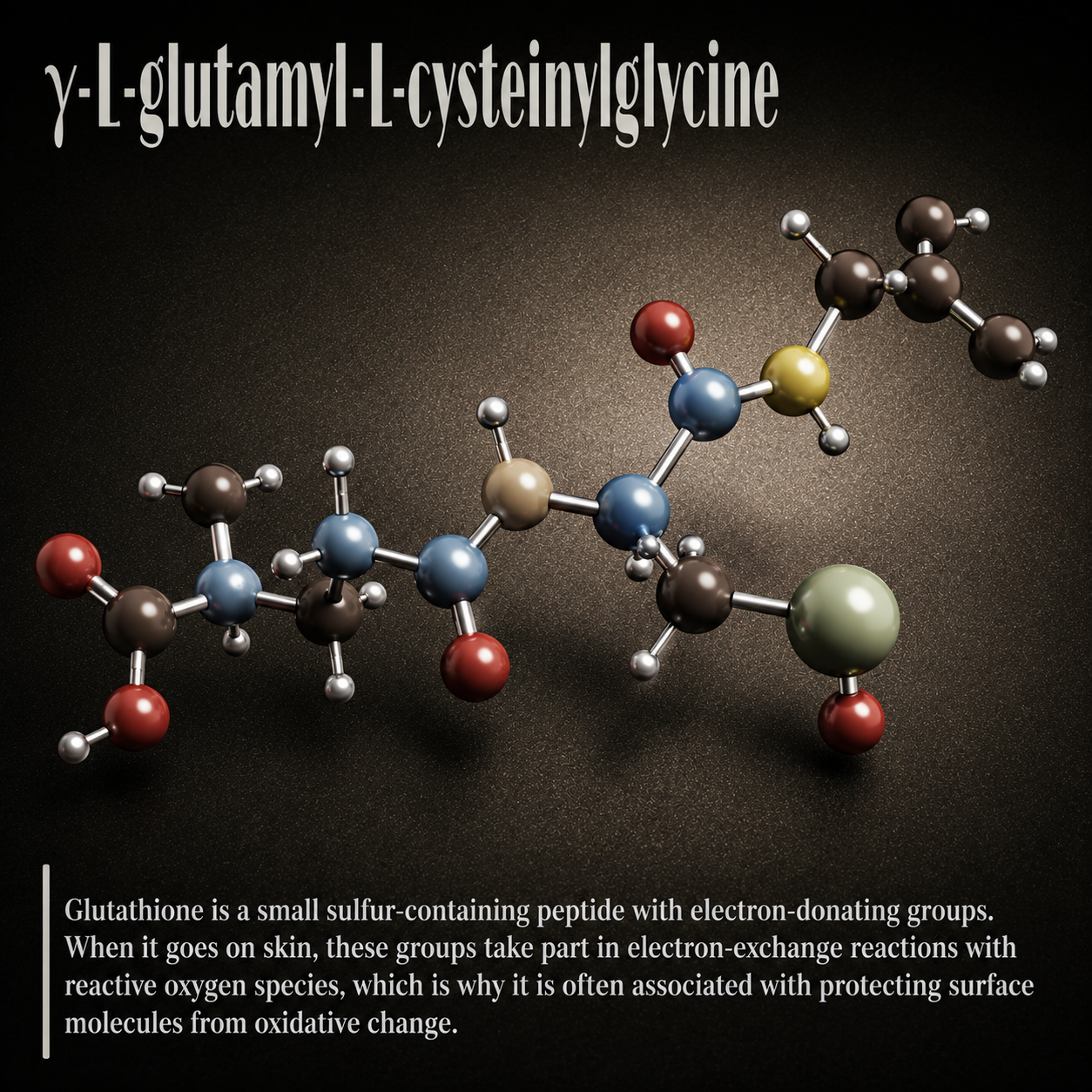
Its vitamin C component is built around 3-Glyceryl Ascorbate, with additional hydration and antioxidant-supporting ingredients incorporated into the formula, including hyaluronic acid and glutathione.
That allows the product to be approached as a multi-function cosmetic serum:
Vitamin C derivative — included within a stabilized vitamin C system.
Hyaluronic acid — contributes hydration.
Glutathione — contributes a separate antioxidant-focused component.
Those ingredients should not be described as though their presence proves that the finished Elora Clinic serum clinically treats hyperpigmentation.
The correct scientific distinction is:
Vitamin C itself has a meaningful body of research relevant to pigmentation. The Elora Clinic product provides vitamin C within its own water-based cosmetic formulation.
That distinction protects scientific credibility while still allowing the formulation itself to be discussed in depth.
Why a Water-Based Vitamin C Serum Can Be Useful
Texture affects adherence.
A lightweight aqueous serum can be easier to layer beneath moisturizer and sunscreen than a heavier oil-rich formulation.
That matters because pigment-focused skincare depends heavily on consistency.
The theoretical activity of an ingredient provides little practical value if the product is uncomfortable enough that the user rarely applies it.
A well-designed routine should therefore consider both chemistry and usability.
For people using multiple serums, water-based products generally belong earlier in the routine before heavier creams and oils.
This creates a practical framework:
Cleanse → Water-based treatment serum → Moisturizer → Sunscreen
Rather than simply asking which vitamin C percentage is highest, the more useful question is:
Which vitamin C system can remain stable, fit my skin, and be used consistently enough to matter?

That question gets much closer to how formulation science actually works.
Why Vitamin C Formulation Matters More Than the Number on the Bottle
When people shop for a vitamin C serum for dark spots, concentration often becomes the first comparison.
10%.
15%.
20%.
A larger number can look more powerful.
But vitamin C formulation does not work like a simple dose competition.
The chemical form of vitamin C, the pH of the system, the amount of water present, the vehicle, stability, skin delivery, packaging, and supporting ingredients all influence how the finished product behaves.
This is why a serum containing a lower percentage of a well-designed vitamin C system cannot automatically be considered weaker than a serum displaying a larger percentage of another form.
In topical skincare, concentration only has meaning within formulation context.
The Vitamin C Paradox: Strong Biology, Difficult Chemistry
Vitamin C presents an unusual formulation problem.
Biologically, it is extremely interesting.
Chemically, its most familiar form—L-ascorbic acid—is notoriously demanding.
A recent external formulation analysis, The Vitamin C Paradox: Why One of Skincare’s Most Famous Antioxidants Is So Difficult to Formulate, explores this tension in detail.
The central problem is straightforward:
A formulator cannot simply add vitamin C to water and assume the ingredient will remain chemically unchanged throughout manufacturing, shipping, storage, and repeated consumer use.
The surrounding system matters.
Water matters.
Oxygen matters.
Light matters.
Temperature matters.
pH matters.
Metal ions can matter.
Packaging matters.
Other antioxidants and formulation components can matter.
The molecule does not stop obeying chemistry once it becomes a skincare product.
That is why vitamin C is one of the clearest examples of the difference between ingredient science and finished-formula science.
What Happens When L-Ascorbic Acid Oxidizes?
L-ascorbic acid acts as a reducing agent.
During oxidation, ascorbic acid can lose electrons and proceed through oxidation products including dehydroascorbic acid.
The chemistry does not necessarily stop there.
Under unfavorable conditions, further degradation can occur and produce additional compounds.
From a consumer perspective, this matters because a serum is expected to remain useful for far longer than the moment it leaves the manufacturing vessel.
A product may spend months being shipped, stored, opened, closed, exposed to environmental oxygen, and subjected to temperature variation.
Stability is therefore part of product performance.
An impressive initial concentration is less useful if the formulation cannot adequately maintain its intended composition over its usable life.
Is Oxidized Vitamin C Useless?
The answer requires nuance.
Dehydroascorbic acid is itself biologically relevant and can participate in vitamin C biology under physiological conditions.
However, uncontrolled oxidation in a cosmetic product should not be confused with a deliberately designed delivery strategy.
When a vitamin C serum changes significantly in color, odor, or appearance over time, those changes may indicate chemical reactions within the formulation.
It is not scientifically appropriate to say that every color change means the serum instantly becomes useless.
Nor is it appropriate to say degradation does not matter.
The meaningful question is whether the product remains within its validated specifications during its intended shelf life.
That can only be established through formulation and stability testing—not by guessing from the front label.
Why Water Makes Vitamin C Formulation More Complicated
Water is extremely useful in skincare.
It creates elegant lightweight serums and allows water-soluble humectants and other ingredients to be incorporated easily.
But water also creates a chemical environment in which many reactions can occur.
L-ascorbic acid is water-soluble, yet aqueous systems can accelerate instability depending on pH, oxygen exposure, temperature, and the complete formulation.
This explains why formulators sometimes choose:
- Acidic aqueous L-ascorbic acid systems
- Water-free vitamin C formulations
- Emulsions
- Encapsulation technologies
- More stable vitamin C derivatives
Each approach solves a different set of problems.
There is no single universal vitamin C architecture.
Why pH Matters So Much for L-Ascorbic Acid

For traditional L-ascorbic acid formulations, pH influences both stability and skin penetration.
Classic penetration research found that L-ascorbic acid needed to be formulated below approximately pH 3.5 for meaningful penetration into skin in the experimental system studied.
This makes chemical sense.
At a lower pH, more ascorbic acid exists in a protonated form that can cross the lipid-rich stratum corneum more effectively.
But this creates a formulation tradeoff.
Lower pH may help delivery of free L-ascorbic acid while making the serum less comfortable for some users.
Someone with sensitive or barrier-impaired skin may experience:
- Stinging
- Burning
- Redness
- Dryness
- Increased irritation when combined with other acidic or exfoliating products
That does not make low-pH L-ascorbic acid inherently bad.
It means the formulation is solving one scientific problem while potentially creating another tolerability consideration.
A 2001 percutaneous absorption study found that L-ascorbic acid penetration depended strongly on both pH and concentration, illustrating why vitamin C performance cannot be predicted from concentration alone.
Is 20% Vitamin C Better Than 10%?
Not automatically.
The same classic penetration study found that increasing L-ascorbic acid concentration increased tissue levels up to a point, with saturation occurring around 20% under the experimental conditions studied.
That result has sometimes been transformed into a marketing rule that “20% is best.”
That interpretation is too broad.
The study evaluated a particular form of vitamin C under a particular experimental system.
It does not prove that:
- Every 20% vitamin C serum is superior to every 10% serum
- A 20% derivative equals 20% L-ascorbic acid
- Increasing concentration beyond the studied range guarantees greater cosmetic benefit
- Formulation stability becomes irrelevant at higher concentration
- All skin types tolerate the same concentration equally
A percentage should be viewed as one variable, not a quality score.
Why Vitamin C Derivatives Change the pH Conversation
Vitamin C derivatives exist partly because formulators wanted alternatives to the limitations of native L-ascorbic acid.
Depending on the derivative, chemical modification can improve stability, change water or oil solubility, alter compatibility, and allow formulation at different pH ranges.
That means the low-pH rule used for free L-ascorbic acid cannot automatically be applied to every vitamin C derivative.
This is critical.
A derivative-based serum formulated at a higher pH is not necessarily “wrong” simply because classic L-ascorbic acid research used acidic formulations.
Different molecule.
Different physicochemical properties.
Different formulation strategy.
The scientific comparison should be made at the level of the actual chemical form.
What Is 3-Glyceryl Ascorbate?
3-Glyceryl Ascorbate is a modified vitamin C derivative designed for use within cosmetic formulations.
Chemically modifying ascorbic acid changes its physicochemical behavior compared with free L-ascorbic acid.
The reason formulators use derivatives such as this is not because classic vitamin C science suddenly becomes irrelevant.
It is because native ascorbic acid creates practical challenges involving stability, formulation flexibility, and user experience.
3-Glyceryl Ascorbate can be incorporated into water-based cosmetic systems, making it particularly interesting for serum formats.
However, scientific restraint matters.
The clinical literature for L-ascorbic acid is considerably more extensive than the literature for many individual vitamin C derivatives.
Evidence supporting vitamin C broadly should therefore not automatically be presented as clinical proof that every derivative produces identical outcomes at equivalent percentages.

A sophisticated formulation can choose a derivative for rational chemistry reasons without pretending that the evidence bases are identical.
Why Conversion Matters With Vitamin C Derivatives
Many vitamin C derivatives are designed to serve as precursors or modified sources of vitamin C activity after application.
For some derivatives, biological activity may depend partly on enzymatic conversion within skin.
That introduces another layer between the ingredient in the bottle and the active molecule participating in skin biology.
The pathway can be thought of conceptually as:
Vitamin C derivative → skin interaction/conversion → biologically active vitamin C-related effects
The efficiency of this process can depend on the specific derivative.
That is why comparing percentages across different forms can be misleading.
10% of one derivative is not chemically equivalent to 10% of another derivative.
Nor should either automatically be treated as equal to 10% free L-ascorbic acid.
Stability Versus Directness: The Formulation Tradeoff
The vitamin C conversation often becomes unnecessarily polarized:
“L-ascorbic acid is the only real vitamin C.”
or
“Derivatives are automatically better because they are stable.”
Both statements oversimplify the subject.
L-ascorbic acid has the advantage of being the directly active native form with a strong historical research base.
Its disadvantage is that it is challenging to stabilize and deliver.
Derivatives can provide improved physicochemical stability or formulation flexibility.
Their limitation is that the evidence for each specific derivative may be smaller, and biological conversion or penetration can differ.
The useful question is not:
Which form wins?
It is:
Which form makes sense for this formulation, this vehicle, this skin type, and this intended use?
That is the formulation-science approach.
Vitamin C for Post-Acne Dark Spots
Post-acne dark marks are commonly examples of post-inflammatory hyperpigmentation.
The inflammation associated with an acne lesion can stimulate melanocytes and leave excess pigment after the lesion itself resolves.
Vitamin C can be relevant because of its relationship with melanogenesis and antioxidant biology.
However, preventing repeated inflammation remains essential.
If someone continues developing inflammatory acne, new pigmentation may continue appearing while older marks are fading.
This creates two different objectives:
Control the process generating new inflammatory lesions.
and
Use a pigment-conscious skincare routine for existing uneven tone.
A vitamin C serum addresses only part of that larger picture.
Aggressive scrubbing or over-exfoliation in an attempt to remove dark spots faster can also create additional irritation and potentially worsen post-inflammatory pigmentation.
Vitamin C for Sun-Induced Dark Spots
UV-associated pigmentation creates another strong rationale for vitamin C.
Ultraviolet radiation can:
Increase reactive oxygen species.
Stimulate melanogenic signaling.
Contribute to photodamage.
Promote uneven pigmentation over time.
Vitamin C is relevant to both the oxidative and melanogenic components of that biology.
But the hierarchy remains important:
Vitamin C supports the routine. Sunscreen controls UV exposure.
The antioxidant does not replace the UV filters.
This is why a morning vitamin C routine makes sense when it ends with broad-spectrum sunscreen.
Vitamin C for Melasma
Melasma requires more careful language.
Vitamin C has been studied in melasma, and clinical literature has reported pigmentation-related improvement with topical vitamin C-containing approaches.
But melasma is not simply excess surface pigment.
Its pathophysiology can involve:
- UV exposure
- Visible light
- Hormonal influences
- Genetic predisposition
- Vascular factors
- Inflammatory signaling
- Altered melanocyte activity
A vitamin C serum for dark spots can be part of a cosmetic pigmentation-focused routine, but it should not be positioned as a cure for melasma.
Persistent or recurrent melasma may require evaluation by a dermatologist and a broader therapeutic strategy.
Vitamin C and Glutathione: Why the Combination Is Scientifically Interesting
Vitamin C and glutathione are both involved in cellular redox biology.
Inside living systems, antioxidants do not function as isolated marketing ingredients.
They participate within interconnected networks.
Glutathione exists primarily in reduced and oxidized states and plays a central role in cellular redox homeostasis.
Vitamin C is also a reducing agent and participates in antioxidant chemistry.
This makes their coexistence scientifically interesting.
But the distinction between biological relationship and finished-product synergy is crucial.

The presence of vitamin C and glutathione in the same serum does not automatically prove that the combination doubles antioxidant performance or creates superior clinical pigmentation results.
Those would be finished-formulation claims requiring specific evidence.
The scientifically responsible statement is simpler:
Vitamin C and glutathione are both biologically relevant antioxidant-associated molecules, and a formulation can deliberately include both within a broader antioxidant concept.
For readers who want to understand glutathione’s separate relationship with pigmentation, see Elora Clinic’s guide to glutathione serum for hyperpigmentation.
Vitamin C and Hyaluronic Acid
Vitamin C and hyaluronic acid perform fundamentally different jobs.
That is precisely why the combination can make formulation sense.
Vitamin C is used primarily for its antioxidant and skin-appearance-related biological activity.
Hyaluronic acid is a hydration-focused ingredient.
Hyaluronic acid does not need to increase vitamin C potency to justify its presence in the same serum.
It can help support the water content and sensory condition of the stratum corneum while vitamin C serves a separate purpose.
This is particularly useful when an active-focused serum is intended for repeated use.
Skin that feels hydrated and comfortable is easier to maintain within a consistent routine than skin that is repeatedly irritated.
Vitamin C and Niacinamide
The long-standing claim that vitamin C and niacinamide “cancel each other out” is generally outdated when applied broadly to modern cosmetic use.
Historical concerns were often based on specific experimental conditions that do not automatically represent contemporary finished formulations.
Modern cosmetic routines can generally include both ingredients when the products are appropriately formulated and tolerated.
Their pigmentation-related mechanisms are also different.
Vitamin C has relevance to melanogenesis chemistry and antioxidant biology.
Niacinamide has been investigated for multiple skin functions, including effects related to melanosome transfer and barrier support.
Different mechanisms do not automatically prove clinical synergy, but there is no universal reason the ingredients must be separated.
For readers focused on pigment concerns, see niacinamide serum for dark spots and hyperpigmentation.
Vitamin C and Retinol
Vitamin C and retinoids can exist within the same broader skincare routine.
The larger concern is tolerability.
A low-pH L-ascorbic acid serum and a retinoid can both create irritation in susceptible skin.
That does not necessarily represent a chemical incompatibility.
It represents cumulative skin stress.
A simple approach is to use:
Morning: Vitamin C → Moisturizer → Sunscreen
Evening: Retinoid → Moisturizer
This separation is not mandatory for every user, but it can simplify the routine and reduce the number of strong active products applied simultaneously.
Vitamin C and Exfoliating Acids
The same logic applies to glycolic acid, lactic acid, salicylic acid, and other exfoliating treatments.
The problem is not automatically that vitamin C and acids chemically destroy one another.
The practical issue is irritation.
Someone using a strong acidic L-ascorbic acid serum, exfoliating toner, retinoid, and additional pigmentation treatments in the same routine may compromise tolerability.
For post-inflammatory hyperpigmentation, this can become especially counterproductive because irritation itself can contribute to new discoloration.

More aggressive skincare does not always produce faster pigment improvement.
Should Vitamin C Be Used in the Morning or at Night?
Vitamin C can be used in either routine when the formulation supports it.
Morning use is particularly logical because vitamin C’s antioxidant role complements a daytime environmental-protection strategy.
A straightforward morning routine is:
- Cleanser
- Vitamin C serum
- Moisturizer if needed
- Broad-spectrum sunscreen
Evening use is also reasonable.
There is no rule that vitamin C becomes biologically useless after sunset.
The best timing is the one that fits the rest of the routine and allows consistent use.
How Long Does Vitamin C Take to Improve Dark Spots?
Dark spots should be evaluated over weeks to months, not days.
Clinical studies of topical vitamin C generally evaluate changes over meaningful multiweek periods.
The visible timeline depends on:
- Cause of pigmentation
- Depth of pigment
- Vitamin C form
- Formulation
- Frequency of use
- UV exposure
- Skin turnover
- Inflammation
- Other products being used
A recent dark spot may behave differently from a long-standing sun-associated lesion.
Post-inflammatory pigmentation may behave differently from melasma.
There is no defensible universal promise that every vitamin C serum will remove dark spots in exactly two, four, or eight weeks.
Why Packaging Is Part of Vitamin C Chemistry
Packaging is often treated as branding.
For oxidation-sensitive skincare, it can also be functional.
Light exposure and oxygen can contribute to degradation in susceptible systems.
Packaging can therefore help reduce avoidable environmental stress on a formula.
That does not mean dark glass or an airless pump can rescue poor formulation chemistry.
Packaging is one layer of stability design.
The formula itself still has to be chemically appropriate.
The external formulation article on why vitamin C is so difficult to formulate explores this relationship between formulation, oxidation, packaging, concentration, and real-world usability in greater depth.
How Elora Clinic Approaches the Vitamin C Problem
The Elora Clinic Vitamin C Serum takes a derivative-based, water-based approach rather than building its identity around the most acidic possible free L-ascorbic acid system.
The formula uses 3-Glyceryl Ascorbate as its vitamin C component, alongside glutathione and hydration-supporting ingredients including hyaluronic acid.
The rationale is not that these ingredients magically multiply one another’s efficacy.
It is that each has a distinct role within the formulation architecture.
3-Glyceryl Ascorbate: vitamin C component.
Glutathione: separate antioxidant-associated component.
Hyaluronic acid: hydration-focused component.

Water-based vehicle: lightweight serum architecture.
This allows the product to be discussed through formulation logic rather than exaggerated drug-style promises.
The scientific literature supporting vitamin C’s role in pigmentation provides important ingredient-level context.
The Elora Clinic product remains its own finished cosmetic formulation.
That distinction matters.
How to Evaluate a Vitamin C Serum Like a Formulator
Instead of asking only, “What percentage is it?” ask:
| Question | Why It Matters |
| Which form of vitamin C is used? | L-ascorbic acid and derivatives have different stability, solubility, pH, and evidence profiles. |
| Is the formula water-based, oil-based, or water-free? | The vehicle affects solubility, stability, texture, and delivery strategy. |
| What pH does the vitamin C form require? | Low pH is especially relevant to free L-ascorbic acid but cannot automatically be applied to every derivative. |
| How is oxidation managed? | Vitamin C chemistry can change during storage and use. |
| What is the packaging doing? | Packaging can help limit unnecessary exposure to light or oxygen in susceptible systems. |
| Are supporting ingredients performing clear functions? | Humectants, antioxidants, preservatives, solvents, and other materials should make sense within the complete formula. |
| Is the product tolerable enough for consistent use? | A theoretically powerful serum provides little practical value if irritation prevents regular application. |
| Are clinical claims based on the finished product or borrowed from ingredient research? | Ingredient evidence and finished-product evidence are not interchangeable. |
This is a much more useful framework for selecting a vitamin C serum for dark spots than simply looking for the highest concentration available.
The best serum is not necessarily the one shouting the largest number.
It is the one whose chemistry, formulation, stability, tolerability, and intended use make sense together.
Vitamin C for Different Types of Dark Spots
Not every dark mark develops for the same reason.
That matters because the biological pathway behind the discoloration affects how quickly it may fade, which supporting ingredients make sense, and how aggressively the skin should be treated.
A vitamin C serum for dark spots is most useful when it is placed inside a routine that first identifies the type of pigmentation being addressed.
Three common categories are especially important:
Post-inflammatory hyperpigmentation — pigment left after inflammation or injury.
Sun-associated hyperpigmentation — uneven pigmentation associated with cumulative ultraviolet exposure.
Melasma-related pigmentation — a chronic, relapsing pigment disorder influenced by multiple biological and environmental factors.
These conditions can look similar in the mirror while behaving very differently over time.
Post-Inflammatory Hyperpigmentation: Why Inflammation Comes First
Post-inflammatory hyperpigmentation, or PIH, occurs after inflammatory or traumatic injury to the skin.
Common triggers include:
- Acne
- Eczema
- Irritant reactions
- Picking or scratching
- Burns
- Aggressive exfoliation
- Cosmetic procedures
Inflammation can increase melanocyte signaling and stimulate excess pigment production.
Once the inflammation resolves, the pigment may remain.
This is especially important because treating PIH too aggressively can create the exact biological condition that caused it in the first place.
If an exfoliating acid, retinoid, scrub, or overly acidic serum repeatedly irritates the skin, that irritation can perpetuate inflammatory signaling.
The result can become a frustrating cycle:
Dark spot → aggressive treatment → irritation → more inflammation → more pigmentation
Breaking that cycle is often more important than adding another brightening ingredient.
Reviews of PIH management consistently emphasize that controlling the original inflammatory condition is fundamental, particularly in darker skin tones where PIH may be more persistent. (PubMed)
Why PIH Can Be More Persistent in Deeper Skin Tones
All skin tones can develop post-inflammatory hyperpigmentation.
However, PIH is especially common and often more persistent in individuals with darker skin tones.
This does not mean darker skin is damaged more easily.
It means melanocytes in more highly pigmented skin can produce a stronger visible pigment response after inflammation.
That is why irritation control is especially important.
A systematic review focused on skin of color found that PIH remains difficult to treat and that no single intervention produces universally robust results. (PubMed)
This has a practical consequence:
A routine designed for dark spots should not create unnecessary inflammation in pursuit of faster results.
Vitamin C can be relevant, but the surrounding routine must remain tolerable.
Vitamin C for Dark Spots After Acne
Post-acne marks are one of the most common reasons people seek brightening skincare.
Here, vitamin C can contribute through several overlapping mechanisms:
- Antioxidant activity
- Melanogenesis-related effects
- Reduction-oxidation chemistry involving pigment formation
- Support for broader photo-protective skincare when used with sunscreen
But vitamin C does not treat the entire acne process.
If inflammatory acne continues to develop, new PIH can continue forming.
The routine therefore needs two separate goals:
Reduce the production of new inflammatory lesions.
Gradually improve the appearance of existing uneven pigmentation.
Failing to separate these goals leads to unrealistic expectations.
A vitamin C serum can help support the second goal, but it should not be expected to replace appropriate acne management.
Epidermal vs. Dermal Pigmentation
The depth of pigment also affects visible persistence.
In epidermal hyperpigmentation, excess melanin is located primarily within the epidermis.
These marks often appear brown.
In deeper dermal pigmentation, melanin may be present within dermal macrophages after pigment drops below the epidermal-dermal junction.
These marks can appear gray, slate, or blue-gray.
Deeper pigmentation is generally more difficult to correct with ordinary topical skincare.
This is another reason no topical serum should promise that every dark spot will respond identically.
A superficial brown post-acne mark and a deeper gray-brown patch may require very different timelines.
Why Skin Turnover Matters
Vitamin C does not chemically wipe existing pigment from the skin surface.
Improvement occurs gradually.
As epidermal cells move upward and are naturally shed, pigmentation can become less visible if excess new pigment production is also being controlled.
This means dark-spot improvement depends partly on:
- Melanin production
- Distribution of pigment
- Epidermal turnover
- Depth of pigment
- Continued inflammation
- UV exposure
- Consistency of skincare
That is why meaningful changes generally happen over weeks or months rather than overnight.
Sun Spots and UV-Driven Pigmentation
Ultraviolet radiation is one of the most important external drivers of pigmentation.
UV exposure can stimulate melanocytes, increase oxidative stress, and contribute to uneven pigmentation over time.
This makes vitamin C particularly relevant to daytime skincare.
Vitamin C’s antioxidant activity can help support skin exposed to oxidative stress, while its relationship with melanogenesis gives it a second reason to be included in pigment-focused routines.
But again, vitamin C cannot substitute for sunscreen.
A strong pigmentation routine that includes antioxidants but neglects photoprotection is internally contradictory.
Why Visible Light Can Matter Too
UV is not the only environmental factor relevant to pigmentation.
Visible light has also been investigated in disorders such as melasma and in pigmentation-prone skin.
This matters because hyperpigmentation is not always a UV-only problem.
The broader lesson is that pigment biology responds to environmental signaling.
That makes prevention an active part of treatment strategy.
A serum can support the skin, but repeated exposure to triggers can continue stimulating pigmentation at the same time.
Vitamin C and Melasma: Important but Not Simple
Melasma is one of the clearest examples of why pigment disorders should not be reduced to one pathway.
Melasma may involve:
- Increased melanogenesis
- UV exposure
- Visible light
- Hormonal influences
- Genetic susceptibility
- Vascular changes
- Oxidative stress
- Altered basement membrane biology
- Chronic recurrence
Vitamin C has been studied in pigmentation-related skincare and may be useful as part of a broader cosmetic routine.
But melasma is not simply a “vitamin C deficiency in the skin.”
It is a complex pigment disorder.
Persistent melasma should therefore be approached more cautiously than an isolated post-acne mark.
Vitamin C vs. Niacinamide for Dark Spots
Vitamin C and niacinamide are frequently compared as though one must be better.
That is not the most useful way to understand them.
Their pigmentation-related mechanisms are different.
Vitamin C is associated with antioxidant chemistry and melanogenesis-related pathways.
Niacinamide is better known for influencing melanosome transfer from melanocytes to keratinocytes and supporting barrier function.
Clinical research has shown that niacinamide can reduce hyperpigmentation, while mechanistic work suggests that it does so primarily through melanosome-transfer effects rather than direct tyrosinase inhibition. (PubMed)
That gives the two ingredients different biological entry points.
| Ingredient | Main Pigmentation-Relevant Role | Additional Benefit | Main Limitation |
| Vitamin C | Antioxidant and melanogenesis-related activity | Environmental antioxidant support | Stability and delivery depend heavily on formulation |
| Niacinamide | May reduce melanosome transfer to keratinocytes | Barrier support and broad tolerability | Does not function through the same chemistry as vitamin C |
| Glutathione | Redox biology and melanogenesis-related interest | Antioxidant network relevance | Human topical evidence is promising but still limited |
| Retinoids | Increase epidermal turnover and regulate pigmentation pathways | Acne and photoaging relevance | Irritation can worsen PIH if poorly tolerated |
| Exfoliating acids | Increase shedding of superficial pigmented cells | Texture improvement | Overuse can create inflammation and worsen pigmentation |
For a deeper explanation of niacinamide specifically, see niacinamide serum for dark spots and hyperpigmentation.
Can Vitamin C and Niacinamide Be Used Together?
For most modern skincare routines, yes.
The old claim that niacinamide and vitamin C universally neutralize one another is not a useful rule for contemporary cosmetic products.
If both formulas are appropriate for the skin, they can generally coexist.
The more important question is whether adding both improves the routine without increasing irritation or unnecessary complexity.
Someone with resilient skin may comfortably use both.
Someone with a compromised barrier may benefit more from simplifying the routine.
Ingredient compatibility is only one part of successful skincare.
Skin compatibility matters just as much.
Vitamin C vs. Glutathione for Hyperpigmentation
Vitamin C and glutathione overlap in antioxidant biology but should not be treated as identical ingredients.
Vitamin C has a substantially larger and longer-standing topical research base.
Glutathione has attracted growing interest because of its redox biology and potential relationship with melanogenesis.
The evidence for topical glutathione is promising but more limited.
For readers who want a detailed breakdown of that ingredient specifically, Elora Clinic’s glutathione serum for hyperpigmentation reviews the current evidence, proposed mechanisms, and formulation questions in depth.
Using vitamin C and glutathione together does not automatically prove superior clinical results.
Their coexistence makes biological sense within an antioxidant-focused formulation, but finished-product efficacy must still be evaluated independently.
Vitamin C vs. Retinol for Dark Spots
Retinoids and vitamin C approach pigmentation differently.
Retinoids influence cell turnover, epidermal differentiation, acne biology, and pigment-related pathways.
Vitamin C contributes antioxidant and melanogenesis-related activity.
Retinoids have meaningful evidence for post-inflammatory hyperpigmentation, particularly in acne-prone skin and skin of color. Reviews have shown that retinoids can improve both acne and pigmentation, although irritation must be carefully managed. (PubMed)
This creates an important practical distinction:
Someone with ongoing acne and PIH may benefit from a retinoid-centered evening routine.
Someone focused on antioxidant protection and uneven tone may prefer vitamin C in the morning.
These ingredients can complement one another across separate routines.
A Practical Vitamin C + Retinoid Routine
A simple structure is often better than applying everything together.
Morning
Cleanser
Vitamin C serum
Moisturizer
Broad-spectrum sunscreen
Evening
Cleanser
Retinoid
Moisturizer
This arrangement separates potentially irritating actives while allowing each to serve a clear purpose.
It also prevents the routine from becoming unnecessarily complicated.
Vitamin C and Exfoliating Acids
Exfoliating acids can help remove superficial dead skin cells and improve texture.
They can also make pigmentation routines unnecessarily aggressive.
Someone using a strong glycolic acid, low-pH L-ascorbic acid, retinoid, and multiple pigment serums simultaneously may experience irritation.
That is especially concerning in PIH-prone skin.
A better approach is usually to rotate stronger actives rather than stack them indiscriminately.
More products do not necessarily create faster pigment correction.
Why Barrier Health Matters in a Dark-Spot Routine
The skin barrier is not separate from pigmentation management.
Barrier disruption can increase sensitivity, inflammation, water loss, and intolerance to active ingredients.
That matters because inflammation is one of the biological drivers of PIH.
A pigmentation routine should therefore aim to improve discoloration without repeatedly destabilizing the barrier.
Hydration and moisturization are not cosmetic distractions from the “real treatment.”
They help create the conditions in which active ingredients can be used consistently.
Vitamin C for Sensitive Skin
Sensitive skin requires more attention to formulation than to ingredient reputation.
A low-pH L-ascorbic acid serum may sting even when vitamin C itself is useful.
Derivative-based systems may offer an alternative for users who do not tolerate classic acidic L-ascorbic acid formulas well.
That does not guarantee that every derivative formula is automatically gentle.
The complete formula still matters.

For sensitive skin, introduce one active at a time and evaluate:
- Burning
- Persistent redness
- Itching
- Flaking
- Tightness
- Increased breakouts
- Worsening pigmentation
A serum that repeatedly causes inflammation is not helping a pigment problem.
Vitamin C for Oily Skin
Oil production does not make vitamin C irrelevant.
Oily skin can still experience:
- Oxidative stress
- Acne
- Post-inflammatory pigmentation
- Sun-induced pigmentation
- Uneven tone
The key variable is texture.
A lightweight water-based serum may fit more comfortably into an oily-skin routine than a heavier lipid-rich formula.
The correct vehicle often matters more for adherence than whether the skin is technically oily.
Vitamin C for Dry Skin
Dry skin can also use vitamin C.
The challenge is preventing an active routine from worsening dryness.
This is where supporting humectants and moisturizers matter.
A vitamin C serum containing hydration-focused ingredients can fit into a broader routine, but it should still be followed with an appropriate moisturizer when needed.
Hyaluronic acid is useful here because it supports hydration without needing to perform the same biological role as vitamin C.
Vitamin C for Combination Skin
Combination skin often benefits from flexible application.
Someone with an oily T-zone and drier cheeks may still use a vitamin C serum across the face while adjusting moisturizer placement.
The serum does not necessarily need to change.
The supporting routine can.
This is an important general principle:
Skin type often changes how a product is layered more than whether the ingredient itself is appropriate.
Vitamin C for Acne-Prone Skin
Acne-prone skin can benefit from vitamin C, particularly when post-acne pigmentation is a major concern.
But formulation matters.
A heavy, irritating, or poorly tolerated serum can undermine adherence.
The broader routine also has to manage active acne.
A vitamin C serum can support the appearance of old marks while acne treatments address new lesion formation.
Trying to make vitamin C perform both jobs creates unrealistic expectations.
Darker Skin Tones Need a Lower-Irritation Strategy, Not a Weaker Strategy
One of the most damaging misconceptions in pigmentation care is that stronger treatment is automatically better.
For skin prone to PIH, excessive irritation can create new pigment.
This is particularly relevant in deeper skin tones, where inflammatory pigment responses can persist for months or longer.
Recent systematic reviews emphasize that PIH disproportionately affects skin of color and that aggressive procedures or poorly tolerated treatments can sometimes worsen the problem. (PubMed)
The correct strategy is not to avoid effective ingredients.
It is to use them with enough control that the treatment does not create another inflammatory event.
How to Build a Minimal Dark-Spot Routine
For many people, a simple routine is enough.
Morning
Gentle cleanser
Vitamin C serum
Moisturizer if needed
Broad-spectrum sunscreen
Evening
Gentle cleanser
One treatment step if needed
Moisturizer
This structure is intentionally boring.
Boring routines are often easier to maintain.
A pigmentation plan that someone follows consistently for three months is usually more useful than an aggressive seven-serum routine used for five days.
How to Build a Vitamin C + Niacinamide Routine
If both ingredients are well tolerated:
Option 1: Same Routine
Cleanser
Vitamin C serum
Niacinamide serum
Moisturizer
Sunscreen
Option 2: Split Routine
Morning: Vitamin C
Evening: Niacinamide
Both approaches can work.
There is no universal requirement to separate them.
The simpler option is usually preferable if the skin is sensitive.
How to Build a Vitamin C + Glutathione Routine
A routine containing both antioxidants does not need to become complicated.
If both are in the same finished serum, use the product according to its instructions.
If separate products are used, apply from lighter to heavier texture unless the product directions say otherwise.
There is no benefit to layering excessive quantities.
The goal is consistent delivery, not saturation of the skin surface.
How to Build a Vitamin C + Retinoid Routine
The most practical pattern remains:
Vitamin C in the morning. Retinoid at night.

This is not because the two ingredients become chemically toxic together.
It is because separating them often makes routine design and tolerance easier.
For PIH-prone skin, minimizing irritation is especially valuable.
Signs Your Dark-Spot Routine Is Too Aggressive
A routine intended to improve pigmentation may be doing the opposite if the skin develops:
- Persistent burning
- Increased redness
- Peeling
- New sensitivity
- Repeated stinging with water
- New inflammatory breakouts
- Worsening discoloration
- Chronic tightness
These signs should not be interpreted as evidence that the products are “working harder.”
Inflammation is not a requirement for pigment improvement.
What Real Progress Looks Like
Dark-spot improvement is usually gradual.
Early changes may include:
- More even overall tone
- Reduced contrast between the spot and surrounding skin
- Fewer new marks
- Less persistent redness or inflammation
- Improved surface texture
The spot does not necessarily disappear all at once.
Instead, its border may soften and its intensity may gradually decrease.
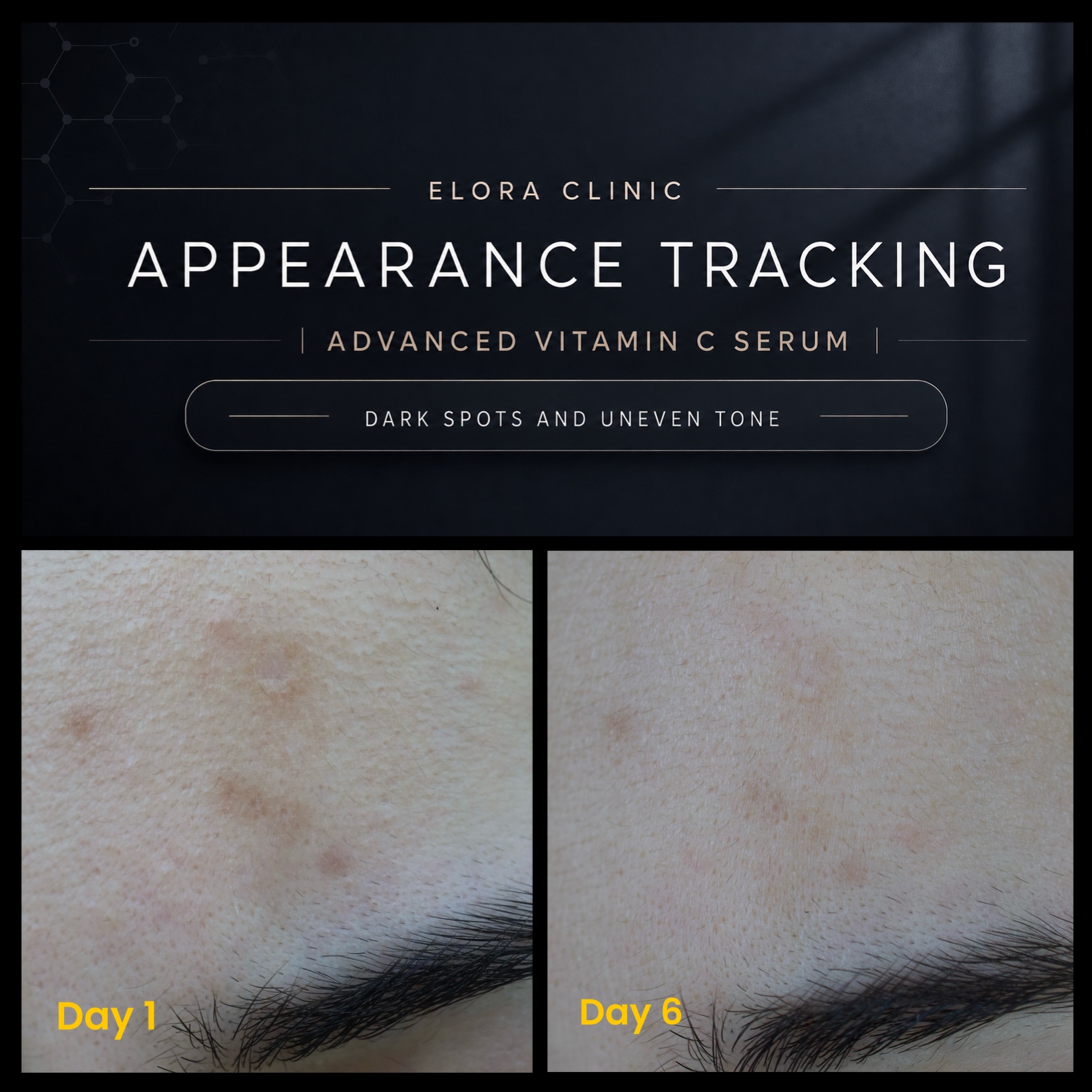
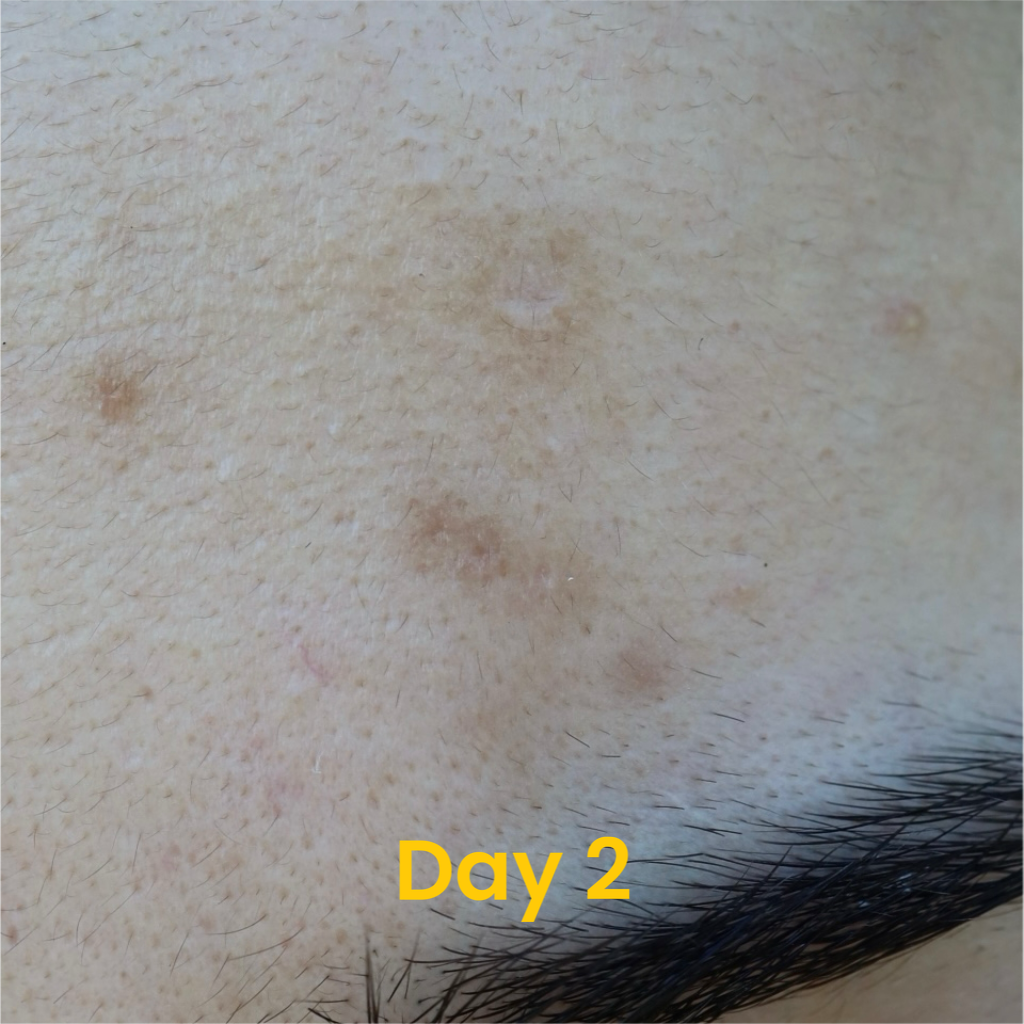
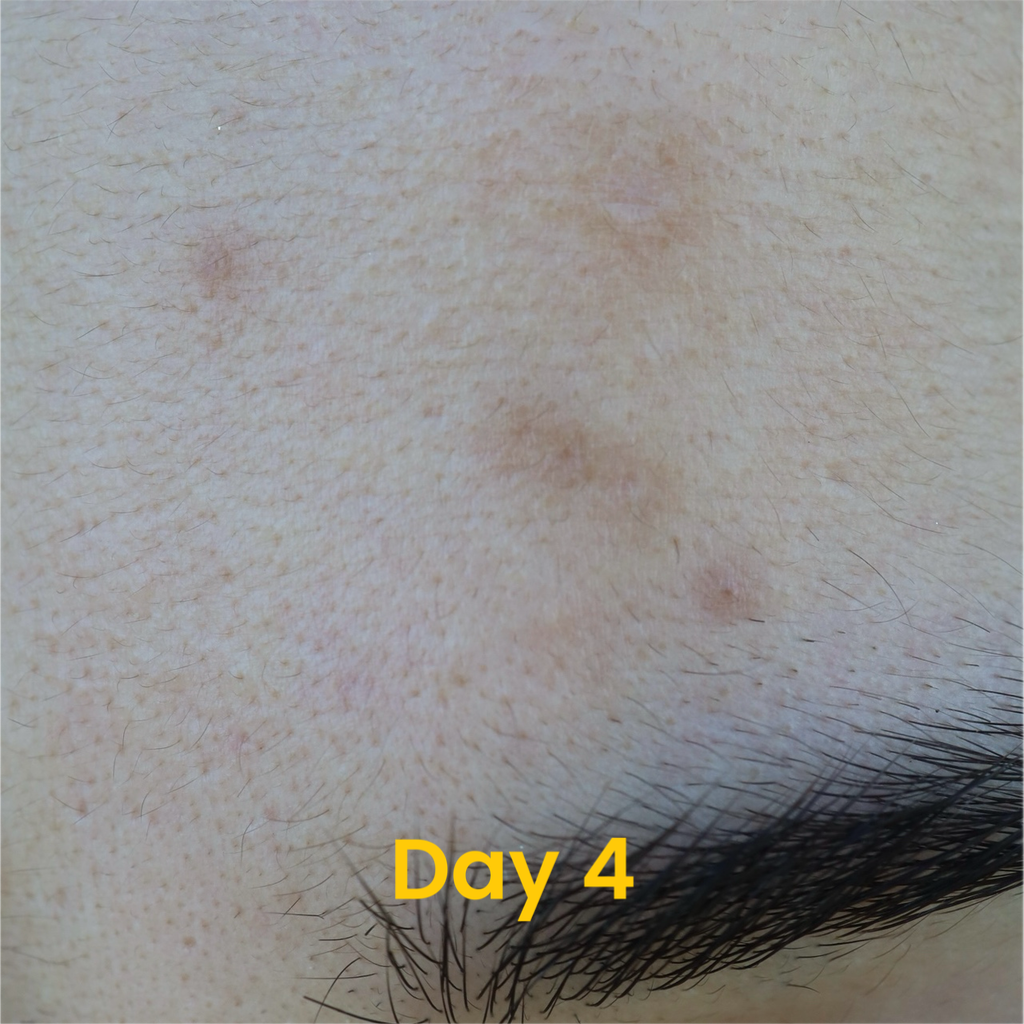
Taking standardized photographs every four weeks under the same lighting can be more useful than checking the mirror every morning.
When to See a Dermatologist
Not every dark spot should be self-treated indefinitely.
Seek professional evaluation when pigmentation is:
- New and rapidly changing
- Irregular in shape or color
- Bleeding, crusting, or symptomatic
- Appearing without an obvious trigger
- Persisting despite a well-designed routine
- Associated with significant melasma
- Accompanied by severe acne or dermatitis
A pigmented lesion should not automatically be assumed to be ordinary hyperpigmentation.

The Best Vitamin C Routine Is the One That Prevents New Damage
Pigmentation skincare often focuses only on fading what already exists.
That is only half the strategy.
The other half is preventing new pigment from being triggered.
That means:
Reduce inflammation.
Protect against UV exposure.
Avoid unnecessary irritation.
Use active ingredients consistently.
Maintain the skin barrier.
A well-formulated vitamin C serum for dark spots fits naturally into that framework because vitamin C contributes antioxidant and pigmentation-related activity without needing to carry the entire routine by itself.
That is the most scientifically realistic way to use it.
How to Choose the Best Vitamin C Serum for Dark Spots
Choosing a vitamin C serum becomes much easier once the marketing language is separated from the formulation science.
A product should not automatically be considered better because it contains 20% vitamin C, uses the phrase “clinical strength,” has an orange color, or combines ten different antioxidants.
For dark spots, the more useful questions are:
Which form of vitamin C is being used?
Can that form remain sufficiently stable in the formulation?
Does the vehicle make sense for the molecule?
Is the product tolerable enough for consistent use?
Does the rest of the routine protect the skin from continued pigment stimulation?
These questions tell considerably more about a serum than the percentage printed on the front of the package.
Vitamin C Serum Selection: A Formulation-Based Comparison
The following table provides a practical framework for evaluating a vitamin C product without assuming that one formulation architecture is universally superior.
| What to Evaluate | What to Look For | Why It Matters for Dark Spots | What Not to Assume |
| Vitamin C form | L-ascorbic acid or a clearly identified derivative | Different forms have different stability, solubility, delivery, and evidence profiles | All forms are biologically identical |
| Concentration | A disclosed percentage when available, interpreted in context | Concentration influences exposure but is only one formulation variable | Higher percentage automatically means better results |
| pH | Appropriate pH for the specific vitamin C system | Especially important for free L-ascorbic acid penetration and stability | Every vitamin C serum must have a very low pH |
| Vehicle | Water-based, emulsion, oil-based, or anhydrous system appropriate to the vitamin C form | Vehicle affects solubility, stability, delivery, texture, and layering | One vehicle is universally superior |
| Stability strategy | Rational ingredient system and appropriate storage/packaging | Degradation can change the formula over time | Vitamin C remains unchanged indefinitely |
| Packaging | Packaging appropriate to the formulation’s sensitivity | Can help reduce unnecessary light and oxygen exposure | Dark packaging alone proves stability |
| Supporting ingredients | Ingredients with defined functions such as humectants or complementary antioxidants | Can support hydration, tolerability, or broader formula design | More antioxidants automatically create greater efficacy |
| Skin tolerance | Minimal persistent burning, redness, peeling, or irritation | Consistency matters and inflammation can worsen PIH | Stinging proves the serum is working |
| Routine compatibility | Fits alongside moisturizer, sunscreen, and other treatments | A serum works within a complete routine | Vitamin C must do everything by itself |
| Claims | Cosmetic claims proportionate to the evidence | Protects against exaggerated expectations | Ingredient research proves the finished serum treats a disease |
This framework is particularly important for pigmentation because dark spots generally require sustained management.
A product that looks powerful on paper but repeatedly irritates the skin may be a worse practical choice than a formulation someone can use consistently.
What Percentage of Vitamin C Is Best for Dark Spots?
There is no universal percentage that is best for every vitamin C form, formulation, and skin type.
This is one of the most important concepts in vitamin C skincare.
For L-ascorbic acid, concentration has been investigated directly in skin-delivery research. Classic experimental work found increasing tissue levels with increasing concentrations up to a point, with saturation occurring around 20% under the conditions studied.
That finding does not establish a universal rule that every consumer should buy a 20% serum.
It also cannot be directly transferred to derivatives.
Consider two hypothetical products:
Product A: 15% L-ascorbic acid
Product B: 15% vitamin C derivative
Those percentages do not necessarily represent equivalent molecular delivery, equivalent active vitamin C exposure, equivalent stability, or equivalent biological activity.
The molecule matters.
Is a 20% Vitamin C Serum Stronger Than a 10% Serum?
Numerically, it contains a greater concentration if the products use the same ingredient and the percentages are reported on the same basis.
Clinically, “stronger” is much harder to define.
A higher concentration could potentially increase exposure.
It could also:
- Increase irritation
- Create formulation challenges
- Be unnecessary beyond a certain point
- Have poor stability
- Reduce adherence because the product becomes uncomfortable
Meanwhile, a lower-concentration product may be more tolerable and used more consistently.
Percentage alone cannot resolve that tradeoff.
Why You Cannot Compare Percentages Across Vitamin C Forms
Imagine comparing 10% L-ascorbic acid with 10% sodium ascorbyl phosphate or another derivative.
The number is the same.
The molecules are not.
They differ in molecular weight, chemical structure, charge behavior, stability, solubility, skin delivery, and potentially the steps required before vitamin C-related biological activity occurs.
This is why percentage-based ranking across chemically different derivatives can be misleading.
It is similar to comparing two completely different ingredients merely because both happen to be present at 5%.
The numerical concentration does not erase the chemical differences.
What Does “Stable Vitamin C” Actually Mean?
“Stable vitamin C” is frequently used as a marketing phrase.
Scientifically, stability needs context.
A finished cosmetic product can be evaluated for:
Chemical stability — whether important ingredients remain within acceptable specifications over time.
Physical stability — whether the product maintains properties such as appearance, homogeneity, viscosity, and phase behavior.
Microbiological stability — whether the preservation system adequately controls microbial contamination in a water-containing product.
Packaging compatibility — whether the formula and container remain compatible during storage.
Environmental stability — how the product responds to conditions such as heat, light, and repeated exposure during use.
Calling an ingredient “stable” does not prove that the finished serum has solved all of these questions.
The complete formula must still work.
Why Vitamin C Serums Change Color
Color change is one of the most discussed issues with vitamin C.
L-ascorbic acid can undergo oxidation and subsequent degradation reactions.
As those reactions progress, a formulation may become increasingly yellow, orange, or brown depending on its composition.
But color should be interpreted carefully.
A pale-yellow serum is not automatically oxidized simply because it is yellow.
Other ingredients may naturally contribute color.
Likewise, a serum that remains visually clear is not automatically chemically perfect.
Color is an observation—not a laboratory assay.
What becomes more concerning is a substantial change from the product’s original appearance, particularly when accompanied by changes in odor, texture, or other characteristics.
Does Brown Vitamin C Serum Still Work?
There is no scientifically responsible universal answer based on color alone.
A dramatically darkened L-ascorbic acid serum may indicate substantial oxidation or other chemical change, but consumers cannot determine the remaining concentration of active ascorbic acid by looking at the bottle.
The better approach is to follow the manufacturer’s:
- Storage instructions
- Period-after-opening guidance
- Expiration information
- Recommendations regarding changes in appearance
If a product changes dramatically from its original condition, contacting the manufacturer is more reliable than trying to diagnose its chemistry visually.
Should Vitamin C Serum Be Clear?
Not necessarily.
A finished serum can have color because of ingredients other than vitamin C.
Plant extracts, antioxidants, oils, polymers, and other formulation materials can influence appearance.
Therefore:
Clear does not automatically mean fresh.
Yellow does not automatically mean oxidized.
Dark packaging does not automatically mean stable.
High concentration does not automatically mean effective.
Vitamin C quality cannot be reduced to a visual checklist.
Why Packaging Matters
Packaging cannot make an unstable formulation magically stable, but it can reduce unnecessary environmental exposure.
For oxidation-sensitive formulas, packaging design may consider:
- Light
- Oxygen
- Repeated opening
- Headspace
- Dispensing mechanism
- Container compatibility
An airless package, pump, opaque container, or appropriately selected bottle may help depending on the formula.
However, packaging decisions must match the actual formulation.
The same package is not required for every vitamin C derivative.
The deeper formulation challenges behind vitamin C—including oxidation, water, pH, ingredient form, and packaging—are explored in the external article The Vitamin C Paradox: Why One of Skincare’s Most Famous Antioxidants Is So Difficult to Formulate.
Is a Water-Based Vitamin C Serum Good?
It can be.
“Water-based” tells you about the vehicle, not whether the product is inherently good or bad.
Water-based systems can provide:
- Lightweight texture
- Easy layering
- Compatibility with many water-soluble ingredients
- Comfortable use beneath moisturizer and sunscreen
At the same time, aqueous formulation creates stability challenges for certain molecules, especially free L-ascorbic acid.
This is one reason derivative selection becomes important.
A vitamin C derivative with properties suitable for an aqueous system can allow formulators to build a water-based serum without relying on the same architecture used for classic acidic L-ascorbic acid.
Is Oil-Based Vitamin C Better?
Not automatically.
Some lipid-soluble vitamin C derivatives can be incorporated into oil-containing or anhydrous systems.
These products may have different sensory properties and stability considerations.
They can be useful for people who prefer richer formulations.
But oil-based does not inherently mean:
- More potent
- More stable
- Better absorbed
- Better for pigmentation
- More effective than a water-based system
Again, the vitamin C form and complete formulation determine the logic.
Does Vitamin C Serum Need to Be Acidic?
If the serum relies on free L-ascorbic acid, an acidic environment is particularly relevant to skin delivery.
If the serum uses a chemically modified derivative, the formulation requirements can be different.
This is why measuring every vitamin C serum against the classic “pH below 3.5” rule is scientifically incorrect.
That rule emerged from research involving L-ascorbic acid.
It is not a universal law governing every vitamin C-containing molecule.
Is Tingling a Sign Vitamin C Is Working?
No.
Tingling can occur with acidic formulations.
It is not a biomarker of efficacy.
A person does not need to feel vitamin C working for biological activity to occur.
Likewise, stronger burning does not mean greater penetration or better pigmentation results.
Persistent burning, redness, or inflammation should be treated as a tolerability problem.
This becomes particularly important when treating PIH because inflammation can contribute to further pigmentation.
Should Vitamin C Serum Sting?
A brief mild sensation may occur with some acidic products, particularly low-pH L-ascorbic acid formulations.
Persistent or intense stinging is different.
Signs that a product may not be well tolerated include:
- Burning that continues after application
- Significant redness
- Swelling
- Itching
- Persistent peeling
- New sensitivity
- Worsening discoloration
Skin does not need to suffer for an active ingredient to be effective.
Fragrance and Vitamin C Serums
Fragrance does not chemically invalidate vitamin C.
The issue is individual tolerability.
Someone with resilient skin may tolerate a fragranced serum without difficulty.
Someone with sensitive, reactive, or dermatitis-prone skin may prefer to minimize unnecessary fragrance exposure.
For a pigmentation-focused routine, preventing irritation is especially useful because inflammation can contribute to PIH.
Fragrance status should therefore be evaluated through the needs of the user rather than turned into a universal rule.
Does Vitamin C Cause Acne?
Vitamin C itself should not automatically be blamed for every breakout that occurs after starting a serum.
A finished serum contains an entire formulation.
Breakouts may be influenced by:
- Vehicle
- Emollients
- Occlusive materials
- Other active ingredients
- Individual sensitivity
- Existing acne
- Simultaneous routine changes
This is why introducing several new products at once makes troubleshooting difficult.
If acne-prone skin develops new lesions after starting a product, simplify the routine and evaluate the complete formulation rather than assuming vitamin C itself is universally comedogenic.
Can Vitamin C Make Dark Spots Worse?
Vitamin C is not expected to intentionally increase pigmentation.
However, a poorly tolerated routine can indirectly work against pigment goals.
For example:
Serum causes significant irritation → inflammation develops → pigmentation-prone skin produces additional PIH.
The problem in that scenario is not that vitamin C biologically “darkened” the skin.
The problem is inflammation.
This reinforces one of the central principles of this guide:
Effective pigmentation skincare must balance activity with tolerability.
Why Sunscreen Determines Whether Your Dark-Spot Routine Makes Sense
Imagine spending months trying to reduce pigment production while repeatedly exposing the same skin to UV radiation without adequate protection.
The routine is fighting itself.
Vitamin C may provide antioxidant support, but sunscreen reduces exposure to one of the major environmental signals driving pigmentation.
That makes sunscreen foundational.
For dark spots, the morning hierarchy is straightforward:
Antioxidant support + moisturization as needed + photoprotection.
Vitamin C and sunscreen are complementary, not interchangeable.
What About Vitamin C and Sunscreen Together?
This combination makes strong biological sense.
Sunscreen works primarily by reducing the amount of harmful ultraviolet radiation reaching the skin.
Vitamin C provides antioxidant activity that can complement environmental protection.
Research has long explored combinations of topical antioxidants and photoprotection because UV-induced oxidative stress is not completely addressed by antioxidant skincare or sunscreen alone.
However, the language still matters.
Vitamin C does not “boost the SPF number” unless that claim has been established for the finished sunscreen formulation through appropriate testing.
Instead, think of the two as different layers of environmental defense.
How Much Vitamin C Serum Should You Apply?

More is not necessarily better.
The objective is to distribute a thin, even layer across the intended treatment area according to the product instructions.
Flooding the face with serum can:
- Waste product
- Increase tackiness
- Interfere with layering
- Increase exposure to potentially irritating components
- Encourage pilling beneath sunscreen or makeup
A well-designed routine should be repeatable.
Consistency beats excess.
Should Vitamin C Go Before or After Moisturizer?
In most routines, a lightweight water-based serum is applied before moisturizer.
A typical order is:
Cleanser → Vitamin C serum → Moisturizer → Sunscreen
This allows the serum to contact clean skin before heavier products are applied.
There are exceptions.
Someone with very sensitive skin may sometimes prefer buffering an active product, depending on its formulation and manufacturer directions.
The correct order is determined by both texture and tolerance.
Can You Use Vitamin C Under Makeup?
Yes, if the formulation layers well.
A lightweight serum can fit comfortably beneath moisturizer, sunscreen, and makeup.
Allowing each layer to settle before applying the next can reduce pilling.
The important point for pigmentation is that makeup should not replace sunscreen unless the makeup product itself provides appropriately tested sun protection and is applied at the amount required to achieve its labeled SPF.
How Often Should Vitamin C Serum Be Used?
Frequency depends on the product and skin tolerance.
Many vitamin C serums are designed for daily use.
Someone new to active skincare or prone to sensitivity may prefer gradual introduction.
For example:
Start several times per week.
Observe tolerance.
Increase frequency if appropriate.
There is no benefit to forcing daily application if the skin becomes chronically irritated.
How Do You Know Whether Vitamin C Is Working?
Dark spots should not be evaluated by memory alone.
Pigmentation changes slowly, and daily visual inspection is unreliable because lighting, hydration, camera exposure, makeup, and even time of day can alter appearance.
A better method is standardized photography.
Take photographs:
- In the same location
- Under similar lighting
- With the same camera
- Without filters
- At similar times of day
- Approximately every four weeks
Look for gradual changes in contrast rather than expecting the mark to vanish suddenly.
The border may become less defined.
The center may appear lighter.
Overall tone may become more uniform.
New pigmentation may occur less frequently if triggers are also being controlled.
These are more realistic indicators of progress.
What Makes a Vitamin C Serum Worth Using Long Term?
The best long-term product is not necessarily the one with the most dramatic first application.
For pigmentation, the stronger criteria are:
Chemical rationale
The vitamin C form makes sense within the formulation.
Stability
The product is designed to maintain acceptable quality during its intended shelf life.
Tolerability
The skin can use it repeatedly without chronic inflammation.
Compatibility
It fits alongside moisturizer, sunscreen, and other necessary treatments.
Usability
The texture encourages regular application.
Realistic claims
The brand distinguishes ingredient evidence from finished-product evidence.
That combination is much more meaningful than chasing the highest percentage.
Where Elora Clinic Vitamin C Serum Fits in This Framework

The Elora Clinic Vitamin C Serum uses a water-based formulation built around 3-Glyceryl Ascorbate rather than positioning itself as a conventional high-percentage, low-pH L-ascorbic acid serum.
Its formulation also includes hyaluronic acid for hydration and glutathione as an additional antioxidant-associated component.
For someone comparing vitamin C products, that distinction matters.
The question is not whether a derivative-based system is universally “better” than L-ascorbic acid.
It is whether that formulation architecture matches what the person wants from the product.
Someone specifically seeking a traditional low-pH L-ascorbic acid serum should evaluate products built around that architecture.
Someone who prefers a lightweight water-based derivative system may evaluate a different category of formula.
Neither decision should be made by percentage alone.
Vitamin C Serum Buying Guide: Quick Decision Table
| If Your Priority Is… | Look For… | Be Careful About… |
| Dark spots after acne | Vitamin C plus a low-irritation routine and daily sunscreen | Over-exfoliation that creates new PIH |
| Sun-associated uneven tone | Antioxidant-focused serum used consistently with photoprotection | Expecting vitamin C to replace sunscreen |
| Sensitive skin | Tolerable formulation; derivative-based systems may be worth considering | Assuming burning means efficacy |
| Traditional L-ascorbic acid | Clearly identified L-ascorbic acid, appropriate formulation and packaging | Oxidation, low-pH irritation, percentage obsession |
| Lightweight texture | Water-based serum architecture | Assuming water-based automatically means unstable |
| Dry skin | Vitamin C plus humectants/moisturizing support | Using a drying active routine without enough moisturization |
| Oily skin | Lightweight, comfortable vehicle | Choosing only by ingredient percentage |
| Acne-prone skin | Well-tolerated complete formulation | Assuming every breakout is caused by vitamin C itself |
| Multiple antioxidants | Ingredients with clearly defined roles | Assuming more antioxidants automatically prove greater efficacy |
| Long-term pigmentation care | Stability, tolerability, sunscreen compatibility, realistic claims | Expecting overnight spot removal |
The Most Important Question Is Not “What Percentage?”
The modern vitamin C market has trained consumers to compare numbers.
But pigmentation biology and formulation chemistry are not that simple.
A scientifically useful evaluation asks:
What molecule is present?

How is it formulated?
How stable is the system?
How well can the skin tolerate it?
Does it fit into a routine that prevents continued pigmentation?
Can the person actually use it consistently for long enough to evaluate results?
Those questions tell far more about the potential usefulness of a vitamin C serum for dark spots than a percentage printed in oversized type on the front of a bottle.
Vitamin C Serum for Dark Spots: Evidence-Based Questions and Answers
Vitamin C is one of the most extensively discussed antioxidants in skincare, but its popularity has also produced a large amount of oversimplified advice.
The most useful way to understand a vitamin C serum for dark spots is to separate what vitamin C can reasonably support from what depends on the cause and depth of pigmentation, formulation quality, photoprotection, skin tolerance, and time.
The following section answers the most important questions directly.
Vitamin C for Dark Spots: Quick Evidence Guide
| Question | Evidence-Based Answer |
| Can vitamin C help dark spots? | Yes. Topical vitamin C has scientific evidence relevant to uneven pigmentation and melanogenesis, although results depend on the formulation, pigmentation type, consistency, and photoprotection. |
| How does vitamin C affect pigmentation? | Vitamin C acts as a reducing antioxidant and can influence oxidation reactions and tyrosinase-related processes involved in melanogenesis. |
| Does vitamin C remove existing melanin instantly? | No. Existing pigmentation fades gradually as pigment production is better controlled and pigmented epidermal cells turn over. |
| Is L-ascorbic acid the same as a vitamin C derivative? | No. Derivatives have modified chemical structures that can alter stability, solubility, formulation requirements, delivery, and conversion to active vitamin C. |
| Is 20% vitamin C always better than 10%? | No. Concentration matters, but vitamin C form, pH, stability, vehicle, delivery, and tolerability also determine how useful a formulation is. |
| Does every vitamin C serum need a low pH? | No. Low pH is particularly important for penetration of free L-ascorbic acid. Vitamin C derivatives can have different formulation requirements. |
| Can vitamin C help post-acne marks? | It can be part of a routine for post-inflammatory hyperpigmentation, but preventing new acne and inflammation is equally important. |
| Can vitamin C help sun spots? | Vitamin C is relevant to UV-associated oxidative stress and pigmentation, but consistent sun protection remains fundamental. |
| Can vitamin C cure melasma? | No. Melasma is a complex, recurrent pigment disorder. Vitamin C may be incorporated into a pigmentation-focused routine but should not be described as a cure. |
| Can vitamin C and niacinamide be used together? | Generally, yes. Their mechanisms differ, and there is no universal modern skincare rule requiring them to be separated. |
| Can vitamin C and glutathione be used together? | They can coexist in a formulation or routine. Both participate in antioxidant-related biology, but their combination does not automatically prove superior clinical efficacy. |
| Can vitamin C and retinol be used together? | They can exist within the same overall routine. Using vitamin C in the morning and a retinoid at night is often a practical way to manage tolerability. |
| Should vitamin C be used morning or night? | Either can be appropriate. Morning use is particularly logical when vitamin C is incorporated into an antioxidant-focused routine followed by sunscreen. |
| Does vitamin C replace sunscreen? | No. Vitamin C provides antioxidant support; sunscreen reduces UV exposure. They perform different functions. |
| How quickly should dark spots fade? | Think in weeks to months rather than days. Timing varies with pigment depth, cause, formulation, inflammation, UV exposure, and consistency. |
| Does tingling mean vitamin C is working? | No. Tingling or burning is not evidence of efficacy. Persistent irritation can be counterproductive, especially for PIH-prone skin. |
| Does yellow vitamin C mean it has oxidized? | Not necessarily. Formula ingredients can naturally affect color. A significant change from the product’s original appearance is more informative than color alone. |
| Is water-based vitamin C effective? | It can be. Effectiveness depends on the vitamin C form and complete formulation rather than water content alone. |
| What matters most when choosing a serum? | Vitamin C form, formulation stability, vehicle, tolerability, appropriate packaging, realistic claims, and whether the product can be used consistently. |
Does Vitamin C Fade Dark Spots Permanently?
“Permanent” is not a particularly useful concept for pigmentation.
A dark mark can become substantially less visible while the skin remains capable of producing new melanin.
If the original trigger returns, pigmentation can return too.
For example, someone may successfully improve post-acne marks but develop new ones if inflammatory acne returns.
Sun-associated pigmentation may improve and later become more noticeable after repeated UV exposure.
Melasma is especially prone to recurrence.
Therefore, long-term pigment management has two objectives:
Improve existing uneven pigmentation.
Reduce the signals that encourage new pigmentation.
Vitamin C can contribute to the first objective and support the broader antioxidant strategy, while sunscreen and control of inflammation are critical to the second.
Does Vitamin C Work on Old Dark Spots?
It may, but older pigmentation should not automatically be expected to disappear quickly.
Age alone does not determine responsiveness.
Depth matters.
Cause matters.
Continued exposure to pigment triggers matters.
A relatively superficial epidermal mark may respond differently from pigmentation with a deeper dermal component.
Long-standing lesions should also not automatically be assumed to be ordinary hyperpigmentation.
A persistent, unusual, changing, or irregular pigmented lesion deserves professional evaluation rather than indefinite experimentation with brightening serums.
Can Vitamin C Remove Dark Spots in One Week?
That is not a realistic universal expectation.
Pigmentation biology does not operate on a seven-day marketing schedule.
A serum can make the skin appear more hydrated or radiant relatively quickly, but that is different from demonstrating substantial reduction in deposited melanin.
Clinical pigmentation research generally evaluates changes over multiple weeks.
When judging a product, standardized photographs taken approximately monthly are much more informative than expecting dramatic daily changes.
Can Vitamin C Prevent New Dark Spots?
Vitamin C may contribute to a routine designed to reduce factors associated with uneven pigmentation, but it cannot guarantee prevention.
New dark spots can result from:
- UV exposure
- Acne
- Irritation
- Hormonal factors
- Skin injury
- Inflammatory conditions
- Individual genetic susceptibility
Preventing new pigmentation therefore requires managing the relevant trigger.
For someone with acne-related PIH, controlling inflammatory acne matters.
For UV-associated pigmentation, photoprotection matters.
For irritation-related PIH, barrier protection and avoidance of repeated inflammation matter.
A serum is one part of that system.
What Happens If You Use Vitamin C Without Sunscreen?
Vitamin C does not suddenly become useless.
But for someone specifically targeting dark spots, skipping sun protection leaves an important pigmentation trigger inadequately addressed.
UV exposure can stimulate melanogenesis and oxidative stress.
Using an antioxidant serum while ignoring repeated UV exposure therefore makes the overall strategy less coherent.
A useful morning sequence is:
Vitamin C → Moisturizer if needed → Broad-spectrum sunscreen
This is not because vitamin C requires sunscreen to “activate.”
It is because the two products address different aspects of environmental skin exposure.
Vitamin C and Sunscreen: Why the Combination Makes Biological Sense
Sunscreen reduces the amount of ultraviolet radiation reaching the skin.
Vitamin C contributes antioxidant activity.

Those are complementary functions.
UV exposure can generate reactive oxygen species within skin. Sunscreen substantially reduces UV exposure, but antioxidant systems provide another layer of biological interest because oxidative reactions are part of the downstream response to environmental stress.
This is why antioxidants are often discussed as complements to photoprotection rather than replacements for it.
Is Vitamin C Good for Every Skin Tone?
Vitamin C is not restricted to a particular skin tone.
Melanogenesis occurs across all human skin.
What differs substantially between individuals is baseline pigmentation, melanogenic responsiveness, propensity for PIH, sensitivity, and the cause of visible discoloration.
For deeper skin tones, avoiding unnecessary inflammation becomes especially important because PIH can be pronounced and persistent.
That means the goal is not a weaker routine.
It is a well-controlled routine.
Effective pigmentation skincare should aim for a more even appearance without attempting to alter someone’s natural, genetically determined skin color.
Brightening Is Not the Same as Bleaching
These terms should not be used interchangeably.
In responsible cosmetic skincare, “brightening” generally refers to improving the appearance of:
- Dullness
- Uneven tone
- Post-inflammatory marks
- Localized discoloration
- Environmentally stressed-looking skin
It should not mean trying to erase someone’s natural skin tone.
Vitamin C is relevant because of its antioxidant and pigmentation-related biology—not because healthy melanin is something that needs to be removed.
Why Antioxidants Cannot Be Ranked by a Simple “Strongest” List
Consumers frequently encounter questions such as:
“Is vitamin C stronger than glutathione?”
“Is vitamin C better than niacinamide?”
“Which antioxidant is strongest?”
These comparisons can be misleading because the ingredients do not necessarily perform identical functions.
Vitamin C participates in redox chemistry, collagen-related biology, and melanogenesis-related processes.
Glutathione plays a major role in cellular redox systems and has its own proposed relationships with melanogenesis.
Niacinamide has barrier-related functions and evidence involving melanosome transfer.
A ranking such as:
Vitamin C > glutathione > niacinamide
would therefore be scientifically meaningless without defining the outcome being measured.
The better question is:
Which biological mechanism am I trying to influence?
Vitamin C, Glutathione, and Niacinamide Compared
| Ingredient | Pigmentation-Relevant Mechanism | Other Major Cosmetic Interest | Evidence Consideration |
| Vitamin C | Redox chemistry and melanogenesis-related activity | Antioxidant and collagen-related biology | Significant historical research, but formulation strongly affects topical performance |
| Glutathione | Redox regulation and proposed melanogenesis-related pathways | Antioxidant biology | Topical human evidence is promising but more limited |
| Niacinamide | Evidence involving reduced melanosome transfer | Barrier support and broader skin-conditioning benefits | Useful clinical and mechanistic evidence |
| Retinoids | Turnover and regulation of pigmentation-related processes | Acne and photoaging | Strong evidence for several uses, but irritation must be controlled |
| Exfoliating acids | Removal of superficial corneocytes and increased turnover | Texture | Useful in selected routines, but overuse can provoke inflammation |
For a deeper examination of glutathione, see glutathione serum for hyperpigmentation.
For niacinamide specifically, see niacinamide serum for dark spots and hyperpigmentation.
Is Vitamin C Better Than Glutathione for Dark Spots?
There is not enough justification for a universal winner.
Vitamin C has a broader historical body of topical dermatologic research.
Glutathione has emerging topical evidence and biologically interesting relationships with pigmentation and redox regulation.
The ingredients can also coexist rather than compete.
What should be avoided is taking evidence generated for one molecule and using it as proof of efficacy for another.
Likewise, research on individual ingredients should not automatically be presented as clinical evidence for a finished serum containing both.
Why Formulation Is the Missing Variable in Most Vitamin C Comparisons
An ingredient can perform beautifully in a biochemical experiment and poorly in an unstable cosmetic formula.
This is one of the central lessons of vitamin C science.
For a molecule to matter in a topical product, several things have to happen:
The ingredient must be incorporated into an appropriate formulation.
It must remain sufficiently stable during the intended product life.
The relevant amount must be delivered to the appropriate location.
The formulation must remain tolerable enough to use consistently.
The user must continue using it long enough for the biological process being targeted.
This chain explains why reading an ingredient list alone cannot predict exact clinical performance.
The formulation challenges are explored further in The Vitamin C Paradox: Why One of Skincare’s Most Famous Antioxidants Is So Difficult to Formulate.
Who Is a Good Candidate for a Vitamin C Serum?
A vitamin C serum may be particularly relevant for someone concerned with:
- Uneven-looking skin tone
- Post-acne dark marks
- Sun-associated discoloration
- Dullness
- Environmental oxidative exposure
- Building an antioxidant-focused morning routine
That does not mean everyone requires vitamin C.

A person with an impaired barrier may need to prioritize restoring tolerability first.
Someone with uncontrolled inflammatory acne may need to address the ongoing source of PIH.
A person with suspicious or unexplained pigmentation needs evaluation rather than a stronger serum.
Good skincare begins with identifying the problem accurately.
Who Should Be More Cautious?
Extra care is sensible for people experiencing:
- Active dermatitis
- Significant barrier damage
- Persistent burning or stinging
- Recent aggressive exfoliation
- Multiple simultaneous active treatments
- Previous reactions to acidic formulations
The correct response is not necessarily to abandon vitamin C permanently.
It may involve choosing a different formulation architecture, reducing frequency, simplifying the surrounding routine, or waiting until the barrier has recovered.
How to Introduce Vitamin C Without Overcomplicating Your Routine
A simple introduction is usually sufficient.
Start with a clean, stable routine.
Add the vitamin C product.
Do not simultaneously introduce a new exfoliant, retinoid, cleanser, toner, and moisturizer.
Use the serum according to its directions.
Observe the skin over time.
If tolerated, maintain consistency.
This makes it much easier to determine what the product is actually doing.
A Practical Dark-Spot Routine
For many users, the routine does not need to be elaborate.
Morning
1. Gentle cleanser
Remove excess oil and residue without aggressively stripping the skin.
2. Vitamin C serum
Apply according to product directions.
3. Moisturizer
Use when needed for hydration and barrier support.
4. Broad-spectrum sunscreen
This is fundamental when pigmentation is a concern.
Evening
1. Gentle cleanser
2. One appropriate treatment step
This could involve niacinamide, a retinoid, or another targeted ingredient depending on the person’s needs and tolerance.
3. Moisturizer
There is no requirement to use every pigmentation ingredient every night.
The Elora Clinic Vitamin C Formulation
The Elora Clinic Vitamin C Serum is a water-based cosmetic serum formulated around 3-Glyceryl Ascorbate rather than a traditional high-concentration, low-pH L-ascorbic acid architecture.
The formula also incorporates hyaluronic acid for hydration and glutathione as an additional antioxidant-associated ingredient.
Those choices give the formula a specific identity.
It is not useful to judge it as though it were attempting to be a conventional 20% L-ascorbic acid serum.
It is a different formulation strategy.
For someone seeking a lightweight water-based vitamin C system that can be integrated into a daily skincare routine, that architecture may be particularly relevant.
Importantly, the product should still be described within appropriate cosmetic boundaries.
Research on vitamin C provides ingredient-level evidence relevant to pigmentation.
Research on glutathione provides separate ingredient-level evidence.
Neither should be transformed into a claim that the finished Elora Clinic serum has been clinically demonstrated to treat melasma, PIH, or another pigmentary disorder unless the finished product itself has undergone the appropriate clinical testing.
That separation between ingredient evidence and finished-product evidence is central to scientifically responsible skincare communication.
Why Elora Clinic Uses a Multi-Function Formulation Approach
A serum does not have to force every ingredient to perform the same job.
Within this formulation:
3-Glyceryl Ascorbate serves as the vitamin C component.
Glutathione contributes to the antioxidant-focused architecture.
Hyaluronic acid supports hydration.
The water-based vehicle provides a lightweight serum format.
This is a more scientifically useful description than claiming that every ingredient “boosts” every other ingredient.
A good formulation can combine materials with complementary purposes without requiring exaggerated synergy claims.
What Results Should You Actually Look For?
Do not judge a vitamin C serum solely by whether one dark spot disappears.
Look at the overall pattern.
Over time, useful cosmetic changes may include:
- Reduced contrast between localized marks and surrounding skin
- More even-looking tone
- Brighter-looking skin
- Improved overall surface appearance
- Fewer new pigmentation marks when triggering factors are also controlled
- Comfortable, consistent use without chronic irritation
Results should be judged over meaningful time periods under consistent conditions.
Pigmentation is a long-game concern.
Why Consistency Usually Beats Aggression
A common skincare mistake is increasing intensity whenever results feel slow.
More exfoliation.
More acids.
Higher concentrations.
More layers.
More frequent application.
Pigmentation biology does not necessarily reward that strategy.
When aggressive treatment produces inflammation, the routine can become self-defeating—especially for people prone to PIH.
A more rational strategy is:
Choose evidence-informed ingredients.
Use formulations the skin tolerates.
Protect against UV exposure.
Control inflammatory triggers.
Stay consistent long enough to evaluate the result.
That approach is less dramatic than constantly changing products.
It is also much closer to how pigmentation biology actually works.
Key Takeaways
Vitamin C is one of skincare’s most scientifically interesting ingredients because it connects several areas of skin biology: antioxidant defense, melanogenesis, environmental oxidative stress, and collagen-related processes.
For dark spots, the evidence supports vitamin C as a legitimate pigmentation-focused cosmetic ingredient—but not as an overnight eraser.
The form of vitamin C matters.
L-ascorbic acid has the deepest historical evidence base but presents substantial challenges involving oxidation, stability, penetration, and low-pH formulation.
Vitamin C derivatives provide alternative formulation strategies, but each derivative has its own chemistry and should not automatically inherit every clinical result generated with L-ascorbic acid.
Concentration matters, but percentage alone cannot determine quality.
Stability matters.
Vehicle matters.
pH matters.
Packaging matters.
Skin delivery matters.
Tolerability matters.
And sunscreen matters enormously.
For post-inflammatory hyperpigmentation, preventing repeated inflammation is particularly important. A powerful routine that repeatedly irritates the skin can work against its own pigmentation goals.
Vitamin C can also coexist with ingredients such as niacinamide, glutathione, hyaluronic acid, and retinoids when the overall routine is appropriately designed.
The objective is not to assemble the largest possible collection of brightening ingredients.
It is to build a routine in which every product has a reason to be there.
About Elora Clinic

Elora Clinic approaches skincare through formulation logic, ingredient compatibility, and practical cosmetic science rather than treating individual ingredients as miracle solutions.
Elora Ellis is the founder of Elora Clinic, a science-driven skincare brand focused on ingredient compatibility, skin barrier health, formulation logic, and practical skincare design.
Readers interested in building a broader evidence-informed skincare routine can explore the Elora Clinic Education Center for additional ingredient and formulation guides.
Final Takeaway
A vitamin C serum for dark spots makes the most scientific sense when it is understood as one part of a complete pigmentation strategy.
Vitamin C can influence processes relevant to melanogenesis and provides meaningful antioxidant activity, but the molecule alone does not determine whether a serum will perform well.
The vitamin C form, formulation, stability, delivery, skin tolerance, pigmentation type, UV exposure, and consistency all matter.
That is why the best question is not:
“What is the strongest vitamin C serum?”
It is:
“Which vitamin C formulation makes scientific sense for my skin, and can I use it consistently while preventing the factors that keep creating pigmentation?”
When that question guides product selection, vitamin C stops being a marketing percentage and becomes what it actually is: a biologically important but formulation-dependent skincare ingredient.