















Bakuchiol Serum for Sensitive Skin: How to Choose a Formula That Supports Skin Without Overwhelming It

Sensitive skin creates a frustrating skincare problem.
You may want the same things everyone else wants:
- Smoother-looking texture
- More even-looking tone
- A healthy-aging routine
- Softer, more hydrated skin
- Fewer visible fine lines
But the products most aggressively marketed for those concerns can also be the products your skin tolerates least comfortably.
Retinoids may cause peeling.
Exfoliating acids may sting.
High-strength treatment routines may leave the face feeling tight, hot, flaky, or reactive.
And eventually, skincare starts feeling like a trade-off:
Do you choose visible results—or comfortable skin?
That is one reason interest in a Bakuchiol Serum for Sensitive Skin has grown.
Bakuchiol is a plant-derived cosmetic ingredient frequently discussed as an alternative approach for people interested in retinol-like skincare goals without necessarily using a retinoid.
But there is an important problem with that description.
Calling bakuchiol a “gentle retinol alternative” can make consumers assume that every bakuchiol serum is automatically gentle.
It isn’t.
A formula can contain bakuchiol and still be irritating because of:
- Fragrance
- Essential oils
- Exfoliating acids
- Other concentrated actives
- A drying vehicle
- Poor product layering
- An already-compromised skin barrier
So when sensitive skin is involved, the important question is not simply:
“Does this serum contain bakuchiol?”
It is:
“How was the entire formula built around bakuchiol?”
That difference matters enormously.

Quick Answer: Is Bakuchiol Good for Sensitive Skin?
Bakuchiol may be a useful option for some people with sensitive skin, particularly those interested in healthy-aging, texture, and tone-focused skincare but who do not comfortably tolerate retinoids.
However, sensitive skin should evaluate the entire finished formula, not bakuchiol alone.
A well-designed Bakuchiol Serum for Sensitive Skin should ideally balance the active ingredient with:
- Hydration
- Emollient support
- Barrier-conscious formulation
- A comfortable concentration
- Minimal unnecessary irritation
For sensitive or dehydration-prone skin, formulas that combine bakuchiol with ingredients such as hyaluronic acid, squalane, jojoba oil, or other compatible emollients may offer a more balanced experience than formulas built primarily around aggressive active stacking.
Sensitive Skin Is Not One Skin Type
This is the first thing most articles get wrong.
“Sensitive skin” is not one uniform condition.
Two people can both describe themselves as sensitive while having completely different problems.
One person may have skin that:
- Stings when products are applied
Another may experience:
- Redness after exfoliation
Another may develop:
- Dryness from retinoids
Another may react specifically to:
- Fragrance
Another may have:
- Rosacea
- Contact dermatitis
- Eczema-prone skin
- A temporarily damaged skin barrier
And another may simply have healthy skin that does not tolerate high concentrations of active ingredients.
That means choosing a bakuchiol serum requires understanding why your skin feels sensitive in the first place.
Reactive Skin vs Sensitive Skin
These terms are often treated as synonyms, but they can describe slightly different experiences.
Sensitive Skin
May consistently react easily to:
- Weather
- Skincare ingredients
- Fragrance
- Strong actives
- Cleansing
Temporarily Reactive Skin
May suddenly become sensitive because of:
- Over-exfoliation
- Retinoid irritation
- Too many active ingredients
- Sun exposure
- Harsh cleansing
- Barrier disruption
This distinction matters.
Someone with chronically sensitive but stable skin may tolerate a thoughtfully designed bakuchiol serum beautifully.
Someone whose face is currently burning from over-exfoliation may need to stop treatment products altogether until the barrier settles.
Bakuchiol being potentially gentler than a retinoid does not mean it should automatically be applied to actively inflamed skin.
If your face suddenly stings or itches after ordinary skincare, start by understanding the barrier problem:
Why Sensitive Skin Often Struggles With Healthy-Aging Routines

Traditional healthy-aging routines frequently rely on ingredients that deliberately change skin behavior.
These may include:
- Retinoids
- Glycolic acid
- Lactic acid
- Strong Vitamin C formulas
- Chemical peels
These ingredients can be highly useful.
But their benefits do not mean every skin type tolerates them equally well.
For someone with reactive skin, a typical routine can become:
Retinol
↓
Dryness
↓
More moisturizer
↓
Exfoliation to remove flakes
↓
More irritation
↓
Barrier damage
That cycle is exactly what many sensitive-skin users are trying to avoid.
Bakuchiol has become interesting because it offers a different formulation path.
What Is Bakuchiol?
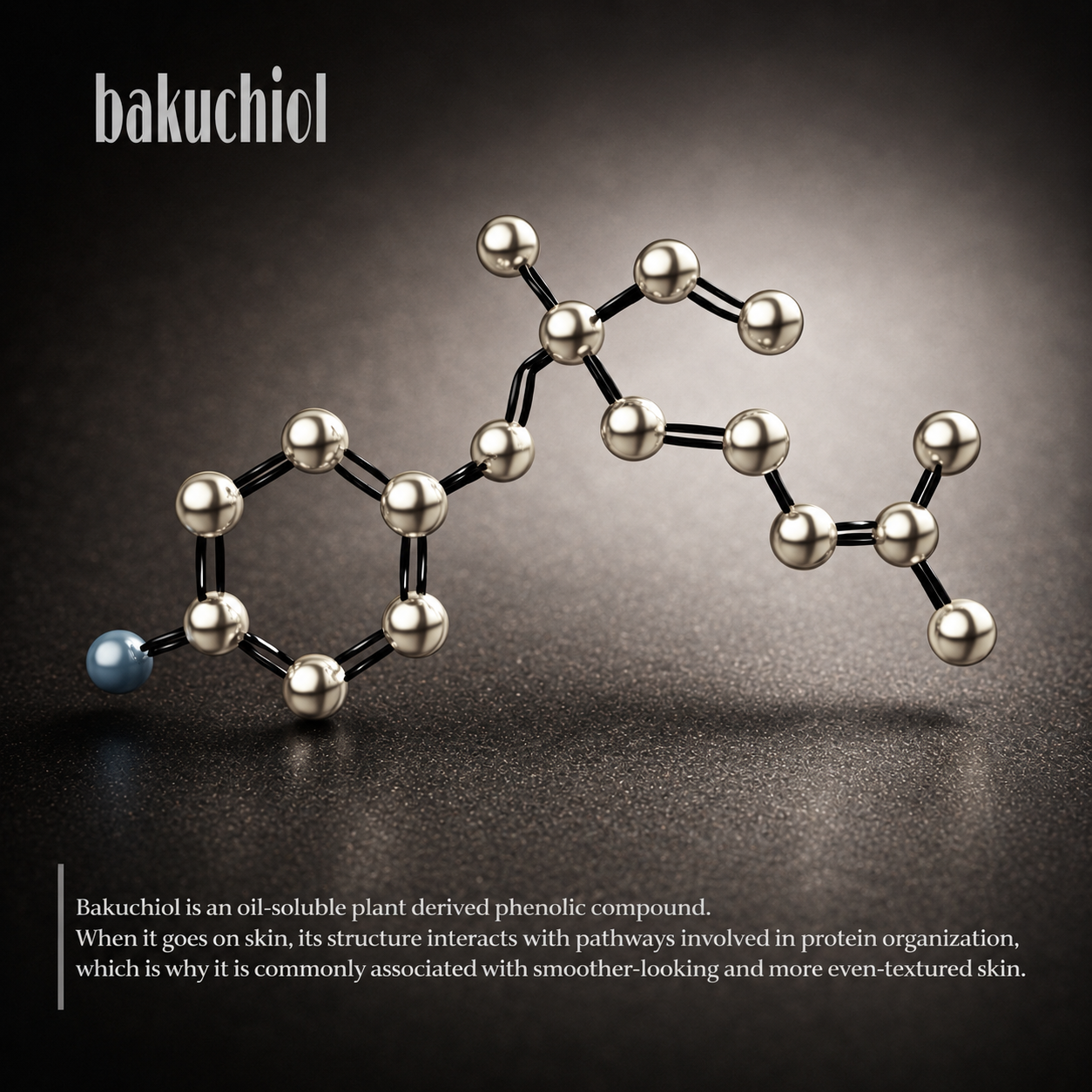
Bakuchiol is a naturally derived meroterpene commonly associated with the seeds and leaves of Psoralea corylifolia, also known botanically as Cullen corylifolium.
It has attracted significant interest in cosmetic dermatology because some research suggests it may influence pathways relevant to:
- Fine lines
- Skin texture
- Pigmentation
- Overall photoaged skin appearance
without being chemically classified as a retinoid.
That final distinction matters.
Bakuchiol is not retinol.
It does not become retinoic acid in the skin.
It does not belong to the retinoid family.
And calling it “natural retinol” is technically inaccurate.
A better description is:
Bakuchiol is a distinct cosmetic active that has demonstrated some overlapping cosmetic outcomes with retinol in research, despite having a different chemical structure.
For the deeper ingredient science:
Bakuchiol vs Retinol for Sensitive Skin
This comparison is probably the reason many people discover bakuchiol in the first place.
Retinol and bakuchiol can appear in routines aimed at similar cosmetic concerns, but they are very different ingredients.
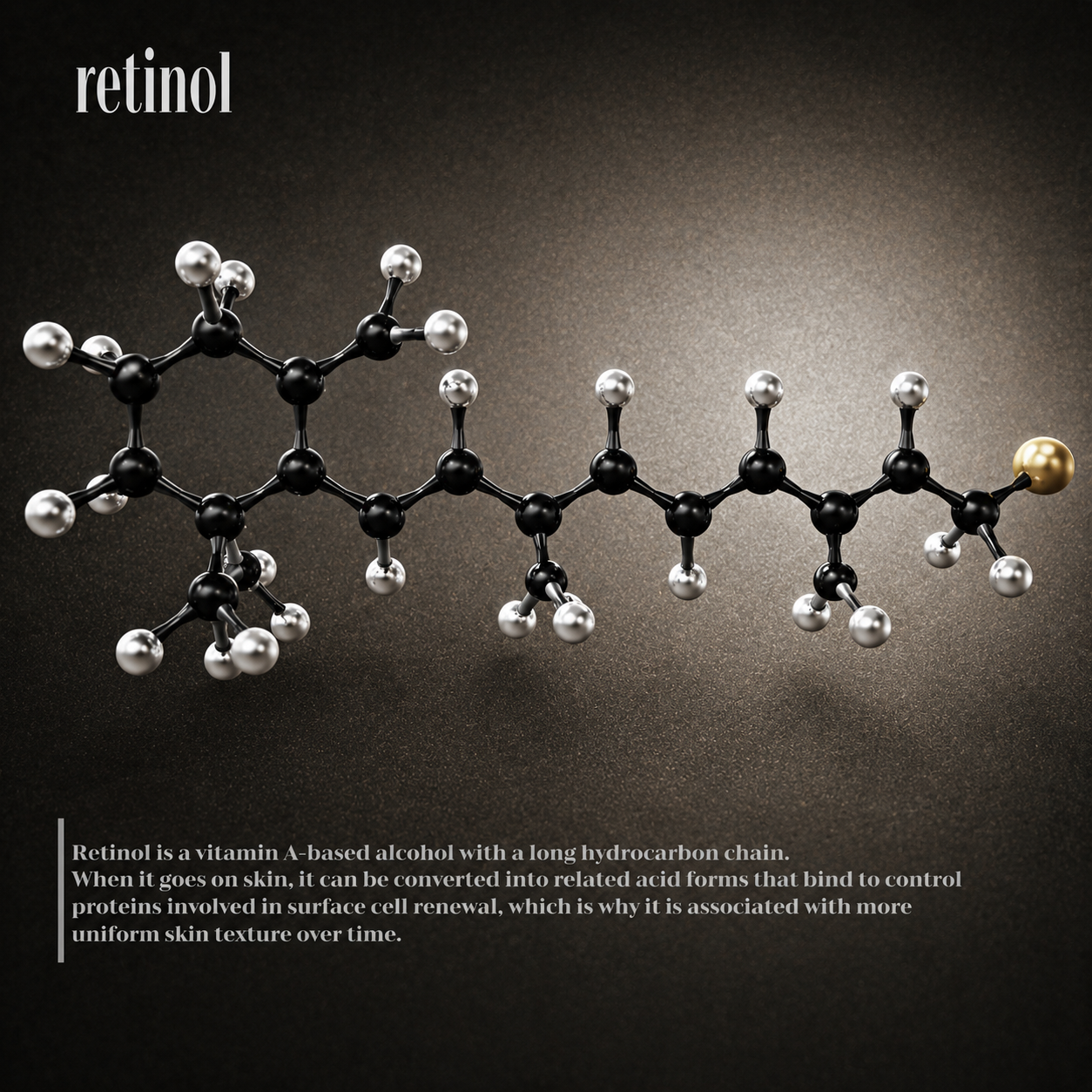
Retinol
Retinol belongs to the retinoid family.
Retinoids are strongly established in dermatology and cosmetic skincare.
Potential drawbacks may include:
- Dryness
- Peeling
- Burning
- Irritation
- Increased sensitivity during adaptation
Bakuchiol
Bakuchiol does not belong to the retinoid family.
Research comparing bakuchiol and retinol has generated interest because bakuchiol may offer some similar visible skin benefits while potentially producing less scaling or stinging in certain users.
That does not mean bakuchiol is universally irritation-free.
It means it offers another formulation strategy.
Full comparison:
Does Bakuchiol Cause a Retinol Purge?
Bakuchiol is not a retinoid and should not automatically be expected to create the classic retinoid adaptation pattern.
This is important for sensitive skin because consumers sometimes assume that any:
- Burning
- Peeling
- Breakouts
- Redness
must mean the ingredient is “working.”
That is a dangerous skincare mindset.
If a new bakuchiol serum repeatedly causes significant discomfort, the appropriate response is not:
“I need to push through the purge.”
Instead, investigate:
- The complete formulation
- How often you are using it
- Other active ingredients
- Whether the skin barrier was already irritated
Comfort matters.

The Formula Around Bakuchiol Matters More for Sensitive Skin
Imagine two bakuchiol products.
Formula A
Contains:
- Bakuchiol
- Strong exfoliating acids
- Fragrance
- Essential oils
- Multiple concentrated actives
Formula B
Contains:
- Bakuchiol
- Hyaluronic acid
- Squalane
- Jojoba oil
- Skin-conditioning oils
Both products technically contain bakuchiol.
But they create very different skincare experiences.
This is why ingredient compatibility matters much more for sensitive skin than simply choosing the right hero ingredient.
Why Hydration Matters in a Bakuchiol Serum for Sensitive Skin
Sensitive skin frequently overlaps with dehydration.
When the outer skin layers lack sufficient water, the face may feel:
- Tight
- Rough
- Less comfortable
- More reactive
- More likely to sting when products are applied
That means a treatment-focused serum can become much easier to integrate when hydration is built into the formulation.
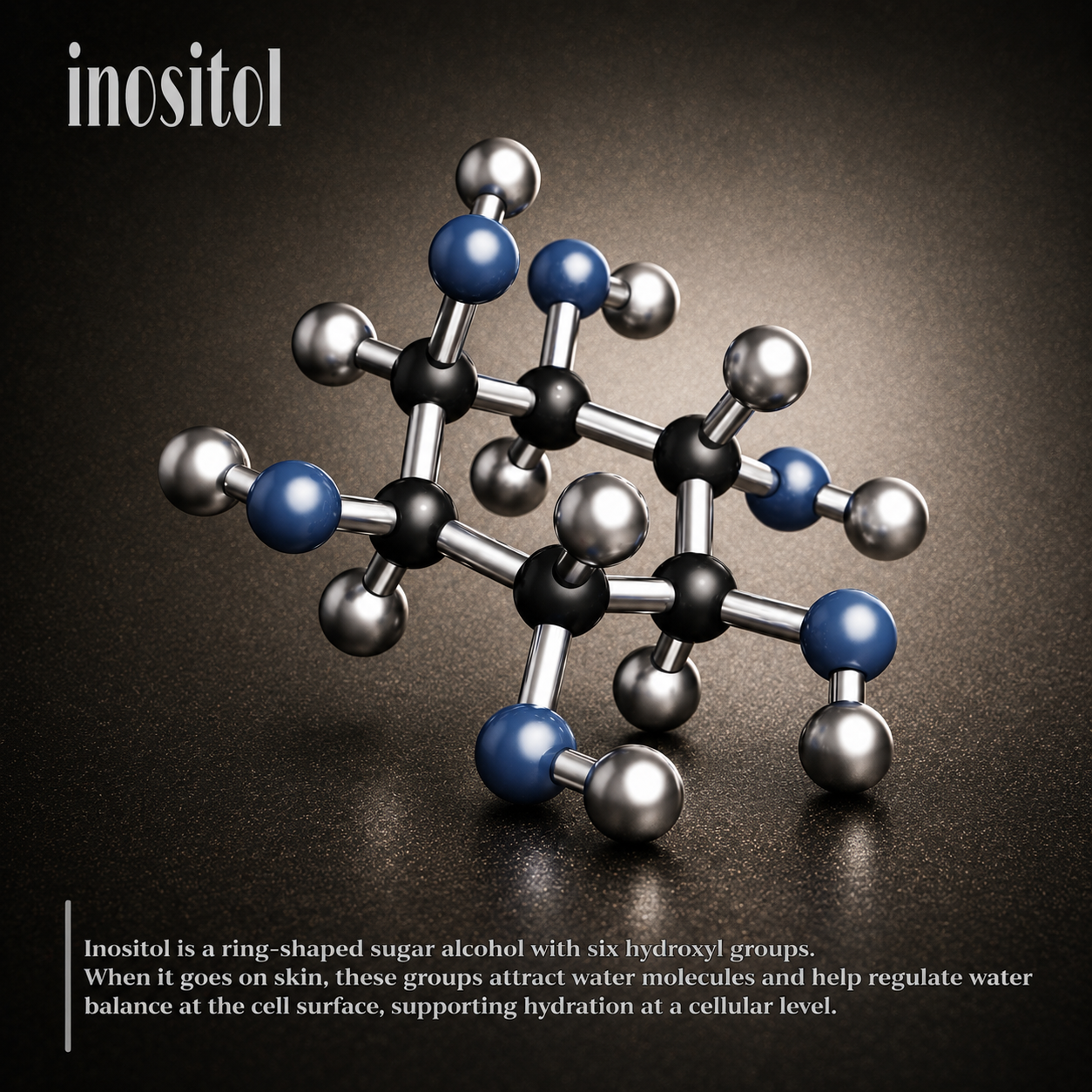
This is where hyaluronic acid becomes useful.
Hyaluronic acid primarily contributes:
- Water-binding hydration
- Temporary plumping
- Improved skin comfort
- Smoother surface appearance
It does not replace bakuchiol.
It supports a different function.
So within a sensitive-skin bakuchiol formula:
Bakuchiol → treatment-focused component
Hyaluronic acid → hydration-focused component
That pairing makes considerably more sense than forcing bakuchiol to do every job.
For dehydrated skin:
Why Oil Can Matter Too
This is where the formulation becomes more interesting.
Sensitive or dry skin often needs more than water-binding hydration.
It may also benefit from emollients.
Emollients help improve:
- Softness
- Flexibility
- Surface smoothness
- Overall skin feel
Common facial oils used in skincare include:
- Squalane
- Jojoba oil
- Sweet almond oil
- Avocado oil
These ingredients perform a different function from hyaluronic acid.
A simplified way to understand it:
Hyaluronic acid helps address water-based hydration.
Emollient oils help address softness and lipid-rich conditioning.
That creates an opportunity for a formula that doesn’t have to choose between the two.
Why a Dual-Phase Bakuchiol Serum Is Different

A dual-phase serum contains distinct water-based and oil-based portions that are mixed before application.
That format can be particularly interesting for a Bakuchiol Serum for Sensitive Skin because it allows a formulation to combine ingredients that naturally belong in different environments.
For example:
Water Phase
Can carry ingredients such as:
- Water
- Aloe vera
- Glycerin
- Hyaluronic acid
Oil Phase
Can carry ingredients such as:
- Bakuchiol
- Squalane
- Jojoba oil
- Sweet almond oil
- Avocado oil
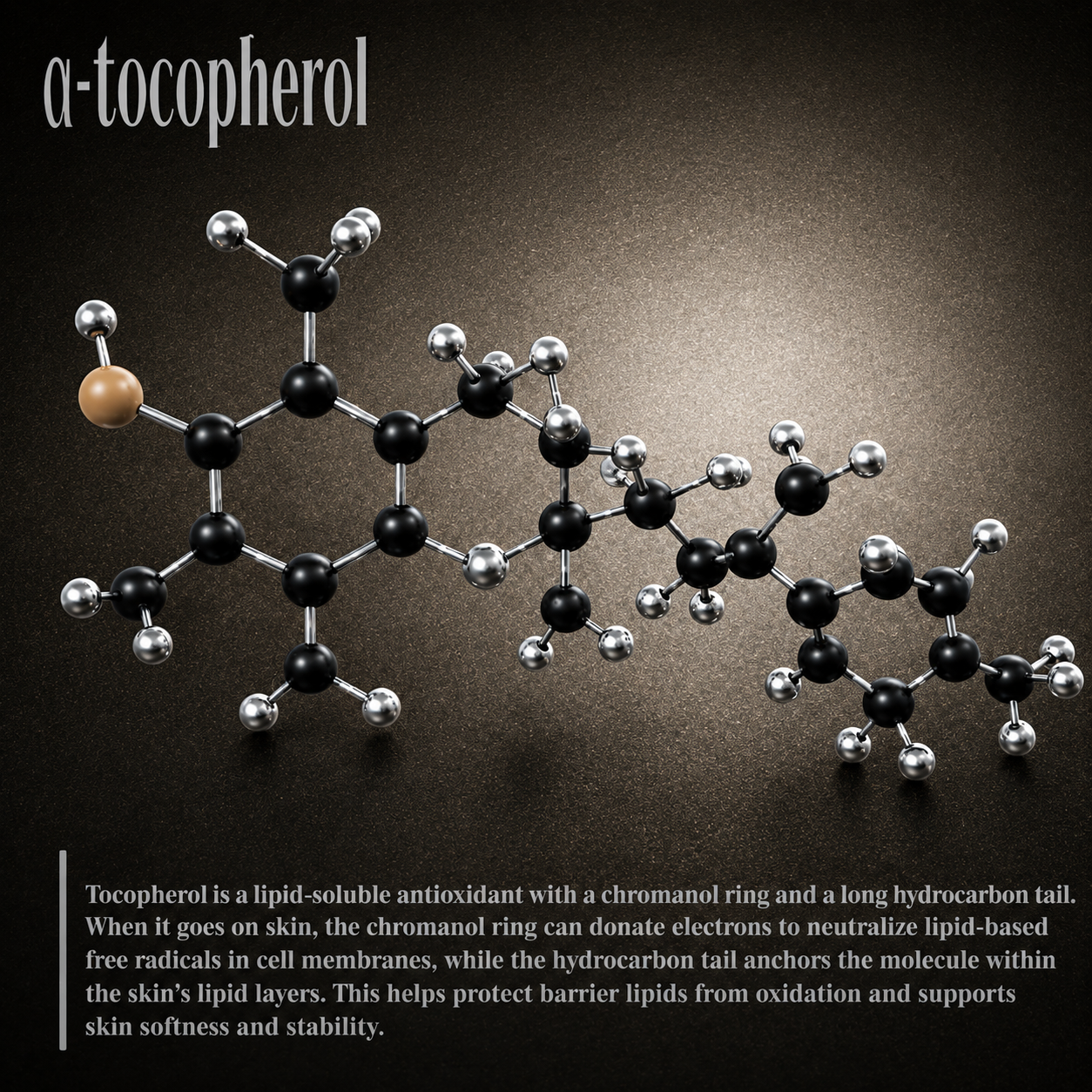
- Tocopherol
Instead of creating a treatment serum that is purely water based or a facial oil that offers no humectant hydration, a dual-phase product can deliver both.
That gives the format a clear rationale:
hydration + emollient support + bakuchiol treatment in one product.
Why This Can Be Useful for Sensitive or Dry-Feeling Skin
Think about someone whose skin reacts poorly to aggressive treatment products.
They may not want:
- An exfoliating toner
- A retinoid serum
- A separate hyaluronic acid serum
- A separate facial oil
- A separate barrier serum
A well-designed dual-phase bakuchiol formula can potentially consolidate several skincare functions.
That can mean:
fewer layers
which also means:
fewer opportunities for pilling, ingredient overlap, and routine complexity.
This does not mean every sensitive skin type needs a dual-phase serum.
But the formulation approach makes sense.
A Closer Look at a Dual-Phase Bakuchiol Formula

One formulation strategy is to combine bakuchiol with both humectant hydration and emollient oils rather than making the serum an aggressive single-active treatment.
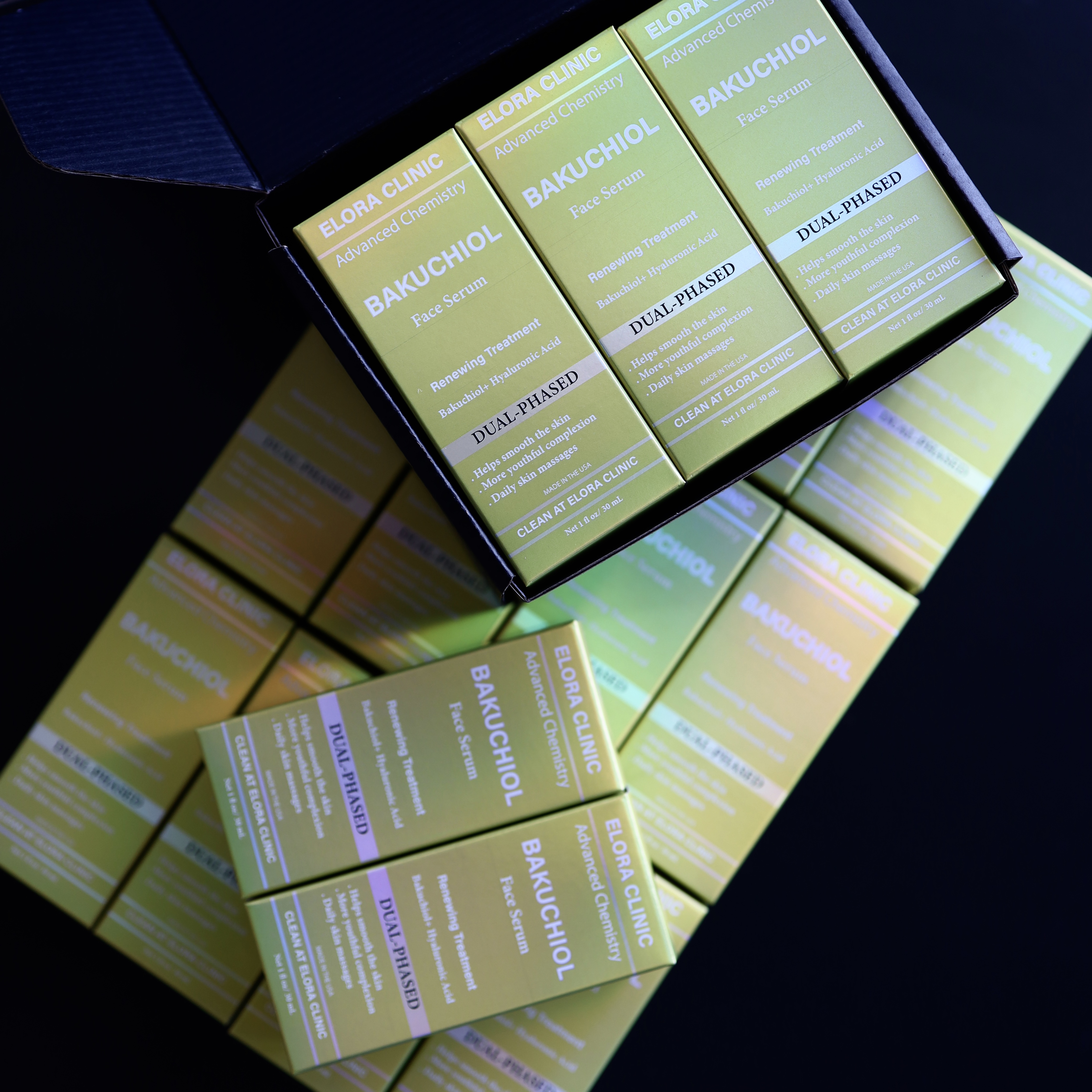
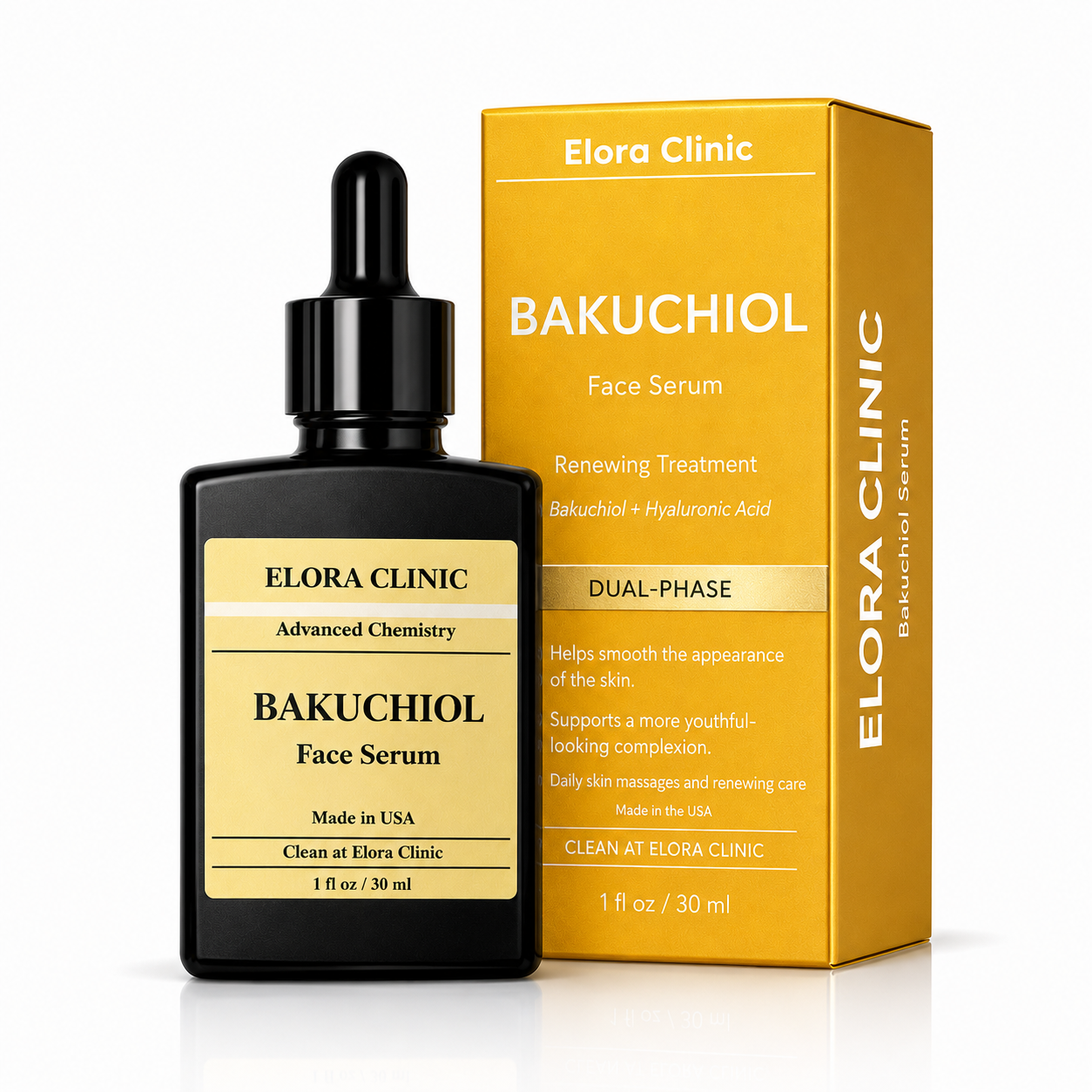
Elora Clinic’s Bakuchiol Face Serum follows this approach.
The formula combines a water phase containing ingredients such as aloe vera, glycerin, and sodium hyaluronate with an oil phase containing squalane, sweet almond oil, avocado oil, jojoba oil, Nigella sativa seed oil, tocopherol, and bakuchiol.
That means the formula is not designed around:
bakuchiol alone.
It is designed around:
bakuchiol + hydration + emollient support.
For someone with sensitive or dehydration-prone skin who is specifically looking for a bakuchiol treatment, that distinction can be important.
Rather than buying:
- A bakuchiol product
- A separate HA serum
- A facial oil
the dual-phase architecture brings those functions together.
For deeper background on bakuchiol oils:
Is Dual-Phase Better Than a Regular Bakuchiol Serum?
Not universally.
Different formulas serve different users.
Lightweight Water-Based Bakuchiol Serum
May appeal more to:
- Very oily skin
- People who dislike oil
- Hot or humid climates
- Minimalist layering routines
Oil-Based Bakuchiol Serum
May appeal more to:
- Dry skin
- People who want emollience
- People who prefer facial oils
Dual-Phase Bakuchiol Serum
May appeal more to someone who wants:
- Hydration
- Emollience
- Bakuchiol
- A more complete treatment step
The best format depends on the skin.
Sensitive Skin Does Not Always Mean Oil-Free
This is another misconception worth clearing up.
People with sensitive skin sometimes avoid all oils because they assume oils are inherently:
- Heavy
- Pore-clogging
- Irritating
That is far too broad.
Different oils behave differently.
For example, squalane is widely used because it provides lightweight emollience and often feels significantly less heavy than traditional plant oils.
Jojoba oil is also widely incorporated into facial formulas because of its favorable skin feel.
That does not mean every person tolerates every oil.
But oil itself is not automatically the enemy of sensitive skin.
Bakuchiol Serum for Sensitive, Oily Skin
This is where formulation balance becomes more important.
If your skin is oily and sensitive, you may want bakuchiol but dislike thick facial oils.
Look for:
- Controlled oil content
- Lightweight emollients
- Hydration
- Good spreadability
- A non-heavy finish
A dual-phase formula can still work for oily skin if the oil phase remains balanced and the product is applied sparingly.
The goal should be conditioning without suffocating the skin in product.
Bakuchiol Serum for Sensitive, Dry Skin

This is arguably one of the strongest use cases for a more nourishing bakuchiol formula.
Dry sensitive skin often struggles with treatment products because it begins with less margin for irritation.
A formula combining:
- Hyaluronic acid
- Glycerin
- Squalane
- Plant oils
- Bakuchiol
can address treatment and comfort simultaneously.
Dry skin may still benefit from moisturizer afterward, especially in low-humidity environments.
But the serum itself is doing more than simply delivering the active.
Bakuchiol Serum for Sensitive, Dehydrated Skin
Dehydrated skin needs water.
This is where a pure bakuchiol facial oil may not solve the entire problem.
An oil can help with emollience and moisture retention.
But it does not provide the same water-based hydration strategy as a formula containing:
- Water
- Glycerin
- Hyaluronic acid
- Aloe vera
A dual-phase product becomes particularly logical here because it contains both water-based and oil-based skincare components.
For hydration science:
Bakuchiol Serum for Sensitive Skin With Dark Spots
Bakuchiol is frequently included in routines targeting uneven-looking tone.
But sensitive skin should be careful about stacking too many pigmentation treatments.
For example:
Bakuchiol
+
Niacinamide
+
Vitamin C
+
Glycolic acid
+
Retinol
may be entirely unnecessary.
If pigmentation is a major concern, a better strategy may be to choose one or two targeted products and maintain consistent sun protection.
If you also use niacinamide:
And if niacinamide irritates your skin:
Should Sensitive Skin Use Bakuchiol Every Day?
Not automatically.
Some bakuchiol products are designed for daily use.
But someone with sensitive skin does not need to begin every new active at maximum frequency.
A smarter introduction can involve:
- Starting less frequently
- Observing the skin
- Increasing use only if comfortable
This is especially helpful when you are introducing a product containing multiple oils or active components.
If your skin remains:
- Comfortable
- Non-itchy
- Non-burning
- Non-flaky
you can adjust frequency according to the product directions.
Morning or Night: When Is Bakuchiol Best for Sensitive Skin?
Bakuchiol is often flexible enough for morning or evening cosmetic routines.
But for sensitive skin, nighttime may be the easiest place to begin.
Why?
Because the routine can remain simple:
- Cleanse
- Bakuchiol serum
- Moisturizer if needed
That makes it easier to evaluate how the product behaves without layering it beneath:
- Sunscreen
- Makeup
- Multiple morning actives
Once you know the formula works for your skin, the routine can be adjusted.
Do You Need Moisturizer After Bakuchiol Serum?
It depends heavily on the serum format and your skin type.
A dual-phase serum already provides:
- Hydration
- Emollient oils
so some users may find that it feels sufficiently nourishing.
Others—particularly those with very dry skin—may still benefit from a moisturizer afterward.
Your skin should determine the answer.
Not a rigid internet routine.
How to Use a Dual-Phase Bakuchiol Serum
Because a dual-phase serum contains separate water and oil layers, the product needs to be mixed before application.
A practical routine is:
Step 1
Gently shake the bottle so the phases temporarily combine.
Step 2
Apply a small amount to clean skin.
Step 3
Spread gently rather than aggressively rubbing.
Step 4
Allow the formula to settle.
Step 5
Apply moisturizer if your skin needs additional moisture retention.
During the day, finish with sunscreen.
The goal is not to saturate the face with oil.
A small amount of a dual-phase formula can spread surprisingly far.
Why Less Can Be Better for Sensitive Skin
Sensitive skin often responds better to controlled exposure than product overload.
Instead of:
Bakuchiol serum
+
Hyaluronic serum
+
Facial oil
+
Barrier serum
+
Moisturizer
a thoughtfully designed multi-phase product may allow you to simplify.
This is an underrated advantage.
Routine simplicity is itself a sensitive-skin strategy.
Fewer products mean:
- Fewer variables
- Fewer potential irritants
- Easier troubleshooting
- Less rubbing
- Less product layering
That can matter just as much as choosing the right hero ingredient.
A Product Should Make Sense Even Without the Marketing Word “Sensitive”

When shopping for a Bakuchiol Serum for Sensitive Skin, ignore the front label for a moment.
Look at the formulation.
Ask:
Does it provide hydration?
Does it include emollient support?
Is it overloaded with exfoliating ingredients?
Is bakuchiol the only useful ingredient in the formula?
Does the texture match my skin type?
Can I realistically use this consistently?
These questions are more valuable than a giant word like:
CALM
or:
SENSITIVE
printed on the bottle.
What Makes Elora Clinic’s Bakuchiol Formula Different
For someone specifically looking for a bakuchiol serum that does not treat the active ingredient as the entire formula, the Elora Clinic approach is worth understanding.
The serum is dual phase, meaning it deliberately combines:
Hydration-focused ingredients
such as:
- Aloe vera
- Glycerin
- Sodium hyaluronate
with:
Lipid/emollient ingredients
such as:
- Squalane
- Sweet almond oil
- Avocado oil
- Jojoba oil
- Nigella sativa seed oil
- Tocopherol
plus:
Bakuchiol
as the treatment-focused ingredient.
The commercial value of this formula is not simply:
“It contains bakuchiol.”
Many products do.
The stronger positioning is:
It is a dual-phase bakuchiol treatment built around both hydration and oil-based conditioning rather than using bakuchiol as an isolated hero ingredient.
That gives us a much more natural reason to recommend it later in the article—especially for people who want a more nourishing alternative to extremely stripped-down active serums.
Where Bakuchiol Fits Compared With a Barrier Serum
A bakuchiol serum and a dedicated barrier-support serum solve different problems.
Bakuchiol Serum
Makes more sense when the goal includes:
- Healthy aging
- Texture
- Uneven-looking tone
- Fine-line appearance
Barrier Support Serum
Makes more sense when the immediate goal is:
- Hydration
- Tightness
- Barrier comfort
- Recovery from irritation
If your skin is currently actively irritated, barrier recovery comes first.
If your skin is stable but sensitive and you want to add a healthy-aging treatment, bakuchiol becomes much more relevant.
For amino-acid-focused barrier support:
Bakuchiol Is Not a Test of Pain Tolerance
This point deserves to be very clear.
A good treatment product does not need to:
- Burn
- Peel
- Sting
- Make the face red
to prove that it is effective.
For sensitive skin especially, tolerability is part of performance.
A theoretically powerful product that you can only use twice before your face becomes irritated is not necessarily more useful than a formula you can integrate consistently for months.
And this is where bakuchiol’s potential becomes most interesting.
Its value for sensitive-skin users is not simply being “weaker than retinol.”
It is offering another path toward a sophisticated healthy-aging routine—one that may place more emphasis on formula balance, hydration, and long-term consistency.

Bakuchiol Serum for Sensitive Skin: Which Sensitive-Skin Type Are You?
“Sensitive skin” sounds like one category, but in practice it can describe very different situations.
That matters because a Bakuchiol Serum for Sensitive Skin may be a great fit for one person and a poor choice for another.
The real question is not:
“Do I have sensitive skin?”
It is:
“What kind of sensitivity am I dealing with?”
That distinction can completely change how bakuchiol should fit into your routine.
Type 1: Retinol-Intolerant Skin
This is probably the most obvious group interested in bakuchiol.
Some people want a healthy-aging routine but struggle with retinoids because they experience:
- Peeling
- Tightness
- Burning
- Persistent dryness
- Increased sensitivity
- Flaking around the mouth or nose
- Discomfort when moisturizer is applied
For this group, bakuchiol becomes interesting because it offers a non-retinoid route to some of the same cosmetic goals.
These may include:
- Smoother-looking texture
- Fine-line-focused skincare
- More even-looking tone
- Overall healthy-aging support
But there is an important mistake to avoid:
Replacing retinol with an equally aggressive bakuchiol routine.
If retinol failed because your skin could not tolerate a high-intensity routine, you probably do not need:
Bakuchiol
- glycolic acid
- high-strength Vitamin C
- exfoliating toner
- another retinoid alternative
The point is to reduce unnecessary irritation—not recreate it under a different ingredient name.
For a deeper comparison:
Type 2: Skin That Is Sensitive Because of Over-Exfoliation
This is different from naturally sensitive skin.
Sometimes the skin becomes sensitive because the routine has become too aggressive.
Common signs include:
- Everything suddenly stings
- Moisturizer burns
- Sunscreen becomes uncomfortable
- Skin feels tight after cleansing
- Flaking appears
- Redness becomes more noticeable
In this situation, the answer is not automatically:
“Switch to bakuchiol.”
The first priority may simply be barrier recovery.
If even normally gentle products sting, pause treatment products and simplify.
A bakuchiol serum can be introduced later—once the skin is comfortable again.
For barrier troubleshooting:
For amino-acid-focused barrier support:
Type 3: Sensitive, Dry Skin
Dry sensitive skin has a different challenge.
The skin may already lack sufficient lipid support and may struggle with:
- Roughness
- Flaking
- Tightness
- Sensitivity to cleansing
- Increased reactivity to strong actives
This is where formula texture becomes particularly important.
A very stripped-down, water-only active serum may not feel sufficient.
A more nourishing formula may make more sense.
For example, a dual-phase bakuchiol serum can combine:
Water-based hydration
with ingredients such as:
- Hyaluronic acid
- Glycerin
- Aloe vera
and:
Oil-based conditioning
with ingredients such as:
- Squalane
- Jojoba oil
- Sweet almond oil
- Avocado oil
plus the bakuchiol itself.
That creates a broader strategy for dry sensitive skin than simply delivering one active ingredient.
Type 4: Sensitive, Dehydrated Skin
Dry and dehydrated are not identical.
Dry skin generally lacks sufficient lipids.
Dehydrated skin lacks sufficient water.
You can have both—but you can also have dehydrated skin that still produces plenty of oil.
Common signs include:
- Tightness
- Dullness
- Fine dehydration lines
- Skin that feels uncomfortable after cleansing
- Oiliness later in the day
A pure facial oil may not solve this entire problem because oil does not replace water-based hydration.
That is why a bakuchiol formula containing hyaluronic acid or glycerin in addition to oils can be more useful for dehydration-prone skin.
For a deeper guide:
Type 5: Sensitive, Oily Skin
Sensitive oily skin is one of the hardest combinations to shop for.
Many products for oily skin are aggressively drying.
Many products for sensitive skin are very rich.
Neither extreme necessarily works.
Someone with oily sensitive skin may need:
- Lightweight hydration
- Moderate emollience
- Minimal unnecessary fragrance
- Fewer active ingredients
- A comfortable finish
A dual-phase bakuchiol serum can still make sense, but application amount matters.
You do not need to flood the skin with oil.
A small amount can provide treatment and conditioning without turning the face into an oil slick.
The exact formula matters far more than the word “oil” alone.
Type 6: Sensitive, Acne-Prone Skin
Acne-prone skin introduces another layer of complexity.
You may want bakuchiol because you are interested in:
- Texture
- Post-acne marks
- Healthy aging
- A gentler treatment routine
But acne-prone skin should still evaluate the entire formula.
Ask:
- Are the oils comfortable for your skin?
- Does the serum feel too occlusive?
- Are you already using acne treatments?
- Is your barrier irritated from benzoyl peroxide or salicylic acid?
- Are you stacking too many actives?
Bakuchiol should not replace established acne treatment if active acne is the main problem.
Its role may be better understood as supportive healthy-aging and texture-focused skincare.
Type 7: Niacinamide-Sensitive Skin
Some people love niacinamide.
Others seem to react every time they use a niacinamide-rich formula.
If you experience:
- Stinging
- Redness
- Tightness
- Small bumps
after high-strength niacinamide products, that does not mean your skin cannot tolerate all active skincare.
It may simply mean niacinamide is not your ingredient.
A bakuchiol serum offers a completely different route.
Instead of using vitamin B3 as the treatment strategy, bakuchiol can occupy the healthy-aging role while hydration and oils support comfort.
If niacinamide repeatedly causes problems:
Type 8: Skin That Reacts to Fragrance or Essential Oils
This is a major consideration for sensitive skin.
A product can contain bakuchiol and still be unsuitable because of everything surrounding it.
If fragrance is a trigger for you, check the ingredient list for:
- Added fragrance
- Essential oils
- Aromatic extracts
The phrase “plant-based” does not automatically mean “sensitive-skin-friendly.”
This is one of the most common misunderstandings in natural skincare.
Botanical ingredients can still trigger irritation or contact allergy in individual users.
Type 9: Rosacea-Prone Skin
Rosacea deserves more caution because it is a dermatologic condition—not simply generic sensitivity.
People with rosacea may experience:
- Persistent redness
- Flushing
- Burning
- Stinging
- Visible blood vessels
- Acne-like bumps
Bakuchiol may be tolerated by some rosacea-prone individuals, but it should not be positioned as a rosacea treatment.
If your skin has diagnosed or suspected rosacea, ingredient introduction should be conservative.
A simple approach is better:
- Stable baseline routine
- Introduce one new product
- Monitor carefully
- Stop if persistent burning or flushing increases
If rosacea symptoms are active, professional dermatologic guidance is more useful than experimenting with multiple treatment serums.
Type 10: Eczema-Prone Skin
Eczema-prone skin also requires additional caution.
A product can be “gentle” in general and still sting on actively eczematous skin.
When the barrier is highly disrupted, even normally comfortable ingredients may feel irritating.
A Bakuchiol Serum for Sensitive Skin should not be treated as an eczema treatment.
If eczema is:
- Actively inflamed
- Cracked
- Weeping
- Intensely itchy
- Infected
cosmetic experimentation should not take priority.
Once the skin is stable, a well-tolerated bakuchiol formula may be considered depending on the individual.
Type 11: Mature Skin That Has Become More Sensitive
Skin does not necessarily remain equally tolerant throughout life.
Over time, people may notice:
- Increased dryness
- Less oil production
- More tightness
- Greater sensitivity to products they previously tolerated
- Stronger reactions to exfoliation
This is one reason a nourishing bakuchiol formula may become particularly appealing.
Instead of trying to force the skin to tolerate the same aggressive retinoid routine forever, a formulation combining:
bakuchiol + hydration + emollients
may provide a more comfortable healthy-aging strategy.
Type 12: Skin That Feels Fine Until You Use Actives
This is another common pattern.
Your basic routine feels great:
Cleanser
Moisturizer
Sunscreen
But every time you add:
- Retinol
- Strong Vitamin C
- Exfoliating acid
- High-strength niacinamide
your skin starts reacting.
This may indicate that your skin’s treatment tolerance threshold is simply lower.
That does not mean your skin is unhealthy.
It means your routine should respect that threshold.
For this type of sensitive skin, a well-formulated bakuchiol serum can be tested as a single treatment step rather than combined with multiple other actives.
Is Bakuchiol Right for Your Sensitive Skin? A Practical Decision Framework

Instead of buying a product based on the word “sensitive,” use this decision sequence.
Question 1: Is Your Skin Currently Burning or Inflamed?
If yes:
Do not start bakuchiol yet.
Stabilize the skin first.
Question 2: Do You Want a Healthy-Aging Active but Cannot Tolerate Retinol?
If yes:
Bakuchiol may be worth considering.
This is one of its clearest use cases.
Question 3: Does Your Skin Also Feel Dry or Dehydrated?
If yes:
Look for a bakuchiol formula that also provides:
- Humectants
- Emollients
- Skin-conditioning ingredients
rather than an extremely bare active formula.
Question 4: Does Your Skin Hate Heavy Oils?
If yes:
Choose a lighter bakuchiol serum or use a dual-phase product sparingly.
Question 5: Does Your Skin Need More Than Just Bakuchiol?
If you have:
- Tightness
- Dehydration
- Dryness
then a formula that combines the active with hydration and conditioning may make more sense.
What a Sensitive-Skin Bakuchiol Formula Should Feel Like
Skincare texture is underrated.
A formula aimed at sensitive skin should ideally feel:
- Comfortable
- Easy to spread
- Non-burning
- Non-stripping
- Not excessively sticky
- Not excessively greasy
The product should integrate into your routine without creating friction.
That sensory experience matters because people are much more likely to use a product consistently when they actually enjoy applying it.
Why Dual-Phase Formulation Can Reduce Routine Complexity

A dual-phase product can potentially eliminate the need for several separate steps.
Instead of:
- Hyaluronic acid serum
- Bakuchiol treatment
- Facial oil
- Moisturizer
a dual-phase serum may provide:
hydration + bakuchiol + emollient oils
within one application.
That does not mean it replaces moisturizer for every person.
But it can significantly reduce product stacking.
For sensitive skin, fewer layers often means fewer opportunities for:
- Pilling
- Irritation
- Ingredient overlap
- Excessive rubbing
The Elora Clinic Dual-Phase Strategy
Elora Clinic’s Bakuchiol Face Serum is built around this multi-function approach.
The formula combines:
Water-based components
including:
- Water
- Aloe vera
- Glycerin
- Sodium hyaluronate
with:
Oil-based components
including:
- Squalane
- Sweet almond oil
- Avocado oil
- Jojoba oil
- Nigella sativa seed oil
- Tocopherol
- Bakuchiol
That architecture creates a different product proposition from a basic one-phase bakuchiol serum.
Instead of saying:
“Here is bakuchiol.”
the formula says:
“Here is bakuchiol within a hydration + emollient system.”
That is especially relevant to users whose primary concern is not simply finding the strongest active, but finding an active they can realistically integrate into a sensitive-skin routine.
Why Squalane Is Particularly Interesting Here
Squalane is a lightweight emollient frequently used in sensitive and dry-skin products because it provides softness without necessarily creating the heavy sensory profile associated with some traditional oils.
Within a dual-phase bakuchiol serum, squalane helps bridge the gap between:
treatment serum
and:
nourishing facial oil
without making the formula entirely oil-based.
Why Jojoba Oil Is Useful in a Sensitive-Skin Formula
Jojoba oil is technically composed largely of wax esters rather than behaving exactly like a conventional triglyceride oil.
It is widely used for:
- Emollience
- Improved spreadability
- Skin conditioning
Again, this does not mean everyone will tolerate it identically.
But it contributes to the overall texture and conditioning profile of a multi-phase serum.
Why Hyaluronic Acid Belongs in the Same Formula
The presence of oils does not make water-based hydration irrelevant.
That is precisely the point of the dual-phase structure.
The hyaluronic-acid component addresses:
- Hydration
- Tightness
- Temporary plumping
while the oil phase addresses:
- Softness
- Emollience
- Conditioning
The formula becomes less dependent on one ingredient category.
Where Bakuchiol Fits if You Already Use Hyaluronic Acid
If you already use a separate hyaluronic acid serum, you may not need both.
A dual-phase bakuchiol serum containing hyaluronic acid may consolidate the routine.
That can be useful if your goal is reducing the number of separate bottles.
But if your existing HA serum works beautifully and your bakuchiol product is simple, there is nothing wrong with continuing that approach either.
There is no universal requirement to simplify every routine.
Where Bakuchiol Fits if You Already Use Niacinamide

You can potentially use both.
But the real question is whether your skin needs both.
Niacinamide may be more useful for:
- Oil balance
- Uneven tone
- Visible pores
Bakuchiol may be more useful for:
- Healthy aging
- Texture
- Fine-line-focused skincare
If your skin is highly sensitive, alternating them may be easier than layering both at once.
For niacinamide-focused pigmentation:
Where Bakuchiol Fits if You Use Red Light Therapy
Bakuchiol and red light therapy can exist in the same broader routine.
But there is no need to assume they must be used simultaneously.
For example:
LED Night
Cleanse
Red light therapy
Hydrating serum
Moisturizer
Bakuchiol Night
Cleanse
Bakuchiol serum
Moisturizer if needed
This keeps each treatment easy to evaluate.
For LED skincare:
What If Your Skin Reacts to Bakuchiol?
Stop and investigate.
Possible reasons may include:
- Bakuchiol itself
- Another botanical ingredient
- An oil in the formula
- Preservative system
- Existing barrier damage
- Too frequent use
- Another treatment in your routine
Do not assume:
“Bakuchiol is supposed to be gentle, so this reaction must be normal.”
Persistent burning or itching is not a goal.
How to Introduce Bakuchiol Without Guessing

A controlled introduction is simple.
First
Keep your existing routine stable.
Then
Introduce the bakuchiol serum as the only new product.
Use It Conservatively
Especially during the first several applications.
Monitor
Watch for:
- Comfort
- Dryness
- Burning
- Redness
- Itching
- Breakouts
Adjust
Increase use only if your skin remains comfortable.
This is much more useful than starting three new products and trying to determine afterward which one caused the reaction.
A More Useful Definition of “Gentle”
In sensitive-skin skincare, “gentle” should not mean:
weak
or:
ineffective.
A better definition is:
a formulation that provides a useful cosmetic function without creating unnecessary irritation for the intended user.
That is a much higher standard.
And it is exactly where a Bakuchiol Serum for Sensitive Skin should compete.
Not on who can create the strongest sensation.
Not on who can pack the most actives into one bottle.
But on who can create the best balance between:
treatment + hydration + comfort + consistency.
What Results Can Sensitive Skin Realistically Expect From Bakuchiol?
The most useful way to evaluate a Bakuchiol Serum for Sensitive Skin is not to ask whether it is “strong.”
Ask whether it can deliver meaningful results without creating enough irritation to derail the routine.
That distinction is especially important for sensitive skin because consistency often matters more than intensity.
A product that causes:
- Burning
- Peeling
- Persistent redness
- Barrier disruption
may be technically active, but if you cannot use it consistently, it may not be the best tool for your skin.
Bakuchiol is interesting because it offers a route toward healthy-aging and texture-focused skincare that may be easier for some sensitive-skin users to maintain over time.
What Can Bakuchiol Help With?
Bakuchiol is most commonly used in routines targeting:
- Fine-line appearance
- Uneven-looking texture
- Uneven tone
- Photoaged-looking skin
- General healthy-aging support
It is not a universal fix for every sensitive-skin concern.
For example, it should not be expected to directly treat:
- Eczema
- Rosacea
- Severe acne
- Allergic contact dermatitis
- Active skin infection
The role of bakuchiol is cosmetic.
That sounds obvious, but it is important because “gentle active” can easily turn into exaggerated medical-style marketing.
How Long Does Bakuchiol Take to Work?

This is one of the most important expectation-setting questions.
Bakuchiol should not be judged after two applications.
Hydrating ingredients in a serum may make the skin feel softer or more comfortable relatively quickly.
But bakuchiol-related changes in:
- Texture
- Fine-line appearance
- Tone
generally require consistent use over a longer period.
Think in weeks, not hours.
And for sensitive skin, slower introduction can actually be an advantage.
You do not need maximum frequency on day one.
What Might You Notice First?
In a dual-phase formula, the first noticeable difference may come from the supporting ingredients, not the bakuchiol.
For example, a formula containing:
- Hyaluronic acid
- Glycerin
- Squalane
- Jojoba oil
- Avocado oil
may quickly change:
- Skin feel
- Softness
- Surface comfort
- Tightness
Those immediate sensory benefits can make the product easier to use consistently while bakuchiol plays the longer-term treatment role.
That is one of the strongest arguments for designing a sensitive-skin treatment around more than one function.
Bakuchiol for Fine Lines on Sensitive Skin
Fine lines are one of the most common reasons people look for bakuchiol.
But there are two different things happening here.
Dehydration Lines
These may temporarily improve when hydration increases.
A formula containing hyaluronic acid and emollients may make them look softer relatively quickly.
Longer-Term Age-Related Lines
These require more realistic expectations.
Bakuchiol may support a healthy-aging routine, but no cosmetic serum erases structural aging overnight.
The surrounding routine still matters:
- Sunscreen
- Hydration
- Consistency
- Avoiding unnecessary irritation
Bakuchiol for Uneven Texture
Sensitive skin often gets trapped in a bad cycle:
Texture feels rough
↓
More exfoliation
↓
More irritation
↓
Barrier gets worse
↓
Texture looks even rougher
Bakuchiol may offer a useful alternative route for someone who wants smoother-looking skin without relying entirely on acids or frequent exfoliation.
That does not mean exfoliation is inherently bad.
It means sensitive skin may benefit from avoiding the assumption that smoother texture always requires stronger exfoliation.
Bakuchiol for Uneven Tone
Bakuchiol is also used in routines aimed at more even-looking skin.
If pigmentation is the main concern, it may be combined strategically with other ingredients rather than stacked aggressively.
For example, a routine may use:
Morning
Niacinamide or another pigmentation-focused product
Moisturizer
Sunscreen
Evening
Bakuchiol serum
Moisturizer if needed
For niacinamide-focused pigmentation:
Bakuchiol and Sensitive Skin With Post-Acne Marks
Post-acne marks can refer to more than one thing.
Flat dark marks are different from:
- Ice-pick scars
- Boxcar scars
- Rolling scars
Bakuchiol may make sense in a routine targeting overall tone and texture, but it should not be marketed as though it reconstructs deep acne scars.
That is an important distinction for credibility.
Can Bakuchiol Help Skin Look Brighter?

Potentially, as part of an overall routine.
“Brightness” is a vague skincare word.
Skin may appear brighter when:
- Hydration improves
- Surface roughness decreases
- Uneven tone improves
- Barrier function is better supported
Bakuchiol can contribute to this type of routine, but the word “brightening” should not be treated as though it means bleaching the skin.
Does Bakuchiol Thin the Skin?
Bakuchiol is not generally discussed as an ingredient that thins the skin.
This concern usually comes from confusion around retinoids.
Even with retinoids, the “skin thinning” myth is often oversimplified.
Bakuchiol belongs to a different chemical category and should not be assumed to produce the same adaptation pattern as retinoids.
Does Bakuchiol Make Skin More Sun Sensitive?
Bakuchiol is not usually discussed as strongly photosensitizing in the way certain exfoliating routines may be.
However, sunscreen remains essential.
If your goal is:
- Healthy aging
- Pigmentation control
- More even tone
then daily UV protection is one of the most important parts of the routine regardless of whether you use bakuchiol, retinol, or neither.
Bakuchiol does not replace sunscreen.
Can You Use Bakuchiol in the Morning?
Potentially, yes.
But for sensitive skin, nighttime use is often the easiest way to begin.
That is not because bakuchiol “only works at night.”
It is because nighttime makes the routine simpler.
You can apply:
- Cleanser
- Bakuchiol serum
- Moisturizer if needed
without worrying about multiple layers under sunscreen and makeup.
Can You Use Bakuchiol Every Night?
Some people may eventually use it nightly if the specific product is designed for that frequency and their skin tolerates it.
But sensitive skin does not need to rush there.
A more conservative schedule may be:
- A few evenings per week
- Then gradually more often if comfortable
The best frequency is the one your skin can maintain without becoming irritated.
What If Bakuchiol Feels Oily?
That depends heavily on the vehicle.
A dual-phase serum naturally contains an oil component.
That is not necessarily a flaw.
For dry or dehydration-prone sensitive skin, the emollient phase may be exactly what makes the formula comfortable.
For very oily skin, use less product.
The answer is not automatically to avoid all oils.
It is to match the amount and texture to the skin.
What If Bakuchiol Feels Too Rich for Oily Sensitive Skin?
Use less.
This sounds simple, but it matters.
A dual-phase formula does not need to be applied in a thick layer.
Start with the smallest amount that spreads comfortably across the face.
If the skin remains greasy for hours, that specific texture may simply not suit you.
Sensitive skin still deserves a pleasant sensory experience.
What If Bakuchiol Feels Too Light for Dry Sensitive Skin?
Then the serum may need to be followed with moisturizer.
Even a nourishing dual-phase formula may not provide enough occlusion for very dry skin.
A useful sequence can be:
Bakuchiol serum → moisturizer
especially in:
- Cold weather
- Low humidity
- Mature skin
- Very dry skin
Can Bakuchiol Be Used Around the Eyes?

This depends on the specific product directions.
The eye area is thinner and more reactive.
Do not assume that because bakuchiol is generally considered gentler than retinol, every facial serum belongs directly on the eyelids.
If the product does not specifically indicate eye-area use, keep a reasonable distance from the lash line.
For eye-specific skincare:
Can You Use Bakuchiol With Hyaluronic Acid?
Yes.
This is actually one of the most logical combinations for sensitive skin.
Bakuchiol contributes the treatment-focused component.
Hyaluronic acid contributes hydration.
The two solve different problems.
This is exactly why combining them within the same serum can be useful.
You do not necessarily need a separate HA serum if the bakuchiol formula already includes sodium hyaluronate or hyaluronic acid.
Can You Use Bakuchiol With Squalane?
Yes.
Squalane is commonly used as a lightweight emollient.
In a bakuchiol formula it can help improve:
- Spreadability
- Softness
- Skin feel
- Conditioning
This pairing makes particular sense in a formula aimed at dry or sensitive skin.
Can You Use Bakuchiol With Jojoba Oil?
Generally, yes.
Jojoba oil is commonly used to provide emollience and improve product feel.
Within a dual-phase bakuchiol serum, it can contribute to the oil phase without necessarily making the product feel as heavy as a very rich balm.
Can You Use Bakuchiol With Aloe Vera?
Yes.
Aloe vera is often used in water-based formulas for hydration and skin conditioning.
This combination is useful from a formulation perspective because:
Aloe vera → lightweight water-based conditioning
while:
Bakuchiol + oils → treatment and emollience
Again, the dual-phase structure allows both to coexist.
For aloe-focused skincare:
Can You Use Bakuchiol With Niacinamide?
Generally, yes.
But sensitive skin should ask whether it needs both in the same application.
Niacinamide may be more useful when your priorities include:
- Oil balance
- Dark spots
- Visible pores
Bakuchiol may be more useful when your priorities include:
- Fine lines
- Texture
- Healthy aging
You could use them at different times of day.
For example:
Morning
Niacinamide serum
Moisturizer
Sunscreen
Evening
Bakuchiol serum
Moisturizer if needed
This keeps the routine cleaner.
Can You Use Bakuchiol With Vitamin C?
Potentially.
But for sensitive skin, combining too many actives in one routine may increase irritation even if the ingredients are not inherently incompatible.
A simple strategy:
Morning
Vitamin C
Moisturizer
Sunscreen
Evening
Bakuchiol serum
This creates functional separation and makes troubleshooting much easier.
Can You Use Bakuchiol With Retinol?
This is where restraint matters.
There is no obvious reason most sensitive-skin users need:
retinol + bakuchiol
at the same time.
If your reason for choosing bakuchiol is that retinol irritates you, stacking the two defeats the point.
Some sophisticated formulas may intentionally combine them, but that is a different product strategy.
For a sensitive-skin routine, choose the treatment that gives you the best balance of results and tolerance.
Can You Use Bakuchiol With Exfoliating Acids?
Potentially, but not necessarily on the same night.
If your skin already becomes sensitive from:
- Glycolic acid
- Lactic acid
- Salicylic acid
you may prefer to alternate.
For example:
Monday
Bakuchiol
Wednesday
Exfoliation
Friday
Bakuchiol
This is just an example—not a mandatory schedule.
The main point is to reduce cumulative irritation.
Bakuchiol and Red Light Therapy
These can exist in the same overall skincare routine, but they do not need to be layered together.
For sensitive skin, separating treatment nights may actually be cleaner.
Example:
LED Night
Cleanse
Red light therapy
Green tea/hydrating serum
Moisturizer
Bakuchiol Night
Cleanse
Bakuchiol serum
Moisturizer if needed
For LED-focused skincare:
Bakuchiol and Caffeine

These ingredients have very different purposes.
Caffeine is more commonly used for:
- Puffiness
- Tired-looking skin
- Antioxidant support
Bakuchiol is more relevant to:
- Texture
- Fine lines
- Healthy aging
- Uneven-looking tone
They can coexist in a routine without needing to be combined into one product.
For caffeine:
What Does “Non-Irritating” Actually Mean?
No skincare brand should promise that a product can never irritate anyone.
Individual biology varies too much.
A better standard is:
Was the formula designed to minimize unnecessary sources of irritation while still delivering a useful treatment?
For a sensitive-skin bakuchiol serum, that means examining:
- The active concentration
- Supporting hydration
- Oil balance
- Fragrance
- Essential oils
- Additional actives
- Texture
- Product directions
This is much more meaningful than a generic “gentle” badge.
Why Formula Architecture Matters More Than Hero Ingredients
A serum is not just a list of ingredients.
It is a system.
Consider the Elora Clinic Bakuchiol Face Serum architecture:
Water phase
- Aqua
- Aloe Barbadensis Leaf Juice
- Glycerin
- Sodium Hyaluronate
Oil phase
- Squalane
- Sweet Almond Oil
- Avocado Oil
- Jojoba Oil
- Nigella Sativa Seed Oil
- Tocopherol
- Bakuchiol
The formulation distributes different functions across the two phases.
That means the product does not rely on bakuchiol alone to create the entire skincare experience.
The water phase addresses hydration.
The oil phase addresses emollience and carries the oil-soluble treatment component.
That is the real advantage of dual-phase formulation.
Why This Makes the Product Easier to Position for Sensitive Skin
The strongest commercial story is not:
“Bakuchiol is gentle, buy this serum.”
That is weak and generic.
A much more meaningful story is:
“If you want bakuchiol but your skin also struggles with dehydration, dryness, or stripped-down active serums, a dual-phase formula gives you treatment plus both water-based hydration and emollient support.”
That explains why the product exists.
And that is far more persuasive than simply claiming it is “better.”
A Smart Way to Compare Bakuchiol Serums
When shopping, compare formulas using four questions.
1. What Is Carrying the Bakuchiol?
Is it:
- A facial oil?
- A water-based emulsion?
- A dual-phase serum?
The vehicle changes the experience.
2. What Supports Hydration?
Look for ingredients such as:
- Glycerin
- Hyaluronic acid
- Aloe vera
3. What Supports Emollience?
Look for ingredients such as:
- Squalane
- Jojoba
- Other compatible oils
4. What Else Is Competing for Attention?
Does the formula contain:
- Acids
- Retinoids
- Strong fragrance
- Multiple additional actives
For sensitive skin, simpler often wins.
When a Dual-Phase Bakuchiol Serum Makes the Most Sense
This format may be particularly useful if you want:
- Bakuchiol
- Hydration
- A nourishing texture
- Fewer separate serum steps
- An alternative to harsh retinoid routines
- A more balanced treatment for dry or dehydration-prone skin
It may be less ideal if you want:
- An ultra-matte finish
- Zero oil
- An extremely minimal water-gel texture
That is fine.
Good skincare is not universal skincare.
A Routine for Retinol-Intolerant Sensitive Skin
Morning
Gentle cleanser
Hydrating serum if needed
Moisturizer
Sunscreen
Evening
Gentle cleanser
Dual-phase bakuchiol serum
Moisturizer if needed
No complicated replacement strategy is necessary.
The point is to create a routine you can actually live with.
A Routine for Dry Sensitive Skin
Morning
Gentle cleanser
Hydrating serum if needed
Moisturizer
Sunscreen
Evening
Gentle cleanser
Dual-phase bakuchiol serum
Richer moisturizer
This emphasizes both treatment and moisture retention.
A Routine for Oily Sensitive Skin
Morning
Gentle cleanser
Lightweight hydration
Sunscreen
Evening
Cleanser
Small amount of bakuchiol serum
Add moisturizer only if needed.
The amount matters more than blindly following someone else’s routine.
A Routine for Sensitive Skin With Dark Spots
Morning
Niacinamide or other well-tolerated pigmentation step
Moisturizer
Sunscreen
Evening
Bakuchiol serum
Moisturizer if needed
If niacinamide irritates you, do not force it.
Read:
A Routine for Sensitive Skin Using Red Light Therapy
LED Nights
Cleanse
Red light therapy according to device instructions
Green tea or hydration-focused serum
Moisturizer
Non-LED Nights
Cleanse
Bakuchiol serum
Moisturizer if needed
This keeps treatment roles separate and easy to troubleshoot.
What If You Want to Buy a Bakuchiol Serum Specifically for Sensitive Skin?

Do not shop only by the front label.
Look for the actual formula strategy.
For someone who wants a nourishing, dual-phase bakuchiol treatment, Elora Clinic’s Bakuchiol Face Serum combines:
- Bakuchiol
- Hyaluronic-acid-based hydration
- Aloe vera
- Glycerin
- Squalane
- Jojoba
- Avocado oil
- Sweet almond oil
- Nigella sativa seed oil
- Tocopherol
The value is the architecture:
water phase + oil phase + treatment active
rather than an isolated bakuchiol ingredient in a bare formula.
For more background:
How to Patch Test a Bakuchiol Serum When Your Skin Is Sensitive
Sensitive skin does not need a complicated introduction protocol.
But it does benefit from not putting an unfamiliar product all over the face immediately.
Patch testing cannot guarantee that you will never react to a product, but it can sometimes identify an obvious problem before full-face application.
A practical approach is to apply a small amount of the product to a limited area of skin and observe for a reaction before expanding use.
The American Academy of Dermatology recommends testing new skincare products on a small test area before incorporating them broadly into a routine.
This is particularly worth considering if you:
- Have reacted to skincare before
- Have highly sensitive skin
- Are introducing bakuchiol for the first time
- Use multiple treatment products
- Are uncertain whether your skin tolerates one of the botanical oils in a formula
A patch test is not a perfect prediction of what will happen with long-term facial use, but it provides more information than immediately covering your entire face.
Your First Week With Bakuchiol Should Be Boring

That is actually a good thing.
When introducing a Bakuchiol Serum for Sensitive Skin, resist the temptation to simultaneously start:
- A new cleanser
- A new exfoliant
- A new Vitamin C serum
- A new moisturizer
- A new retinoid
- A new facial oil
If irritation develops, you will have no idea what caused it.
Instead, keep everything else relatively stable and introduce bakuchiol as the main new variable.
That gives you a much cleaner answer to the question:
“Does my skin actually like this formula?”
A Sensitive-Skin Introduction Schedule
You do not need to follow an exact calendar, but a conservative introduction may look something like this:
First Several Uses
Apply the bakuchiol serum on nonconsecutive evenings.
Watch how your skin feels the following day.
If Skin Remains Comfortable
Gradually increase frequency according to the product directions.
If Mild Dryness Appears
Reduce frequency and evaluate whether additional moisturizer helps.
If Significant Burning, Swelling, Rash, or Persistent Itching Appears
Stop using the product.
Do not increase frequency because you think your skin needs to “adjust.”
What Counts as a Bad Reaction?
This is where sensitive-skin users can get confused.
Not every unusual sensation automatically means allergy.
But neither should every reaction be dismissed as “purging.”
Pay attention to symptoms such as:
- Persistent burning
- Significant itching
- Swelling
- Hives
- Worsening redness
- Rash
- Cracking
- Blistering
- Significant peeling
Those are very different from simply noticing that a new serum has a richer texture than your previous one.
If you develop a significant or persistent skin reaction, discontinue the suspected product and seek appropriate medical evaluation when needed.
What About a Few New Pimples?
This requires more detective work.
A few blemishes after introducing a product do not automatically prove that bakuchiol caused them.
Consider:
- Where did the breakouts appear?
- Are you using more product than necessary?
- Did you introduce anything else?
- Is the formula much richer than your previous routine?
- Are you cleansing adequately at night?
- Are the breakouts persistent?
Sensitive, acne-prone skin should evaluate both irritation and congestion rather than assuming every breakout is a “purge.”
Should You Apply Bakuchiol to Damp or Dry Skin?

This depends on the formulation.
For sensitive skin, applying a treatment to clean, comfortably dry skin can make it easier to keep the routine predictable.
However, hydration-focused ingredients such as glycerin and sodium hyaluronate can still function as part of the finished formulation without requiring you to deliberately leave the face dripping wet.
The bigger issue is following the instructions for the actual product rather than internet rules designed for every serum on Earth.
How Much Bakuchiol Serum Should You Apply?
More product does not mean more results.
This is especially important with a dual-phase formula containing oils.
You need enough to create a thin, even layer—not enough to leave the face saturated.
Using excessive amounts can:
- Make the formula feel unnecessarily greasy
- Increase product buildup
- Complicate layering
- Waste product
- Make it harder to determine whether the texture actually suits your skin
For sensitive skin, controlled application is usually the smarter starting point.
Why You Should Shake a Dual-Phase Bakuchiol Serum
This is not just aesthetic.
In a dual-phase serum, the visible separation reflects different portions of the formulation.
The Elora Clinic Bakuchiol Face Serum, for example, contains a water-based portion alongside an oil-based portion containing bakuchiol and emollient ingredients.
Shaking before application temporarily disperses the phases so the product can be applied as intended.
If you consistently pull product from only one separated phase, you may not be applying the formula in the way it was designed to be used.
The “Buffering” Strategy for Very Sensitive Skin
Some sensitive-skin users prefer putting moisturizer on before a treatment product.
This strategy is frequently discussed with retinoids.
Whether it makes sense with bakuchiol depends on the specific formula.
With a nourishing dual-phase serum, you may not need to buffer it at all because the product already contains hydrating and emollient components.
But if your skin is exceptionally dry, another simple strategy is:
Cleanse → Bakuchiol serum → Moisturizer
rather than surrounding the serum with several additional active products.
The goal is not to create the longest routine possible.
It is to create the most tolerable one.
The Skin-Barrier Check Before You Start
Before introducing bakuchiol, ask yourself five questions:
Does plain moisturizer currently sting?
Does my face burn after washing?
Am I visibly peeling?
Have I recently overused acids or retinoids?
Does my skin feel unusually tight throughout the day?
If several answers are yes, this may not be the best week to introduce another treatment.
Your barrier may need attention first.
This is one reason our guide on L-arginine skincare is relevant to this conversation:
Bakuchiol Serum vs Bakuchiol Oil for Sensitive Skin

This distinction deserves more attention because these products can feel completely different despite sharing the same hero ingredient.
Bakuchiol Oil
Typically places bakuchiol within an oil-based vehicle.
It may be attractive for:
- Dry skin
- People who enjoy facial oils
- Minimalist oil-based routines
But it may provide little or no water-based hydration depending on the formulation.
Bakuchiol Serum
The word “serum” covers many different formats.
A serum might be:
- Water based
- Emulsion based
- Anhydrous
- Dual phase
That means you cannot determine how a bakuchiol serum behaves from the word serum alone.
For a full explanation of the ingredient in oil-based products:
Bakuchiol Oil vs Dual-Phase Bakuchiol Serum
For sensitive skin, this is a more useful comparison.
A traditional oil-based product primarily gives you the advantages of its oil phase.
A dual-phase formula can provide both:
Water-phase benefits
and
Oil-phase benefits.
That becomes particularly relevant for someone whose skin is simultaneously:
dry + dehydrated
or:
sensitive + tight-feeling
because those concerns may benefit from more than one type of formulation support.
The Water Phase Has a Job
Consider a water phase containing:
- Aqua
- Aloe Barbadensis Leaf Juice
- Glycerin
- Sodium Hyaluronate
These ingredients contribute primarily to hydration and skin conditioning.
Glycerin and sodium hyaluronate function differently from facial oils.
They are not there simply to make the ingredient list longer.
They create a humectant-focused side of the formula.
The Oil Phase Has a Different Job
Now consider:
- Squalane
- Sweet almond oil
- Avocado oil
- Jojoba oil
- Nigella sativa seed oil
- Tocopherol
- Bakuchiol
This portion of the formula provides:
- Emollience
- Skin conditioning
- Oil-soluble ingredient delivery
- A richer sensory profile
This is why dual-phase formulation can be especially interesting for sensitive skin.
The product does not ask one ingredient to accomplish everything.
Bakuchiol Serum vs Retinol Serum When Irritation Is the Deciding Factor
Suppose two products target similar cosmetic goals.
One provides excellent results but causes you to peel so badly that you stop using it every two weeks.
The other produces gradual results but remains comfortable enough for consistent use.
For your skin, the second product may ultimately be more useful.
This is where bakuchiol has earned much of its attention.
A randomized, double-blind study published in the British Journal of Dermatology compared topical bakuchiol with retinol over 12 weeks. Both groups showed improvement in measured photoaging outcomes, while participants using retinol reported more scaling and stinging.
https://pubmed.ncbi.nlm.nih.gov/29947134
That study does not prove that bakuchiol and retinol are identical.
It does provide a legitimate scientific reason for investigating bakuchiol as an option when tolerability matters.
What the Bakuchiol vs Retinol Study Actually Tells Us
This is where skincare articles often go too far.
The study does not mean:
Bakuchiol is literally natural retinol.
It does not mean:
Bakuchiol works exactly like prescription tretinoin.
And it does not establish:
Bakuchiol can never cause irritation.
What it supports is more interesting:
Bakuchiol produced improvements in certain photoaging measures in the study while being associated with less scaling and stinging than the retinol treatment.
For a sensitive-skin consumer, that is a much more credible reason to investigate the ingredient.
Read our full comparison:
Sensitive Skin Should Care About Evidence AND Tolerability

Skincare discussions sometimes create a false choice.
Either:
“Only use the strongest ingredient with the largest evidence base.”
or:
“Natural ingredients are always better.”
Neither approach is particularly intelligent.
A useful treatment needs to satisfy several conditions:
Evidence
Does the ingredient have a reasonable scientific basis?
Formulation
Is the ingredient delivered within a sensible product?
Tolerance
Can this person actually use it?
Consistency
Will they continue using it long enough to evaluate results?
Routine Fit
Does it work alongside the rest of their skincare?
Bakuchiol becomes interesting when these questions are considered together.
When Retinol May Still Be the Better Choice
Bakuchiol does not need to “defeat” retinol to be valuable.
Retinoids have an extensive dermatologic history and remain important ingredients.
Someone who:
- Tolerates retinol beautifully
- Gets excellent results
- Has no meaningful irritation
does not necessarily need to replace it.
Bakuchiol becomes particularly compelling when someone says:
“I want a healthy-aging treatment, but my skin and retinol do not get along.”
That is a much more precise use case.
When Bakuchiol May Be the More Practical Choice
Consider bakuchiol if your priorities include:
- A non-retinoid healthy-aging routine
- Improved appearance of texture
- Fine-line-focused skincare
- More even-looking tone
- A formula you can potentially use more comfortably
It becomes even more relevant when the finished product also addresses:
- Dehydration
- Dryness
- Skin conditioning
because sensitive skin rarely exists in isolation.
What About “Natural Retinol Alternative”?
This phrase is everywhere.
It is convenient.
But scientifically, it is sloppy.
Bakuchiol is not a form of retinol.
A more accurate way to explain it is:
Bakuchiol is a plant-derived cosmetic active with a chemical structure distinct from retinoids that has demonstrated some overlapping cosmetic outcomes with retinol in clinical research.
That sentence is less flashy.
It is also considerably more useful.
Can Sensitive Skin Use Bakuchiol Long Term?
If the formula remains well tolerated, bakuchiol is generally used as part of an ongoing cosmetic skincare routine rather than as a seven-day treatment.
Healthy-aging skincare is fundamentally long-term.
You do not use sunscreen for three weeks and declare sun protection complete.
Likewise, ingredients aimed at maintaining:
- Texture
- Tone
- Fine-line appearance
are generally incorporated consistently.
If your skin begins reacting later, however, reassess the routine instead of assuming that a product tolerated six months ago can never become problematic.
Should You Take Breaks From Bakuchiol?
There is no universal requirement to “cycle” bakuchiol.
You may reduce or stop use because:
- Your skin becomes irritated
- The weather changes
- You introduce another treatment
- Your routine changes
- You simply no longer need the product
But routine cycling for the sake of preventing the skin from “getting used to” bakuchiol is not an established requirement.
Can You Use Bakuchiol During a Minimalist Skin Reset?

This depends on what you mean by reset.
If your skin is actively irritated, a reset should probably be genuinely minimal.
That may mean:
Gentle cleanser + moisturizer + sunscreen
rather than:
Gentle cleanser + six supposedly gentle actives.
Once the skin feels stable, bakuchiol can be reintroduced gradually.
Sensitive-skin minimalism only works if it is actually minimal.
Why “Fragrance-Free” Alone Does Not Make a Bakuchiol Serum Sensitive-Skin Friendly
Fragrance is only one variable.
When comparing formulas, also consider:
- Active concentration
- Essential oils
- Exfoliating acids
- Alcohol content
- Botanical complexity
- Number of additional treatment ingredients
- Overall vehicle
- Your personal allergens
A fragrance-free formula can still irritate you.
A formula containing botanical ingredients can still irritate you.
A product marketed for sensitive skin can still irritate you.
The label cannot predict your individual biology.
Plant-Derived Does Not Mean Hypoallergenic
Bakuchiol’s botanical origin sometimes creates an assumption that it must be inherently safer for reactive skin.
That logic does not hold.
Poison ivy is natural too. Nature has never signed a contract promising to be hypoallergenic.
Plant-derived ingredients can contain compounds capable of triggering individual reactions.
Bakuchiol’s appeal should therefore come from its properties and evidence, not simply from the fact that it originated from a plant.
What About the Other Botanical Oils in a Bakuchiol Serum?
This matters with a multi-oil formula.
The Elora Clinic dual-phase formula includes:
- Sweet almond oil
- Avocado oil
- Jojoba oil
- Nigella sativa seed oil
These contribute different sensory and emollient properties.
But sensitive skin should never interpret a long list of nourishing oils as a guarantee of universal tolerance.
If you know you react to a particular botanical ingredient, avoid it regardless of how beneficial it may be for someone else.
That is another reason patch testing is useful.
Can Sensitive Skin Use Bakuchiol With a Barrier Serum?
Potentially, yes.
This combination can actually make conceptual sense.
The roles are different:
Bakuchiol serum → healthy-aging/texture-focused treatment
Barrier serum → hydration and barrier-focused support
You can also separate them:
Morning
Barrier-support serum
Moisturizer
Sunscreen
Evening
Bakuchiol serum
Moisturizer if needed
For barrier-focused ingredient education:
What If You Already Use Hyaluronic Acid?
Check the bakuchiol formula before automatically layering another HA product.
If your bakuchiol serum already contains sodium hyaluronate, additional hyaluronic acid may be redundant.
More humectant is not automatically more hydration.
Your routine should solve problems, not collect ingredients.
What If You Already Use Facial Oil?
The same logic applies.
If your dual-phase bakuchiol serum already contains:
- Squalane
- Jojoba
- Avocado oil
- Sweet almond oil
- Nigella sativa oil
you may not need another facial oil over it.
That can be particularly useful for sensitive skin because it reduces unnecessary product layering.
What If You Already Use Both Hyaluronic Acid and Facial Oil?
This is precisely where a dual-phase product can simplify the routine.
Instead of:
HA serum → bakuchiol serum → facial oil
you may be able to use:
dual-phase bakuchiol serum
followed by moisturizer only when needed.
This creates a very clear reason for choosing a dual-phase formula that has nothing to do with hype.
It is functional consolidation.
What to Look for on a Bakuchiol Serum Ingredient List

When evaluating a Bakuchiol Serum for Sensitive Skin, divide the formula mentally into functions.
Treatment
Where is the bakuchiol?
Hydration
Are there ingredients such as:
- Glycerin
- Sodium hyaluronate
- Aloe
Emollience
Are there ingredients such as:
- Squalane
- Jojoba
- Other oils
Additional Actives
Are there acids, retinoids, or other potentially irritating treatments?
Sensory Ingredients
Is there fragrance or essential oil?
This method tells you far more than counting how many trendy ingredients appear on the label.
The Question to Ask Before Buying
Not:
“Is this the strongest bakuchiol serum?”
Not:
“Does TikTok like it?”
Not even:
“Does it say sensitive skin on the package?”
Ask:
“Does the architecture of this formula match what my skin actually needs?”
If your skin is sensitive and dehydrated, a bare oil may not address everything.
If your skin is sensitive and very oily, an extremely rich oil may be unnecessary.
If your skin is sensitive and dry, a formula with both hydration and emollience may make considerably more sense.
That is how skincare becomes personalized without becoming complicated.
Bakuchiol Serum for Sensitive Skin After 30, 40, 50 and Beyond
Sensitive skin does not stay exactly the same throughout life.
A routine that felt effortless at 25 may suddenly feel too aggressive years later. Skin can become:
- Drier
- Less comfortable after cleansing
- More reactive to strong actives
- More affected by environmental conditions
- Less tolerant of frequent exfoliation
At the same time, concerns about:
- Fine lines
- Texture
- Uneven tone
- Loss of softness
- Photoaging
may become more important.
That creates an interesting problem.
You may want more sophisticated skincare at exactly the point when your skin wants less aggression.
This is one of the situations where bakuchiol becomes especially relevant.
Rather than thinking of it merely as an ingredient for people who “cannot handle retinol,” it can be viewed as part of a broader strategy:
How can you build a long-term healthy-aging routine without making irritation the price of admission?
Bakuchiol Serum for Sensitive Skin in Your 30s
There is no biological rule saying everyone needs to begin an anti-aging serum at 30.
But this is often when people become more interested in:
- Early fine lines
- Sun-related changes
- Uneven tone
- Texture
- Preventive skincare
For sensitive skin, the temptation is often to suddenly introduce everything:
Retinol.
Vitamin C.
Acids.
Peptides.
Eye cream.
Exfoliating toner.
That can turn a previously healthy routine into an irritation experiment.
A simpler approach may be more sustainable:
Morning
Gentle cleansing as needed
Hydration if needed
Moisturizer
Broad-spectrum sunscreen
Evening
Cleanser
Bakuchiol serum
Moisturizer if needed
You can build complexity later if there is an actual reason to.
Bakuchiol Serum for Sensitive Skin in Your 40s
By the 40s, some people begin noticing more pronounced changes in:
- Fine lines
- Elasticity
- Dryness
- Pigmentation
- Surface texture
Sensitive skin may also become less forgiving of products that previously caused only minor irritation.
This makes formula architecture increasingly important.
A treatment containing bakuchiol alongside both humectants and emollients can make sense because the formula is not exclusively chasing visible aging.
It is simultaneously addressing skin feel and hydration.
That is where a dual-phase formula can become particularly useful.
Bakuchiol Serum for Sensitive Skin Over 50
For mature, sensitive skin, richness is not automatically a disadvantage.
Skin may increasingly appreciate ingredients that provide:
- Hydration
- Emollience
- Softness
- Comfortable occlusion from subsequent moisturizer
A dual-phase bakuchiol product may therefore be particularly appealing compared with an extremely lightweight treatment serum.
But again, the goal is not to drown mature skin in oil.
The goal is balance.
If a serum already supplies:
- Glycerin
- Sodium hyaluronate
- Squalane
- Jojoba oil
- Other emollients
then the moisturizer used afterward can be adjusted according to what the skin actually needs.
Sensitive Skin During Perimenopause and Menopause

Hormonal changes can influence skin characteristics.
Some people notice increasing:
- Dryness
- Sensitivity
- Tightness
- Changes in elasticity
- Changes in texture
during and after the menopausal transition.
This can change how previously tolerated skincare feels.
A routine that once centered around aggressive exfoliation may become increasingly uncomfortable.
For someone experiencing these changes, the formulation question becomes:
Can my healthy-aging treatment also contribute to hydration and softness?
That is where combining a treatment active such as bakuchiol with humectants and emollients becomes especially logical.
Bakuchiol is not a treatment for menopause-related skin changes.
It is simply one cosmetic ingredient that may fit into a routine designed around the skin’s changing needs.
The Most Important Healthy-Aging Product Still Isn’t Bakuchiol
It is sunscreen.
This is not glamorous, but it matters.
If your goal is to reduce the appearance of premature photoaging while continuing to expose unprotected skin to significant UV radiation, you are working against your own routine.
Bakuchiol should sit inside a broader healthy-aging strategy.
Not replace it.
For most people, that means:
Morning → sunscreen
Evening → treatment
The treatment may be bakuchiol.
The photoprotection remains essential.
Can Bakuchiol Replace Retinol Completely?
This question needs a nuanced answer.
If you mean:
“Are bakuchiol and retinol chemically interchangeable?”
No.
If you mean:
“Can I build a healthy-aging routine around bakuchiol instead of retinol because I don’t tolerate retinol?”
Potentially, yes.
Those are completely different claims.
Retinoids have a much larger body of evidence and a long history in dermatology.
Bakuchiol should not be artificially inflated into prescription tretinoin wearing a botanical costume.
But skincare does not require everyone to use the exact same active ingredient.
For someone who repeatedly abandons retinol because of irritation, a well-tolerated alternative may be far more useful in real life.
What If You Tried Retinol and Hated It?
First, determine why you hated it.
Was it:
- Peeling?
- Burning?
- Dryness?
- Texture?
- Purging?
- Difficulty layering?
- Having to constantly adjust your routine?
If irritation was the problem, switching to bakuchiol may be reasonable.
But do not immediately recreate the same aggressive routine around bakuchiol.
Give the alternative a chance to actually be an alternative.
What If You Never Want to Use Retinol?
That’s fine.
Retinol is not mandatory membership for adulthood.
You can still build a thoughtful routine around:
- Sunscreen
- Hydration
- Antioxidants
- Bakuchiol
- Other well-tolerated ingredients
The purpose of skincare is not to collect every evidence-based ingredient simultaneously.
It is to build a routine that addresses your goals and that you can actually maintain.
Sensitive Skin and the “More Actives = Better” Problem
Imagine this evening routine:
Glycolic toner
↓
20% niacinamide
↓
Vitamin C
↓
Retinol
↓
Bakuchiol
↓
Moisturizer
Every ingredient may have a reason to exist independently.
That does not mean they need to exist on your face simultaneously.
For sensitive skin, adding another active should answer a specific question:
What problem does this solve that my existing routine does not?
If there is no good answer, you probably do not need it.
The One-Active-at-a-Time Strategy
Sensitive skin can benefit enormously from assigning products distinct roles.
For example:
Morning
Antioxidant or pigmentation-focused serum
Evening
Bakuchiol
Occasional Separate Evening
Exfoliation if actually needed and tolerated
This approach has another advantage:
If irritation occurs, troubleshooting becomes much easier.
What Ingredients Should You Avoid With Bakuchiol?
There is no universal blacklist.
That is the wrong way to think about formulation.
Instead, distinguish between:
chemical incompatibility
and:
cumulative irritation.
Two ingredients can be chemically compatible while still being too much for your particular skin when used together.
For sensitive skin, the second issue is often more important.
Bakuchiol + Glycolic Acid

These may exist within the same broader routine.
But glycolic acid can be irritating for sensitive skin.
If you already know acids make you reactive, consider separating use.
For example:
Bakuchiol nights
and:
exfoliation nights
rather than stacking both automatically.
Bakuchiol + Salicylic Acid
Salicylic acid can be particularly useful for acne-prone or oily skin.
Someone with sensitive acne-prone skin may therefore legitimately want both.
Again, separation may make troubleshooting easier.
For example:
Morning or Selected Nights
Salicylic-acid treatment
Other Nights
Bakuchiol
There is no prize for getting every active onto your face before bedtime.
Bakuchiol + Vitamin C
This can be a very logical routine when the products are well tolerated.
A straightforward approach is:
Morning
Vitamin C
Moisturizer
Sunscreen
Evening
Bakuchiol serum
This gives each active a clear role.
Bakuchiol + Niacinamide

These ingredients can also coexist.
If your priorities include:
- Dark spots
- Oiliness
- Visible pores
niacinamide may occupy the morning treatment position.
Bakuchiol can then occupy the evening healthy-aging position.
If you want to understand combining hydration and niacinamide:
Bakuchiol + Hyaluronic Acid
This pairing is especially relevant for sensitive skin because there is no need to choose between treatment and hydration.
Hyaluronic acid does not compete with bakuchiol.
It addresses a different need.
That is why incorporating sodium hyaluronate directly into a dual-phase bakuchiol formula can be useful.
It reduces the need for another separate hydration step.
Bakuchiol + Aloe Vera

Aloe vera can function as part of the water-based, skin-conditioning portion of a formula.
For someone interested in lightweight hydration alongside a treatment active, this is a sensible formulation pairing.
More on aloe-focused skincare:
Bakuchiol + Squalane
This is one of the more natural formulation pairings because bakuchiol is oil soluble.
Squalane provides lightweight emollience and can contribute to a smooth sensory profile.
For dry or sensitive skin, that can make the finished product feel significantly different from a stripped-down active serum.
Bakuchiol + Jojoba
Jojoba contributes emollience and conditioning.
Within a multi-oil system, it can form part of a broader lipid-rich phase rather than acting as the entire product vehicle.
This distinction matters because a dual-phase serum does not behave exactly like applying straight jojoba oil to the face.
Bakuchiol + Vitamin E
Tocopherol, commonly known as Vitamin E, is frequently incorporated into oil-containing skincare formulations.
Within an oil phase, it can provide antioxidant functionality to the formulation while also contributing to the overall skin-conditioning profile.
Again, ingredient function should be evaluated in the context of the finished product.
Bakuchiol + Nigella Sativa Seed Oil
Nigella sativa, commonly known as black seed oil, is another botanical oil used in cosmetic formulations.
It contributes to the emollient profile of the oil phase.
Sensitive skin should still remember the rule from earlier:
Botanical does not equal universally non-irritating.
If you know you are sensitive to a particular botanical, the fact that it has desirable cosmetic properties does not override your individual reaction.
Sweet Almond Oil and Sensitive Skin
Sweet almond oil provides emollience and helps create a softer skin feel.
But people with known allergies or sensitivities should evaluate ingredient lists carefully rather than assuming every plant oil is appropriate for them.
This is one reason transparent ingredient labeling matters.
You should be able to understand what you are putting on your skin before purchasing it.
Avocado Oil in a Bakuchiol Serum
Avocado oil provides a richer emollient component than extremely lightweight hydrocarbons such as squalane.
In a multi-oil system, this can help create a more nourishing sensory profile.
For dry sensitive skin, that richness may be desirable.
For very oily skin, the same formula may simply need to be used more sparingly.
Why the Ratio of Water to Oil Matters
Two products can contain identical hero ingredients and still feel dramatically different.
Suppose both contain:
- Bakuchiol
- Hyaluronic acid
- Jojoba
- Squalane
One might feel lightweight.
Another might feel like facial oil.
Why?
Because formulation is about more than ingredient presence.
It includes:
- Concentration
- Ratios
- Phase structure
- Viscosity
- Dispersion
- Application amount
This is why copying an ingredient list does not automatically recreate a product.
The architecture matters.
What a Dual-Phase Serum Looks Like in the Bottle
Visible separation is expected in a true dual-phase product.
You may see:
a water-dominant layer
and:
an oil-dominant layer.
That does not automatically mean the product has “gone bad” or separated accidentally.
The phases are intentionally distinct and are mixed before use.
That physical design can also make the formulation concept easy for consumers to understand:
two phases → two complementary skincare functions.
Should You Shake a Dual-Phase Bakuchiol Serum Every Time?
Yes, when the product directions specify shaking before use.
The purpose is to temporarily distribute the two phases before application.
A simple habit is:
Shake → dispense → apply.
Then allow the bottle to naturally separate again between uses.
Why a Dual-Phase Serum Can Be More Interesting Than Another “Gentle Bakuchiol” Product

There are already countless products claiming:
Gentle
Natural
Clean
Anti-aging
Retinol alternative
Those phrases are easy to copy.
Formulation architecture is harder to copy as a meaningful story.
The stronger explanation for a dual-phase bakuchiol product is:
Bakuchiol is oil soluble, while important hydrating ingredients such as glycerin and sodium hyaluronate belong naturally within the water portion of the formula. A dual-phase format allows both hydration-focused and lipid-focused components to exist within one treatment.
That gives consumers a reason to understand the product beyond branding.
Where Elora Clinic’s Bakuchiol Serum Fits
For someone searching specifically for a Bakuchiol Serum for Sensitive Skin, Elora Clinic’s dual-phase formulation is most relevant when the consumer wants more than an isolated active.
Its ingredient architecture combines:
Bakuchiol
with:
Hyaluronic-acid-based hydration
plus:
Aloe + glycerin
plus:
Squalane + jojoba + avocado + sweet almond + Nigella sativa oils
plus:
Tocopherol.
That makes it especially worth considering for someone whose priorities overlap:
- Healthy aging
- Dehydration
- Dryness
- Texture
- Skin softness
- Routine simplification
The point is not to claim that every sensitive skin type will tolerate it.
The more credible proposition is:
If your sensitive skin tends to dislike stripped-down treatment serums because it also needs hydration and emollient support, the dual-phase architecture provides a different option.
For the broader science behind the ingredient:
And for the difference between bakuchiol in serum and oil-based formats:
How to Decide Whether the Elora Clinic Formula Fits Your Skin
It May Be Particularly Interesting If:
You want bakuchiol but also have dry or dehydration-prone skin.
Or you like facial oils but still want water-based hydration.
Also maybe you want to consolidate several skincare steps.
Maybe you are specifically looking for a non-retinoid healthy-aging treatment.
You prefer a more nourishing serum format.
A Different Format May Suit You Better If:
You strongly dislike any oil sensation.
You know you react to one of the botanical oils in the formula.
Your skin is currently actively inflamed.
You want an ultra-light gel serum with essentially no emollient phase.
That kind of specificity builds more trust than pretending one serum is perfect for every human face.
The Sensitive-Skin Routine Audit

Before adding bakuchiol, write down everything you currently use.
Seriously.
A lot of “sensitive skin” routines quietly contain six treatment ingredients.
Look at your:
Cleanser
Does it contain exfoliating acids?
Toner
Is it actually another exfoliant?
Serum #1
Does it contain Vitamin C?
Serum #2
Does it contain high-strength niacinamide?
Moisturizer
Does it contain retinol or acids?
Spot Treatment
Benzoyl peroxide?
Weekly Treatment
Another acid?
Suddenly your supposedly gentle routine is running a small chemistry conference on your face every evening.
The Traffic-Light Method for Sensitive-Skin Routines
Instead of memorizing endless ingredient rules, categorize your products.
Green: Supportive Basics
Examples:
- Gentle cleanser
- Basic moisturizer
- Sunscreen
- Simple hydration
These form the routine foundation.
Yellow: Treatment Products
Examples:
- Bakuchiol
- Niacinamide
- Vitamin C
- Exfoliating acids
- Acne treatments
These need a reason to exist.
Red: Products Currently Causing Problems
Anything that repeatedly produces:
- Burning
- Rash
- Persistent itching
- Significant peeling
does not earn a place in the routine just because the ingredient is popular.
This framework is much easier than memorizing 50 supposedly forbidden skincare combinations.
How Many Treatment Serums Does Sensitive Skin Need?
Often fewer than social media would have you believe.
If one well-designed serum provides:
bakuchiol + hydration + emollience
then adding separate products for all three functions may not provide much additional value.
That is one of the practical advantages of multifunctional formulation.
It reduces what I would call routine redundancy.
And reducing redundancy is especially useful when the goal is keeping sensitive skin calm enough to maintain treatment consistently.
AI Summary: Bakuchiol Serum for Sensitive Skin

Bakuchiol serum can be a suitable option for sensitive skin, particularly for people seeking a non-retinoid approach to fine lines, uneven skin texture, uneven tone, and healthy-aging skincare. Bakuchiol is a plant-derived cosmetic active and is chemically different from retinol. Research has generated interest in bakuchiol because it may provide some overlapping cosmetic benefits with retinol while potentially being better tolerated by some users.
For sensitive skin, however, the complete serum formulation matters as much as the bakuchiol itself. A well-balanced formula may combine bakuchiol with hydrating and emollient ingredients rather than relying on a high-intensity active-only approach.
Key facts at a glance
| Question | Short answer |
|---|---|
| Is bakuchiol suitable for sensitive skin? | It may be well suited to some sensitive or retinol-intolerant skin types, but individual tolerance varies. |
| Is bakuchiol retinol? | No. Bakuchiol and retinol are chemically different ingredients. |
| Why do people with sensitive skin choose bakuchiol? | Primarily to pursue healthy-aging, texture, and tone goals without relying exclusively on retinoids. |
| Can bakuchiol be combined with hyaluronic acid? | Yes. Bakuchiol provides treatment-focused benefits while hyaluronic acid supports hydration. |
| What is useful for dry or dehydrated sensitive skin? | A formula combining humectants such as glycerin or hyaluronic acid with emollients such as squalane or compatible oils may be especially useful. |
| What is a dual-phase bakuchiol serum? | A serum containing separate water and oil phases that are mixed before application, allowing water-soluble hydrating ingredients and oil-soluble ingredients such as bakuchiol to coexist in one product. |
| Should bakuchiol burn or peel to work? | No. Significant or persistent irritation should not be interpreted as proof that a skincare product is effective. |
| Can bakuchiol replace retinol? | It can serve as a non-retinoid alternative in a cosmetic routine, particularly when retinol is poorly tolerated, but the two ingredients are not identical. |
| What should sensitive skin prioritize? | Tolerability, hydration, barrier comfort, simple routines, sun protection, and consistent use. |
The Most Important Thing to Know
For sensitive skin, choosing bakuchiol should not become a search for the strongest possible serum.
A more useful goal is finding a formula that you can use consistently while keeping the skin comfortable.
That is why a dual-phase approach can be particularly relevant. Combining a water-based phase containing ingredients such as aloe, glycerin, and sodium hyaluronate with an oil-based phase containing bakuchiol and emollients allows one formula to address treatment, hydration, and conditioning simultaneously.
Elora Clinic’s Bakuchiol Face Serum follows this type of dual-phase formulation, combining bakuchiol with sodium hyaluronate, aloe, glycerin, squalane, jojoba oil, avocado oil, sweet almond oil, Nigella sativa seed oil, and tocopherol.
For readers comparing bakuchiol formats, these guides provide additional background:
Final Word
The best Bakuchiol Serum for Sensitive Skin is not necessarily the product with the most actives, the highest concentration, or the most aggressive claims.
It is the formula that fits the skin.
For someone who wants bakuchiol but also struggles with dryness, dehydration, or retinol intolerance, a formula that combines bakuchiol with hydration and emollient support offers a particularly logical approach.
Sensitive skin does not need to choose between doing nothing and overwhelming the skin with aggressive treatments.
There is a third option:
Build a routine around effective ingredients, thoughtful formulation, and consistency—and give the skin enough time to respond.