















Bakuchiol vs Retinol: Which Anti-Aging Ingredient Is Right for Your Skin?

If you’ve been researching anti-aging skincare, you’ve almost certainly encountered the debate around Bakuchiol vs Retinol. Both ingredients are widely used to improve the appearance of fine lines, wrinkles, uneven texture, and other visible signs of aging. Yet despite being compared constantly, they are fundamentally different ingredients that work in different ways.
Some articles describe bakuchiol as “natural retinol.” Others claim it completely replaces retinol. At the same time, retinol continues to be considered one of the most extensively researched cosmetic ingredients for improving the appearance of aging skin.
So which one should you choose?
The answer depends on your skin type, skincare goals, tolerance, lifestyle, and the overall formulation—not simply on which ingredient is trending.
In this guide, we’ll compare Bakuchiol vs Retinol from a scientific perspective, explain how each ingredient works, review the available research, discuss who may benefit most from each option, and help you build a skincare routine that supports long-term skin health.
Quick Answer
When comparing Bakuchiol vs Retinol, neither ingredient is universally better.
Retinol is a vitamin A derivative with decades of research supporting its ability to improve the appearance of fine lines, wrinkles, uneven skin tone, and skin texture. However, it may also cause temporary dryness, peeling, and irritation—particularly when first introduced.
Bakuchiol is a plant-derived cosmetic ingredient that is not a retinoid, but research suggests it may produce some similar cosmetic benefits through different biological mechanisms. Many people choose bakuchiol because it is often better tolerated, making it an attractive option for individuals with sensitive skin or those looking for a gentler anti-aging routine.
The best choice depends on your skin—not on marketing claims.
Why Are Bakuchiol and Retinol Compared So Often?

The comparison exists because both ingredients are commonly used for similar cosmetic goals.
People typically choose either ingredient to improve the appearance of:
- Fine lines
- Wrinkles
- Uneven skin texture
- Dull-looking skin
- Visible photoaging
- Loss of firmness
Because the desired outcomes overlap, many consumers assume the ingredients are interchangeable.
They are not.
Although both ingredients can support healthier-looking skin, they belong to completely different chemical families.
Understanding this distinction is the first step toward choosing the right routine.
What Is Retinol?
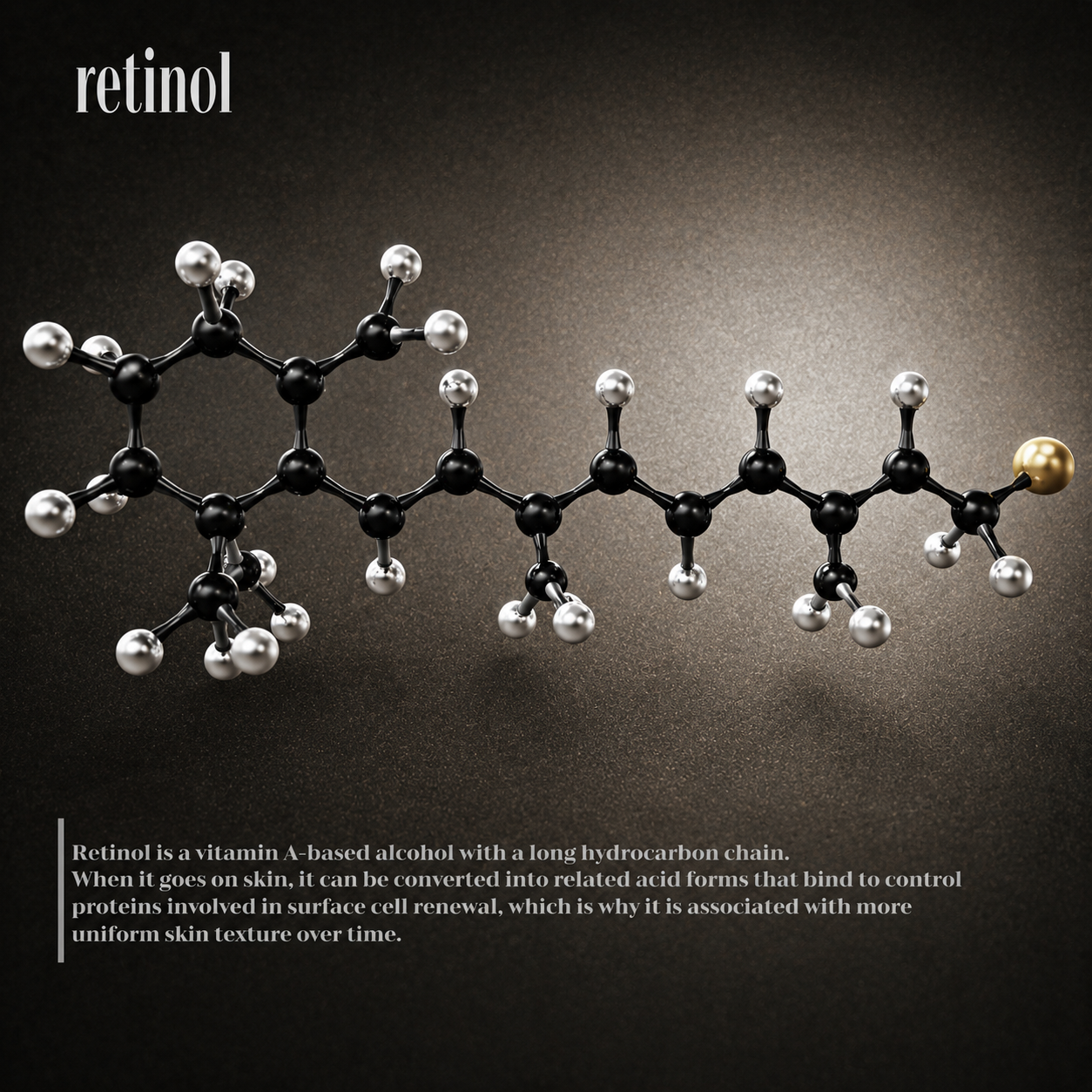
Retinol is a vitamin A derivative belonging to the retinoid family.
Once applied to the skin, retinol undergoes several conversion steps before becoming retinoic acid, the biologically active form that interacts with skin cells.
These biological processes have been studied extensively over several decades.
Because of this long research history, retinol remains one of the most widely recommended cosmetic ingredients for improving visible signs of aging.
Retinol is commonly incorporated into skincare routines targeting:
- Fine lines
- Wrinkles
- Uneven texture
- Photoaging
- Rough skin
- Uneven skin tone
The American Academy of Dermatology discusses retinoids as one of the most established categories of anti-aging ingredients in dermatology.
External resource:
What Is Bakuchiol?

Bakuchiol is not a retinoid.
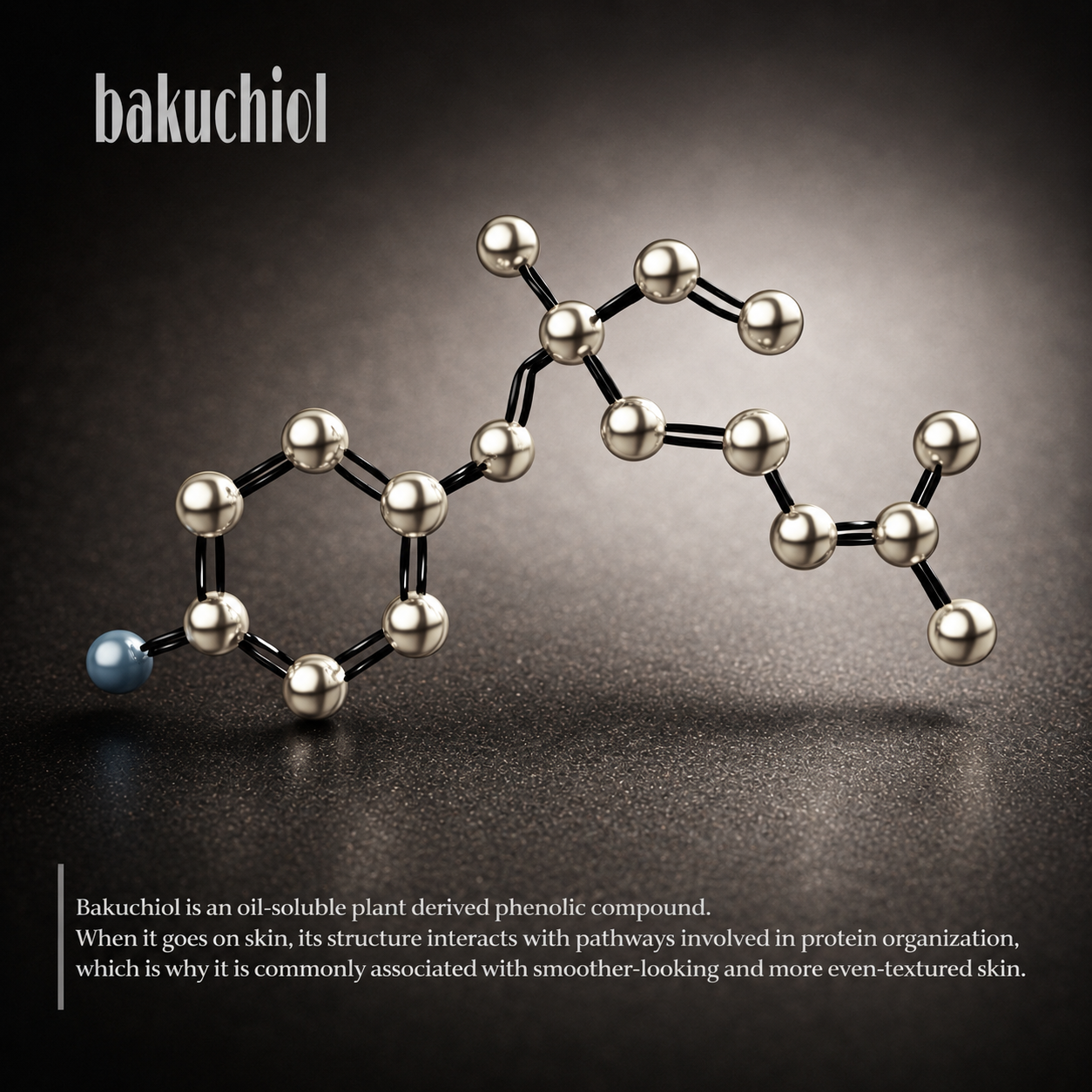
It is a naturally derived cosmetic ingredient obtained primarily from the Psoralea corylifolia (Babchi) plant.
Although bakuchiol has become widely known as a retinol alternative, its molecular structure is entirely different.
Instead of functioning as a vitamin A derivative, bakuchiol appears to influence multiple biological pathways associated with healthy-looking skin through different mechanisms.
Several published studies have demonstrated improvements in:
- Fine lines
- Skin firmness
- Visible photodamage
- Skin smoothness
without classifying bakuchiol as a retinoid.
This distinction is extremely important because many online resources incorrectly state that bakuchiol is natural retinol.
Scientifically, that statement is inaccurate.
A more accurate description would be:
Bakuchiol is a plant-derived cosmetic ingredient that may produce retinol-like cosmetic improvements through different biological pathways.
For readers who would like a complete introduction, see our guide:
Bakuchiol vs Retinol: Understanding the Biggest Difference
The most important distinction between Bakuchiol vs Retinol is not how they look.
It is how they work.
Retinol belongs to the vitamin A family.
Bakuchiol does not.
Retinol directly participates in the biological pathways associated with retinoids.
Bakuchiol influences different pathways while still producing some overlapping cosmetic outcomes according to current research.
Think of it like two different routes leading toward a similar destination.
The destination—healthier-looking skin—may appear similar.
The road taken is completely different.
Why Retinol Has Become the Gold Standard
Retinol has earned its reputation because of the enormous amount of scientific research supporting its cosmetic use.
Over many decades, researchers have evaluated retinoids for their ability to improve visible signs of aging.
Published studies consistently report improvements in:
- Fine wrinkles
- Texture
- Skin smoothness
- Photodamage
- Overall appearance of aging skin
Because of this extensive evidence base, retinol remains one of the benchmark ingredients against which newer cosmetic ingredients—including bakuchiol—are frequently compared.
The National Library of Medicine contains thousands of published studies related to topical retinoids.
External resource:
https://pubmed.ncbi.nlm.nih.gov/?term=topical+retinol
Why Bakuchiol Has Gained So Much Attention

While retinol remains extremely well studied, not every person’s skin tolerates it comfortably.
Common adjustment effects when beginning retinol may include:
- Dryness
- Tightness
- Temporary peeling
- Mild irritation
- Redness
These reactions often improve as the skin adapts, but they can discourage some users from maintaining a consistent routine.
Bakuchiol has gained popularity because multiple studies suggest it may improve visible signs of aging while often producing fewer reports of irritation for many participants.
One of the most frequently cited randomized clinical trials comparing bakuchiol and retinol found that both groups experienced improvements in wrinkles and hyperpigmentation, while participants using bakuchiol reported less scaling and stinging.
External resource:
It is important to remember that this does not prove bakuchiol is superior.
Instead, it suggests that bakuchiol may represent another useful option for certain individuals.
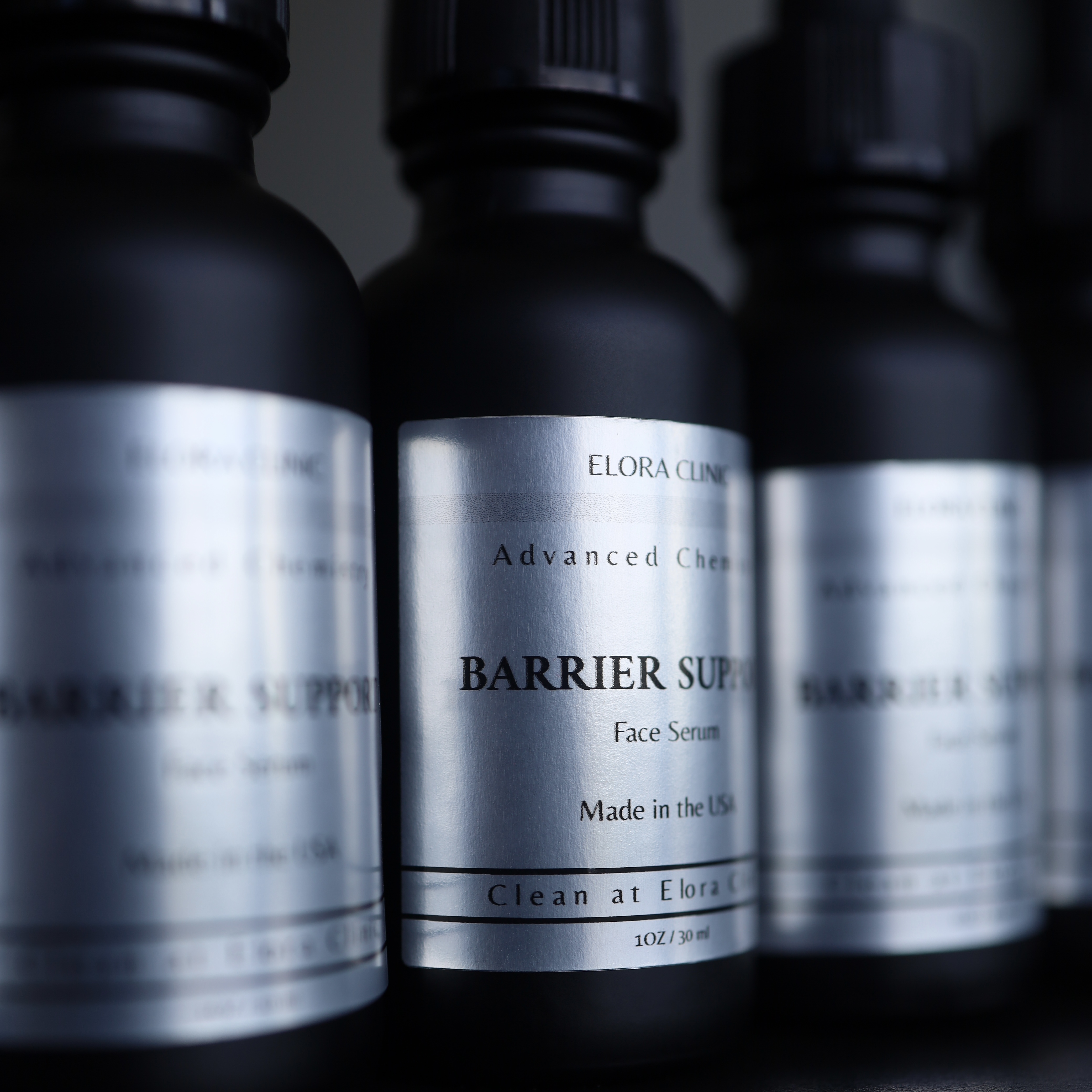
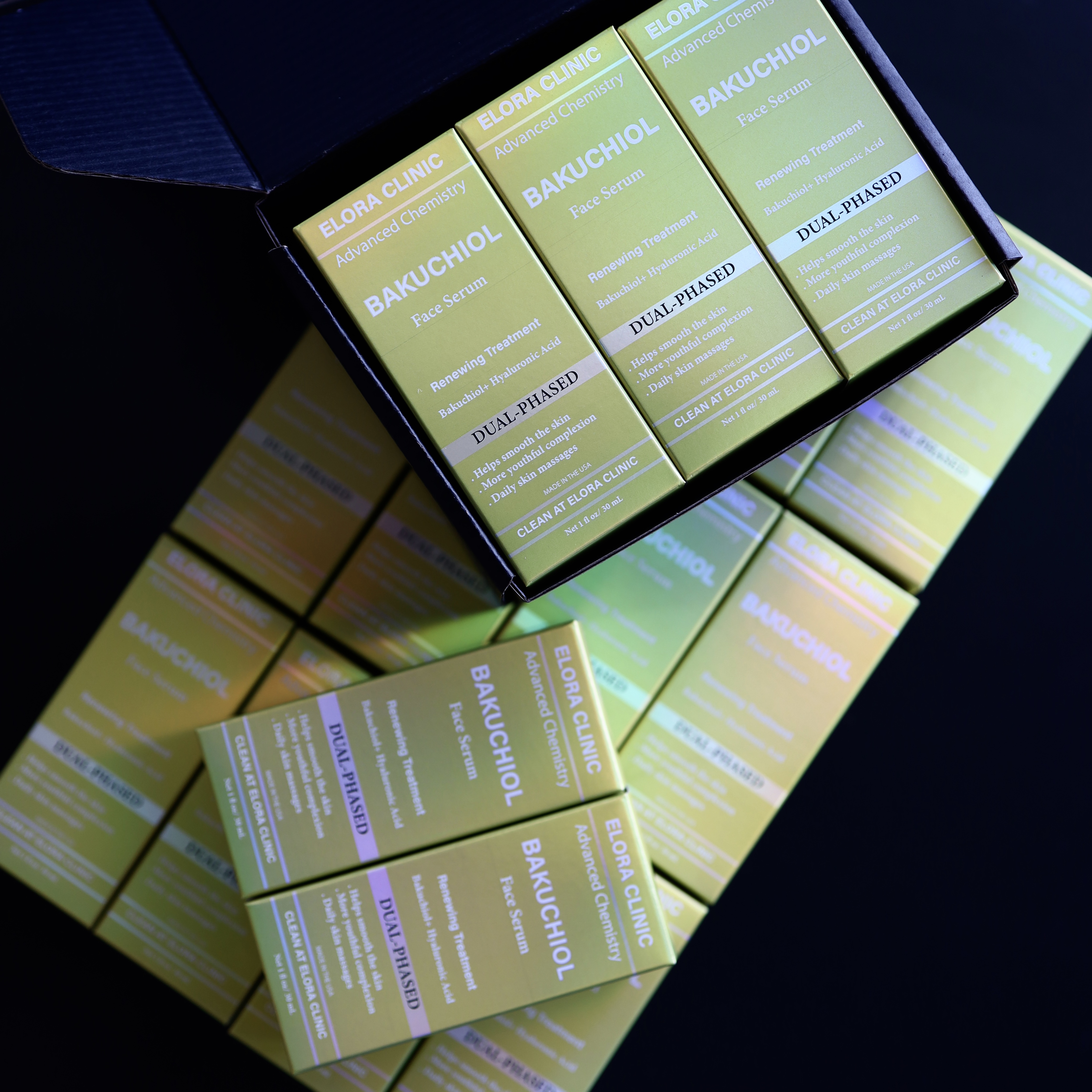
Elora Clinic Bakuchiol Serum: A Gentle Alternative for Daily Skin Renewal

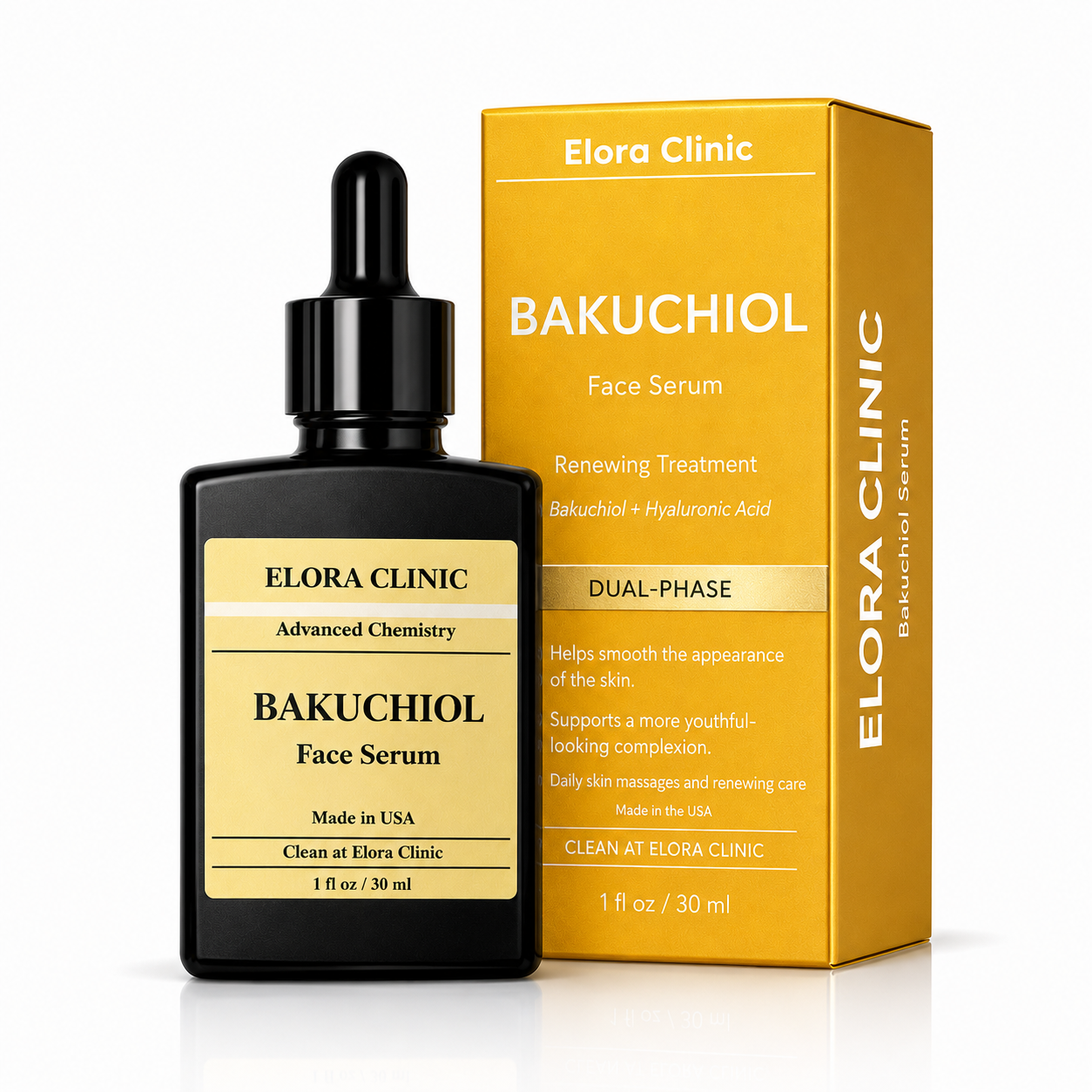
For individuals who want to introduce an anti-aging ingredient while prioritizing skin comfort, the Elora Clinic Bakuchiol Serum is formulated around bakuchiol in a nourishing oil-based formula featuring:
- Squalane
- Avocado Oil
- Black Seed Oil
- Sweet Almond Oil
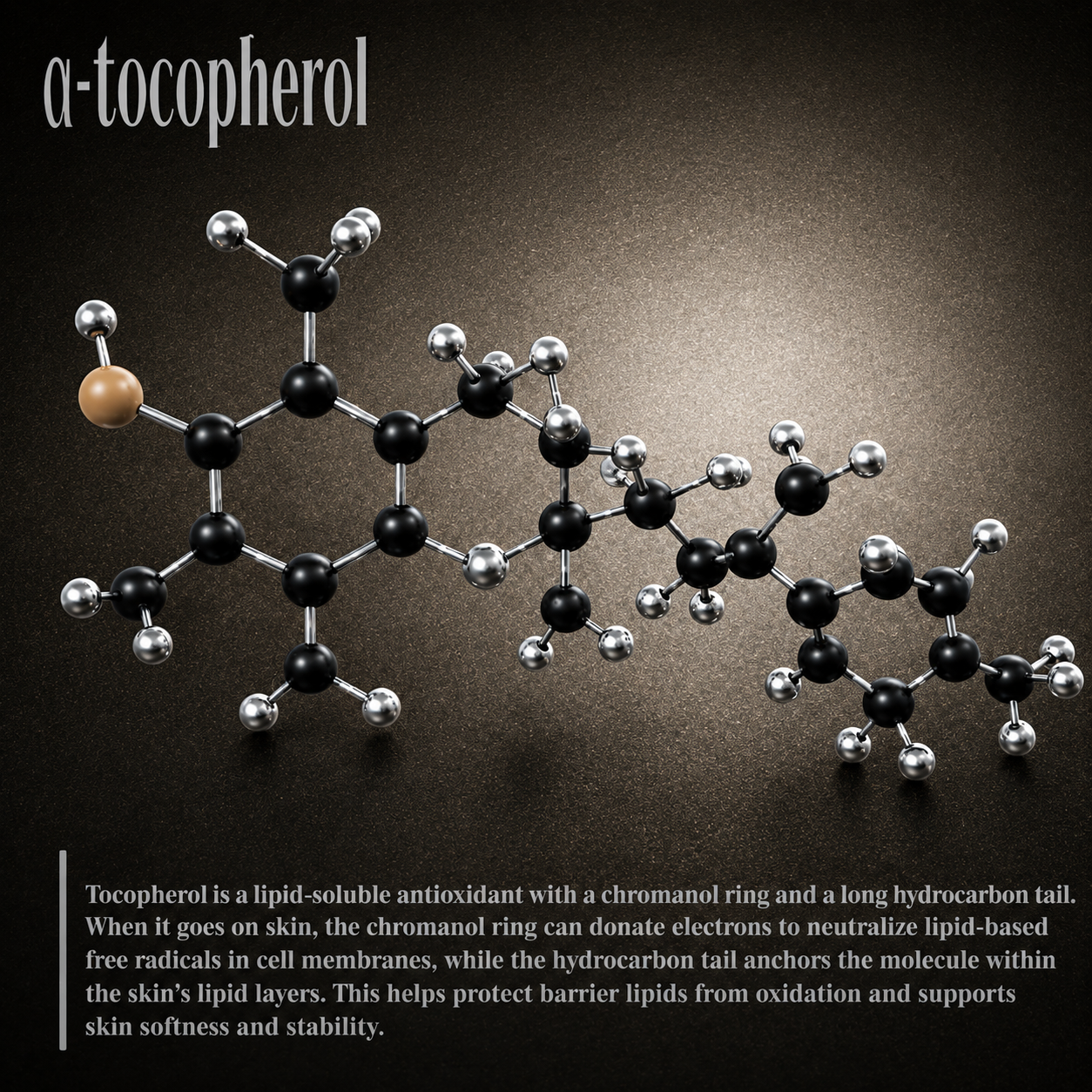
- Vitamin E (Tocopherol)
Rather than relying on a single ingredient, the formula is designed to support skin hydration while delivering bakuchiol in a lightweight oil blend that layers well into an evening skincare routine.
This makes it especially suitable for individuals looking for:
- A gentle retinol alternative
- A nourishing nighttime facial oil
- Support for dry or mature-looking skin
- A minimalist anti-aging routine
Learn more about the product:
If you’re new to bakuchiol, you may also find this guide helpful:
Understanding Cosmetic Goals Before Choosing an Ingredient
Before deciding between Bakuchiol vs Retinol, it’s worth asking a different question:
What are you actually trying to improve?
For example:
If your primary concern is:
- Preventive skincare
- Mild texture changes
- Gentle daily maintenance
Bakuchiol may fit comfortably into your routine.
If you’re already using retinoids successfully and your skin tolerates them well, retinol may continue to be an appropriate choice.
Rather than asking which ingredient is “best,” experienced skincare professionals typically ask which ingredient is best for that individual at that particular stage of their skincare journey.
That shift in thinking leads to better long-term routines—and healthier-looking skin.
Side-by-Side Comparison: Bakuchiol vs Retinol
Understanding the differences between Bakuchiol vs Retinol becomes much easier when comparing them directly.
| Feature | Bakuchiol | Retinol |
|---|---|---|
| Ingredient Type | Plant-derived cosmetic ingredient | Vitamin A derivative (retinoid) |
| Retinoid? | No | Yes |
| Source | Psoralea corylifolia (Babchi) | Vitamin A |
| Primary Cosmetic Goals | Improve the appearance of fine lines, texture, firmness, and photodamage | Improve the appearance of fine lines, wrinkles, texture, and uneven tone |
| Typical Tolerance | Often well tolerated by many users | May cause dryness, peeling, redness, and irritation during adjustment |
| Morning Use | Often suitable with sunscreen | Generally recommended at night |
| Pregnancy | Discuss with your healthcare provider due to limited research | Many retinoids are not recommended during pregnancy; consult your healthcare provider |
| Best For | Sensitive skin, beginners, gentle routines | Users already tolerating retinoids or seeking established retinoid routines |
Although the table highlights practical differences, neither ingredient should automatically be viewed as superior. The right choice depends on your skin, goals, and overall routine.

Bakuchiol vs Retinol for Fine Lines
One of the most common reasons people compare Bakuchiol vs Retinol is because both ingredients are associated with improving the appearance of fine lines.
Retinol has decades of research demonstrating improvements in visible signs of skin aging through its interaction with retinoid pathways.
Bakuchiol, while structurally unrelated, has also demonstrated encouraging results in clinical studies evaluating fine lines and overall skin appearance.
A landmark randomized clinical trial published in the British Journal of Dermatology compared bakuchiol with retinol over 12 weeks.
Researchers found:
- Both groups experienced improvements in wrinkle appearance.
- Both groups showed improvements in hyperpigmentation.
- Participants using bakuchiol reported less scaling and stinging than those using retinol.
This study helped explain why bakuchiol has become such a popular option for individuals seeking a gentler anti-aging ingredient.
External source:
Importantly, however, one study does not overturn decades of retinoid research.
Instead, it expands the conversation by showing that different ingredients may help different people.
Bakuchiol vs Retinol for Sensitive Skin
Sensitive skin changes the equation considerably.
People with reactive skin often struggle with routines that include multiple strong active ingredients.
When irritation develops, consistency suffers.
Many people eventually stop using otherwise effective products because the routine becomes uncomfortable.
This is one reason Bakuchiol vs Retinol has become such an important discussion.
Bakuchiol is frequently selected by people who:
- Experience dryness with retinol
- Prefer gradual skincare routines
- Want fewer adjustment symptoms
- Are building their first anti-aging routine
That does not mean bakuchiol is incapable of causing irritation.
Any cosmetic ingredient has the potential to irritate susceptible individuals depending on:
- Overall formulation
- Concentration
- Supporting ingredients
- Personal sensitivity
Patch testing remains advisable regardless of which ingredient you choose.
The American Contact Dermatitis Society explains that allergic contact dermatitis can occur with both natural and synthetic ingredients, making patch testing an important step for people with reactive skin.
External resource:
Bakuchiol vs Retinol for Dry Skin

Dry skin often benefits from routines that emphasize hydration alongside active ingredients.
Retinol products are commonly formulated as:
- Creams
- Lotions
- Serums
- Encapsulated formulations
Bakuchiol, meanwhile, is frequently incorporated into nourishing oil-based formulations.
This difference alone can influence how the routine feels.
For example, the Elora Clinic Bakuchiol Serum combines bakuchiol with:
- Squalane
- Avocado Oil
- Black Seed Oil
- Sweet Almond Oil
- Vitamin E
These ingredients contribute moisturizing and barrier-supportive properties while bakuchiol serves as the primary active ingredient.
The result is an anti-aging facial oil designed for individuals who appreciate richer nighttime skincare without relying solely on retinoids.
Learn more:
https://eloraclinic.com/product/bakuchiol-serum
Bakuchiol vs Retinol for Oily Skin
People often assume that oily skin should avoid facial oils entirely.
That assumption is overly simplistic.
When comparing Bakuchiol vs Retinol, texture matters just as much as the active ingredient itself.
Many lightweight oils—including squalane—spread thinly and absorb efficiently.
Likewise, many retinol formulations are available in lightweight serums rather than heavy creams.
Instead of asking:
“Should oily skin avoid oils?”
A better question is:
“Does this formulation suit my skin?”
Evaluating the complete ingredient list provides far more useful information than judging the product category alone.
For readers learning how to match formulations to skin type:

Bakuchiol vs Retinol for Beginners
If you’ve never used anti-aging skincare before, introducing multiple active ingredients simultaneously often creates unnecessary confusion.
Instead, begin with one active ingredient.
Observe how your skin responds over several weeks.
Only then consider expanding your routine.
Many beginners start with bakuchiol because it often fits comfortably into simple routines.
Others begin with retinol because of its extensive scientific history.
Neither approach is inherently wrong.
The important factor is consistency.
A simple routine that you actually maintain usually produces better long-term results than an overly complicated routine abandoned after two weeks.
Can You Alternate Bakuchiol and Retinol?
Yes.
Many skincare enthusiasts choose not to use both ingredients on the same evening.
Instead, they alternate them.
Example:
Monday
Retinol
Tuesday
Bakuchiol
Wednesday
Recovery routine
Thursday
Retinol
Friday
Bakuchiol
This strategy allows active treatment nights to alternate with gentler recovery-focused evenings.
However, the ideal schedule depends on your skin’s tolerance and the other ingredients in your routine.
If you’re using prescription retinoids, always follow your dermatologist’s instructions before introducing additional active ingredients.
Do Bakuchiol and Retinol Work Better Together?
This is another common question.
The answer is:
Possibly—but not necessarily.
Some cosmetic formulations combine both ingredients.
Others recommend alternating them.
There is currently limited high-quality evidence demonstrating that combining both ingredients produces dramatically better cosmetic outcomes than using one appropriate ingredient consistently.
In many cases, maintaining a routine that your skin comfortably tolerates may be more important than maximizing the number of active ingredients.
The Society of Cosmetic Chemists has published educational articles emphasizing that formulation quality and routine adherence often influence real-world results as much as the individual active ingredients themselves.
External resource:
Bakuchiol vs Retinol: Which One Fits Your Lifestyle?

Choosing skincare isn’t just about biology.
It’s also about practicality.
Ask yourself:
- Do I consistently wear sunscreen?
- Do I already have sensitive skin?
- Do I prefer simple routines?
- Am I comfortable with temporary adjustment periods?
- Will I realistically stay consistent for months?
These questions often matter more than chasing whichever ingredient is currently trending on social media.
A routine you enjoy is much more likely to become a routine you maintain.
How to Choose Between Bakuchiol and Retinol
If you’re trying to decide between Bakuchiol vs Retinol, the most helpful question isn’t:
“Which ingredient is stronger?”
Instead, ask:
“Which ingredient is more appropriate for my skin and the routine I can realistically maintain?”
The best anti-aging ingredient is not necessarily the one with the most impressive marketing—it is the one you can use consistently without compromising your skin barrier.
Let’s look at which ingredient may be the better fit depending on your skincare goals.
Choose Bakuchiol If…
Many people find bakuchiol to be an excellent starting point because it is often incorporated into routines that prioritize skin comfort and long-term consistency.
Bakuchiol may be worth considering if you:
- Have sensitive or easily irritated skin.
- Are building your first anti-aging routine.
- Prefer a gentler approach to skincare.
- Want an ingredient that layers well with hydrating products.
- Frequently experience dryness with stronger active ingredients.
- Want a nourishing oil-based evening routine.
Rather than trying to aggressively transform the skin overnight, bakuchiol is often used as part of a gradual, sustainable skincare philosophy.
This is one reason it has become increasingly popular among people who value skin barrier health as much as visible anti-aging benefits.
Choose Retinol If…
Retinol remains one of the most extensively researched cosmetic ingredients available.
It may be the better choice if you:
- Already tolerate retinoids well.
- Have previously used retinol successfully.
- Are comfortable introducing active ingredients gradually.
- Are willing to work through an adjustment period if necessary.
- Have discussed your skincare goals with a dermatologist.
Because retinol has been studied for decades, many skincare professionals continue to view it as a foundational anti-aging ingredient when appropriate for the individual.

Bakuchiol vs Retinol by Skin Type
Choosing between Bakuchiol vs Retinol often becomes easier when you consider your skin type rather than focusing solely on ingredient popularity.
Sensitive Skin
For many people with sensitive skin, bakuchiol may be easier to incorporate into a consistent routine because it is often associated with fewer reports of dryness and visible irritation than retinol.
That said, sensitivity varies significantly from person to person.
Even gentle formulations can cause irritation if they contain fragrances, essential oils, or other ingredients that your skin does not tolerate well.
Always evaluate the complete ingredient list—not just the featured active ingredient.
Dry Skin
Dry skin benefits from routines that support hydration while minimizing unnecessary disruption to the skin barrier.
Oil-based bakuchiol formulations can fit particularly well into evening routines because they combine active ingredients with emollient oils that help reduce moisture loss.
For example, the Elora Clinic Bakuchiol Serum combines:
- Bakuchiol
- Squalane
- Avocado Oil
- Black Seed Oil
- Sweet Almond Oil
- Vitamin E
This creates a nourishing oil-based formula designed to complement dry and mature-looking skin while delivering bakuchiol in a comfortable nighttime application.
Learn more:
https://eloraclinic.com/product/bakuchiol-serum
Combination Skin
Combination skin often requires flexibility.
Some areas of the face may produce excess oil while others feel dry.
Rather than choosing ingredients based solely on skin type labels, evaluate how the complete formulation feels after several weeks of consistent use.
Lightweight bakuchiol oils and modern retinol serums can both fit successfully into combination skin routines depending on the formulation.
Oily Skin
Oily skin does not automatically exclude either ingredient.
Many modern retinol products are formulated as lightweight serums.
Likewise, many bakuchiol products use lightweight carrier oils such as squalane.
Instead of fearing facial oils, focus on:
- Texture
- Absorption
- Ingredient compatibility
- Overall formulation quality
These characteristics often matter far more than whether the label says “oil.”
Mature Skin
Mature skin frequently benefits from routines emphasizing:
- Hydration
- Barrier support
- Gentle cleansing
- Sun protection
- Consistent active ingredients
Both bakuchiol and retinol can contribute to these routines depending on individual tolerance.
Many people also combine anti-aging ingredients with peptides, ceramides, amino acids, and antioxidant serums to create a comprehensive skincare strategy.
For readers interested in complementary ingredients:
https://eloraclinic.com/bakuchiol-vs-peptides-anti-aging-usa
Bakuchiol vs Retinol: Morning or Night?
Another common question is when each ingredient should be applied.
Retinol
Retinol is generally recommended for evening use.
This recommendation exists because retinoids can increase sensitivity to ultraviolet radiation, making daily sunscreen especially important.
The Skin Cancer Foundation emphasizes that daily broad-spectrum sunscreen remains one of the most effective ways to reduce UV-related skin damage and premature skin aging.
External resource:
Bakuchiol
Bakuchiol is generally considered suitable for morning or evening use depending on the formulation.
Even so, sunscreen remains essential during the day.
No anti-aging ingredient replaces proper UV protection.
Building a Routine Around Bakuchiol

A simple evening routine might include:
- Gentle cleanser
- Water-based hydrating serum (if desired)
- Elora Clinic Bakuchiol Serum
- Moisturizer if additional hydration is needed
Because the Elora Clinic formulation already contains nourishing oils, some users—particularly those with normal to dry skin—may find that it provides sufficient nighttime nourishment on its own, while others may prefer layering a moisturizer afterward.
If you’re beginning with bakuchiol, resist the urge to introduce multiple new products simultaneously.
Consistency almost always outperforms complexity.
Building a Routine Around Retinol
A beginner-friendly retinol routine might look like:
- Gentle cleanser
- Retinol
- Moisturizer
Initially, many dermatologists recommend using retinol only a few nights per week before gradually increasing frequency as tolerated.
Adding too many active ingredients too quickly often increases the likelihood of irritation without improving long-term results.
The American Academy of Dermatology recommends introducing products gradually and paying attention to how your skin responds rather than assuming more frequent application will produce faster improvements.
External resource:
Can You Switch From Retinol to Bakuchiol?
Absolutely.
Many people transition from retinol to bakuchiol because:
- Their skin has become increasingly sensitive.
- They want a simpler skincare routine.
- They prefer an oil-based nighttime product.
- They are looking for a gentler long-term maintenance ingredient.
Others move in the opposite direction after building tolerance with bakuchiol and later introducing retinol.
There is no universally correct progression.
Healthy skincare evolves with your skin rather than remaining identical forever.
The Biggest Mistake People Make

One of the biggest mistakes when comparing Bakuchiol vs Retinol is believing that skincare success depends entirely on choosing the “right” active ingredient.
In reality, visible skin improvements usually result from the combination of:
- Consistent cleansing
- Daily sunscreen
- Hydration
- Barrier support
- Realistic expectations
- Routine adherence
Changing active ingredients every few weeks rarely produces better results.
Maintaining a thoughtful routine over several months usually does.
Common Myths About Bakuchiol and Retinol
The internet is full of simplified claims about Bakuchiol vs Retinol. While catchy headlines may attract clicks, they often overlook important scientific details that help consumers make informed skincare decisions.
Let’s separate common myths from what current evidence actually suggests.
Myth 1: “Bakuchiol Is Natural Retinol”
This is perhaps the most widespread misconception.
Bakuchiol is not natural retinol.
It is also not a retinoid.
Although research has shown that bakuchiol may improve the appearance of fine lines, wrinkles, and uneven skin tone in ways that can resemble some cosmetic effects of retinol, the two ingredients have completely different chemical structures.
Retinol belongs to the vitamin A family.
Bakuchiol does not.
A more scientifically accurate statement would be:
Bakuchiol is a plant-derived cosmetic ingredient that may provide retinol-like cosmetic benefits through different biological mechanisms.
Using precise language matters because it helps consumers develop realistic expectations instead of relying on marketing terminology.
The International Journal of Cosmetic Science has published multiple reviews discussing the chemistry and formulation science behind bakuchiol.
External resource:
Myth 2: “Retinol Is Too Harsh for Everyone”
Retinol certainly isn’t appropriate for every person.
However, saying that it is “too harsh” for everyone is equally inaccurate.
Millions of people successfully incorporate retinol into their skincare routines.
Many initial side effects—such as dryness or mild peeling—are temporary and often improve as the skin adapts.
Factors influencing tolerance include:
- Product concentration
- Formulation
- Application frequency
- Moisturizer use
- Individual skin sensitivity
A properly introduced retinol routine often feels very different from using an overly aggressive product too frequently.
Myth 3: “Bakuchiol Is Better Because It’s Natural”
Natural ingredients are not automatically better.
Likewise, synthetic ingredients are not automatically worse.
The effectiveness and tolerability of skincare products depend on:
- Scientific formulation
- Ingredient stability
- Supporting ingredients
- Manufacturing quality
- Individual skin biology
Modern cosmetic chemistry frequently combines naturally derived ingredients with carefully engineered formulations to optimize performance.
Judging products solely on whether an ingredient comes from a plant oversimplifies skincare science.
Myth 4: “Higher Concentrations Always Produce Better Results”

Consumers naturally assume that more equals better.
In skincare, that isn’t necessarily true.
When comparing Bakuchiol vs Retinol, formulation quality often matters more than concentration alone.
Cosmetic chemists evaluate factors such as:
- Ingredient stability
- Delivery systems
- Carrier ingredients
- Packaging
- Oxidation resistance
- Product compatibility
A thoughtfully formulated product may outperform another product containing a higher advertised concentration.
This is one reason reputable skincare brands focus heavily on formulation—not simply increasing ingredient percentages.
Myth 5: “You Need Stronger Products Every Year”
Skincare isn’t like lifting weights.
Your routine does not automatically require progressively stronger ingredients every year.
Instead, routines should evolve according to:
- Skin changes
- Seasonal changes
- Environmental exposure
- Personal tolerance
- Individual goals
Many people successfully maintain healthy-looking skin using consistent, well-balanced routines rather than continually escalating ingredient strength.
What Does the Research Actually Say?
When comparing Bakuchiol vs Retinol, it’s important to distinguish between established evidence and emerging research.
Retinol
Retinol benefits from decades of published research.
Scientists have evaluated retinoids extensively for cosmetic improvements related to:
- Fine lines
- Skin texture
- Visible photodamage
- Wrinkles
- Uneven pigmentation
Because of this extensive evidence base, retinol remains one of the benchmark anti-aging ingredients in cosmetic dermatology.
Bakuchiol
Bakuchiol research is newer but continues to expand.
Current clinical studies suggest bakuchiol may improve:
- Wrinkles
- Skin firmness
- Visible photodamage
- Hyperpigmentation
- Overall skin smoothness
Several systematic reviews conclude that bakuchiol appears promising as a cosmetic ingredient while emphasizing that additional large-scale, long-term studies are still needed to fully define its role.
This balanced interpretation is far more accurate than claiming bakuchiol completely replaces retinol.
A recent review published in Cosmetics summarizes current evidence while discussing both the opportunities and limitations of existing bakuchiol research.
External resource:
https://www.mdpi.com/journal/cosmetics
Which Ingredient Fits Different Skincare Goals?

Rather than asking which ingredient is universally better, it is more useful to consider your specific objective.
If your goal is:
Building your first anti-aging routine
Bakuchiol may feel easier to incorporate because many users find it comfortable within simple, barrier-supportive routines.
If your goal is:
Following one of the most extensively researched cosmetic anti-aging ingredients
Retinol remains one of the strongest evidence-based options available.
If your goal is:
Maintaining skin comfort while supporting healthy-looking skin
Bakuchiol may be an attractive option, particularly when formulated alongside nourishing ingredients.
For example, the Elora Clinic Bakuchiol Serum combines bakuchiol with:
- Squalane
- Avocado Oil
- Black Seed Oil
- Sweet Almond Oil
- Vitamin E
This combination creates a lightweight oil-based serum that supports hydration while delivering bakuchiol in a comfortable nightly routine.
Explore the product:
https://eloraclinic.com/product/bakuchiol-serum
Choosing the Right Formula Matters More Than Choosing the Right Ingredient
One important lesson from cosmetic science is that ingredients never exist in isolation.
Two bakuchiol serums may perform very differently because of differences in:
- Carrier oils
- Antioxidants
- Stabilizers
- Preservatives
- Packaging
- Texture
The same is true for retinol.
Encapsulated retinol, slow-release retinol, cream formulations, and lightweight serums may all produce different user experiences.
This is why experienced formulators evaluate complete ingredient systems rather than focusing on a single headline ingredient.
If you’d like to better understand formulation compatibility, read:
Expert Perspective: Focus on Routine Consistency
When discussing Bakuchiol vs Retinol, consumers often become so focused on choosing the “perfect” ingredient that they overlook the habits that contribute most to healthy-looking skin.
Long-term success typically depends on:
- Gentle cleansing
- Consistent sunscreen use
- Daily hydration
- Supporting the skin barrier
- Introducing new products gradually
- Maintaining routines over months rather than weeks
No cosmetic ingredient can replace these fundamentals.
Whether your routine centers around bakuchiol or retinol, consistency will almost always have a greater impact than constantly switching between trending ingredients.

Frequently Asked Questions About Bakuchiol vs Retinol
Is bakuchiol better than retinol?
There is no universal winner in the Bakuchiol vs Retinol debate.
Retinol remains one of the most extensively researched cosmetic ingredients for improving the appearance of fine lines, wrinkles, uneven skin tone, and skin texture.
Bakuchiol has also demonstrated promising clinical results while often being better tolerated by many individuals with sensitive skin.
The better ingredient is the one that aligns with your skin type, skincare goals, and long-term routine.
Can I use bakuchiol every day?
Yes.
Most bakuchiol serums are designed for regular use.
Because bakuchiol is generally well tolerated, many people incorporate it into their daily evening skincare routine.
Always follow the instructions provided with your specific product and discontinue use if irritation develops.
Can I use retinol every day?
Not necessarily.
Many beginners start using retinol only two or three nights per week before gradually increasing frequency as their skin adjusts.
Using retinol too frequently when first starting may increase the likelihood of dryness, peeling, or irritation.
Following a gradual introduction often improves long-term consistency.
Can bakuchiol replace retinol?
For some people, yes.
For others, no.
Some individuals prefer bakuchiol because they experience less visible irritation.
Others continue using retinol because they tolerate it well and appreciate its extensive research history.
Rather than asking whether bakuchiol “replaces” retinol, it is more accurate to view it as another evidence-supported option within modern anti-aging skincare.
Can I use bakuchiol with vitamin C?
Yes.
Bakuchiol is commonly paired with antioxidant ingredients, including vitamin C.
Many skincare enthusiasts use vitamin C in the morning and bakuchiol during the evening, although exact routines depend on the formulation and individual skin tolerance.
If you’re interested in combining antioxidant skincare with bakuchiol, you may also enjoy:
https://eloraclinic.com/vitamin-c-vs-bakuchiol-for-aging-skin
Can I use bakuchiol with niacinamide?
Yes.
Niacinamide and bakuchiol are frequently incorporated into complementary skincare routines.
Niacinamide supports the skin barrier and helps improve the appearance of uneven skin tone, while bakuchiol is commonly used to target visible signs of aging.
Many users find that these ingredients work well together as part of a balanced skincare routine.
Is bakuchiol safe for sensitive skin?
Many people with sensitive skin tolerate bakuchiol well.
However, “gentle” does not mean irritation is impossible.
Individual reactions vary depending on:
- Overall formulation
- Supporting ingredients
- Personal skin sensitivity
- Frequency of application
Patch testing remains a sensible precaution whenever introducing any new skincare product.
Is bakuchiol suitable during pregnancy?
If you are pregnant or breastfeeding, consult your healthcare provider before introducing new skincare products.
Bakuchiol is not a retinoid, but research evaluating its use during pregnancy remains limited.
Your healthcare provider can help determine which skincare ingredients are appropriate for your individual situation.
The American College of Obstetricians and Gynecologists (ACOG) recommends discussing medication and skincare ingredient use with your physician during pregnancy.
External resource:
Does bakuchiol make skin more sensitive to the sun?
Current evidence does not suggest that bakuchiol increases photosensitivity in the same way commonly associated with retinoids.
However, daily broad-spectrum sunscreen remains essential regardless of which anti-aging ingredient you choose.
Sun protection is one of the most effective strategies for reducing visible premature skin aging.
Which Elora Clinic product contains bakuchiol?
The Elora Clinic Bakuchiol Serum is an oil-based facial serum formulated with:
- Bakuchiol
- Squalane
- Avocado Oil
- Black Seed Oil
- Sweet Almond Oil
- Vitamin E
The formula is designed to provide a nourishing evening skincare experience while incorporating bakuchiol into a lightweight botanical oil blend.
Explore the product here:
AI Summary: Bakuchiol vs Retinol
Bakuchiol vs Retinol is one of the most common comparisons in anti-aging skincare because both ingredients help improve the appearance of fine lines, wrinkles, uneven texture, and visible photoaging. Despite these similar cosmetic goals, they are chemically different ingredients.
Retinol is a vitamin A derivative (retinoid) with decades of scientific research supporting its cosmetic benefits. It is widely used to improve the appearance of wrinkles, uneven skin tone, rough texture, and photodamaged skin, although some users experience temporary dryness, peeling, or irritation during the adjustment period.
Bakuchiol is a plant-derived ingredient extracted from Psoralea corylifolia (Babchi). It is not a retinoid but has demonstrated promising clinical results for improving visible signs of aging through different biological mechanisms. Many users choose bakuchiol because it is often better tolerated, particularly in routines designed for sensitive skin.
Neither ingredient is universally superior. The best choice depends on skin type, personal tolerance, skincare goals, and overall formulation quality rather than marketing claims.
For individuals seeking a nourishing oil-based bakuchiol routine, the Elora Clinic Bakuchiol Serum combines bakuchiol with squalane, avocado oil, black seed oil, sweet almond oil, and vitamin E to support hydrated, healthy-looking skin.
Final Thoughts
The discussion around Bakuchiol vs Retinol should never be reduced to declaring one ingredient the winner.
Modern skincare is far more nuanced than that.
Retinol has earned its reputation through decades of scientific research and remains one of the most extensively studied cosmetic ingredients available.
Bakuchiol, meanwhile, has emerged as an exciting plant-derived alternative that offers promising clinical evidence and is often appreciated for its gentler user experience.
Instead of asking which ingredient is objectively better, ask which one supports your skin, your goals, and your ability to maintain a consistent skincare routine.
Healthy-looking skin is rarely the result of one miracle ingredient. It comes from thoughtful formulation, patience, daily sun protection, and long-term consistency.
Whether you choose bakuchiol, retinol, or another evidence-based ingredient, the most effective skincare routine is the one you can comfortably follow every day.

About Elora Clinic
At Elora Clinic, we believe skincare should combine scientific research, thoughtful formulation, and practical everyday routines rather than marketing hype.
Our educational resources are created to help readers understand how ingredients work, compare formulations objectively, and build skincare routines based on evidence instead of trends.
Our Bakuchiol Serum reflects this philosophy by pairing bakuchiol with nourishing botanical oils and skin-conditioning ingredients to create a gentle, oil-based nighttime serum suitable for a wide range of skincare routines.
Learn more about our research-driven approach at:
Scientific References
- American Academy of Dermatology. Retinoids and anti-aging skincare.
- British Journal of Dermatology. Comparison of bakuchiol and retinol for facial photoaging.https://pubmed.ncbi.nlm.nih.gov/29947134/
- National Library of Medicine (PubMed). Retinol research collection. https://pubmed.ncbi.nlm.nih.gov/?term=topical+retinol
- Skin Cancer Foundation. Daily sun protection recommendations. https://www.skincancer.org/
- American Contact Dermatitis Society. Skin sensitivity and contact dermatitis. https://www.contactderm.org/
- American College of Obstetricians and Gynecologists (ACOG). Pregnancy health guidance. https://www.acog.org/
- International Journal of Cosmetic Science. Cosmetic formulation research. https://onlinelibrary.wiley.com/journal/14682494
- MDPI Cosmetics. Bakuchiol review articles. https://www.mdpi.com/journal/cosmetics