
















THD Ascorbate Vitamin C Serum: Evidence and How to Choose
A THD ascorbate vitamin C serum contains tetrahexyldecyl ascorbate, an oil-soluble vitamin C derivative. The name tells you which ingredient to look for. It does not tell you whether a particular bottle will outperform another vitamin C serum, suit your skin or deliver the results of a published study.
Start with three questions: does the label name tetrahexyldecyl ascorbate, what else is in the formula, and what evidence supports that finished product? This guide explains those decisions. It focuses on THD-specific research and label reading rather than repeating a general vitamin C routine.

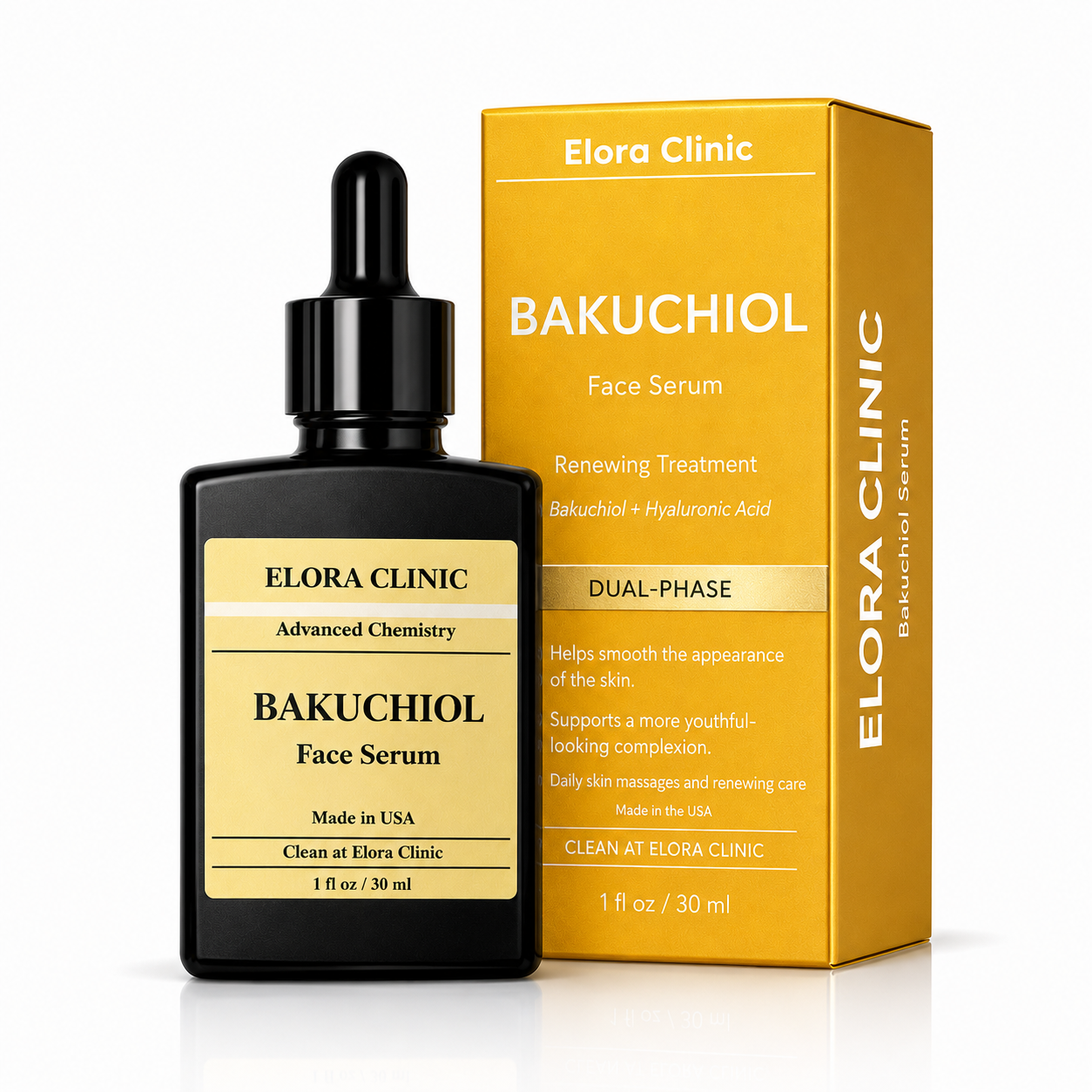
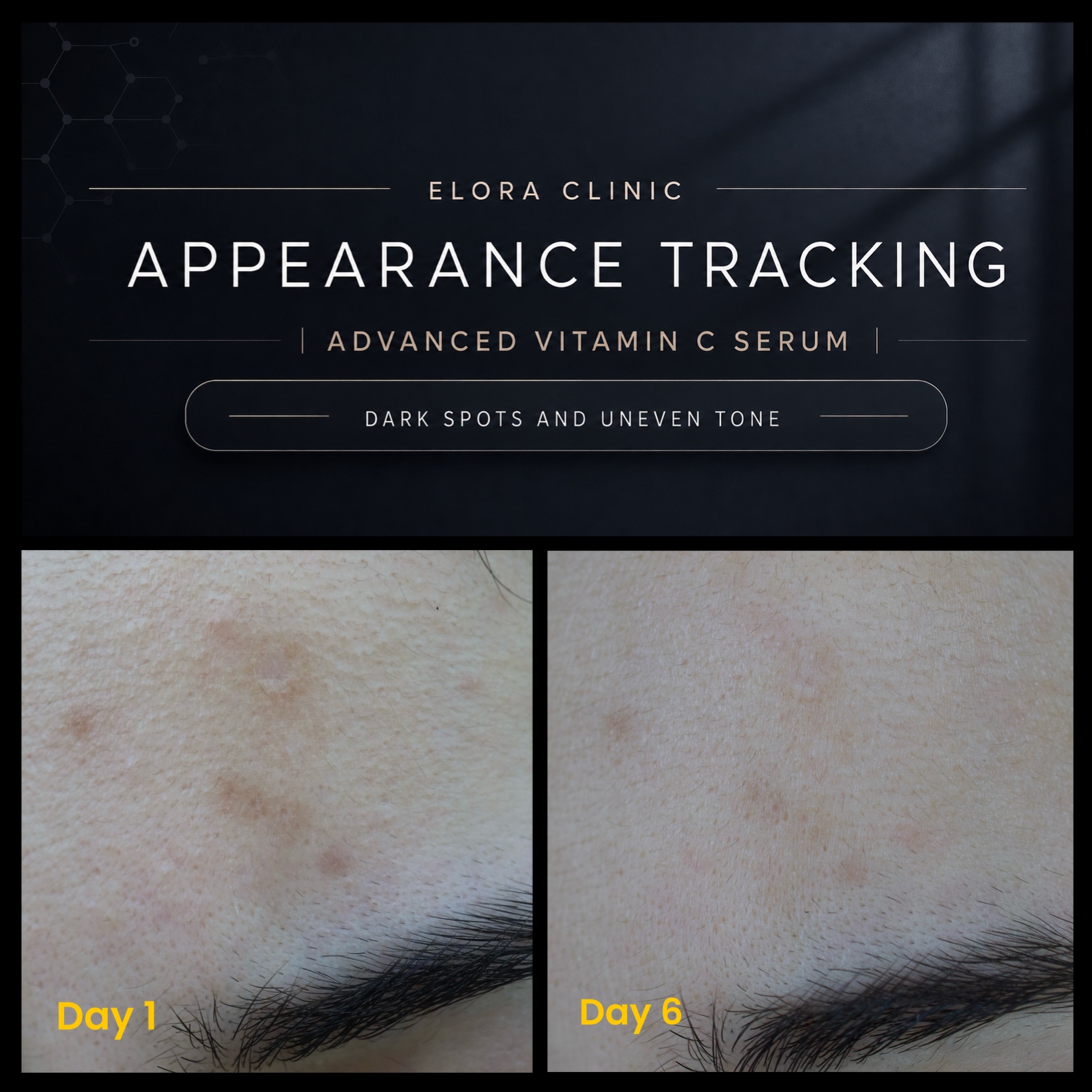
For comparison, Elora Clinic’s Advanced Vitamin C Serum is a water-based cosmetic whose current listed vitamin C ingredient is 3-Glyceryl Ascorbate. It is not a THD serum. Research on tetrahexyldecyl ascorbate cannot substantiate that product’s performance. If you specifically want THD, this is an important distinction before buying. Always check the ingredient panel on the bottle you receive, because product versions can change.
What does THD ascorbate mean on a label?
THD is shorthand for tetrahexyldecyl ascorbate; research may also abbreviate it as THDA or THDC. It is a modified form of ascorbic acid. Its lipid solubility makes it different from simply putting pure ascorbic acid into a watery serum. However, the ingredient’s solubility alone does not describe the texture of every finished formula.
Look for the full ingredient name rather than only “vitamin C complex” on the front of the package. A serum can contain more than one vitamin C form. It can also combine THD with other antioxidants, oils, solvents or texture ingredients. Those combinations matter when interpreting research and deciding how it fits your routine.
Do not assume that every oil-based vitamin C serum contains THD. Likewise, a cream can combine water and lipid ingredients. Read the whole panel and the manufacturer’s directions. If the vitamin C form is unclear, ask the manufacturer instead of identifying it by color, thickness or price.
What does the research actually show?
Human studies of formulas containing THD provide useful signals, but they do not prove that every THD serum works equally well. A study of a multi-ingredient product tests that combination. The following examples illustrate how to judge the evidence, rather than ranking brands or promising a result.
A small split-face study tested two vitamin C forms together
A 2002 double-blind, half-face trial enrolled ten people. It compared a gel containing 10% ascorbic acid plus 7% tetrahexyldecyl ascorbate with the gel vehicle on the other side of the face over 12 weeks. The study reported improvement in measures of photodamage. Its small sample and combined formula limit what it tells us about THD alone.
The practical lesson is attribution: this was not a trial of a generic 7% THD serum against every other vitamin C product. You cannot separate the contribution of each vitamin C form from this design or use its percentages as a shopping rule.
A later study assessed THD with another antioxidant
A 2024 open-label study followed 35 healthy adults using a serum containing THD and acetyl zingerone daily for 12 weeks. The researchers reported improvements from baseline in several appearance measures. However, an open-label study without a vehicle-control group cannot isolate THD’s contribution or rule out all other explanations. The paper lists industry funding.
These findings support further interest in the specific combination. They do not establish that any THD product will erase dark spots, reverse aging or be appropriate for every skin type. No study discussed here tested an Elora Clinic finished product.

Is a THD ascorbate vitamin C serum always stable?
No ingredient name guarantees the stability of a finished bottle. “Stable” also needs context: behavior in a stored formula is a different question from behavior under a laboratory oxidative challenge. Packaging, the complete formula and tested storage conditions all matter.
In a 2021 laboratory study, THD degraded under exposure to singlet oxygen, while acetyl zingerone helped stabilize it under the tested conditions. These were laboratory and cell-based findings, not a consumer trial showing that all products without that ingredient fail. They also do not establish a shelf life for your serum.
Therefore, avoid both extremes: THD is not automatically indestructible, and this experiment does not mean every THD formula is ineffective. Ask for product-specific storage and use-after-opening guidance. Follow the label, close the container after use and avoid leaving it in a hot car or direct sunlight.
A normal-looking serum is not a chemical potency test. If its smell, texture or appearance changes unexpectedly, contact the manufacturer before continuing. Our separate guide to vitamin C serum expiry covers dates and product changes in more detail.
How to compare THD with other vitamin C options
Compare products through evidence and routine fit rather than a single percentage. A higher number on one derivative does not by itself prove better results than a lower number on another. They are different ingredients in different formulas, not interchangeable doses.
- Identity: Find the exact vitamin C ingredient. THD, ascorbic acid and 3-Glyceryl Ascorbate are different names, not synonyms.
- Finished formula: Check the entire ingredient list, including ingredients you already know you cannot tolerate.
- Evidence: Ask whether a claim comes from the actual product, a different formula, or only a raw-ingredient experiment.
- Use: Compare directions, package size and the amount you would realistically use. Do not exceed the label to imitate a study.
- Practical fit: Consider whether the texture works with your usual moisturizer and sunscreen. A pleasant finish is useful, but it does not prove deeper delivery.
For example, two bottles might both advertise vitamin C but use different derivatives and vehicles. One may feel richer and another lighter. That sensory difference can guide preference; it cannot establish which one produces a better clinical outcome. A fair head-to-head conclusion would require an appropriate comparative study.

Can sensitive or acne-prone skin use THD?
The THD label alone cannot answer that for an individual. Do not assume that a derivative is reaction-proof, or that oil solubility automatically means a product will clog pores. Your experience depends on the finished product and your skin, among other factors.
Before first use, the American Academy of Dermatology recommends testing a new skincare product on a small area. Follow the product’s own restrictions and stop if redness, itching, swelling or other irritation appears. A comfortable small-area trial does not guarantee that facial use will be problem-free. Our face-serum patch-testing guide explains the limits.
If a product has already caused a concerning reaction, do not deliberately retry it just to see what happens. Persistent or significant symptoms deserve clinical advice. A vitamin C serum is optional skincare, not a treatment for an active rash or a reason to push through burning.
Where does it fit in a routine?
Use the directions for the particular serum. There is no single THD schedule that applies to every concentration and vehicle. Introduce one new product at a time, keep the rest of your routine familiar and avoid mixing bottles together in your palm. This makes any change easier to interpret.
Some THD products are richer than a water-based serum; others are not. That is why a universal “THD always goes last” rule is unhelpful. Follow the brand’s application order and watch how the finished layers behave. If a combination pills or feels uncomfortable, simplify rather than adding more product.
For daytime use, vitamin C does not replace sunscreen. The AAD recommends broad-spectrum, water-resistant sunscreen with SPF 30 or higher, alongside other sun-protection measures. Keep sunscreen use consistent when judging an optional cosmetic; do not attribute every change to the new serum.

Elora Clinic’s formulation perspective
A useful product comparison starts with identity. Our current Vitamin C Face Serum page names 3-Glyceryl Ascorbate, whereas the research above concerns tetrahexyldecyl ascorbate combinations. Keeping those names separate is more informative than grouping every bottle under a generic vitamin C claim.
If you prefer to explore the wider subject, the Vitamin C education hub connects ingredient, storage and routine guides. You can also read Elora Clinic customer reviews for reported experiences. Reviews can describe preferences, but they cannot establish a formula’s clinical efficacy or predict your result.
Questions to ask before buying
Does a higher THD percentage mean faster results?
Not on its own. First establish what the percentage describes and whether the evidence applies to that complete formula. A study duration is an observation window, not a deadline by which your skin must change. Avoid paying more solely for a larger number.
Should I replace a vitamin C serum I already like?
You do not need to switch just because a different derivative is popular. Ask what problem the change would solve: an unwanted texture, unclear ingredients, a routine conflict or a different preference. If your current product suits your needs, novelty alone is a weak reason to replace it.
Can I use two vitamin C serums to cover both forms?
There is no need to copy a research combination by layering unrelated finished products. The studies above used deliberately formulated products; adding two bottles does not reproduce their concentrations, vehicle or testing. Choose one clear role first, and ask your clinician about combinations if you use prescription skincare.

Final Takeaway
A THD ascorbate vitamin C serum is one option within vitamin C skincare. Confirm the full ingredient name, assess the complete formula and read research as evidence for the tested product. Choose for your needs and tolerance, not a promise that THD is universally stronger, gentler or permanent on the shelf.