















Bakuchiol and Hyaluronic Acid: How to Use Them Together for Hydration and Smoother-Looking Skin

Bakuchiol and hyaluronic acid occupy very different places in skincare. Bakuchiol is usually discussed in conversations about visible skin aging, texture, uneven tone, and alternatives to retinoids. Hyaluronic acid is associated much more directly with hydration. Used together, however, those differences are precisely what make the pairing useful.
Rather than expecting one ingredient to accomplish everything, a routine can give each ingredient a distinct job. Hyaluronic acid can provide a hydration-focused layer, while bakuchiol can occupy the more active-focused position in a routine designed to support smoother, more even-looking skin over time.
That distinction also helps explain why the best way to combine these ingredients is not simply to ask whether they are “compatible.” Formulation matters. Texture matters. The order in which products are applied matters. Even the difference between a water-based hyaluronic acid serum and an oil-rich bakuchiol formula can change how the routine should be constructed.
Can You Use Bakuchiol and Hyaluronic Acid Together?
Yes. Bakuchiol and hyaluronic acid can generally be used in the same skincare routine. They perform different functions, and there is no established incompatibility that requires the two ingredients to be separated into different routines or different days.
Hyaluronic acid is a glycosaminoglycan naturally found in the skin and other tissues. In topical skincare, it is valued largely for its hygroscopic properties—its ability to interact with and retain water—and is widely incorporated into hydration-focused cosmetic formulations.
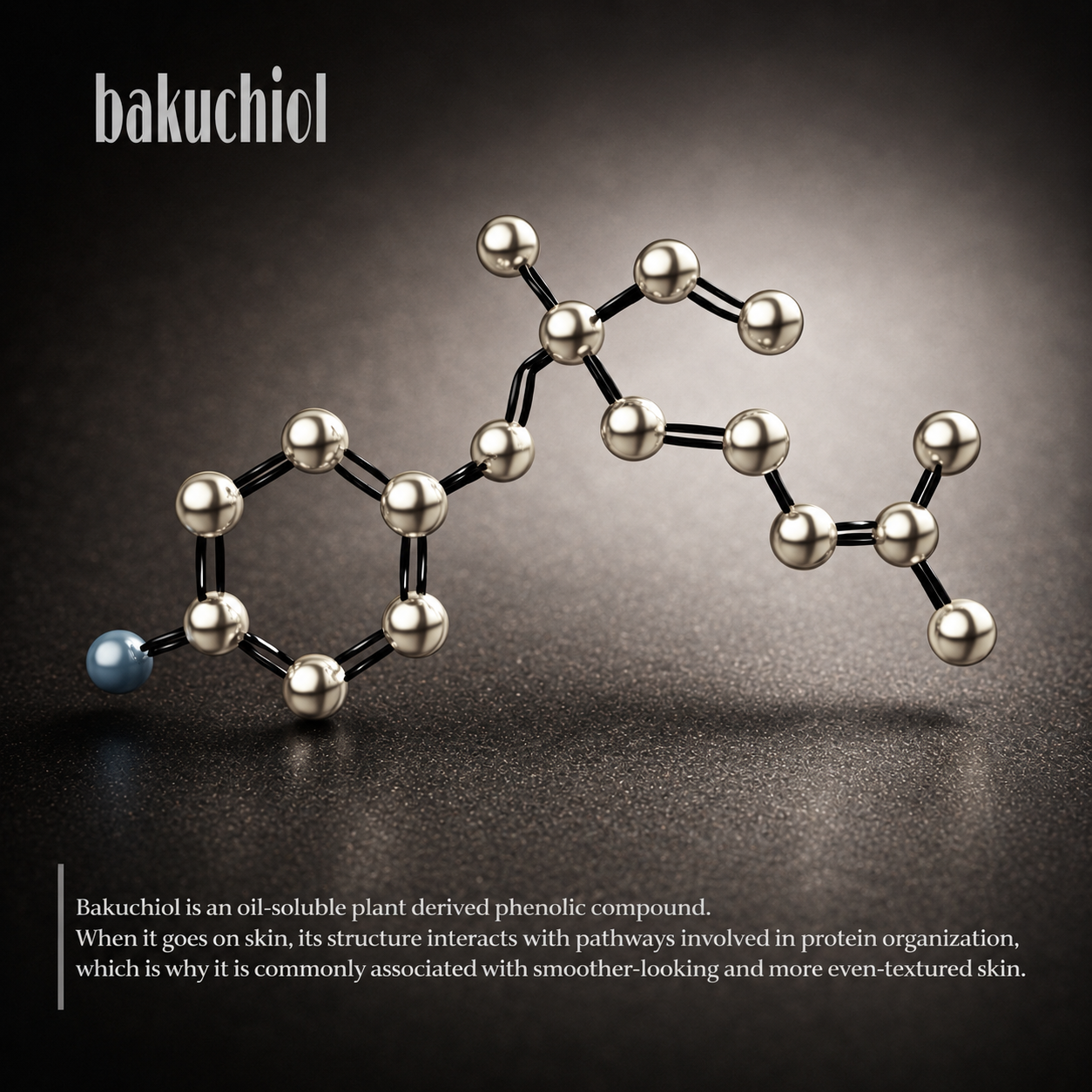
Bakuchiol is chemically different. This plant-derived compound has been investigated for several dermatologic applications, particularly visible photoaging, hyperpigmentation, and acne. Research into topical bakuchiol remains substantially smaller than the evidence base surrounding established retinoids, so it is more accurate to treat it as an ingredient with promising clinical evidence rather than as a perfect botanical replacement for retinol.
When both ingredients are used in one routine, hyaluronic acid does not “activate” bakuchiol, and bakuchiol does not make hyaluronic acid inherently more hydrating. Their value comes primarily from complementary function.
For most routines involving separate products, a lightweight water-based hyaluronic acid serum can be applied before a richer or more oil-based bakuchiol formula. The exact order should still be determined by the finished products rather than by ingredient names alone.
That formulation distinction becomes especially important when the goal is to keep skin hydrated without building an unnecessarily complicated routine.
Why Bakuchiol and Hyaluronic Acid Make Sense Together

Skincare ingredients are often discussed as though each bottle needs to solve an entire skin concern by itself. In practice, well-designed routines frequently work better when different products have clearly defined roles.
Hyaluronic acid primarily contributes to the hydration side of the routine. Bakuchiol can contribute to a longer-term routine focused on visible texture, tone, and signs of skin aging.
These functions are related, but they are not identical.
Skin that is adequately hydrated often appears smoother and more supple because water content influences the physical properties of the stratum corneum, the outermost portion of the epidermis. Hydration can therefore improve the immediate appearance and feel of skin without necessarily addressing the same biological pathways targeted by an active-focused ingredient.
Bakuchiol approaches the routine from another direction.
A systematic review of human clinical trials published in 2024 found that topical bakuchiol has been studied in areas including aging, acne, and post-inflammatory hyperpigmentation. At the same time, the review identified important weaknesses in the evidence: many studies were open-label, several used combination products, and study designs varied considerably.
That nuance matters.
Bakuchiol deserves more scientific precision than the common description of “natural retinol.” It is not retinol, and the molecules do not share the same chemical structure. The more useful question is what bakuchiol itself may contribute to a skincare routine and how the finished formulation can complement other steps.
Elora Clinic explores those distinctions more deeply in its guide to what bakuchiol is and throughout the broader Bakuchiol ingredient hub.
Pairing a bakuchiol-focused step with intentional hydration allows the routine to address two objectives without pretending they are the same objective.
Hyaluronic Acid Is More Than a “Plumping” Ingredient
Hyaluronic acid has become so familiar in skincare marketing that its actual formulation science can disappear behind phrases such as “deep hydration” and “plumping.”
Its biology is considerably more interesting.
Hyaluronic acid, also called hyaluronan, is an important component of the extracellular matrix. Its interactions with water contribute to the hydration and biomechanical properties of skin. In topical cosmetic products, however, performance depends on more than the simple presence of “hyaluronic acid” on an ingredient list.
Molecular weight can matter. Chemical modifications can matter. The concentration and surrounding formulation can matter. A hyaluronic acid ingredient incorporated into a gel, serum, cream, or more sophisticated delivery system does not necessarily behave identically in every finished product.
Research reviews of topical hyaluronic acid also distinguish among different molecular sizes and forms rather than treating all HA materials as interchangeable.
For someone building a routine around bakuchiol and hyaluronic acid, this has a practical implication: choose the finished formula, not merely the ingredient name.
A lightweight water-based serum containing sodium hyaluronate alongside other humectants may work very differently within a routine than a richer cream that happens to contain hyaluronic acid farther down its ingredient list.
Elora Clinic’s guide to hyaluronic acid serum benefits examines hydration more specifically, including how hyaluronic acid fits into serum-based routines.
Hydration Is Not the Same as Moisturization
This distinction becomes particularly useful when combining hyaluronic acid with bakuchiol.
Hydration refers primarily to water.
Moisturization is broader.
A complete moisturizing system can contain humectants, emollients, and occlusive ingredients that address different aspects of how skin acquires and retains moisture. Humectants interact with water. Emollients help soften and smooth the skin surface, while more occlusive materials can reduce water loss by forming a barrier at the surface.
Hyaluronic acid belongs primarily to the humectant side of this framework.
Applying a hyaluronic acid serum therefore does not automatically mean that every dry or dehydrated skin problem has been solved. Someone can use a hydration-focused serum and still experience tightness if the rest of the routine does not adequately support the skin.
Cleansing habits can contribute. Low-humidity environments may change how comfortable a routine feels. An impaired barrier can increase water loss, while an unsuitable product combination can leave skin feeling coated without actually resolving dehydration.

This is why Elora Clinic’s guide on how to use hyaluronic acid without drying the skin focuses on the entire routine rather than telling readers simply to apply more hyaluronic acid.
The same principle applies when bakuchiol enters the routine.
If the bakuchiol product is delivered in a lipid-rich or oil-containing system, the second step may contribute an emollient component that a lightweight hyaluronic acid serum does not provide on its own. If the bakuchiol product is another lightweight water-based serum, a separate moisturizer may still be useful afterward.
In other words, product architecture matters as much as ingredient compatibility.
Bakuchiol Should Be Understood on Its Own Terms
Much of bakuchiol’s popularity comes from its association with retinol.
There is legitimate scientific reasoning behind the comparison, but the marketing version often goes too far.
Clinical research has evaluated topical bakuchiol for visible signs of photoaging, and earlier research found improvements in parameters such as wrinkle appearance and hyperpigmentation. Systematic reviews have also identified potentially useful findings across several dermatologic applications.
Yet the available human evidence has limitations. A 2024 systematic review analyzing 15 human clinical trials noted substantial methodological weaknesses across the literature, including uncontrolled studies and combination formulations that make it difficult to isolate bakuchiol’s individual contribution.
That does not make bakuchiol uninteresting. It makes accurate interpretation more important.
The ingredient can be incorporated into a routine without assuming that it reproduces every effect, mechanism, strength, or limitation associated with retinoids.
For readers specifically weighing those two approaches, Elora Clinic’s bakuchiol versus retinol guide examines the comparison directly.
Within a bakuchiol and hyaluronic acid routine, however, retinol does not need to remain the center of the conversation. The more practical objective is to understand what each selected product contributes.
Bakuchiol can occupy the active-focused portion of the routine.
Hyaluronic acid can strengthen its hydration architecture.
The remaining products—cleanser, moisturizer, sunscreen, and any additional treatment serum—should then be chosen around what the skin actually needs rather than around the assumption that more active ingredients automatically produce better results.
Complementary Does Not Automatically Mean Synergistic
“Synergy” is one of the most overused words in skincare.
Two ingredients can make excellent sense together without evidence showing that one amplifies the biological activity of the other.
That is the more responsible way to describe bakuchiol and hyaluronic acid.
Current evidence supports the independent relevance of topical hyaluronic acid for hydration-focused cosmetic applications and provides emerging-to-moderate clinical evidence for bakuchiol across several skin concerns. That is different from demonstrating that combining the two produces a unique biological effect greater than either ingredient would otherwise provide.
Fortunately, a skincare routine does not require biochemical synergy to be intelligently designed.
Complementary ingredients can be useful precisely because they do different things.
A hydration-focused step can improve immediate skin comfort and surface hydration. An appropriately formulated bakuchiol product can serve a separate longer-term purpose. Moisturizer can add additional emollient or occlusive support where necessary, while sunscreen handles a function neither bakuchiol nor hyaluronic acid should be expected to replace.
This approach creates a more rational question than simply asking whether two popular ingredients can be mixed:
What is the best order for using bakuchiol and hyaluronic acid so that the formulation of each product works logically within the complete routine?
The answer begins with one of the most important rules of serum layering: look beyond the ingredient name and pay attention to the vehicle carrying it.
How to Layer Bakuchiol and Hyaluronic Acid
When bakuchiol and hyaluronic acid are supplied in separate products, the most logical layering order usually follows the structure of the formulations rather than a rigid rule about the ingredients themselves.
For a routine built around a lightweight water-based hyaluronic acid serum and a richer bakuchiol serum, a practical order is:
- Cleanse the skin.
- Apply the water-based hyaluronic acid serum.
- Allow the serum to settle into a thin, even layer.
- Apply the bakuchiol product.
- Follow with moisturizer when additional barrier support is needed.
- During the daytime, finish with broad-spectrum sunscreen.
This sequence follows a basic formulation principle: lighter, water-rich products generally sit more naturally underneath lipid-rich or oil-based products.

The distinction is especially relevant when the bakuchiol formula contains emollient oils. Applying an oil-rich layer first can create a more hydrophobic surface, which may make a water-based serum applied afterward spread or layer less elegantly. That does not mean the ingredients become chemically incompatible. It simply means the finished products may perform better sensorially when their vehicles are considered.
Elora Clinic’s guide to how to layer serums in a skincare routine explores this broader principle across multi-serum routines.
There is no need to wait 20 or 30 minutes between these two ingredients. Unless the directions for a specific product state otherwise, allowing one layer to settle enough that the next product can be distributed without excessive pilling is generally sufficient.
Should Hyaluronic Acid Go Before Bakuchiol?
In many routines, yes—but not because hyaluronic acid must chemically precede bakuchiol.
The answer depends on the vehicles carrying them.
A thin aqueous hyaluronic acid serum will normally make sense before an oil-based or lipid-rich bakuchiol serum. Conversely, if bakuchiol is incorporated into a lightweight water-based treatment and the hyaluronic acid is part of a richer cream, the order could reasonably be reversed.
This is why the familiar instruction to “apply hyaluronic acid first” is useful only when the products themselves support that order.
Texture offers a practical starting point:
| Product Type | Typical Position in Routine | Primary Role |
| Lightweight hyaluronic acid serum | Earlier | Hydration/humectancy |
| Water-based treatment serum | Earlier to middle | Depends on active ingredients |
| Emulsion or moisturizer | Middle to later | Hydration, emollience and/or occlusion |
| Oil-rich bakuchiol serum | Later | Active-focused treatment plus emollience, depending on formula |
| Facial oil | Later | Emollient/occlusive support |
| Sunscreen | Final morning step | Photoprotection |
This framework is more useful than memorizing an ingredient-by-ingredient hierarchy.
Elora Clinic discusses the underlying difference between aqueous and lipid-rich formulations in its water-based versus oil-based serum guide.
For bakuchiol and hyaluronic acid, the practical goal is to create a sequence in which each formula spreads properly, remains comfortable, and performs the role for which it was designed.
Should You Apply Hyaluronic Acid to Damp Skin?
Applying a humectant serum to slightly damp skin can be a useful technique, but it should not be transformed into an absolute skincare rule.
Hyaluronic acid interacts with water, so applying a hydration-focused formula while some water remains at the skin surface can create a comfortable application environment. The important step is what happens afterward.
Leaving a humectant serum as the final layer may not provide enough moisturization for every person, particularly when skin is dry or the environment is challenging. A moisturizer, emollient serum, or other appropriate finishing product can help complete the routine.
This distinction becomes useful when the next step contains bakuchiol.
Imagine a routine using a lightweight hyaluronic acid serum followed by an oil-containing bakuchiol formula. The first product provides a water-rich humectant step. The second may add lipids and emollience while delivering bakuchiol.
That is a more complete formulation strategy than expecting the hyaluronic acid serum alone to perform every aspect of moisturization.
People who repeatedly experience tightness after HA products should examine the entire routine rather than automatically concluding that they need a higher concentration. Elora Clinic covers this issue in its guide to why hyaluronic acid can make skin feel tight.
More product is not necessarily the answer.
Morning or Night: When Should You Use the Combination?
There is no universal requirement to reserve this combination exclusively for nighttime.
Hyaluronic acid can readily fit into morning or evening skincare because hydration is useful at either time. Bakuchiol is also frequently incorporated into routines without the same conventional nighttime-only positioning associated with many retinoid routines.
Still, the finished product’s directions should take priority over general ingredient advice.
For someone introducing bakuchiol for the first time, evening use can offer a particularly simple starting point because it allows the routine to remain minimal:
Simple Evening Routine
- Gentle cleanser
- Hyaluronic acid serum
- Bakuchiol serum
- Moisturizer if needed
There is little benefit in surrounding a new bakuchiol product with five additional treatment serums simply because the ingredients are technically compatible.
A simpler routine makes it easier to evaluate how the skin responds.
Once the combination is established and comfortable, the routine can be adjusted according to skin type, climate, formulation texture, and other skincare goals.
Simple Morning Routine

A morning version might look like:
- Gentle cleanse or rinse
- Hyaluronic acid serum
- Bakuchiol product, if intended for daytime use
- Moisturizer when needed
- Broad-spectrum sunscreen
Sunscreen remains the essential final step. Neither bakuchiol nor hyaluronic acid replaces photoprotection.
This matters particularly for someone using skincare to improve the appearance of uneven tone or visible photoaging. A sophisticated treatment routine cannot compensate for repeatedly exposing the skin to ultraviolet radiation without appropriate protection.
How Often Should You Use Bakuchiol and Hyaluronic Acid?
The two ingredients do not necessarily need identical introduction schedules.
Hyaluronic acid is commonly incorporated into daily hydration products. Bakuchiol deserves a more individualized approach because tolerability depends on concentration, vehicle, accompanying ingredients, and the person’s existing routine.
A conservative strategy for someone new to bakuchiol is to begin with a limited number of applications each week and increase frequency if the skin remains comfortable.
That approach is particularly sensible when the routine already contains other active-focused ingredients.
Using bakuchiol alongside exfoliating acids, retinoids, strong acne treatments, or several unfamiliar products at once makes it difficult to identify what caused irritation if a reaction develops.
Starting simply creates information.
If the skin remains comfortable, frequency can gradually increase according to the product instructions and individual needs. When persistent burning, itching, swelling, or significant redness develops, continuing simply to “build tolerance” is not a sensible strategy.
Bakuchiol is often described as gentle, but gentle does not mean incapable of causing irritation.
Elora Clinic addresses this distinction in its guide to whether bakuchiol can cause irritation.
Human clinical research on bakuchiol has produced promising findings, yet the evidence base is still developing. A 2024 systematic review identified 15 human clinical trials involving topical bakuchiol formulations, but 12 were unblinded, open-label trials without control groups, and 10 evaluated combination formulations rather than bakuchiol alone. Those limitations make sweeping claims about universal efficacy or tolerability inappropriate.

A well-designed routine should therefore respond to the individual formula and the individual’s skin rather than to the reputation of an ingredient.
Can You Use the Combination Every Day?
Potentially, yes.
Many people may be able to incorporate bakuchiol and hyaluronic acid into a daily routine when the products are well tolerated. There is no inherent requirement to cycle hyaluronic acid, and bakuchiol formulations may be designed for regular use.
Frequency should still be separated from ambition.
Using an ingredient twice as often does not automatically produce twice the benefit. The skin needs to tolerate the complete routine, and excessive complexity can become counterproductive even when each individual product appears reasonable.
Consider what else is already being used.
Someone applying bakuchiol alongside a gentle cleanser, hydration serum, moisturizer, and sunscreen has a very different irritation burden from someone simultaneously using retinol, glycolic acid, salicylic acid, vitamin C, multiple exfoliating toners, and bakuchiol.
The question is therefore not simply whether bakuchiol itself can be used daily.
The better question is whether the entire routine makes sense daily.
Elora Clinic’s guide to how many serums to use in a skincare routine provides a useful framework for preventing technically compatible ingredients from turning into an unnecessarily complicated regimen.
What If Your Skin Is Sensitive?
Sensitive skin changes the strategy more than it changes the fundamental compatibility of the ingredients.
Hyaluronic acid itself is widely used in hydration-focused formulas, but a person can still react to a finished HA serum because every serum contains more than its headline ingredient. Preservatives, botanical extracts, fragrances, solvents, acids, or other actives may influence tolerability.
The same principle applies to bakuchiol.
A label that says “bakuchiol serum” does not reveal everything necessary to predict how a sensitive complexion will respond.
When sensitivity is a concern, introduce one new product at a time.
Begin with a small amount and follow the manufacturer’s directions. Avoid simultaneously introducing several strong actives, and observe whether persistent redness, itching, burning, or swelling develops.
For people specifically interested in this active while managing reactive skin, the Elora Clinic guide to bakuchiol serum for sensitive skin examines that decision in greater detail.
Hydration can support comfort, but adding hyaluronic acid should not be treated as an antidote to irritation.
If a bakuchiol formula causes a genuine reaction, applying more hydrating serum over it does not solve the underlying problem.
That distinction matters because dryness and irritation can feel similar while requiring different responses.
Dehydration, Dryness, and Irritation Are Three Different Problems

A person may describe all three conditions by saying, “My skin feels dry.”
From a routine-design perspective, however, they are not identical.
Dehydrated skin is lacking water. It may feel tight and can occur even when the skin produces substantial sebum.
Dry skin generally refers to a skin type or condition characterized by insufficient lipids and reduced ability to maintain an appropriately moisturized surface.
Irritated skin involves an inflammatory response. Burning, stinging, redness, itching, or tenderness can signal something different from ordinary dehydration.
Hyaluronic acid is most directly relevant to the hydration component.
A richer bakuchiol formula may contribute emollience depending on its composition, but neither ingredient should automatically be treated as a complete solution to a compromised skin barrier.
For a broader explanation of barrier function, Elora Clinic’s skin barrier repair guide examines how the stratum corneum, lipids, hydration, and transepidermal water loss interact.
Recognizing the actual problem prevents an extremely common skincare mistake: responding to every uncomfortable sensation by adding another serum.
Sometimes the routine needs more hydration.
Sometimes it needs more lipid support.
At other times, the most useful intervention is temporarily removing unnecessary actives and allowing an irritated barrier to recover.
Understanding those differences becomes especially important before deciding what additional ingredients belong beside bakuchiol and hyaluronic acid.
Which Ingredients Pair Well With Bakuchiol and Hyaluronic Acid?
Once hydration and bakuchiol are established as the foundation of the routine, the next question is whether anything else needs to be added.
Often, the answer is less than people expect.
A routine does not become more sophisticated simply because it contains more active ingredients. Each additional serum should have a defined purpose that is not already being adequately addressed. For someone using bakuchiol and hyaluronic acid, that might mean adding antioxidant support in the morning, barrier-focused ingredients when the skin is easily irritated, or a targeted ingredient for a specific concern.
The important principle is to build outward from the skin’s needs rather than inward from a collection of trending ingredients.
Niacinamide
Niacinamide can make sense alongside this combination because its role extends beyond simple hydration. As a form of vitamin B3 used topically, niacinamide has been studied for effects related to epidermal barrier function, sebum, pigmentation, and the appearance of aging skin.
That does not mean every routine needs it.
Someone already using several treatment products may gain more from keeping the routine simple than from adding another serum merely because the ingredients are compatible.
When niacinamide is appropriate, a water-based formula would typically be positioned with the lighter serum steps before richer oils or creams. The concentration also matters. Higher percentages are not automatically more effective for every objective, and sensitive skin does not benefit from chasing the largest number on a label.
For a deeper comparison of how these ingredients can fit together, Elora Clinic’s guide to bakuchiol and niacinamide examines that pairing separately.
Peptides
Peptides occupy another interesting position because “peptide” describes a broad class rather than one standardized skincare ingredient.
Different cosmetic peptides are designed for different purposes, and their evidence varies. A peptide serum should therefore be evaluated according to the specific peptides, formulation, and intended use rather than the assumption that all peptide products behave identically.
From a routine perspective, a lightweight peptide serum can often coexist with hydration-focused and bakuchiol products. Whether adding one is worthwhile depends on the goal.
Someone interested in comparing hydration-focused ingredients with peptide-based treatment strategies can use Elora Clinic’s peptide serum versus hyaluronic acid guide to understand why these categories should not be treated as substitutes.
Hyaluronic acid is primarily supporting hydration. Peptides may be selected for entirely different formulation objectives.
Compatibility alone is not a reason to use both.
Aloe Vera and Other Humectant-Supporting Ingredients
Hyaluronic acid rarely needs to function alone inside a hydration formula.
Glycerin, aloe-derived ingredients, amino acids, panthenol, and other humectant or barrier-supportive components may complement a hydration system depending on the formulation.
This is an important shift in how to evaluate serums. Instead of asking whether the bottle contains one famous ingredient, examine the entire formula.
Elora Clinic’s Aloe Vera Serum combines aloe-focused skincare with hyaluronic acid in a water-based serum format. For someone who wants a lightweight hydration step before a richer treatment product, this illustrates how hyaluronic acid can exist as part of a broader aqueous formulation rather than as an isolated hero ingredient.
The best option still depends on the individual’s skin and the rest of the routine.
What Should You Be Careful Combining With This Routine?
The presence of hyaluronic acid does not make a routine irritation-proof.
This is one of the most important limitations to understand.
Because HA is associated with hydration and bakuchiol is often marketed as gentle, someone may assume that virtually any number of additional actives can be layered around them. In reality, the cumulative irritation potential of the complete routine matters more than whether two individual ingredients are technically compatible.
Retinoids
Bakuchiol and retinoids are not inherently the same ingredient, but using both simultaneously may be unnecessary for someone who is just beginning an active-focused routine.
An experienced user may have a reason to include both. A beginner, however, gains little from introducing multiple unfamiliar treatment ingredients at once.
When irritation develops, determining the cause becomes much harder.
Elora Clinic’s guide to bakuchiol and retinol together explores this combination specifically. The key consideration is not simply whether the ingredients can coexist, but whether using both serves a clear purpose for that particular routine.
Exfoliating Acids
Alpha hydroxy acids and beta hydroxy acids can be useful ingredients, but they add another variable.
Someone already using glycolic acid, lactic acid, salicylic acid, or another exfoliating treatment does not necessarily need to stop it simply because bakuchiol has been introduced. Frequency, concentration, existing tolerance, and overall skin condition should guide the decision.
Introducing both at the same time is less informative.
A more controlled approach is to establish tolerance to one treatment before adding another. Alternating active-focused nights can also make a routine easier to manage when sensitivity is a concern.
Hyaluronic acid may remain useful as a hydration step, but hydration should not be used to justify excessive exfoliation.
Strong or Unfamiliar Multi-Active Routines
The biggest problem may not be any single ingredient.
It may be the accumulation of them.
Consider a routine containing an exfoliating toner, vitamin C, niacinamide, hyaluronic acid, retinol, bakuchiol, peptide serum, and an acne treatment. Each product might have a defensible reason for existing independently, yet the combined routine can become difficult to tolerate and nearly impossible to troubleshoot.
A simpler structure makes cause and effect easier to observe.
Water-Based Hyaluronic Acid and Oil-Rich Bakuchiol: A Formulation Strategy
One of the most useful ways to build a bakuchiol and hyaluronic acid routine is to think in phases.
A water-based hydration layer comes first.
A more lipid-rich treatment layer follows.
This arrangement can provide a broader sensory profile than stacking several similar water serums. The first formula can deliver humectants in an aqueous environment, while the second contributes its own treatment ingredients and, depending on formulation, emollient lipids.
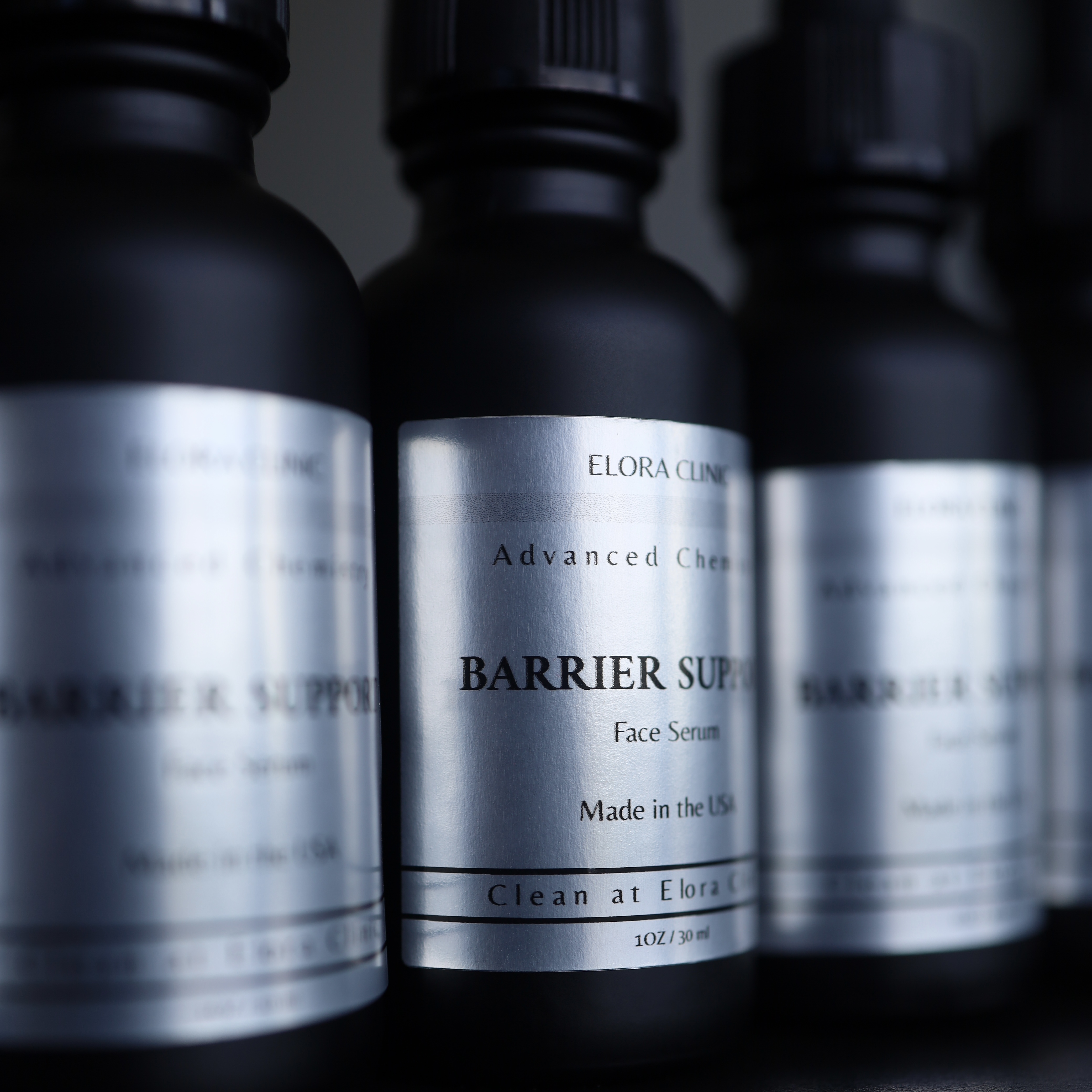
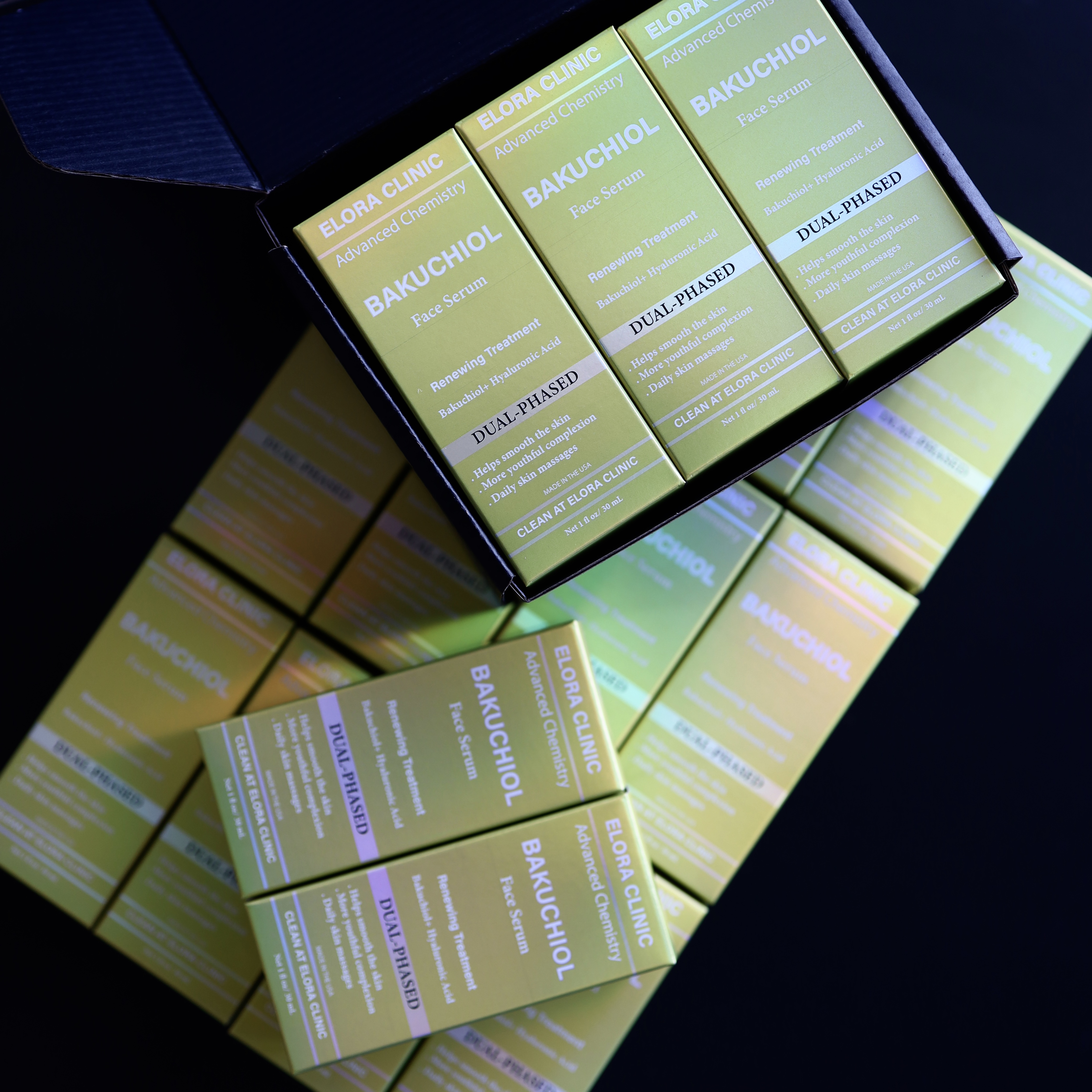
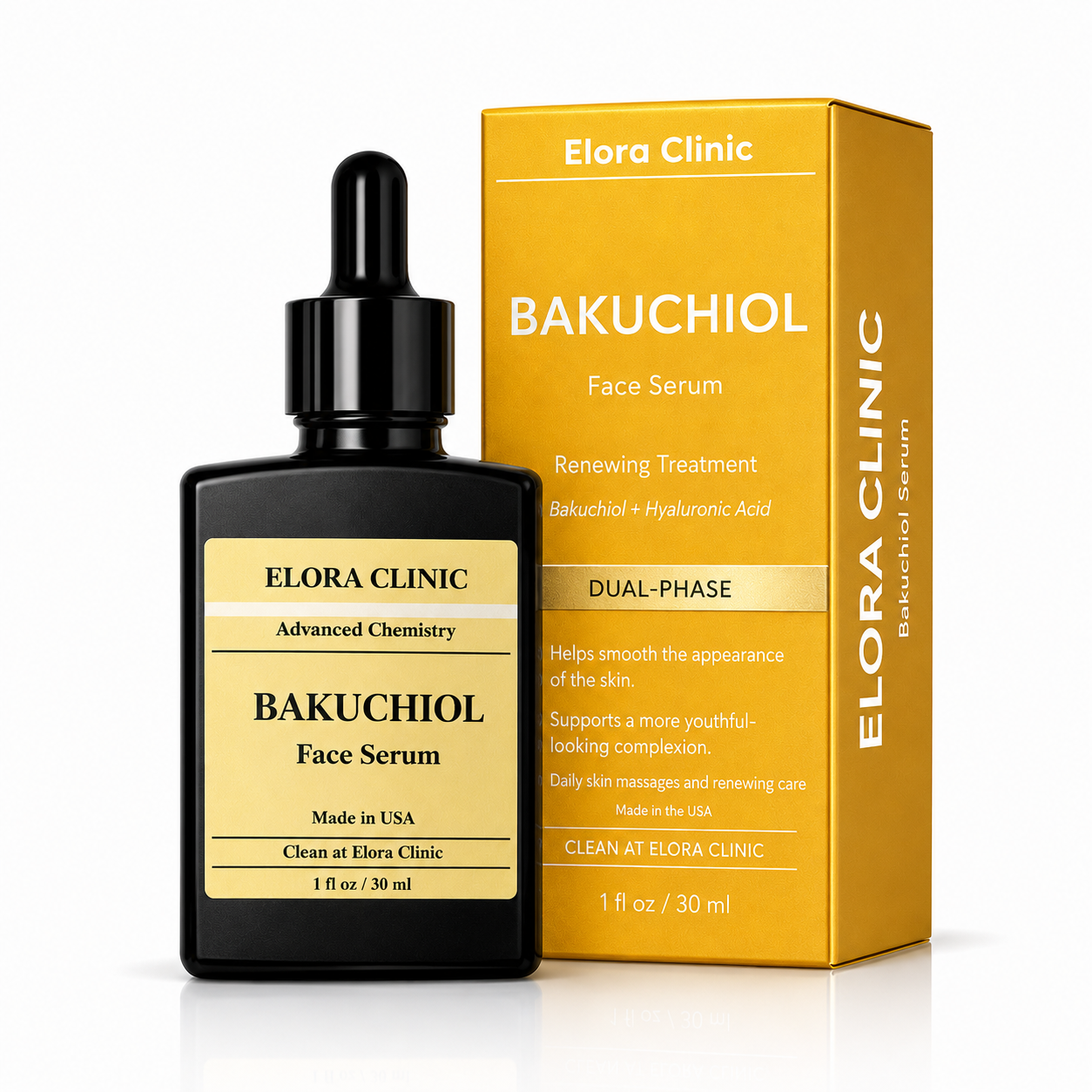
Elora Clinic’s bakuchiol serum is designed as a dual-phase system rather than a conventional single-phase water serum. The distinction matters because a dual-phase product combines aqueous and lipid components that are physically separated and intended to be mixed before application.
That architecture changes the role of the product within a routine.
Instead of thinking about bakuchiol as an isolated ingredient floating independently from its vehicle, the formula can be understood as a delivery system containing both water-compatible and oil-compatible components.
For consumers comparing formats, Elora Clinic’s guide to bakuchiol oil versus bakuchiol serum explains why product format can influence the experience even when the headline ingredient is identical.
This is also why the instruction “thinnest to thickest” is useful but incomplete.
Viscosity is visible. Phase behavior is not always visible.
A watery-looking product can contain solubilized lipophilic ingredients, while a multiphase serum can intentionally contain distinct aqueous and oil phases. Understanding the formulation gives better layering guidance than appearance alone.
How Elora Clinic Approaches the Bakuchiol Step
For a routine centered on this pairing, Elora Clinic’s Bakuchiol Serum provides the treatment-focused step in a dual-phase format.

Rather than positioning bakuchiol as the only meaningful component of the formula, the formulation combines an aqueous phase with a lipid phase. The water side includes hydration-supporting components, while the oil phase provides the environment for lipophilic components, including bakuchiol.
This matters chemically because bakuchiol is lipophilic. Formulation therefore involves more than simply adding the ingredient to water.
A dual-phase system provides one way to accommodate ingredients with different solubility characteristics while creating a product that combines water- and oil-associated components in the application experience.
For someone already using a separate lightweight HA serum, this type of bakuchiol formula can logically follow the aqueous hydration step.
The Elora Clinic Bakuchiol education hub provides the broader ingredient context, while the Bakuchiol Serum is also available through Elora Clinic’s retail presence on Walmart.
The objective is not to stack two products simply because both contain desirable ingredients. The routine should have an intelligible structure:
Water-focused hydration → bakuchiol treatment/emollient phase → moisturizer if needed.
Some people may find the first two steps sufficiently comfortable beneath sunscreen during the daytime or as part of an evening routine. Drier skin may still benefit from a moisturizer afterward.
Skin type, climate, cleansing habits, and the amount of lipid support already present determine that final decision.
Choosing a Hyaluronic Acid Step
There is no requirement that a hydration serum contain only hyaluronic acid.
In fact, the surrounding ingredients may be one of the most useful reasons to choose one formula over another.
Elora Clinic offers several water-based products in which hyaluronic acid appears within a broader formulation strategy. The appropriate choice depends on what else the reader wants from the hydration step.
For a straightforward hydration-oriented approach, a water-based formula can be positioned before the dual-phase bakuchiol product.
Someone seeking aloe-focused hydration could consider the Elora Clinic Aloe Vera Serum, while a person interested in a different water-based formulation strategy may choose another serum according to their skin goals.
The central rule remains the same: avoid adding multiple products that perform essentially the same job without a clear reason.
If the first serum already provides the hydration profile the skin needs, another HA-containing serum may add complexity without meaningful benefit.
A Practical Elora Clinic Routine

A simple evening routine can therefore be constructed without turning the bathroom shelf into a chemistry experiment.
Evening
Step 1: Cleanse gently.
Remove sunscreen, makeup, excess sebum, and surface debris without deliberately trying to make the skin feel “squeaky clean.”
Step 2: Apply the hydration serum.
Use a lightweight water-based hyaluronic acid formula as the aqueous hydration step.
Step 3: Apply the bakuchiol serum.
When using a dual-phase formula, follow its directions for properly combining the phases before application.
Step 4: Assess whether moisturizer is needed.
Dry skin, low-humidity environments, or a compromised barrier may require more support. Comfortable skin may need less.
The morning routine can remain even simpler.
Morning
Step 1: Cleanse or rinse according to skin needs.
Step 2: Apply a lightweight hydration serum.
Step 3: Use moisturizer if necessary.
Step 4: Finish with broad-spectrum sunscreen.
Bakuchiol can be positioned according to the specific product directions and individual routine, rather than assuming every person must use it twice daily.
This structure gives each step a purpose.
More importantly, it leaves enough space to determine whether the routine is actually working before another active ingredient is added.
How Bakuchiol and Hyaluronic Acid Work for Different Skin Types
The same two ingredients can feel very different depending on skin type, climate, and the rest of the routine.
That is why bakuchiol and hyaluronic acid should not be treated as a universal formula with one fixed application strategy. The pairing is broadly compatible, but the surrounding routine determines whether it feels lightweight, balanced, too rich, or insufficiently moisturizing.
Dry Skin
Dry skin often needs more than humectancy.
A hyaluronic acid serum can contribute water-binding support, but dry skin may still require emollients and occlusive ingredients to reduce water loss and improve surface comfort.
For this skin type, a practical routine might include:
- Gentle cleanser
- Hyaluronic acid serum
- Bakuchiol serum
- Moisturizer with lipid-supporting ingredients
If the bakuchiol product already contains an oil phase, that may contribute additional emollience. Even so, some people with very dry skin will still benefit from a moisturizer afterward.
The mistake is assuming that a humectant serum alone has replaced every other moisturizing function.
Oily or Combination Skin
Oily skin can still be dehydrated.
Sebum and water content are not the same thing, so a shiny complexion does not automatically mean the skin has adequate hydration.
Someone with oily or combination skin may prefer a lighter routine:
- Cleanse
- Lightweight hyaluronic acid serum
- Bakuchiol product
- Lightweight moisturizer only if needed
The amount of the oil-rich step matters. More is not necessarily better.
If the bakuchiol product feels heavy, using a smaller amount may be more comfortable than adding several extra layers. Climate also changes the equation. A routine that feels balanced in a dry winter environment may feel excessive during a humid summer.
Elora Clinic’s guide to oily and dehydrated skin explains why excess oil and insufficient water can exist simultaneously.
Sensitive Skin
Sensitive skin benefits from restraint.
Rather than introducing bakuchiol and hyaluronic acid plus several other actives at once, begin with a simple routine and assess the response.
Hydration can support comfort, but it should not be used to push through persistent irritation.
A mild transient sensation from a new product is not necessarily the same as an allergic or irritant reaction, yet ongoing burning, pronounced redness, itching, swelling, or worsening sensitivity deserves attention.
Sensitive skin also makes formulation details particularly important. A person may tolerate hyaluronic acid itself but react to fragrance, botanical extracts, preservatives, solvents, or another active in the finished serum.
The same applies to bakuchiol products.
Looking at the entire ingredient list is more informative than focusing only on the two headline ingredients.
Acne-Prone Skin
Acne-prone skin does not automatically need to avoid either ingredient.
Hyaluronic acid is commonly incorporated into lightweight water-based formulas, while bakuchiol has been investigated in acne-related applications. However, the human clinical evidence for bakuchiol in acne remains less robust than the evidence supporting established acne medications. Current reviews emphasize that many bakuchiol trials involve combination formulations or study designs with significant limitations. (PubMed)
That distinction is especially important for someone with moderate or severe acne.
A cosmetic bakuchiol serum should not be presented as a substitute for evidence-based medical acne treatment when professional care is warranted.
The finished product’s oil phase also matters. Some acne-prone users tolerate facial oils well; others find particular lipid systems too heavy or notice more congestion.
Rather than assuming that every oil is “pore-clogging” or that every oil is safe, monitor how the actual formulation behaves on the skin.
Common Mistakes When Using Bakuchiol and Hyaluronic Acid
The pairing itself is relatively straightforward. Most problems come from the way the surrounding routine is constructed.
Mistake 1: Using Too Many Products Because the Ingredients Are Compatible
Compatibility is not the same as necessity.
A routine can technically contain hyaluronic acid, bakuchiol, niacinamide, peptides, vitamin C, retinol, exfoliating acids, and several botanical extracts. That does not mean using all of them simultaneously creates a better routine.
Every additional product introduces more variables.
When the skin becomes irritated, congested, or unusually dry, identifying the cause becomes much harder.
A better approach is to assign each product a role.
Hydration. Treatment. Moisturization. Photoprotection.
Anything beyond those fundamentals should earn its place.
Mistake 2: Applying an Oil-Rich Product Before a Thin Water Serum
This is not usually a dangerous mistake, but it can make layering less efficient.
If the first layer is strongly oil-rich, a subsequent water-based serum may spread unevenly or sit differently on the surface.
When using separate products, the lighter aqueous layer will usually make more formulation sense first, followed by the richer bakuchiol product.
The rule is not absolute. Finished products differ, and manufacturer directions should take priority.
Mistake 3: Assuming Hyaluronic Acid Prevents Irritation

Hydration and irritation are not opposites.
A hyaluronic acid serum may make the skin feel more hydrated, but it cannot guarantee tolerance to another active or formula.
Persistent burning after bakuchiol should not be handled by repeatedly adding HA and continuing treatment unchanged.
Instead, remove the suspected trigger and allow the skin to recover.
Elora Clinic’s guide to how to calm irritated skin after trying new skincare explains how simplifying the routine can help when the source of irritation is unclear.
Mistake 4: Confusing Tightness With Effectiveness
A product does not need to make the skin feel tight to be working.
Tightness after a serum can reflect dehydration, film formation, an unsuitable cleansing routine, or an uncomfortable formulation.
It is not evidence that the active is “firming” the skin.
This matters especially for hyaluronic acid products because some users interpret a temporary surface-tightening sensation as proof of stronger performance.
Comfort is not a sign of weakness, and discomfort is not proof of efficacy.
Mistake 5: Introducing Bakuchiol at the Same Time as Several Other Actives
This makes troubleshooting unnecessarily difficult.
Suppose redness appears three days after introducing bakuchiol, an exfoliating toner, a stronger vitamin C serum, and a new moisturizer. There is no clean way to know which product—or interaction among them—was responsible.
Introducing one major change at a time provides much better information.
Mistake 6: Using More Product Than the Formula Requires
Serums are not dosed according to the principle that more must work faster.
A thick layer may increase tackiness, pilling, greasiness, or irritation without creating additional benefit.
Use enough to distribute the product evenly according to its instructions.
Particularly with oil-containing formulas, a small amount can cover a large surface area.
Five Real-World Scenarios
The easiest way to understand the pairing is to look at how different routine problems change the recommendation.
Scenario 1: Your Skin Feels Tight After Your Hyaluronic Acid Serum
You apply HA, wait a few minutes, and the skin feels progressively tighter.
That does not necessarily mean you are “allergic” to hyaluronic acid.
The problem may involve the finished formula, insufficient follow-up moisturization, a compromised barrier, a very dry environment, or another part of the routine.
Instead of adding more serum, evaluate what follows it.
A lipid-containing bakuchiol product or moisturizer may improve comfort by adding an emollient layer after the humectant step. Persistent burning, itching, or redness, however, points toward irritation rather than simple dehydration.
Elora Clinic’s article on why skin can feel tight after a hydrating serum explores that distinction in more detail.
Scenario 2: Your Bakuchiol Serum Feels Too Oily
An oil-rich finish is not automatically a problem, but it may not suit every complexion or climate.
Try reducing the amount rather than immediately abandoning the ingredient.
Keep the hydration layer thin and lightweight, then apply a smaller quantity of the bakuchiol product.
If the routine still feels excessively rich, move bakuchiol to nighttime only.
People with oily or combination skin may also find that they do not need a separate moisturizer over a sufficiently emollient evening product.
Scenario 3: You Want Anti-Aging Benefits but Retinol Irritates Your Skin
This is one of the most common reasons people become interested in bakuchiol.
A randomized double-blind trial comparing topical bakuchiol with retinol found improvements in photoaging measures in both groups, while participants using retinol reported more scaling and stinging. That study is encouraging, but it does not establish perfect equivalence between the ingredients. (PubMed)
A broader 2024 systematic review also concluded that the existing bakuchiol clinical literature has substantial methodological limitations. (PubMed)
For someone who cannot comfortably use retinol, a bakuchiol-focused routine may still be worth considering.
Adding a hydration-focused HA step can improve the overall routine structure without pretending that hyaluronic acid itself replaces retinoid activity.
Scenario 4: Your Skin Is Oily but Feels Dehydrated
This combination is common.
Do not respond by stripping away all moisture because the skin looks shiny.
Use a lightweight water-based hydration serum, followed by a modest amount of bakuchiol product.
If moisturizer makes the routine too heavy, adjust the texture rather than eliminating hydration entirely.
The goal is not to make the skin feel dry. It is to build a routine that supplies enough water and emollience without unnecessary heaviness.
Scenario 5: Your Skin Starts Burning After Adding Bakuchiol
Stop treating the burning as evidence that the product is “working.”
Bakuchiol can cause irritation in some individuals, and contact dermatitis has also been reported in the medical literature. Reviews of bakuchiol’s dermatologic use note that adverse reactions appear less prominent than with traditional retinoids in available studies, but the evidence is not strong enough to imply that reactions cannot occur. (PubMed)
Temporarily simplify the routine.
A gentle cleanser, simple moisturizer, and sunscreen may make more sense than continuing to layer active products over irritated skin.
Severe swelling, blistering, persistent burning, or widespread rash warrants professional medical evaluation.
Does Hyaluronic Acid Make Bakuchiol More Effective?
There is no strong clinical evidence showing that topical hyaluronic acid directly increases bakuchiol’s biological activity.
That does not make the combination pointless.
The benefit is primarily architectural.
A hydration step can create a more balanced routine around a treatment-focused product. Improved comfort may also make a routine easier to use consistently, although consistency should not be confused with biochemical enhancement.

Bakuchiol has been studied for effects involving photoaging, pigmentation, acne, gene-expression pathways, and extracellular-matrix-related processes. Earlier laboratory work found retinol-like patterns of gene regulation despite bakuchiol having no structural resemblance to retinoids. (PubMed)
More recent reviews continue to describe broader mechanistic possibilities while emphasizing that the clinical evidence is still evolving. (PubMed)
Hyaluronic acid has its own role.
Using both ingredients together therefore makes the most scientific sense when they are understood as complementary components of a complete routine rather than as a proven synergistic complex.
Does Bakuchiol Naturally Increase Hyaluronic Acid in the Skin?
This question requires more caution.
Preclinical research has examined bakuchiol in relation to pathways involved in extracellular-matrix biology, and some laboratory models have reported effects involving components connected with skin structure and hydration. Those findings are scientifically interesting but should not be translated directly into a promise that applying a bakuchiol cosmetic will significantly increase the skin’s own hyaluronic acid in humans.
Laboratory findings and finished-product clinical outcomes are different levels of evidence.
That difference becomes particularly important when marketing language turns a mechanistic observation into a guaranteed cosmetic result.
For consumers, there is no need to rely on that claim anyway.
A topical hyaluronic acid serum can serve as the explicit hydration step, while bakuchiol maintains its separate treatment role.
That creates a much clearer and more defensible formulation strategy.
When Should You Simplify the Routine?
Simplification is appropriate when the skin starts giving inconsistent signals.
Examples include:
- New persistent stinging
- Increased redness
- Sudden tightness
- Flaking
- Itching
- Unexpected congestion
- Burning when ordinarily gentle products are applied
At that point, adding another active is rarely the first move.
Return to a smaller routine and identify what changed.
When the skin is comfortable again, reintroduce products gradually.
This approach is especially useful for someone using bakuchiol and hyaluronic acid because both ingredients are often perceived as gentle. That reputation can encourage people to overlook irritation from the complete formula or from the accumulation of multiple products.
Good skincare is not determined by how many compatible ingredients can fit on the face at once.
The better routine is the one in which every step has a clear function and the skin remains comfortable enough for that routine to be maintained.
Frequently Asked Questions About Bakuchiol and Hyaluronic Acid
Can Bakuchiol and Hyaluronic Acid Be Used at the Same Time?
Yes. Bakuchiol and hyaluronic acid can generally be used in the same routine and even in the same application session. There is no established incompatibility requiring one ingredient to be used in the morning and the other at night.
When the products are separate, formulation usually determines the order. A lightweight water-based hyaluronic acid serum will typically go before a richer or more oil-based bakuchiol product.
Which Goes First, Bakuchiol or Hyaluronic Acid?
In most routines, hyaluronic acid goes first when it is supplied in a thin, water-based serum.
The bakuchiol product can follow, particularly when it contains an oil phase or has a richer texture.
This is not because bakuchiol chemically needs to sit on top of hyaluronic acid. The order simply reflects sensible product layering.
If the two ingredients appear in different types of formulas, follow the texture and manufacturer directions rather than forcing a universal rule.
Can You Mix Bakuchiol and Hyaluronic Acid in Your Hand?
Using them in the same routine is usually more predictable than physically mixing two finished products together before application.
Each cosmetic formula is designed with a specific ingredient concentration, pH, preservative system, phase structure, and sensory profile. Mixing products in the palm can change how evenly they spread and makes the amount of each formula less consistent.
Layering preserves the structure of each product more reliably.
Apply the lighter serum first, then follow with the richer product.
Is Bakuchiol With Hyaluronic Acid Good for Dry Skin?

It can be a useful combination, but dry skin often needs more than a humectant.
Topical hyaluronic acid is widely used because of its hygroscopic and hydration-supporting properties. Reviews of topical HA formulations describe benefits related to skin hydration and surface quality, although performance varies according to molecular weight, formulation, and delivery system. A review of topical hyaluronic acid and skin quality discusses these differences in more detail.
Bakuchiol can occupy the treatment-focused step, while an appropriate moisturizer adds additional emollient and occlusive support.
Very dry skin may therefore benefit from:
- Hyaluronic acid serum
- Bakuchiol product
- Moisturizer
The moisturizer remains important if the first two products do not provide enough lipid support.
Is This Combination Good for Oily Skin?
Potentially.
Oily skin still requires water, and an oily complexion can simultaneously be dehydrated. A thin water-based hyaluronic acid product may provide hydration without requiring a heavy cream underneath.
The amount and format of bakuchiol matter more for oily skin.
An oil-rich bakuchiol product may feel comfortable in a small amount, while another person may prefer to reserve it for nighttime. Product texture should be adjusted according to how the skin behaves rather than according to the assumption that oily skin must avoid all oils.
Is Bakuchiol as Effective as Retinol?
Current evidence does not justify saying that bakuchiol and retinol are universally equivalent.
A randomized clinical trial found improvements in photoaging measures with both topical bakuchiol and retinol, while the retinol group reported more scaling and stinging. Later systematic review evidence has also highlighted important limitations in the overall bakuchiol literature, including small samples, uncontrolled trials, and combination formulas that make the independent effect of bakuchiol difficult to establish.
For that reason, bakuchiol can reasonably be considered an interesting skincare active with growing clinical evidence, but it should not simply be renamed “natural retinol.”
Readers deciding specifically between those two ingredients can review Elora Clinic’s bakuchiol versus retinol guide for a more direct comparison.
Can You Use Bakuchiol and Hyaluronic Acid Around the Eyes?
Products used near the eyes require additional care.
Neither ingredient name alone determines whether a finished product is appropriate for the eye area. The full formula, concentration, application instructions, and manufacturer guidance matter.
Avoid bringing products too close to the eyes unless they are intended for that area. Persistent watering, swelling, burning, or redness should not be ignored.
For the eye area, a product specifically designed for that location is usually more sensible than assuming any facial serum can be applied directly beneath the lash line.
Can You Use Vitamin C With Bakuchiol and Hyaluronic Acid?
Many routines can include all three, but that does not mean they need to be layered together at the same moment.
A practical approach is to give the ingredients different roles.
Vitamin C may occupy the antioxidant-focused morning treatment step. Hyaluronic acid can support hydration. Bakuchiol can be used according to the selected product’s instructions, often as part of the evening routine for people who want to reduce complexity.
Separating treatment steps can make the routine easier to tolerate and troubleshoot.
The strongest routine is not necessarily the one that contains the greatest number of actives.
How to Choose Products for a Bakuchiol and Hyaluronic Acid Routine
The ingredient names on the front of a package are only the beginning of product selection.
A useful routine should also consider:
- Vehicle
- Texture
- Supporting ingredients
- Skin type
- Climate
- Existing actives
- Sensitivity
- Whether the formula is water-based, emulsified, or oil-rich
A thin hyaluronic acid serum works well as an early hydration layer because it can be incorporated without adding excessive richness.

The bakuchiol step can then be selected according to the type of treatment experience the user wants.
Someone with dry skin may appreciate a more emollient format. Oily or combination skin may require a smaller amount or a lighter overall routine.
The goal is not to find the bottle containing the largest number of recognizable ingredients.
It is to build a sequence in which each formula solves a different problem.
A Hydration-Focused Elora Clinic Option
For someone who wants a dedicated water-based hydration step before bakuchiol, Elora Clinic’s hyaluronic-acid-containing water serums can fill that position depending on the additional ingredients desired.
One option is the Elora Clinic Aloe Vera Serum, which provides a lightweight water-based format for someone who wants hydration without beginning the routine with a heavy oil product.
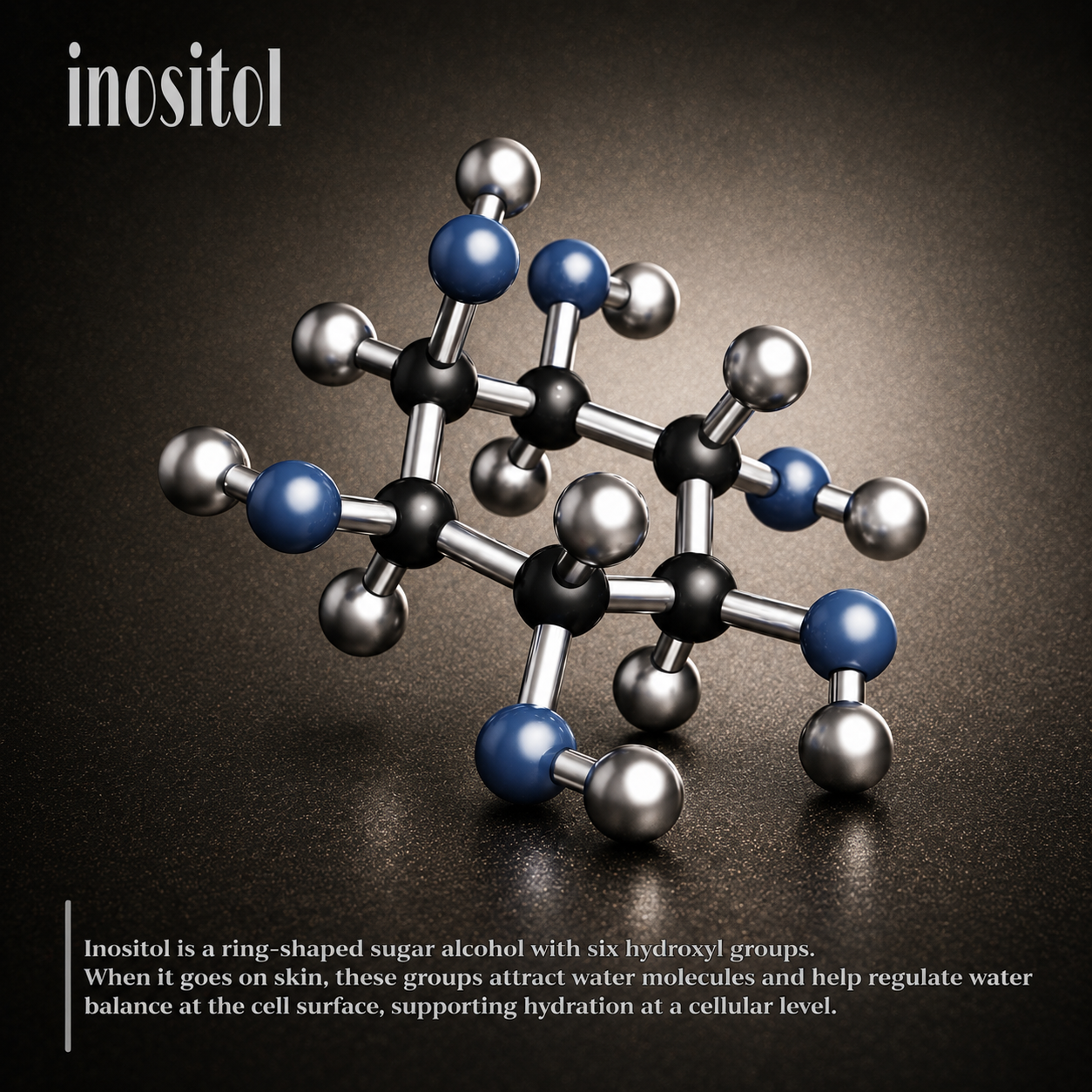
Another hydration-focused retail option is Elora Clinic’s White Rice, Inositol and Hyaluronic Acid Serum at Walmart.
These products do not need to be stacked together.
Choose one hydration step according to the surrounding routine.
Using two or three hyaluronic-acid-containing serums consecutively rarely creates the same improvement that comes from choosing one suitable hydration formula and completing the routine appropriately.
Adding the Bakuchiol Step
Once hydration is established, the bakuchiol product can occupy the active-focused portion of the routine.
Elora Clinic’s Bakuchiol Serum is available through its Walmart Bakuchiol Serum listing.
Its dual-phase format is particularly relevant to the layering principles discussed throughout this guide.
Unlike a conventional single-phase aqueous HA serum, a dual-phase serum incorporates distinct water and oil components. That makes it useful to think of the product as more than simply “bakuchiol in a bottle.”
The delivery format contributes to how the product belongs within the routine.
When pairing the two:
- Apply the lightweight hydration serum first.
- Follow with the properly mixed dual-phase bakuchiol serum.
- Add moisturizer if the skin needs more support.
- Use broad-spectrum sunscreen as the final morning step.
The American Academy of Dermatology recommends choosing a sunscreen that provides broad-spectrum protection, SPF 30 or higher, and water resistance. AAD sunscreen guidance provides additional detail.
That final step deserves emphasis because visible photoaging and uneven tone cannot be approached intelligently without considering ultraviolet exposure.
What Results Should You Realistically Expect?
The two ingredients operate on different timelines.
Hyaluronic acid can influence how hydrated and supple the skin feels relatively quickly because its role is primarily tied to hydration and the physical characteristics of the skin surface.
Topical HA research supports its use in cosmetic formulations for improving hydration and aspects of skin quality, although not every hyaluronic acid formula is identical. Differences in molecular weight, chemical modification, concentration, and formulation can change how a product behaves. Research on topical hyaluronic acid delivery illustrates how varied HA systems can be.
Bakuchiol should be viewed through a longer-term lens.
Clinical trials examining visible signs of skin aging have typically evaluated use over weeks rather than days. The available evidence suggests potential benefits, but current systematic reviews continue to emphasize limitations in trial design and the need for stronger controlled studies. The 2024 systematic review of human bakuchiol trials provides a useful overview of that evidence.
This means a realistic routine does not promise overnight transformation.
Hydration may change the immediate appearance and feel of the skin.
Visible changes associated with bakuchiol, if they occur, require consistent use over time.

How Long Should You Give the Routine?
A new routine should be evaluated on two separate questions.
First: Does the skin tolerate it?
That can often be assessed relatively early. Persistent burning, swelling, itching, or pronounced redness indicates that something needs to change.
Second: Is it producing the cosmetic result you want?
That question requires more patience.
Changes in visible texture, tone, or fine lines should not be judged after three applications. Clinical studies of active skincare ingredients commonly evaluate changes over multiple weeks because skin remodeling is not instantaneous.
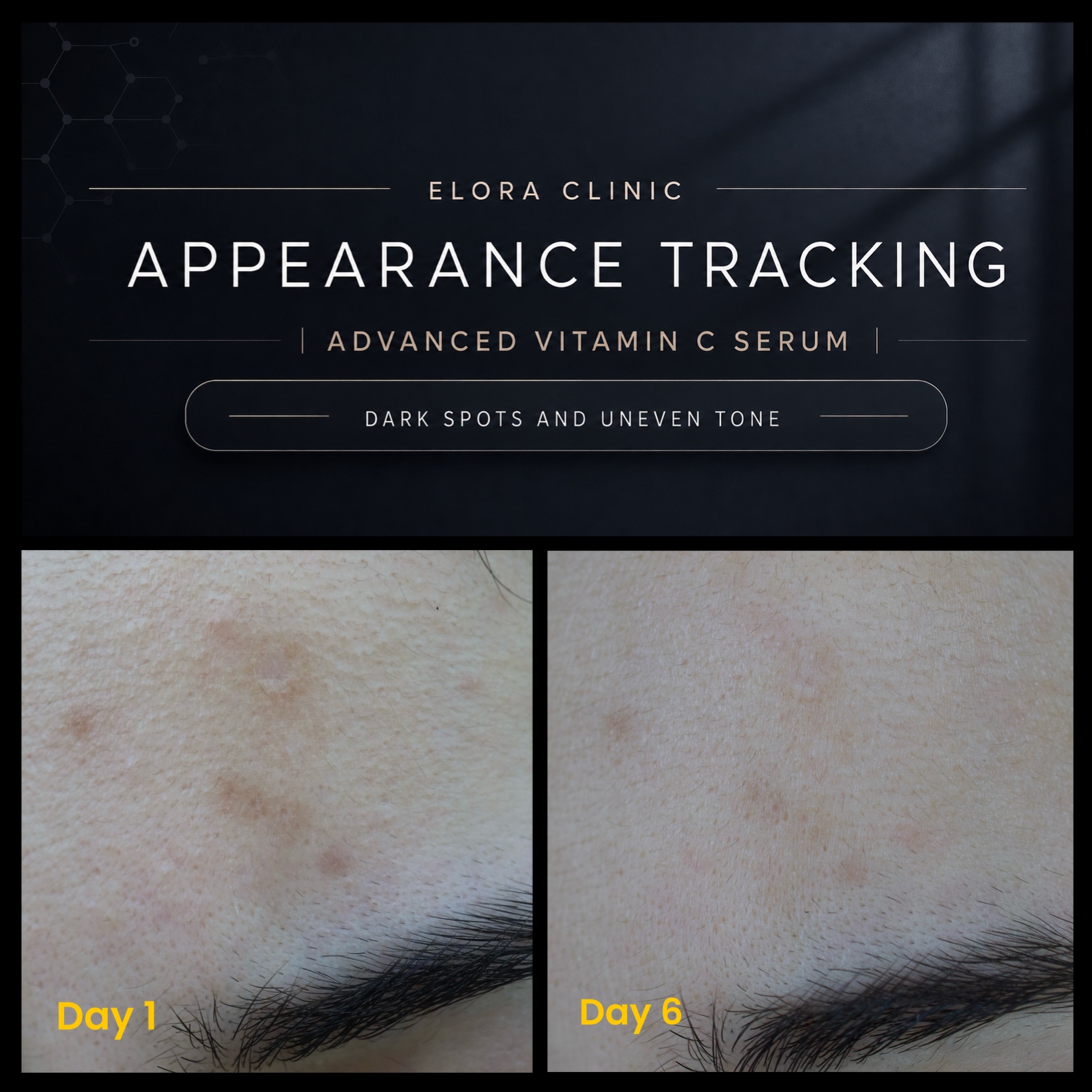
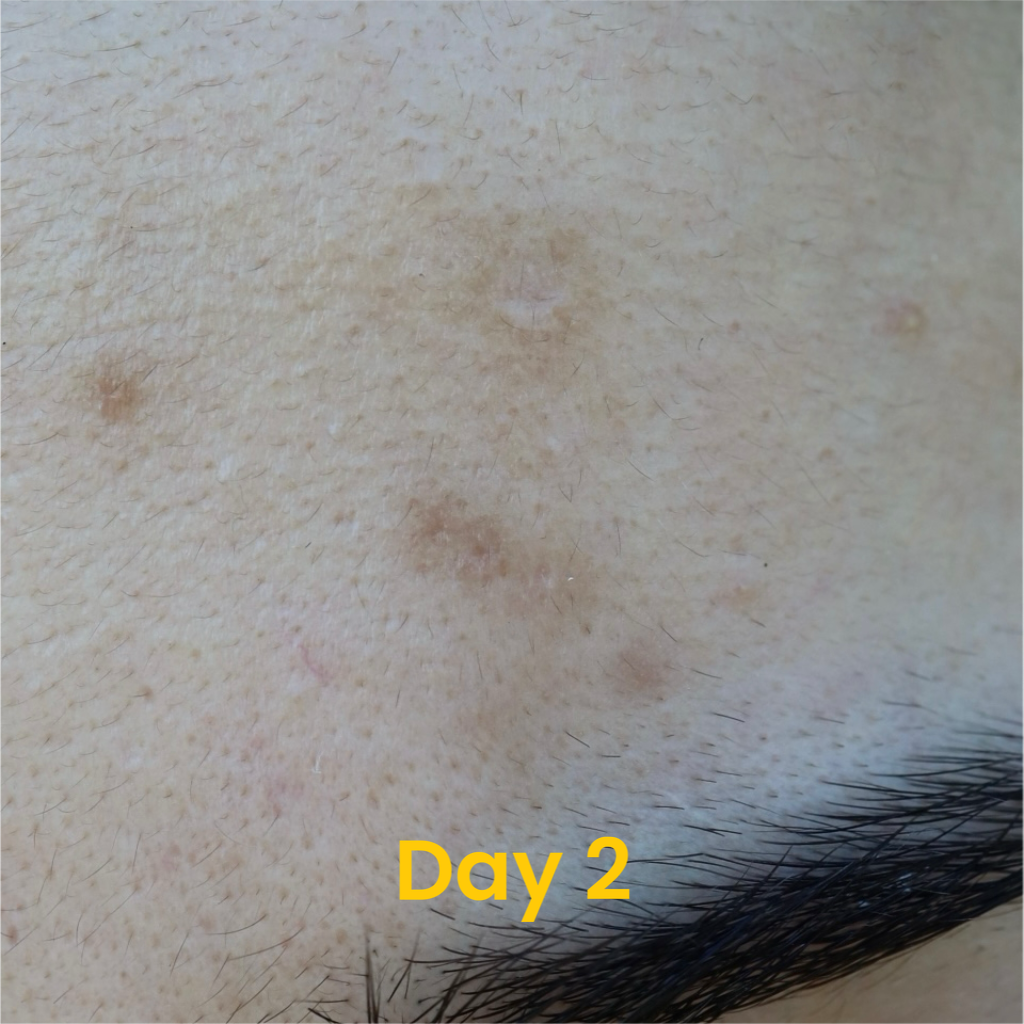
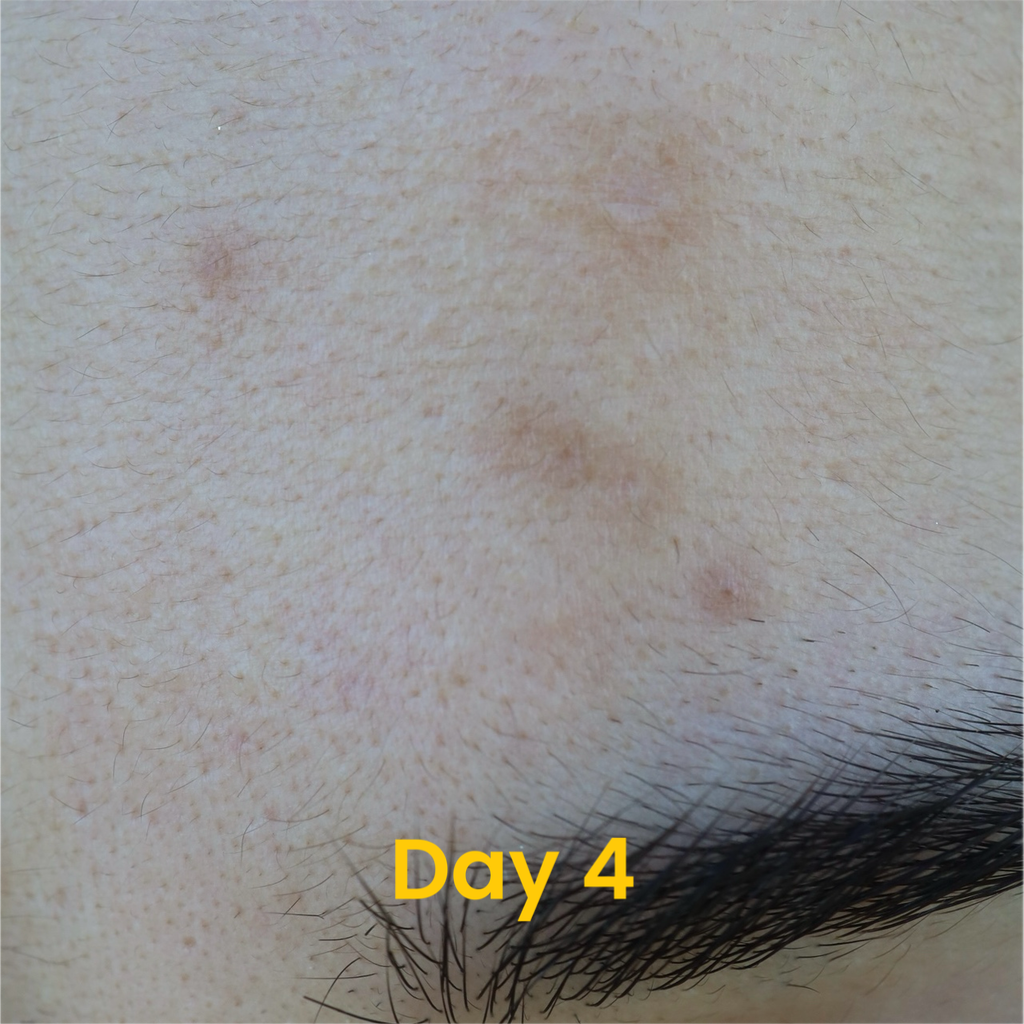
Take photographs under similar lighting if you want a more objective comparison.
Avoid introducing another new active every several days during the evaluation period. Constantly changing the routine makes it nearly impossible to determine what is helping.
Key Takeaways
- Bakuchiol and hyaluronic acid can generally be used together because they perform different functions and have no established incompatibility requiring separation.
- Hyaluronic acid primarily contributes hydration, while bakuchiol occupies the more active-focused portion of the routine.
- The pairing is best described as complementary rather than as a proven biochemical synergy.
- A lightweight water-based HA serum will usually make sense before a richer or oil-containing bakuchiol product.
- Finished formulation matters more than ingredient names alone.
- Hyaluronic acid is a humectant, but hydration alone does not replace every moisturizing function.
- Dry skin may still need a moisturizer after both products.
- Oily skin can be dehydrated and may still benefit from a lightweight HA step.
- Bakuchiol is not chemically identical to retinol, and current evidence should not be used to claim universal equivalence.
- Adding hyaluronic acid does not prevent irritation from bakuchiol or another ingredient in the finished formula.
- More serums do not automatically create a better routine.
- Consistent sunscreen use remains essential when the broader goal includes visible photoaging or uneven tone.
About Elora Clinic
Elora Clinic is a science-driven skincare brand focused on ingredient compatibility, skin barrier health, formulation logic, and practical skincare design.
Elora Ellis, founder of Elora Clinic, approaches skincare education through the relationship between individual ingredients and the finished formulations that deliver them. That distinction is especially important for ingredient combinations such as bakuchiol and hyaluronic acid, where the vehicle, layering order, and surrounding routine can matter as much as the headline ingredients themselves.
More information about the founder and the brand’s scientific approach is available through the Elora Ellis biography.
Final Takeaway: Should You Use Bakuchiol and Hyaluronic Acid Together?
For most people who tolerate the individual products, bakuchiol and hyaluronic acid can form a logical and uncomplicated skincare combination.
Hyaluronic acid provides the hydration-focused component. Bakuchiol can provide a separate active-focused step for someone interested in the appearance of texture, tone, and signs of photoaging. When the HA serum is water-based and the bakuchiol product is richer or contains an oil phase, applying the hydration serum first is usually the most sensible layering strategy.

The bigger lesson is not that these two ingredients form a magical pair.
It is that a good skincare routine gives different ingredients different jobs.
Hydration does not need to replace treatment. Treatment does not need to replace moisturization. Neither replaces sunscreen.
Once each step has a clear purpose, the routine becomes easier to understand, easier to troubleshoot, and much less likely to turn into an unnecessarily complicated collection of products.