






















Niacinamide Before or After Moisturizer? A Practical Guide

Niacinamide before or after moisturizer? For a separate, water-based niacinamide serum, the usual order is cleanser → serum → moisturizer. Finish your morning skincare with sunscreen. If niacinamide is already inside your moisturizer, use that product at the moisturizing step; a second niacinamide product is not automatically necessary.
The important distinction is between an ingredient and the product carrying it. Niacinamide can appear in a light serum, a rich cream, or a sunscreen. Its name alone does not assign every formula the same place in your routine.
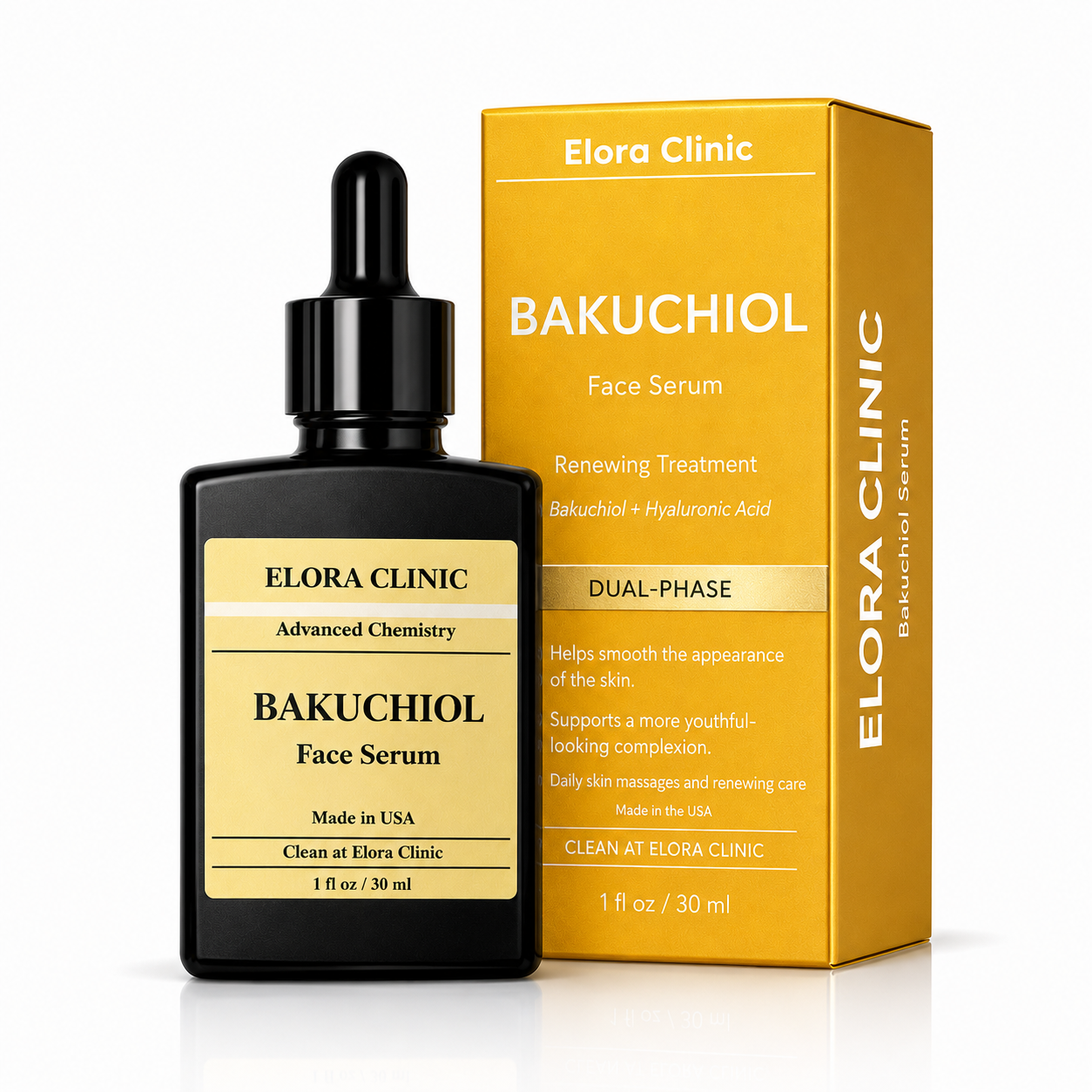
Looking for a dedicated serum? The Elora Clinic Niacinamide Face Serum is a water-based option formulated with niacinamide, glycerin, aloe vera, and sodium hyaluronate. Its cosmetic focus includes hydration and the appearance of pores. You can explore the formula on our website or shop the Elora Clinic niacinamide serum on Walmart. Check the listing for current price, seller, and delivery options.
This guide explains the usual sequence, the exceptions, and how to troubleshoot layering without turning a simple question into a complicated routine. For broader ingredient education, start with our All About Niacinamide educational hub.
Niacinamide Before or After Moisturizer: Choose by Product Type
Put a standalone water-based serum before a heavier moisturizer; put a niacinamide-containing moisturizer at the cream step. Use the table to identify which situation actually describes the products on your shelf.
| What you are using | Where it fits | What to check |
|---|---|---|
| A separate water-based niacinamide serum | After cleansing, before a heavier moisturizer | The serum’s directions, amount, and recommended frequency |
| A moisturizer that contains niacinamide | At the moisturizer step | Whether a separate serum adds anything useful |
| A sunscreen that contains niacinamide | At the sunscreen step | The sunscreen label and adequate application |
| A routine that includes prescription skincare | Follow the prescribed sequence | Your clinician’s instructions take priority over a generic layering chart |
| A cream applied before you remembered your serum | Do not restart or add extra doses automatically | Resume the intended sequence next time if your skin is comfortable |
The American Academy of Dermatology’s application-order guidance places cleansing first, followed by treatment products, then moisturizer or sunscreen. That is general guidance, not a niacinamide-specific clinical trial, and it does not classify a cosmetic serum as a medicine.
Why the Formula Matters More Than the Ingredient Name

A serum and a moisturizer can contain the same ingredient while behaving differently on the skin. Water, oils, humectants, emulsifiers, and film-forming ingredients all contribute to the finished texture. “Contains niacinamide” tells you only one part of that story.
Cleveland Clinic’s skincare-order guide recommends applying lighter products before heavier ones. For a typical thin serum and rich cream, that gives a useful starting point. However, “thin to thick” is a practical guideline—not a measurement of molecular size and not a guarantee of how much ingredient will enter the skin.
For example, imagine two products labeled “niacinamide.” One is a watery dropper serum; the other is a substantial night cream. Treating both as interchangeable serum steps makes little sense. The cream already provides the moisturizing format. Conversely, the watery product may not provide the finish you want from your usual cream.
Our formulation perspective is to assign each product a job before adding another layer. Ask: Is this my dedicated serum, my moisturizer, or my sunscreen? If two products do the same job, you may be able to simplify. A routine should earn its complexity.
What Niacinamide Research Can—and Cannot—Tell You

Niacinamide, also called nicotinamide, is a form of vitamin B3. Researchers have investigated topical nicotinamide in relation to the outer skin barrier. A study by Tanno and colleagues in the British Journal of Dermatology included cultured human skin cells and topical evaluation in dry skin. It reported changes in skin lipids and reduced water loss under the studied conditions.
That supports interest in the ingredient. It does not establish a universal waiting time between serum and moisturizer, compare every possible layering order, or prove that every commercial niacinamide formula produces the same results. Laboratory findings and observations from a particular topical preparation cannot simply be assigned to a different finished product.
For this article, the before-moisturizer recommendation follows product format and application guidance. It is not a claim that an ingredient study tested or clinically proved Elora Clinic’s serum. Nor does adding a moisturizing cream make an unsuitable serum suitable for everyone.
A Simple Morning or Evening Routine

Choose one comfortable application time that fits your product’s directions. The examples below show the order on days you use a niacinamide serum. They are not instructions to use every serum twice daily.
Morning: leave sunscreen as the final skincare layer
- Cleanse gently and follow the serum label’s instructions for skin preparation.
- Apply the directed amount of niacinamide serum.
- Add your moisturizer.
- Finish with sunscreen, following its label. Apply makeup afterward if desired.
For sun protection, the AAD recommends broad-spectrum, water-resistant sunscreen with SPF 30 or higher, alongside measures such as shade and protective clothing. A niacinamide serum does not replace sunscreen. Do not mix the two together to save a step.
Evening: keep the serum and moisturizing steps distinct
After cleansing, use the serum as directed, then moisturize. If you use prescribed skincare, follow your clinician’s sequence. Do not move a prescribed product around solely to accommodate this example.
Elora Clinic’s current product directions specify 2–3 drops on clean skin, 2–3 times per week or as tolerated. Follow your packaging if it differs, and discontinue use if irritation occurs. These instructions are more useful than assuming that every niacinamide product belongs in every morning and evening routine.
How Long Should You Wait Before Applying Moisturizer?

Follow the product’s directions rather than a universal timer. If the label does not specify a waiting period, a practical approach is to let the serum settle enough that the next layer spreads comfortably. You do not need to invent a strict ten- or twenty-minute rule for niacinamide itself.
There is an important difference between a layer that has stopped feeling wet and proof that an ingredient has completely absorbed. You cannot measure the latter by touching your face. Avoid claims that a certain number of seconds “activates” niacinamide or guarantees deeper delivery.
If your moisturizer drags or the combination rolls into flakes, test a smaller serum application within the label’s guidance and a short pause before the next layer. Change one variable at a time so you can tell what helped.
The same principle applies to wet versus dry skin: follow the directions for the actual formula. You do not need to re-wet your face simply because another serum on social media is applied that way.
What If You Already Applied Moisturizer First?
One reversed application does not establish that your routine failed. If your skin feels comfortable, you generally do not need to wash everything off and begin again. You can skip that serum application and return to the intended order next time.
For example, if you remember your serum after applying your evening cream, avoiding an extra layer may be the simplest choice. In the morning, do not disturb a finished sunscreen layer merely to fit in a forgotten optional serum.
Also, applying moisturizer first is not a reliable way to make an irritating serum safe. If you repeatedly need a workaround to tolerate a product, reconsider the product rather than continually adjusting the order. Persistent burning, itching, or redness deserves attention, not another layer to hide it.
How to Troubleshoot Pilling Without Overcomplicating the Routine

Start by separating a texture problem from a skin reaction. Pilling describes product forming little rolls or flakes during application. That appearance alone does not tell you whether niacinamide is unsuitable, whether a product is defective, or whether your skin needs exfoliation.
A useful troubleshooting sequence is:
- Record the combination. Note which serum, moisturizer, and sunscreen you used and which layer started rolling.
- Check the amount. Use the directed dose instead of adding more serum to overcome stickiness.
- Remove optional layers. Trial your basic routine without extra primers, oils, or duplicate serums.
- Compare one change at a time. Changing three products together makes the cause harder to identify.
- Stop if there is discomfort. Burning or a rash is not just a cosmetic finish problem.
Do not respond by aggressively rubbing or scrubbing the flakes away. If sunscreen is pilling, simplify the layers beneath it and ensure you can apply the sunscreen properly; using less sunscreen to improve the finish is not the solution.
Do You Need a Separate Moisturizer or Hyaluronic Acid Serum?
The answer depends on what your existing formulas already provide and how comfortable your skin feels. A product list is not a checklist that every person must complete.
Take a niacinamide serum that already contains sodium hyaluronate. Buying a separate hyaluronic acid serum solely to add that ingredient may duplicate a role already present. Our guide to niacinamide and hyaluronic acid in the same serum explores the combination in more detail.
At the same time, a water-based serum is not automatically interchangeable with your moisturizer. Consider your cream’s finish, comfort, and fit with sunscreen. If your current moisturizer works well, introducing niacinamide does not create a reason to discard it.
For oily or combination skin, avoid treating shine as a command to remove every moisturizing step. You can explore our niacinamide guide for oily skin, then choose a routine based on your own response. A product that feels pleasant on one person’s face may feel too rich or too light on another’s.
Introduce a New Product Carefully
Before full-face use, the AAD suggests testing new skincare on a small area, such as the inner arm, twice daily for seven to ten days. Use the normal amount and usual contact time. If a reaction develops, wash the product off gently and stop using it.
A home use test cannot guarantee that your face will tolerate a product or diagnose an allergy. Seek professional advice for a persistent or significant reaction. Our guide to possible niacinamide reactions explains why irritation and allergy should not be treated as interchangeable labels.
When starting something new, keep a simple note of the date, frequency, other products used, and any discomfort. Introduce only one new optional product at a time when practical. That gives you a more useful record than trying to judge an entire new routine at once.
Elora Clinic’s Approach: Give Each Layer a Purpose

Our editorial recommendation is straightforward: identify the purpose of a layer before adding it. Decide whether you want a dedicated niacinamide step, what your moisturizer contributes, and whether the finished routine remains comfortable under sunscreen.
If you want to compare the actual formula, review the Elora Clinic Niacinamide Face Serum’s ingredients and directions. For customer perspectives, read Elora Clinic customer reviews. Reviews describe individual experiences; they do not guarantee your results or substitute for clinical evidence.
To explore other ingredient families without building an unnecessarily crowded routine, visit the Elora Clinic skincare education library. Choose the next article around a specific unanswered question rather than feeling that every educational topic requires another purchase.
Final Takeaway
For niacinamide before or after moisturizer, first identify the product format. A separate water-based serum usually comes before a heavier cream. Niacinamide already inside a moisturizer stays at the moisturizer step.
Follow the actual label, give each layer a clear purpose, and keep sunscreen in its proper place. If the routine becomes uncomfortable, adding more product or rearranging the same irritating layers is not a dependable fix. The most useful order is one you can follow correctly with products that suit your skin.