



















How to Use Glutathione Serum: Amount, Order and a Simple Routine
Learning how to use glutathione serum starts with three decisions: how much your particular bottle recommends, where it belongs in your routine, and whether your skin tolerates it. For a water-based serum, the usual place is after cleansing and before moisturizer. In the morning, finish with sunscreen. A serum is an optional cosmetic step; adding more drops does not make it a medical treatment or guarantee faster changes in skin tone.
Start with the directions on the product you own. Different glutathione formulas can contain different forms of the ingredient, solvents and supporting ingredients. A routine copied from a study or a different brand may therefore be the wrong routine for your bottle.
A product example: Elora Clinic Glutathione Face Serum
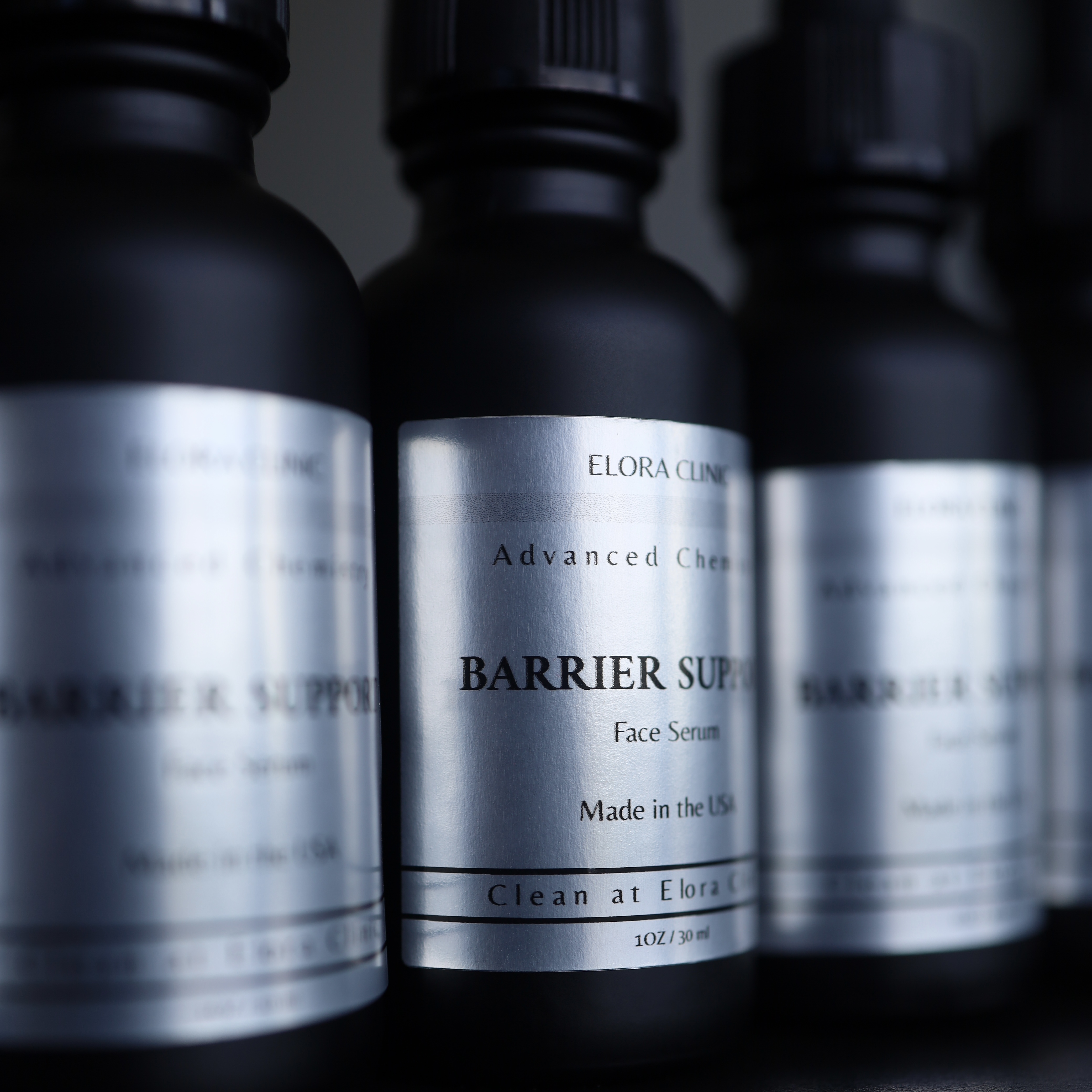
Elora Clinic Glutathione Face Serum is a water-based formula containing glutathione, aloe vera leaf juice, glycerin and sodium hyaluronate. Its published directions call for 2–3 drops on clean face and neck, before moisturizer, with morning or evening use. Check the packaging for the most current directions and ingredient declaration.
The product is positioned for hydration and a more even-looking complexion. That is a cosmetic description, not evidence that this finished serum treats melasma, acne marks or another pigment disorder. Its ingredient list does not disclose a glutathione percentage, so there is no basis for assigning it the concentration used in a clinical study.

How to use glutathione serum, step by step
1. Begin with a small-area tolerance check
Before using a new leave-on product across your face, follow the American Academy of Dermatology’s guidance for testing a skincare product. A home test can reveal an obvious reaction; it cannot rule out every allergy or predict every later breakout.
If you have an active rash, broken skin or a recent procedure, ask the professional managing your care before adding another serum. Introducing a cosmetic into an unsettled routine makes it harder to tell which product is causing discomfort.
2. Cleanse gently, then assess the skin surface
Wash your hands and use your usual gentle cleanser. Pat the skin rather than rubbing it with a towel. Follow any instructions about applying the serum to dry or damp skin. There is no established universal rule that glutathione must go onto a soaking-wet face.
Very wet skin can also make a measured application harder to control. If the serum runs toward your eyes, use less and allow the face to dry further. Avoid the eye area and any area excluded by the label.
3. Use the labeled amount
For the Elora Clinic product, start with the directed 2–3 drops. Spread a thin, even layer across the intended area using clean fingertips. Keep the dropper from touching your face, hands or other surfaces before returning it to the bottle.
A full dropper is not the same as a few drops. Drop sizes vary, so do not translate the directions into a precise milliliter dose unless the manufacturer supplies that conversion. If a small amount will not spread comfortably, review the application directions rather than repeatedly flooding the skin.
4. Follow with moisturizer
Let the serum settle enough that your moisturizer spreads without dragging or rolling into little flakes. You do not need a fixed ten- or twenty-minute pause unless a product instruction specifically requires one. The practical aim is an even layer, not a stopwatch target.
Choose a moisturizer you already tolerate. A hydrating serum and a moisturizer serve overlapping but different roles in a routine; a serum that feels watery does not automatically replace the comfort provided by your existing cream or lotion.
5. Complete the morning routine with sunscreen
Apply sunscreen as its label directs. The AAD recommends broad-spectrum, water-resistant SPF 30 or higher, alongside other sun-protection measures. Glutathione serum does not provide an SPF and should never be mixed into sunscreen to create a combined step.

Where it fits with other products
Keep the order simple: cleanser, the serum, moisturizer, and morning sunscreen. A toner is optional. A second serum is also optional. Product-specific directions take priority over the broad advice to apply lighter textures before richer ones.
| Your routine | A practical starting point | What to avoid |
|---|---|---|
| Cleanser and moisturizer only | Add the serum between those two steps | Replacing every product at once |
| Several hydrating serums | Choose one first, then assess whether another adds value | Repeating similar layers just because they are available |
| A prescription topical | Ask the prescriber where an optional cosmetic fits | Moving or diluting the prescribed treatment yourself |
| Morning makeup | Let each layer settle before the next | Scrubbing away pilling after sunscreen has been applied |
If your question is mainly about timing, the separate guide to glutathione serum in the morning or at night covers that choice. The amount, handling and product compatibility still matter whichever time you choose.
Can it be layered with vitamin C, niacinamide or an exfoliant?
There is no need to add all of these ingredients to make a glutathione serum “work.” Compatibility depends on the finished formulas and your tolerance, not simply two ingredient names. Introduce one change at a time and keep the rest of the routine familiar.
If a combination stings or leaves the skin persistently dry, stop the newly added product and simplify. Do not assume that separating products by a few minutes will make an irritating combination suitable. Strong exfoliants and prescribed treatments deserve particular attention because their own directions and precautions still apply.
Avoid mixing serums together inside a bottle. You would no longer be using either formula as designed, and you cannot judge the resulting preservation, pH or stability at home. Separate, labeled applications are easier to track.
What does the research actually tell us?
A small randomized, double-blind, split-face study of topical oxidized glutathione enrolled 30 healthy women. It compared a 2% oxidized glutathione lotion with its vehicle, applied twice daily for ten weeks. The researchers reported a reduction in the measured melanin index on the glutathione-treated side.
That study provides a reason to investigate topical glutathione further. It does not establish an ideal dose for every serum. The tested ingredient was oxidized glutathione, the delivery format was a particular lotion, and the population was small. A different glutathione form or an undisclosed concentration cannot simply inherit its results.
For broader context, visit the glutathione education hub. When reading any ingredient study, check the route of use, the exact formula, the comparison group and the outcome measured. Oral supplementation research does not establish what a topical bottle will do.

How to judge the routine without overusing the serum
First assess comfort and usability: does the routine leave your skin comfortable, and can you apply the next product smoothly? A pleasant feel is useful information, but it is different from a measured change in pigmentation. Similarly, a freshly moisturized appearance is not proof that an ingredient has changed a persistent dark mark.
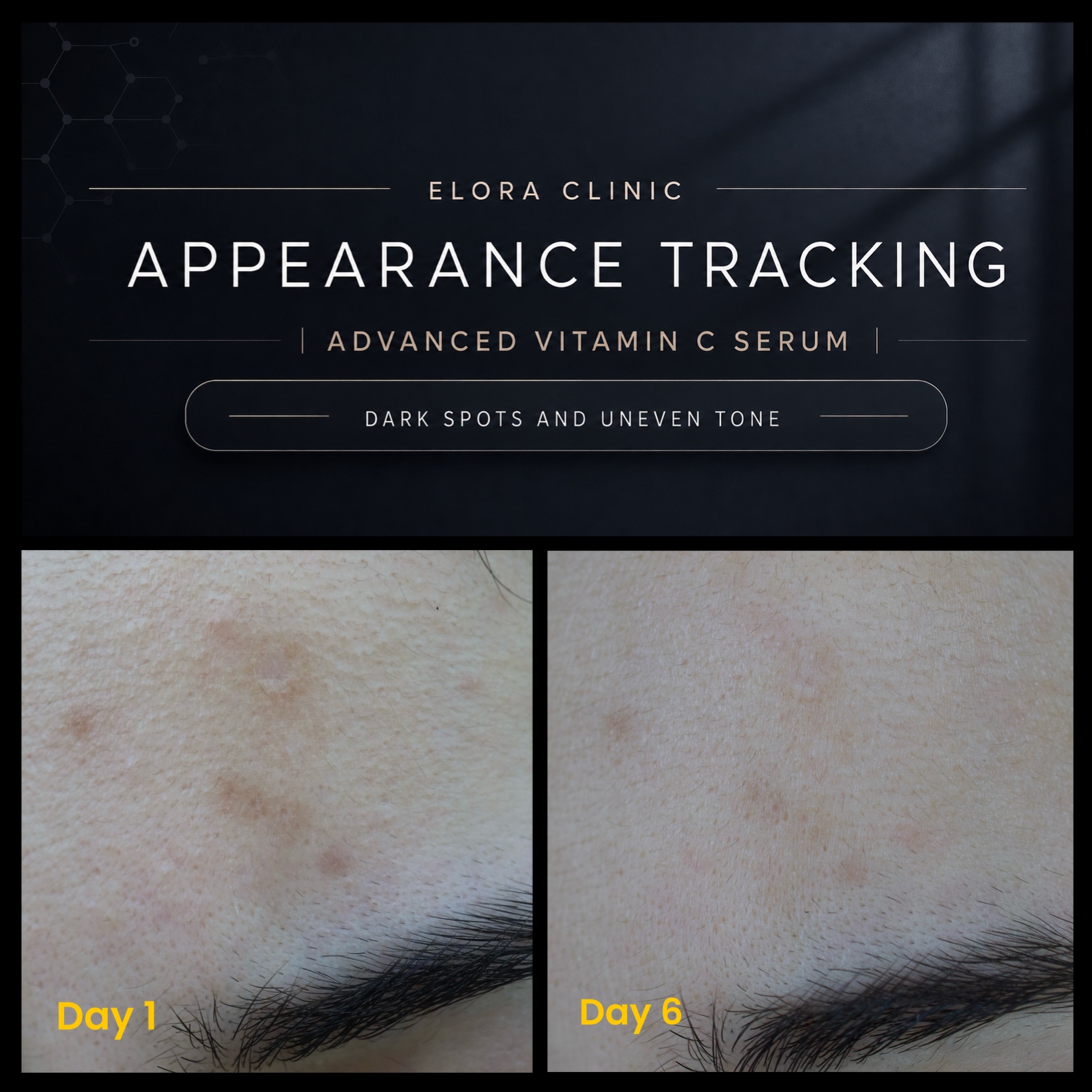
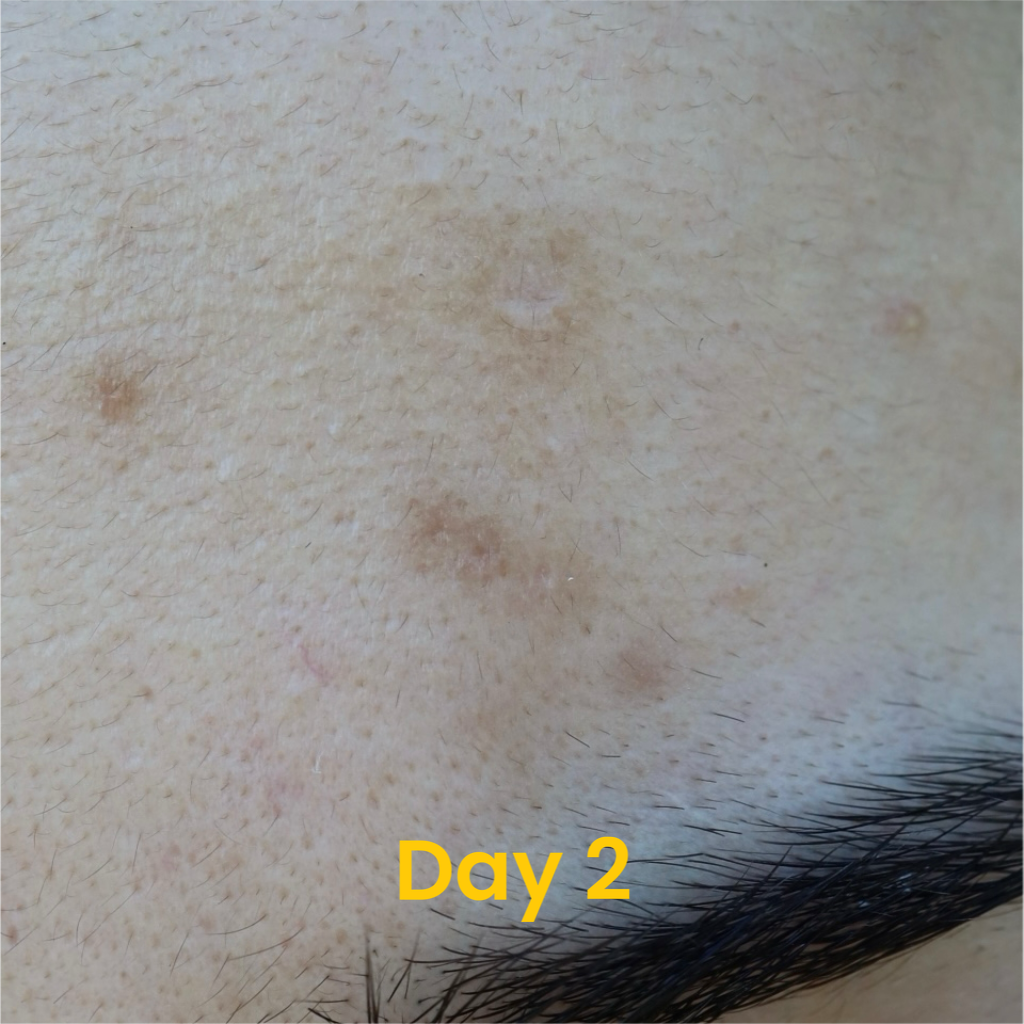
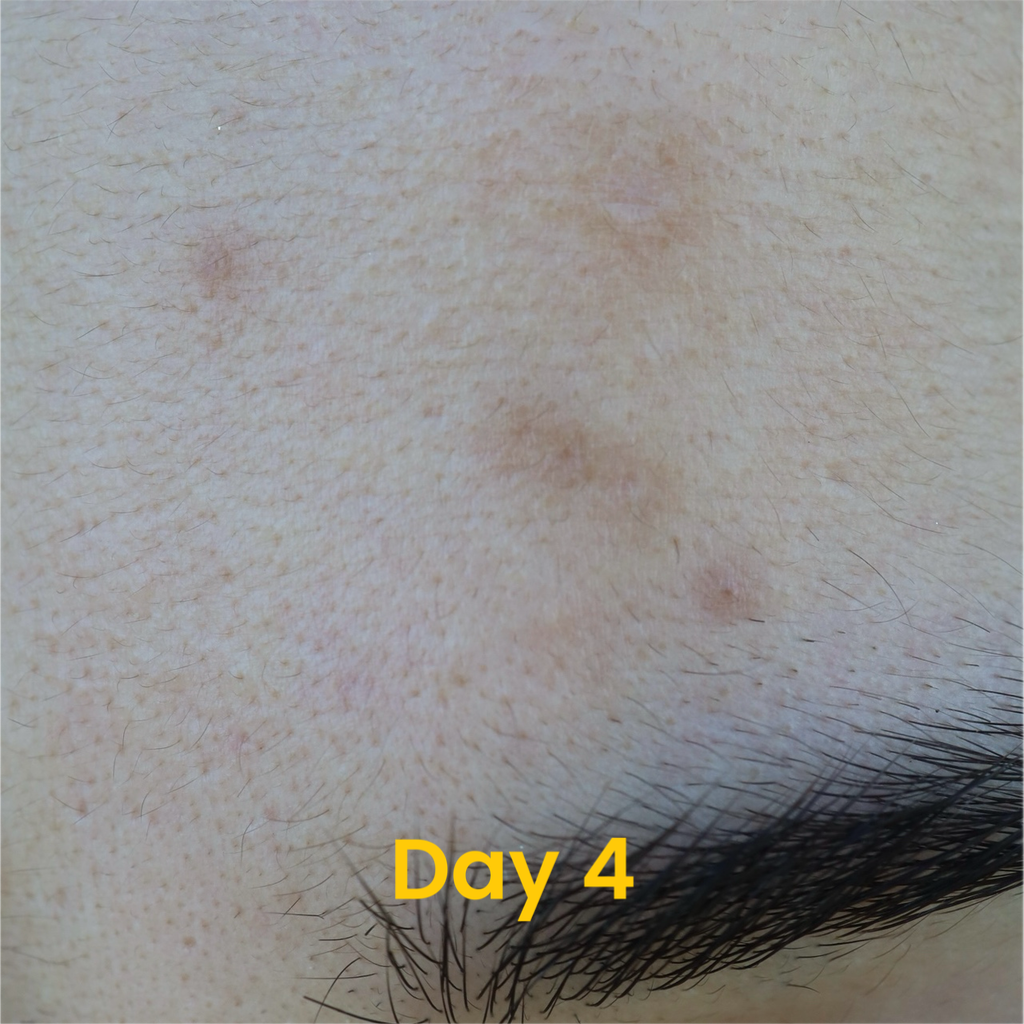
If you want to document visible changes, take occasional photographs in the same place with comparable lighting and no filter. Record the start date and other routine changes. Daily photographs under different lighting often create more confusion than insight.
There is no defensible universal “results by day seven” promise. Do not increase the amount or frequency simply because a photograph looks unchanged. A persistent, unexplained or changing patch should be assessed by a dermatologist instead of being repeatedly treated as a cosmetic experiment.
The Elora Clinic customer review page can help you understand individual experiences with texture and routine preferences. Reviews are personal reports, not controlled comparisons or guarantees of your own outcome.
Troubleshooting common application problems
The serum feels sticky. Try the labeled amount on a clean surface and reduce unnecessary layers. Stickiness can reflect the combination of products or how much is applied; it does not prove that glutathione is ineffective.
Small flakes appear while layering. This may be product pilling. Apply thinner layers and use a gentle spreading motion. If the skin itself is flaky, sore or burning, treat that as a different problem and pause the new product. Avoid rubbing aggressively to remove either type of flake.
The serum stings. Stinging is not a required sign of progress. Stop using a product that causes a reaction. Persistent symptoms warrant medical advice; significant swelling, breathing difficulty or other severe symptoms require urgent care.
The bottle has changed noticeably. Do not keep applying a product with an unexpected change in smell, texture or appearance. Contact the manufacturer with the batch information and storage history. The photograph on a website cannot establish whether your individual bottle remains suitable to use.

Storage and bottle hygiene
Keep the cap closed and store the serum according to its label. A bathroom windowsill, hot car or other exposed location can be a poor choice if it conflicts with the stated storage conditions. Refrigeration is not automatically necessary, and it does not repair a spoiled or expired product.
The FDA’s cosmetic microbiological safety guidance advises clean handling, following storage directions and not adding water to cosmetics. Do not thin a serum inside the bottle or top it up from another container. Keep track of the opening date and any stated expiry or period-after-opening information.

Frequently asked questions
Should glutathione serum be rinsed off?
A leave-on serum should be used as a leave-on product when its label says so. The Elora Clinic directions place it before moisturizer; they do not describe a rinse-off mask. If it causes a reaction, remove the product and stop using it.
Can I use extra drops on one dark spot?
Applying more than directed is not an evidence-based shortcut. A dark spot also has a cause that cannot be determined from the serum label. Use the labeled application method and seek an assessment for a persistent or changing lesion.
What if I miss a day?
Resume your normal routine. Do not double the next application. An optional cosmetic step does not need a compensating dose.
Final Takeaway
The practical answer to how to use glutathione serum is to follow your bottle’s directions, apply a controlled thin layer, and keep the surrounding routine simple. For Elora Clinic’s water-based serum, that means 2–3 drops on clean face and neck before moisturizer, with sunscreen completing a morning routine. Judge comfort before adding complexity, and keep ingredient research separate from promises about your own bottle.