
















Red Light Therapy Skincare Routine: How to Build a Scientifically Sound Routine Before and After LED

A good Red Light Therapy Skincare Routine is not simply a matter of deciding which serum sounds the most “LED-friendly.”
The routine has to coordinate two different systems:
- the photobiomodulation treatment itself, which depends on wavelength, irradiance, fluence, treatment time, device geometry, and consistency;
- and the skincare environment around the treatment, which depends on cleansing, hydration, antioxidants, emollients, barrier status, and ingredient tolerance.
That distinction matters because red light therapy is often treated online as though the skincare applied around it somehow creates the photobiological effect.
It does not.
Red and near-infrared light produce the photonic stimulus. Skincare can support the skin before or after treatment, but it does not substitute for correct PBM parameters.
The American Academy of Dermatology currently describes red light therapy as a non-invasive treatment using red or near-infrared light and notes that dermatologists generally use it as a complementary therapy, not as a universal replacement for conventional skincare or dermatologic treatment. The AAD also emphasizes that home devices differ substantially and should be used according to their instructions.
That makes the central question much more useful:
How should skincare be organized around the LED session so that the device can be used correctly while the skin still receives the hydration, antioxidant support, barrier care, and treatment actives it needs?
For Elora Clinic, that question is particularly relevant because there are two different red-light-support serum architectures.
The Elora Clinic Green Tea Face Serum is a lightweight, water-based formula built around green tea, sodium hyaluronate, glycerin, aloe vera, and water. Its strength is hydration and antioxidant support without an oil-heavy finish.
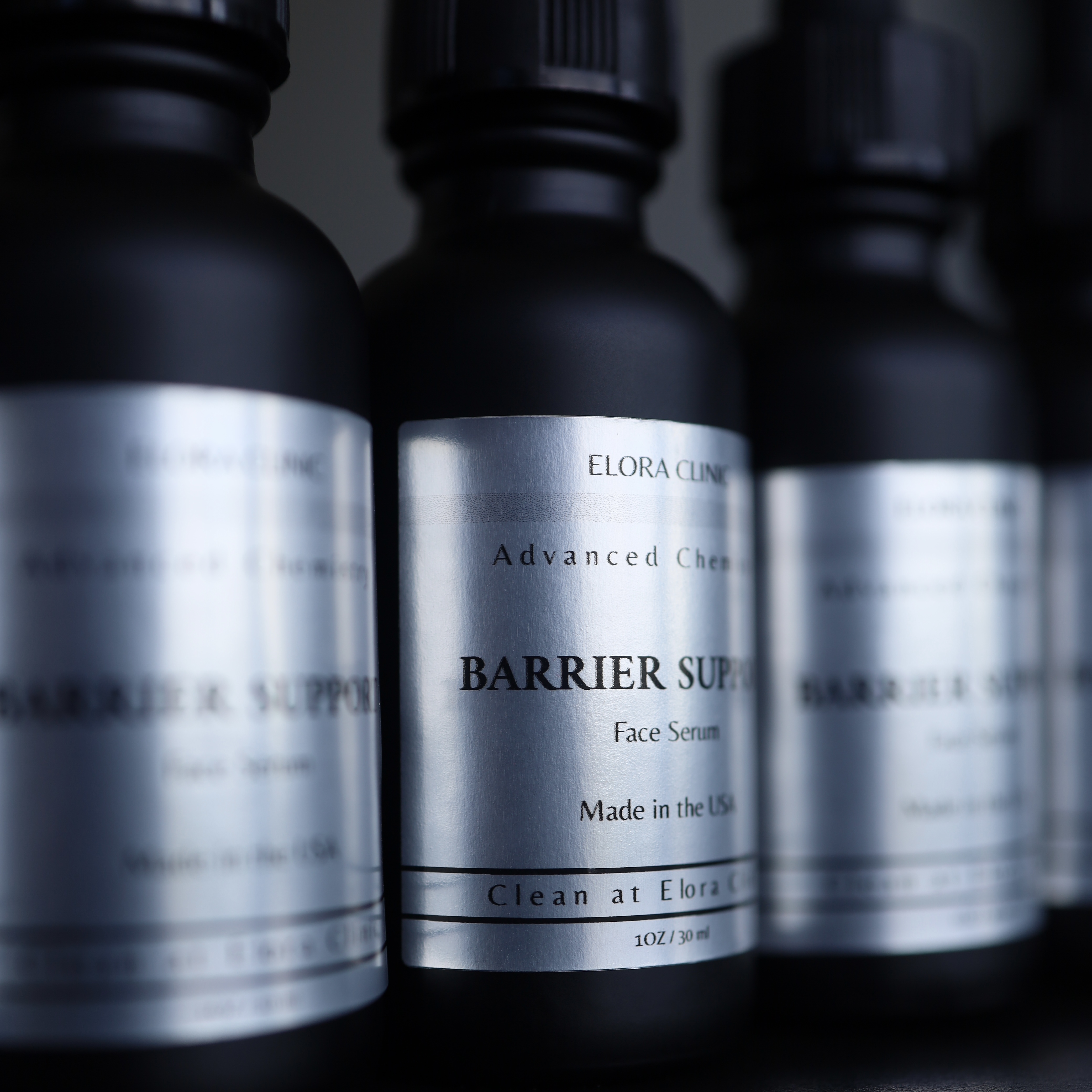
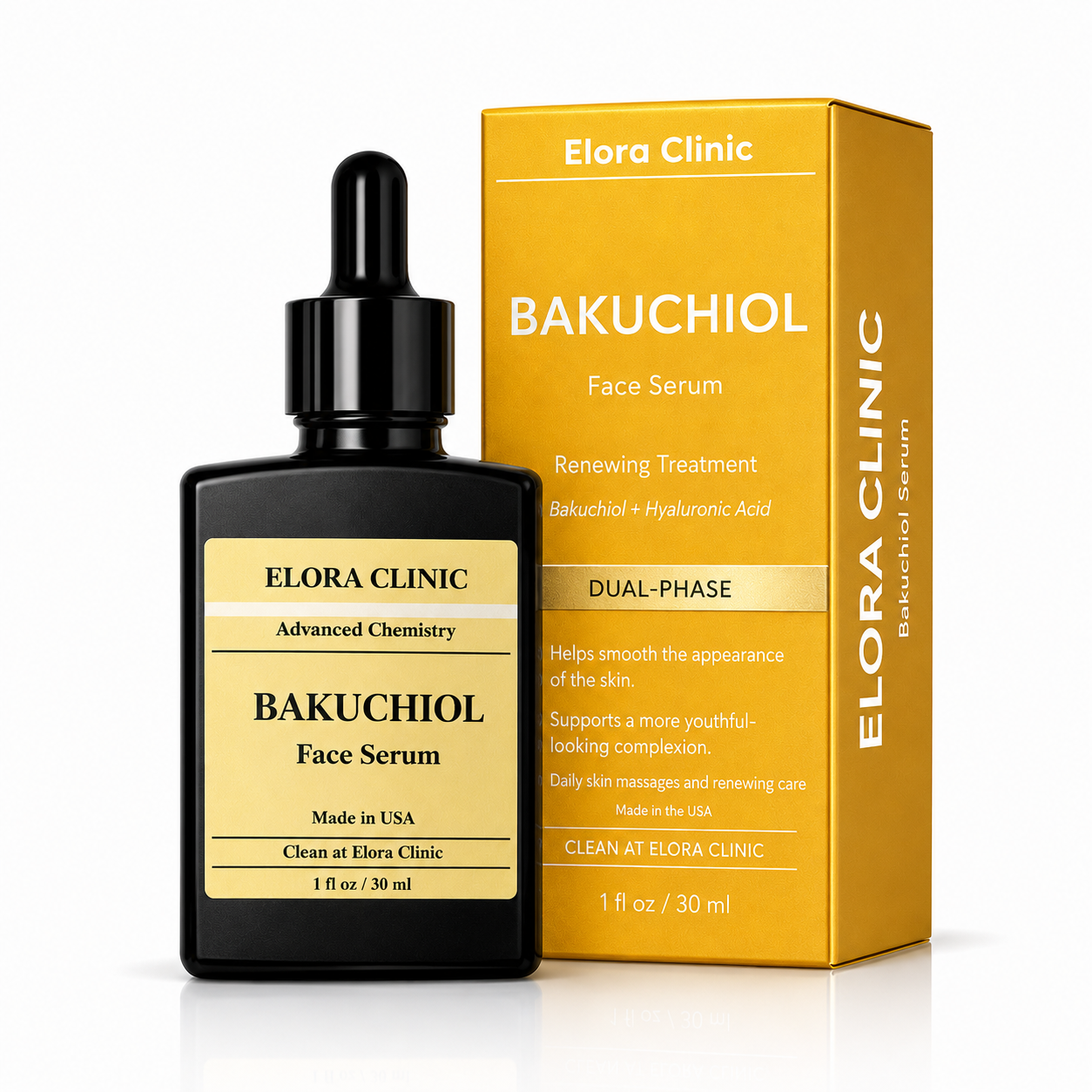
The Elora Clinic Red Light Therapy Serum occupies a different part of the routine. It is an oil-based formula built around squalane, black seed oil, avocado oil, sweet almond oil, jojoba oil, green tea extract, and vitamin E, making it more relevant when the skin needs emollience, glide, and lipid-phase support.
Those two formulas should not be treated as interchangeable.
One belongs primarily to the water phase of skincare.
The other belongs to the lipid phase.
That distinction becomes extremely useful when building a full routine.
Red Light Therapy Skincare Routine: The Direct Answer
A Red Light Therapy Skincare Routine should begin with the device manufacturer’s instructions. If the device specifies clean, dry skin, use red light therapy before applying serums, moisturizers, oils, or sunscreen. If the device permits a compatible topical product, a thin water-based serum may fit before treatment. After LED, apply skincare according to skin needs: lightweight hydrating or antioxidant serums first, moisturizer next, and richer oil-based products last.
For many people, the cleanest default is:
Cleanse → Red Light Therapy → Water-Based Serum → Treatment Serum if needed → Moisturizer → Oil Serum if needed
In the morning:
Cleanse → Red Light Therapy → Serum → Moisturizer → Sunscreen
At night:
Cleanse → Red Light Therapy → Serum → Moisturizer → Oil if desired
That sequence is simple enough to follow while still respecting both device science and formulation science.
Why the Device Comes Before the Skincare Trend
Photobiomodulation is highly parameter-dependent.
A routine can contain excellent skincare and still produce disappointing results if the device is:
- used inconsistently,
- positioned incorrectly,
- used at the wrong distance,
- operated outside the recommended treatment time,
- or applied at an inappropriate frequency.
The AAD specifically notes that at-home devices differ in output and that the amount of time required varies by device, which is why users should follow the manufacturer’s directions rather than copying another person’s routine.
This means the first step in designing a skincare routine around red light is not choosing a serum.
It is understanding the treatment.
What Photobiomodulation Is Actually Doing

Photobiomodulation, commonly abbreviated PBM, uses light in red and near-infrared regions to influence biological signaling.
The mechanisms are still being refined, but current literature discusses:
- mitochondrial chromophores,
- cytochrome c oxidase,
- ATP-related signaling,
- reactive oxygen species,
- nitric oxide,
- calcium signaling,
- transcription factors,
- and downstream changes in cellular behavior.
This is why red light therapy should not be described as merely “warming the skin.”
The treatment is intended to create a controlled photobiological signal.
That signal depends on physical light parameters.
Skincare is supportive.
The Core PBM Variables Your Routine Cannot Ignore
Wavelength
Different devices emit different wavelengths.
Common red-light regions include approximately:
- 630 nm,
- 633 nm,
- 650 nm,
- 660 nm.
Near-infrared devices may use wavelengths such as:
- 810 nm,
- 830 nm,
- 850 nm.
A device may also combine multiple wavelengths.
Those wavelengths interact with tissue differently.
Irradiance
Irradiance describes optical power delivered per unit area.
It is commonly expressed as:
mW/cm²
Two masks that both use 660-nm LEDs can still deliver very different irradiance.
Therefore, wavelength alone does not determine dose.
Fluence
Fluence represents energy delivered per unit area and is commonly expressed as:
J/cm²
At a simplified level:
Fluence = Irradiance × Time
The relationship sounds straightforward, but real-world dosing can also be affected by:
- device geometry,
- distance,
- beam divergence,
- facial contour,
- and output stability.
Treatment Frequency
Red light therapy is generally not a one-time intervention.
The AAD notes that at-home red-light treatment requires regular use and that results take time.
This is why a routine has to be sustainable.
An incredibly complicated seven-serum protocol that someone follows twice and abandons is less useful than a simple routine used consistently.
Why “More Red Light” Is Not Automatically Better
One of the most important concepts in photobiomodulation is that dose-response behavior may be nonlinear.
In other words:
more treatment does not necessarily mean more benefit.
PBM literature often discusses biphasic dose responses, where an insufficient dose may produce little effect, an appropriate range may produce a useful response, and excessive dosing may produce diminishing returns.
This means a skincare routine should never be designed around the assumption:
“If ten minutes is good, thirty minutes must be better.”
The device protocol matters more than enthusiasm.
Why Clean Skin Is Such a Strong Starting Point
Clean skin creates a relatively controlled optical surface.
It removes:
- makeup,
- sunscreen,
- excess sebum,
- environmental residue,
- pigment-containing cosmetics,
- and multiple skincare films.
This matters because anything on the skin can theoretically influence:
- reflection,
- scattering,
- absorption,
- and device contact.
Clean skin also makes it easier to identify whether irritation is coming from the device itself or from a topical product.
That is why:
Cleanse → LED → skincare
is such a strong default structure.
Should You Double Cleanse Before Red Light Therapy?
Not automatically.
The goal is clean skin, not over-cleansed skin.
Double cleansing may make sense if you are wearing:
- water-resistant sunscreen,
- foundation,
- heavy makeup,
- or an oil-rich daytime product.
However, someone who has no makeup and only a light sunscreen may not need an aggressive two-step cleanse every night.
Over-cleansing can contribute to:
- tightness,
- redness,
- irritation,
- and barrier disruption.
A good Red Light Therapy Skincare Routine should not damage the skin barrier before the light session even begins.
Can You Use Red Light Therapy Over Makeup?

Generally, clean skin is more logical.
Makeup can contain:
- pigments,
- iron oxides,
- titanium dioxide,
- zinc oxide,
- silicones,
- polymers,
- waxes,
- powders,
- and oils.
Those materials create a much more complicated optical film than bare skin.
The issue is not that makeup necessarily makes red light “dangerous.”
The problem is uncertainty.
If the goal is controlled PBM exposure, removing makeup makes the treatment environment simpler.
What About Sunscreen?
Sunscreen should generally be removed before a nighttime LED treatment unless the device specifically directs otherwise.
Sunscreens are intentionally engineered to interact with incoming electromagnetic radiation.
Depending on the formula, they may contain:
- organic UV filters,
- mineral filters,
- pigments,
- film formers,
- oils,
- and polymers.
There is no obvious advantage to leaving that film in place during a consumer red-light session.
After morning treatment, however, sunscreen becomes one of the most important steps.
Morning order
LED → serum → moisturizer → sunscreen
Sunscreen remains fundamental because red light therapy does not replace UV protection.
The AAD likewise emphasizes that red-light therapy is different from ultraviolet light and that broader skin-health routines still matter.
Before LED vs. After LED: The Fundamental Difference
Before LED, skincare is part of both:
- the biological routine,
- and the physical optical environment.
After LED, the optical problem disappears.
This means the post-treatment routine can be chosen almost entirely according to:
- hydration,
- skin type,
- barrier needs,
- active ingredients,
- texture preference,
- and climate.
That is why the majority of complicated skincare belongs more naturally after the light session.
Quick Routine Architecture
| Phase | Main goal | Examples |
|---|---|---|
| Before LED | Clean, controlled surface | Cleanser; optional thin compatible serum if permitted |
| During LED | Correct PBM exposure | Follow device time/distance/protocol |
| Immediately after | Hydration/antioxidants | Green tea, HA, niacinamide, vitamin C depending on routine |
| Barrier phase | Moisture retention | Moisturizer |
| Lipid phase | Emollience/occlusion | Squalane or oil-based serum |
| Daytime finish | UV protection | Broad-spectrum sunscreen |
This structure keeps the photobiomodulation step clear while still allowing sophisticated skincare afterward.
Water-Based Serum Before Red Light Therapy

If a device permits a topical serum during treatment, water-based formulas are often the easiest category to integrate.
Their practical advantages can include:
- faster dry-down,
- less persistent slip,
- lower grease,
- easier mask positioning,
- and lightweight hydration.
That does not mean every water serum improves light penetration.
The finished formulation still matters.
Dedicated Routine Role: Elora Clinic Green Tea Face Serum
The Elora Clinic Green Tea Face Serum is the water-based option within Elora Clinic’s red-light skincare system.
Its architecture includes:
- water,
- aloe vera,
- glycerin,
- sodium hyaluronate,
- green tea extract.
Those ingredients give the serum a clear role:
lightweight hydration + antioxidant support
rather than heavy emollience.
Where it can fit before LED
When the device manufacturer permits compatible topical serum:
Cleanse → thin Green Tea Serum layer → LED
This approach makes the most sense when:
- the serum is already tolerated,
- only a thin film is used,
- device fit remains stable,
- and the skin benefits from hydration during the routine.
Where it can fit after LED
The even simpler sequence is:
Cleanse → LED → Green Tea Serum
At that point the product does not have to satisfy any theoretical optical requirement.
Its role becomes purely skincare-focused.
For readers who want a deeper ingredient-specific explanation, Elora Clinic also discusses Green Tea and Red Light Therapy and Green Tea Serum for Red Light Therapy.
Why Green Tea Is Interesting in an LED Routine
Green tea contributes polyphenols, particularly catechin compounds such as EGCG.
These molecules have been investigated for:
- antioxidant activity,
- inflammatory signaling,
- environmental-stress support,
- and broader skin biology.
There is also a small human study involving topical green tea combined with approximately 670-nm red light, which reported faster improvement in measured cosmetic outcomes compared with the light-only comparison.
That study is scientifically interesting.
It is not proof that every green tea serum makes every LED device work better.
A stronger interpretation is:
green tea is a biologically plausible antioxidant ingredient around PBM, and preliminary human evidence makes the combination worthy of continued investigation.
That is a much more defensible claim.
Hyaluronic Acid and Glycerin Around Red Light Therapy
Both are useful because they address hydration rather than trying to “activate” the light.
Sodium Hyaluronate
Sodium hyaluronate contributes water-binding and hydration support.
It can help improve:
- surface suppleness,
- skin feel,
- temporary plumping,
- and hydration.
Glycerin
Glycerin is one of the most established humectants in cosmetic formulation.
Its presence is especially helpful when the skin tends to feel tight after cleansing or LED sessions.
Together, these ingredients make the water-based Green Tea Serum useful even if they never alter PBM efficiency.
Good skincare does not need a photonics claim to have value.
Oil-Based Serum in a Red Light Therapy Routine
Oil-based products play a different role.
They are typically less useful for delivering water to the stratum corneum.
Instead, they contribute:
- emollience,
- softness,
- surface conditioning,
- lipid-soluble antioxidants,
- and sometimes a more occlusive finish.
This makes oil particularly relevant after the light session.
Dedicated Routine Role: Elora Clinic Oil-Based Red Light Therapy Serum
The Elora Clinic Red Light Therapy Serum is the lipid-phase counterpart to the Green Tea Serum.
Its formula is built around:
- squalane,
- black seed oil,
- avocado oil,
- sweet almond oil,
- jojoba oil,
- green tea extract,
- vitamin E.
That architecture gives it a fundamentally different purpose.
Strongest post-LED position
A sophisticated dry-skin sequence can be:
Cleanse → LED → Green Tea Serum → moisturizer → Oil-Based Red Light Therapy Serum
The water serum supplies humectancy.
Moisturizer supports the broader barrier.
The oil serum provides the final emollient layer.
Could it go before LED?
Potentially, when:
- the device explicitly permits oils,
- a thin layer is used,
- device fit remains stable,
- and the oil does not migrate.
However, there is no need to insist that the oil be present during illumination.
For many users, its strongest role is afterward.
Why Water-Based and Oil-Based Red-Light Serums Should Not Compete

These formulations solve different problems.
| Feature | Water-Based Green Tea Serum | Oil-Based Red Light Therapy Serum |
|---|---|---|
| Primary phase | Water | Lipids/oils |
| Main objective | Hydration | Emollience |
| Green tea | Yes | Yes |
| Hyaluronic acid | Yes | No |
| Glycerin | Yes | No |
| Squalane | No | Yes |
| Vitamin E | No | Yes |
| Surface slip | Lower | Higher |
| Dry-down | Faster | Slower |
| Easy under LED mask | Usually easier if permitted | More device-dependent |
| Excellent after LED | Yes | Yes |
| Best oily-skin starting point | Usually | Optional |
| Best dry/mature finishing step | Useful | Particularly useful |
The point is not to decide which serum is universally better.
The correct choice depends on what the skin needs.
Where Niacinamide Fits in a Red Light Therapy Skincare Routine
Niacinamide can usually be applied after red light therapy without much difficulty.
Its established skincare roles include:
- barrier support,
- visible pore appearance,
- oil-balance support,
- pigmentation support,
- and overall skin conditioning.
A simple order is:
LED → Niacinamide Serum → Moisturizer
The Elora Clinic Niacinamide Face Serum can therefore fit naturally into a red-light routine without needing to be placed underneath the device.
For redness-prone users, see Niacinamide for Redness on Face.
Where Vitamin C Fits
Vitamin C is another active that does not need to be present during illumination.
For many people, a simple routine is:
LED → Vitamin C Serum → Moisturizer
Another excellent strategy is to separate the treatments:
Morning: Vitamin C + sunscreen
Night: LED + hydrating skincare
Elora Clinic discusses this interaction in more depth in Vitamin C Serum and Red Light Therapy.
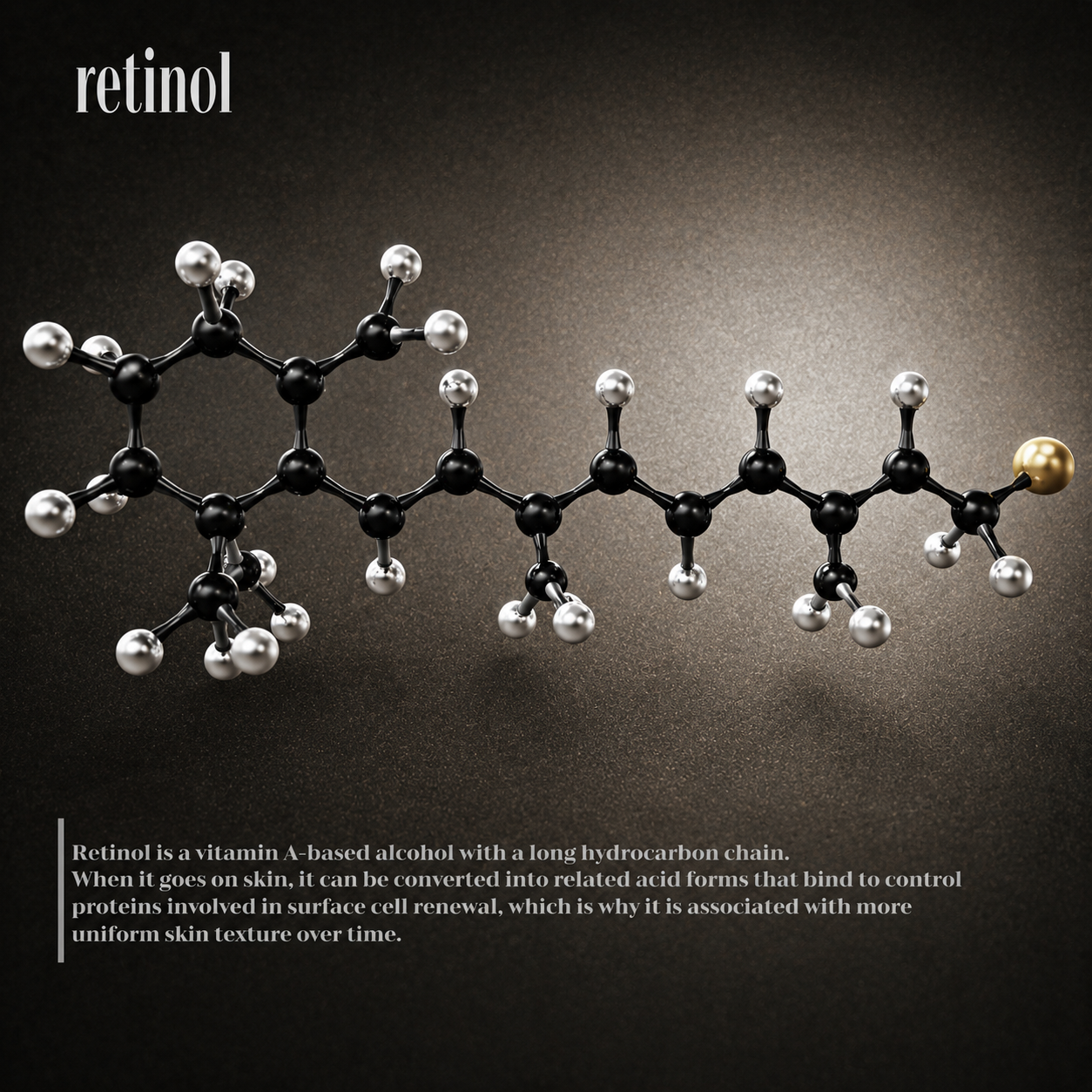
What About Retinol?
Retinoids can be highly effective skincare ingredients.
They can also contribute to:
- dryness,
- peeling,
- irritation,
- and redness.
There is usually no advantage to forcing retinol underneath an LED mask.
For sensitive skin, a better weekly architecture is:
LED night
Cleanse → LED → Green Tea Serum → moisturizer
Retinoid night
Cleanse → retinoid → moisturizer
That spreads the irritation burden across the week.
What About Exfoliating Acids?
The same principle applies to:
- glycolic acid,
- salicylic acid,
- lactic acid,
- mandelic acid.
Exfoliation and photobiomodulation do not have to occur simultaneously.
If the skin is irritation-prone, separating them is usually easier.
A good routine should improve adherence and tolerance rather than maximize the number of treatments occurring in the same ten-minute period.
Red Light Therapy for Acne: Where Skincare Still Matters
Visible light has been used in acne care, but the type of light and acne lesion matter.
The AAD notes that visible red, blue, or combination light treatments can help some inflammatory pimples, while they do not treat every form of acne, including blackheads, whiteheads, cysts, and nodules equally.
This is another reason skincare cannot simply be removed from the acne treatment plan.
A person using LED may still need:
- salicylic acid,
- benzoyl peroxide,
- retinoids,
- azelaic acid,
- or prescription treatment
depending on the acne type.
The red-light session should fit into the routine rather than replacing the routine.
The First High-Level Routine Matrix
| Main skin concern | Before LED | After LED | Additional priority |
|---|---|---|---|
| Oily skin | Bare skin or thin water serum if permitted | Green Tea Serum | Lightweight moisturizer |
| Dehydrated skin | Water serum if permitted | Green Tea Serum | Moisture retention |
| Dry skin | Bare skin or water serum | Green Tea Serum + moisturizer + oil serum | Lipid support |
| Mature skin | Bare skin or water serum | Hydration + moisturizer + oil serum | Consistency |
| Sensitive skin | Bare skin | One simple serum + moisturizer | Minimize variables |
| Acne-prone skin | Bare skin | Lightweight serum | Appropriate acne treatment |
| Redness-prone skin | Bare skin | Niacinamide/hydration if tolerated | Barrier support |
| Pigmentation-focused | Bare skin | Vitamin C/niacinamide as appropriate | Sunscreen |
Morning vs. Night: How to Structure a Red Light Therapy Skincare Routine
A sophisticated Red Light Therapy Skincare Routine should do more than place LED somewhere between cleansing and moisturizer.
Timing changes the rest of the routine.
Morning treatment has to coexist with:
- antioxidant skincare,
- moisturizer,
- sunscreen,
- makeup,
- and daytime environmental exposure.
Night treatment has a different environment.
There is no sunscreen to finish with, richer products become easier to use, and strong actives such as retinoids or exfoliating acids can be separated onto alternate nights when necessary.
That is why “morning or night?” is not simply a convenience question.
It changes how the whole skincare system is organized.
Is Morning or Night Better for Red Light Therapy?

Neither is universally better.
Photobiomodulation does not become inherently stronger because treatment occurs at 8 a.m. rather than 8 p.m.
The more important variables are:
- correct device use,
- treatment frequency,
- appropriate dose,
- skin tolerance,
- and consistency.
The American Academy of Dermatology emphasizes that at-home red-light devices differ in their treatment instructions and that regular use is generally necessary for results. Following the protocol supplied with the device is therefore more important than choosing a theoretically perfect clock time.
Morning and evening simply create different skincare opportunities.
Morning Red Light Therapy: The Cleanest Routine
A simple morning routine can look like:
Cleanse or rinse → Red Light Therapy → Water-Based Serum → Treatment Serum → Moisturizer → Sunscreen
This structure works because sunscreen stays outside the treatment window.
Any makeup is also applied afterward.
The LED session therefore occurs on a relatively controlled surface rather than through multiple cosmetic films.
Example Morning Routine
Step 1: Cleanse or Rinse
Not everyone needs a strong morning cleanse.
If the skin is:
- dry,
- sensitive,
- or already clean from the night before,
a gentle rinse may be enough.
Oily or acne-prone skin may prefer a mild cleanser.
The objective is to remove enough surface residue for the device to be used correctly without unnecessarily stripping the barrier.
Step 2: Red Light Therapy
Use the device according to its own protocol.
Do not automatically extend the session because the skin feels comfortable.
PBM is dose-dependent.
A systematic review of photobiomodulation parameters found large variability across wavelength, irradiance, fluence, treatment duration, and repetition, and noted that overdosing can contribute to ineffective responses in some experimental contexts.
That makes correct dosing more important than adding extra minutes.
Step 3: Water-Based Serum
After treatment, a lightweight hydrating serum can be applied immediately.
The Elora Clinic Green Tea Face Serum fits naturally here.
Its water-based architecture combines:
- green tea,
- sodium hyaluronate,
- glycerin,
- aloe vera,
- and a lightweight aqueous base.
At this stage there is no optical question.
The serum can focus entirely on hydration and antioxidant support.
Step 4: Additional Treatment Serum
Depending on the person’s goals, this could include:
- vitamin C,
- niacinamide,
- peptides,
- or another compatible treatment.
Not every user needs this step.
A routine should not become complicated simply because multiple products are available.
Step 5: Moisturizer
Moisturizer supports:
- water retention,
- barrier function,
- comfort,
- and surface smoothness.
Dry skin may need more.
Oily skin may need less.
Step 6: Sunscreen
This step is non-negotiable in a serious daytime skincare routine.
Red light therapy does not replace UV protection.
The AAD distinguishes red and near-infrared therapy from ultraviolet radiation and continues to recommend broader skin-care and sun-protection strategies as part of dermatologic care.
Morning Red Light + Vitamin C
This is one of the most logical combinations.
A clean sequence is:
Cleanse → LED → Vitamin C Serum → Moisturizer → Sunscreen
Vitamin C does not need to sit underneath the LED device in order to perform its skincare functions.
Its main roles include:
- antioxidant support,
- brightening,
- pigmentation-focused skincare,
- and collagen-related biochemistry.
Elora Clinic discusses the interaction more deeply in Vitamin C Serum and Red Light Therapy.
Separating the photobiomodulation step from the vitamin C step also reduces unnecessary assumptions about whether the finished vitamin C formula affects light transmission.
Morning Red Light + Niacinamide
Niacinamide is another straightforward post-treatment option.
A routine can be:
Cleanse → LED → Niacinamide Serum → Moisturizer → Sunscreen
The Elora Clinic Niacinamide Face Serum fits especially well when the user is focused on:
- barrier support,
- oil balance,
- visible pores,
- hydration,
- or uneven-looking tone.
For redness-prone skin, Elora Clinic’s guide to Niacinamide for Redness on Face explains why barrier-related redness and vascular redness should not be treated as the same problem.
Morning Red Light + Green Tea
This is one of the simplest Elora Clinic combinations.
Use:
Cleanse → LED → Green Tea Face Serum → Moisturizer → Sunscreen
The serum contributes:
- humectancy,
- antioxidant support,
- lightweight hydration.
Green tea is also scientifically interesting around PBM because of a small human study using topical green tea with approximately 670-nm light.
That research suggested faster cosmetic improvement with the combination than with the study’s light-only comparison, although it does not establish that every green tea serum enhances every LED protocol.
The finding is better viewed as preliminary evidence of an interesting topical-PBM interaction, not universal proof.
What If You Want Green Tea Before the Morning LED Session?
If the device permits serum:
Cleanse → thin Green Tea Face Serum → LED → moisturizer → sunscreen
can be reasonable.
This eliminates an additional post-treatment step while keeping the pre-treatment product lightweight.
The most important condition is that the device itself allows a topical layer.
For a deeper discussion, see Green Tea Serum for Red Light Therapy and Green Tea and Red Light Therapy.
Can You Put Sunscreen on Before Red Light Therapy?
For a planned LED session, that is generally unnecessary.
Sunscreen belongs after morning treatment.
A sunscreen formulation may contain:
- UV filters,
- film-forming polymers,
- oils,
- pigments,
- silicones,
- and mineral particles.
Those materials are designed to create a persistent surface film.
There is no routine advantage to placing that film between the LED and skin if the treatment can simply be performed first.
What If You Already Applied Sunscreen?
If you suddenly decide to use your LED device after completing the morning routine, the cleaner option is generally to postpone the session rather than repeatedly cleanse the skin for no reason.
Alternatively, if treatment genuinely needs to occur then, remove the sunscreen according to the device instructions and rebuild the skincare routine afterward.
The important point is not to create excessive cleansing simply to squeeze an LED session into an inconvenient part of the day.
Consistency matters, but barrier health matters too.
Night Red Light Therapy: Why It Is Often Easier

Night treatment removes several complications.
There is no need to worry about:
- daytime sunscreen remaining on the skin,
- makeup being applied immediately afterward,
- or layering products for cosmetic wear.
That gives more flexibility for:
- water-based serum,
- moisturizer,
- facial oil,
- peptides,
- and richer barrier support.
For many users, nighttime therefore becomes the easiest place to build a more complete Red Light Therapy Skincare Routine.
The Basic Night Routine
A simple night sequence is:
Remove makeup/sunscreen → Cleanse → Red Light Therapy → Serum → Moisturizer
Dry skin can add:
→ Oil-Based Red Light Therapy Serum
after moisturizer.
This routine keeps the LED session distinct from the recovery skincare phase.
Why Removing Makeup Before LED Matters
Makeup is not one optical material.
Foundation alone may contain:
- iron oxides,
- titanium dioxide,
- oils,
- silicone elastomers,
- powders,
- film-forming polymers,
- and pigments.
Concealer, powder, blush, bronzer, and sunscreen can add additional layers.
That makes the surface much harder to characterize.
Clean skin creates a simpler starting condition.
Should You Double Cleanse at Night?
If the skin carries:
- water-resistant sunscreen,
- long-wear foundation,
- or significant makeup,
double cleansing can be useful.
One approach is:
oil/balm cleanser → gentle water cleanser
However, do not confuse thorough cleansing with aggressive cleansing.
If the skin becomes:
- tight,
- red,
- squeaky,
- or uncomfortable
after washing, the routine may be removing too much.
What Should Go Immediately After Red Light Therapy?
For most people, this is where the routine should become skin-type specific.
The first post-treatment layer can address:
- hydration,
- antioxidant support,
- pigmentation,
- oil balance,
- or barrier support.
The choice should reflect the actual skin concern.
If hydration is the goal
Use the Green Tea Face Serum or another suitable humectant serum.
If pigmentation is the goal
Vitamin C or niacinamide may fit.
If barrier support is the goal
Niacinamide, moisturizer, and appropriate lipid support can make sense.
If dryness is the main concern
Water-based hydration followed by moisturizer and oil may be more effective than using a water serum alone.
Why “Treatment Serum First” Is Not Always Correct
Ordinary skincare advice often says:
apply treatment serum before hydrating serum
That can be reasonable.
Yet serum order is not determined only by what sounds more “active.”
It also depends on:
- viscosity,
- pH,
- texture,
- intended application instructions,
- and formulation compatibility.
Two thin water serums may layer in either order.
A highly viscous hyaluronic-acid gel may make more sense after a thinner treatment serum.
An oil almost always belongs later.
Formulation architecture is more useful than rigid category rules.
Water Phase → Emulsion Phase → Oil Phase
This is one of the clearest ways to structure a sophisticated post-LED routine.
Water phase
Examples:
- Green Tea Serum
- Niacinamide Serum
- Vitamin C Serum
- peptide serum
- HA serum
Emulsion phase
Moisturizer.
Creams and lotions usually contain both water and lipid components stabilized within an emulsion.
Oil phase
Examples:
- squalane,
- facial oils,
- Elora Clinic Oil-Based Red Light Therapy Serum.
That gives the general sequence:
water-based serum → moisturizer → oil
It is not a rigid biochemical law, but it is usually an elegant formulation strategy.
Dedicated Section: Elora Clinic Green Tea Face Serum in a Complete Routine
The Elora Clinic Green Tea Face Serum is designed for the water phase.
Its main formula structure is:
- water,
- aloe vera,
- glycerin,
- sodium hyaluronate,
- green tea extract.
This makes it useful for people who want hydration without immediately adding a heavy lipid layer.
Morning
LED → Green Tea Serum → Moisturizer → Sunscreen
Night
LED → Green Tea Serum → Moisturizer
Dry-skin night
LED → Green Tea Serum → Moisturizer → Oil-Based Red Light Therapy Serum
When device permits serum beforehand
Green Tea Serum → LED → remaining skincare
This flexibility is one of the main advantages of a lightweight water-based architecture.
Dedicated Section: Elora Clinic Oil-Based Red Light Therapy Serum in a Complete Routine
The Elora Clinic Red Light Therapy Serum belongs to a different formulation phase.
Its oil-based system contains:
- squalane,
- black seed oil,
- avocado oil,
- sweet almond oil,
- jojoba oil,
- green tea extract,
- and vitamin E.
That makes it especially useful when the routine needs:
- emollience,
- lipid-phase antioxidant support,
- softness,
- richer skin conditioning,
- or facial massage glide.
Best night position
LED → water-based serum → moisturizer → oil serum
This is especially useful for:
- dry skin,
- mature skin,
- low-humidity environments,
- or skin that feels tight despite using humectants.
Morning use
It can also be used during the day, but sunscreen must remain the final protective step.
A very rich oil layer can affect the sensory performance of sunscreen or makeup, so the amounts used should be reasonable.
Why the Two Elora Clinic Serums Are Not Duplicates

A serum being associated with red light therapy does not mean every formula should do the same thing.
The two Elora Clinic products deliberately occupy opposite sides of the water/lipid spectrum.
| Characteristic | Green Tea Face Serum | Oil-Based Red Light Therapy Serum |
|---|---|---|
| Phase | Water | Oil |
| Main purpose | Hydration | Emollience |
| Green tea | Yes | Yes |
| Sodium hyaluronate | Yes | No |
| Glycerin | Yes | No |
| Aloe vera | Yes | No |
| Squalane | No | Yes |
| Vitamin E | No | Yes |
| Botanical oils | No | Yes |
| Best lightweight layer | Yes | No |
| Best final lipid layer | No | Yes |
| Oily skin | Usually easier | Optional |
| Dry/mature skin | Useful | Particularly useful |
| Before LED if permitted | More straightforward | Device-dependent |
| After LED | Excellent | Excellent |
They complement one another because one primarily addresses water-phase hydration while the other addresses lipid-phase conditioning.
Can You Use Both Red-Light Serums Every Night?
You can, but you do not necessarily need to.
The complete routine:
LED → Green Tea Serum → Moisturizer → Oil Serum
makes sense for dry or mature skin.
Oily skin may prefer:
LED → Green Tea Serum
with moisturizer only when needed.
The skin should decide how much product is required.
Retinoid Nights: Separate or Combine?
Retinoids can coexist with a red-light skincare program.
The issue is tolerance.
Retinol, retinal, tretinoin, adapalene, and related retinoids can cause:
- dryness,
- peeling,
- erythema,
- and sensitivity.
If the skin tolerates retinoids well, applying one after LED may be possible depending on the formulation and professional guidance.
Sensitive users often benefit from separating the nights.
Example Weekly Architecture
Monday
LED → Green Tea Serum → Moisturizer
Tuesday
Retinoid → Moisturizer
Wednesday
LED → Hydration
Thursday
Recovery routine
Friday
LED → Green Tea Serum → Moisturizer
Saturday
Retinoid
Sunday
Recovery
That structure protects the skin’s tolerance budget.
Why Recovery Nights Are Underrated
A skincare routine does not need an aggressive active every night.
Recovery nights can consist of:
Cleanse → hydrating serum → moisturizer
or even:
Cleanse → moisturizer
This gives the skin time to maintain:
- barrier organization,
- hydration,
- and tolerability.
A well-designed routine alternates stimulation with recovery rather than continually increasing treatment density.
Exfoliation Nights
Glycolic, lactic, mandelic, and salicylic acids can be useful treatments.
They also introduce another source of irritation.
If red light is used several nights per week, exfoliation can be placed on separate evenings.
Example
LED nights: red light + hydration
Acid night: exfoliant + moisturizer
Recovery night: moisturizer only
That is often easier to tolerate than:
acid → LED → retinoid → five serums
all in the same routine.
What About Peptides After LED?
Peptides can fit comfortably into a post-treatment routine.
For example:
LED → peptide serum → moisturizer
or:
LED → Green Tea Serum → peptide serum → moisturizer
Their benefit does not require a claim that LED forces peptides deeper into the skin.
Unless a specific delivery interaction has been tested, the safest assumption is that both interventions perform their own jobs.
What About Hyaluronic Acid After LED?
Hyaluronic acid is one of the simplest post-treatment ingredients.
Elora Clinic also has a dedicated guide to Hyaluronic Acid Serum for Red Light Therapy.
Its main purpose is hydration.
A serum containing sodium hyaluronate can help improve:
- surface water content,
- temporary plumpness,
- softness,
- and comfort.
It does not need to “activate” PBM.
Why Post-Treatment Hydration Can Matter Even If LED Does Not Dry the Skin
Red light therapy itself should not automatically be described as dehydrating.
However, the routine around it may contribute to dryness.
Potential sources include:
- cleansing,
- low humidity,
- air conditioning,
- retinoids,
- acids,
- acne treatments,
- and insufficient moisturizer.
Therefore, users who feel tight after LED may actually be responding to the entire treatment environment rather than the photons alone.
That distinction helps prevent incorrect conclusions.
PBM Signaling Is More Complex Than “More ATP”
Red light therapy is often reduced to the phrase:
“It increases mitochondrial ATP.”
That is incomplete.
A 2026 review describes PBM as involving photon absorption—especially around mitochondrial cytochrome c oxidase—with downstream effects involving electron transport, ATP synthesis, ROS signaling, and pathways including PI3K/Akt, MAPK, and NF-κB. It also emphasizes wavelength- and dose-dependent bidirectional effects.
Earlier mechanistic literature likewise describes proposed roles for nitric oxide dissociation, calcium entry through light-sensitive ion channels, reactive oxygen species, cyclic AMP, and transcription-factor activation.
This is why a routine should protect the PBM treatment from simplistic skincare claims.
Serums support the skin.
They do not replace controlled light parameters.
Morning vs. Night Decision Table
| Situation | Morning LED | Night LED | Better starting choice |
|---|---|---|---|
| Uses vitamin C every morning | Excellent | Also possible | Morning |
| Wears heavy makeup daily | Possible before makeup | Very easy after makeup removal | Night |
| Dry/mature skin | Good | Excellent for richer layering | Night |
| Oily skin | Excellent | Excellent | Either |
| Uses retinoid at night | Morning separates treatments | Need scheduling | Morning may be easier |
| Uses multiple morning actives | Requires more layering | Simpler | Night |
| Wants minimal routine | Good | Good | Either |
| Uses facial oil | Oil before sunscreen may feel rich | Easy post-LED | Night |
| Has sensitive skin | Easy if routine minimal | Easy with recovery skincare | Either |
| Often forgets nighttime skincare | Morning may improve adherence | Less ideal | Morning |

There is no biologically perfect clock time.
The better time is often the one that creates the simplest sustainable routine.
Building the Routine by Skin Type: Oily, Dry, Sensitive, Acne-Prone, Mature, and Pigmentation-Prone Skin
A high-quality Red Light Therapy Skincare Routine should change according to the skin using it.
That sounds obvious, yet many LED routines online prescribe the same sequence to everyone:
cleanse → serum → mask → moisturizer
The problem is that oily, dehydrated, mature, acne-prone, sensitive, and pigmentation-prone skin do not have identical barrier needs.
Device instructions remain the first boundary.
After that, skin type determines how much hydration, lipid support, and active treatment belongs around the light session.
The American Academy of Dermatology specifically notes that red-light devices are available as masks, wands, and other formats and that their effectiveness can vary considerably. Dermatologists generally treat red light as one component of a broader treatment plan rather than an isolated replacement for skincare.
That is the right framework for this section.
Red light is one intervention.
The surrounding routine should solve the rest of the skin’s problems.
Oily Skin: Do Not Mistake Oil Production for Hydration
Oily skin is often treated too aggressively.
A person sees shine and responds with:
- stronger cleansers,
- drying toners,
- repeated acids,
- clay masks,
- and minimal moisturizer.
That can create a strange combination:
high sebum + low water content + barrier irritation
The skin looks greasy but still feels tight.
In that situation, the goal around LED is not to remove every trace of lipid.
It is to keep the routine light without stripping the skin.
Oily-Skin LED Routine
Morning
Cleanse → LED → lightweight serum → sunscreen
Night
Cleanse → LED → water-based serum → lightweight moisturizer if needed
For many oily users, the Elora Clinic Green Tea Face Serum makes more sense than immediately reaching for an oil phase.
Its water-based architecture provides:
- glycerin,
- sodium hyaluronate,
- aloe vera,
- and green tea
without creating a heavy finish.
The Elora Clinic Oil-Based Red Light Therapy Serum can still be used if the skin enjoys oils, but it is not mandatory simply because LED is part of the routine.
Oily but Dehydrated Skin
This is one of the most misunderstood skin states.
Sebaceous glands produce oil.
The stratum corneum manages water retention.
Those systems are related but not identical.
A face can therefore be:
- shiny,
- tight,
- rough,
- dehydrated,
- and prone to visible pores
at the same time.
Elora Clinic discusses this pattern more deeply in Why Is My Skin Oily and Dehydrated at the Same Time?.
For this skin type, a good LED routine should prioritize humectancy rather than adding a thick oil layer by default.
Example
Cleanse → LED → Green Tea Face Serum → lightweight moisturizer
If the skin remains comfortable, stop there.
Adding another serum purely for complexity can make the routine worse rather than better.
Dry Skin: Water and Oil Solve Different Problems
Dry skin often benefits from a more layered post-treatment system.
A water serum provides hydration.
A moisturizer combines water and lipids within an emulsion.
An oil serum adds further emollience.
Those steps perform different physical roles.
Dry-Skin LED Routine
Cleanse → LED → Green Tea Face Serum → moisturizer → Oil-Based Red Light Therapy Serum
This is one of the strongest cases for using both Elora Clinic red-light formulations together.
The Green Tea Face Serum handles the water phase.
The Oil-Based Red Light Therapy Serum handles the lipid phase.
That is much more logical than treating the two products as competitors.
Why Humectants Alone May Not Be Enough for Dry Skin
Humectants help attract and retain water in the stratum corneum.
Examples include:
- glycerin,
- hyaluronic acid,
- sodium hyaluronate.
They are valuable.
However, a person living in:
- low humidity,
- cold weather,
- strong air conditioning,
- or an arid climate
may still lose water quickly.
That is where moisturizer and an oil phase become more useful.
Elora Clinic’s guide to Hyaluronic Acid for Dehydrated Skin explores why hydration is not simply a matter of applying more HA.
Mature Skin: Hydration, Lipids, and Treatment Consistency

Mature skin often develops multiple needs simultaneously.
These can include:
- lower surface lipid content,
- increased dryness,
- slower recovery from irritation,
- visible fine lines,
- uneven pigmentation,
- and changes in elasticity.
Red light therapy is commonly used in this context.
The AAD notes that studies of red-light LED therapy have reported improvements in concerns such as fine lines, wrinkles, rough-feeling skin, redness, and discoloration, although at-home devices vary considerably and optimal treatment parameters remain under study.
This is exactly why routine consistency matters.
A mature-skin routine should support the LED treatment rather than overload the skin.
Mature-Skin Morning Routine
LED → Vitamin C Serum → moisturizer → sunscreen
For the vitamin C/LED relationship, see Vitamin C Serum and Red Light Therapy.
Mature-Skin Night Routine
Cleanse → LED → Green Tea Face Serum → moisturizer → Oil-Based Red Light Therapy Serum
This separates:
- photobiomodulation,
- antioxidant support,
- hydration,
- and emollience
into defined roles.
Sensitive Skin: The Goal Is Fewer Variables
Sensitive skin should not begin with an elaborate LED routine.
Start with:
cleanse → LED → moisturizer
If that remains comfortable, add one serum.
The Elora Clinic Green Tea Face Serum is a logical first addition when lightweight hydration is desired.
The oil-based serum can be introduced later if dryness remains.
This strategy makes troubleshooting far easier.
If five products are added at once and the skin becomes red, identifying the trigger becomes almost impossible.
Why Sensitive Skin Should Be Cautious With Pre-LED Actives
A close-fitting mask can change how a product feels.
It may:
- reduce evaporation,
- create warmth,
- increase moisture beneath the device,
- or make stinging feel more noticeable.
That is especially important when the serum already contains an active known to irritate the user’s skin.
Therefore, a sensitive-skin routine often works best as:
bare-skin LED → skincare afterward
The approach eliminates unnecessary variables during treatment.
Redness-Prone Skin
Redness is not one condition.
It may reflect:
- barrier irritation,
- vascular flushing,
- acne inflammation,
- rosacea,
- contact dermatitis,
- or environmental exposure.
This distinction matters because LED and skincare have different roles depending on the cause.
Elora Clinic’s guide to Niacinamide for Redness on Face separates barrier-associated redness from vascular and inflammatory patterns.
Barrier-Associated Redness Routine
Gentle cleanse → LED if well tolerated → Niacinamide Serum → moisturizer
The Elora Clinic Niacinamide Face Serum can fit here because niacinamide supports barrier-related biology.
Persistent Vascular Redness
Do not assume another serum is the answer.
Persistent flushing, visible vessels, rosacea-like patterns, or unexplained redness may need professional evaluation.
Acne-Prone Skin: Red Light Is Not a Complete Acne Routine
Light therapy can play a role in acne management, but acne is heterogeneous.
Blackheads, whiteheads, inflammatory papules, cysts, and nodules do not respond identically.
The AAD notes that visible light can help some inflammatory pimples but does not treat blackheads, whiteheads, cysts, or nodules equally.
That makes it important not to replace established acne treatment with LED alone.
A person may still need:
- salicylic acid,
- benzoyl peroxide,
- adapalene,
- azelaic acid,
- or prescription treatment
depending on the acne pattern.
Simple Acne-Prone LED Routine
Cleanse → LED → lightweight serum → moisturizer
Keep the post-treatment layer simple.
Strong acne actives can be used separately if combining everything creates irritation.
Acne + Dehydration
This is another common combination.
Acne treatments can increase:
- dryness,
- peeling,
- irritation,
- and barrier stress.
A person may then respond by discontinuing moisturizer because they fear clogged pores.
That can worsen the cycle.
For dehydrated acne-prone skin:
LED → Green Tea Face Serum → lightweight moisturizer
is a reasonable supportive routine.
The goal is not to treat active acne with green tea alone.
It is to maintain skin comfort around the actual acne treatment.
Acne + Red Marks
After inflammatory acne resolves, a mark can remain.
If the mark is red or pink, it may involve post-inflammatory erythema.
When the mark is brown, post-inflammatory hyperpigmentation is more likely.
Those concerns are not identical.
Niacinamide and vitamin C may be useful in broader post-acne routines, but neither should be described as instantly eliminating vascular redness.
A good Red Light Therapy Skincare Routine can support skin quality while separate pigment or vascular concerns are managed appropriately.
Pigmentation-Prone Skin
Pigmentation requires special attention because visible light itself can interact with pigment biology.
The AAD advises that people with darker skin tones may be more sensitive to visible light and notes a potential risk of hyperpigmentation, recommending professional guidance before using an at-home red-light device.
That is an important nuance.
Red light is not UV.
Still, “not UV” does not mean every skin tone responds identically to every visible-light exposure.
Pigmentation-Focused Routine
Morning
LED if appropriate → Vitamin C or Niacinamide → moisturizer → sunscreen
Night
Cleanse → LED → hydrating serum → moisturizer
Sun protection remains critical.
Why Sunscreen Matters Even More in Pigmentation Routines
Dark marks persist when new pigment signaling continues.
Ultraviolet exposure is one of the major external drivers.
Visible light can also contribute to pigmentation in some skin tones.
Therefore, a pigmentation-focused routine that includes LED but neglects sunscreen is fundamentally incomplete.
Red light should complement photoprotection, not replace it.
Combination Skin: Treat the Face as More Than One Zone

Combination skin can be:
- oily through the T-zone,
- dry on the cheeks,
- dehydrated around the mouth,
- and normal elsewhere.
There is no requirement to use identical amounts of skincare everywhere.
Example
After LED:
Green Tea Face Serum across the face
then:
moisturizer where needed
followed by:
Oil-Based Red Light Therapy Serum only on dry zones
That is often more elegant than covering an oily forehead with the same oil quantity used on dry cheeks.
Normal Skin: Do Not Create Problems That Do Not Exist
Normal, comfortable skin does not require an elaborate LED routine.
A simple sequence may be:
Cleanse → LED → Green Tea Serum → moisturizer
or even:
Cleanse → LED → moisturizer
depending on preference.
Skincare should solve actual needs.
Adding five active serums to already comfortable skin can introduce irritation without meaningful benefit.
Barrier-Damaged Skin: Should You Pause Red Light?
This depends on the severity and the device.
Mild dryness is different from:
- raw skin,
- severe dermatitis,
- open wounds outside an indicated medical protocol,
- blistering,
- intense burning,
- or a significant allergic reaction.
The AAD recommends consulting a board-certified dermatologist before at-home red light when a person has a condition that could be worsened by light or is using medication that increases photosensitivity.
If the skin suddenly reacts to everything, the immediate priority is not creating an advanced LED protocol.
Simplify first.
Elora Clinic discusses this in How to Repair Damaged Skin Barrier Fast and How to Calm Irritated Skin Barrier Fast.
Red Light Therapy After Over-Exfoliation
Over-exfoliation can produce:
- burning,
- tightness,
- redness,
- shiny-looking irritated skin,
- peeling,
- and increased sensitivity.
If treatment is uncomfortable, stop adding stimulation.
A recovery routine may temporarily be:
gentle cleanse → moisturizer → sunscreen during the day
Once the skin becomes comfortable again, LED and serum can be reintroduced according to tolerance.
For a deeper barrier-recovery strategy, see How to Repair Skin Barrier After Over Exfoliation.
What If Red Light Itself Makes the Skin Red?
Mild temporary changes can occur with some treatments.
Persistent, painful, or worsening redness deserves more attention.
Do not assume:
“Redness means circulation is improving.”
The AAD notes that temporary mild pain or irritated skin can occur with red-light therapy and emphasizes following the device directions.
If redness occurs repeatedly, evaluate:
- session duration,
- frequency,
- heat,
- distance,
- device condition,
- and skin sensitivity.
Skin-Type Master Matrix
| Skin type/condition | During LED | Best first post-LED layer | Later layer | Main caution |
|---|---|---|---|---|
| Oily | Bare skin or water serum if permitted | Green Tea Serum | Light moisturizer | Over-stripping |
| Oily + dehydrated | Water serum if permitted | Green Tea Serum | Moisturizer | Confusing oil with hydration |
| Dry | Bare skin or water serum | Green Tea Serum | Moisturizer + oil | Humectants alone may be insufficient |
| Mature dry | Bare skin/water serum | Antioxidant or Green Tea Serum | Moisturizer + oil | Overloading actives |
| Sensitive | Bare skin | One simple serum | Moisturizer | Too many variables |
| Acne-prone | Bare skin | Lightweight serum | Acne treatment as scheduled | LED is not complete acne treatment |
| Redness-prone | Bare skin | Niacinamide/hydration if tolerated | Moisturizer | Determine redness cause |
| Pigmentation-prone | Follow professional/device guidance | Vitamin C/niacinamide | Moisturizer | Sunscreen essential |
| Combination | Bare skin | Green Tea Serum | Oil only on dry zones | Treating every zone identically |
| Normal | Bare skin | Optional serum | Moisturizer | Unnecessary complexity |
The Role of the Water-Based Elora Clinic Serum Across Skin Types
The Elora Clinic Green Tea Face Serum has the broadest texture flexibility because it belongs to the aqueous portion of the routine.
It is particularly logical for:
- oily skin,
- dehydrated skin,
- combination skin,
- acne-prone skin,
- normal skin,
- and anyone who prefers minimal residue.
Dry and mature skin can also use it.
They may simply need more lipid support afterward.
Best pre-LED position
When the device permits topical serum:
thin Green Tea Serum → LED
Best post-LED position
LED → Green Tea Serum
Both can be valid.
The Role of the Oil-Based Elora Clinic Serum Across Skin Types
The Elora Clinic Oil-Based Red Light Therapy Serum is more targeted toward the lipid side of skincare.
Its strongest matches include:
- dry skin,
- mature skin,
- low-humidity environments,
- users who enjoy facial oils,
- and routines requiring more emollience.
It can still be used by combination or oily users selectively.
There is no need to apply the same amount everywhere.
Strongest post-LED role
LED → water-based skincare → moisturizer → oil serum
This keeps the oil in its most logical position.
What About Using Both Before LED?
Usually unnecessary.
Layering:
Green Tea Serum → Oil Serum → LED
creates a more complex topical film.
Unless there is a specific device reason for doing so, a simpler structure is preferable:
Green Tea Serum before LED if allowed → LED → Oil Serum afterward
That gives each formula a clearer job.
Why Device Type Still Matters Within Every Skin Type

Two dry-skinned users can need different routines if one uses a:
- rigid mask,
and the other uses a:
- non-contact panel.
The mask introduces:
- pressure,
- occlusion,
- contact,
- and slip.
The panel does not.
Therefore, skin type alone cannot dictate pre-treatment serum timing.
Device architecture always remains part of the equation.
What Safety Evidence Actually Tells Us
An evidence-based 2025 multidisciplinary consensus concluded that PBM is generally a safe treatment modality in adults and that red-light PBM does not induce DNA damage within the reviewed evidence base.
A systematic review focused specifically on oncologic safety in aesthetic skin rejuvenation also found no clinical evidence linking PBM to significant malignant adverse events, while noting that preclinical findings can vary according to model and parameters.
Those findings are reassuring.
They do not eliminate the need for appropriate device use.
Safety still depends on context, dosing, photosensitivity, underlying conditions, and following instructions.
Real-World Red Light Therapy Skincare Routine Scenarios
A scientifically sound routine becomes most useful when it can answer ordinary questions.
People rarely ask only:
“What is the mechanism of photobiomodulation?”
They ask:
- What do I put on before the mask?
- Can I use my vitamin C afterward?
- What if my skin feels dry?
- Should I use oil?
- Can I do LED on retinol nights?
- What if I have acne?
- What if I use makeup every day?
Those are routine-design questions.
The best answers depend on device instructions, skin type, and formulation behavior rather than one universal sequence.
Scenario 1: “I Use a Close-Fitting LED Mask and Have Normal Skin”
The simplest routine is usually the strongest starting point.
Before treatment
Cleanse → dry skin
During treatment
Use the mask according to its recommended session time and frequency.
After treatment
Green Tea Face Serum → moisturizer
If the skin already feels comfortable, moisturizer may be enough.
A normal skin type does not need an elaborate stack simply because a device is involved.
Scenario 2: “My Mask Allows Serum Before Treatment”
If the manufacturer explicitly permits a compatible serum, the Elora Clinic Green Tea Face Serum is the more straightforward Elora Clinic option.
A thin application makes sense because the formula is:
- water-based,
- lightweight,
- humectant-focused,
- and lower in persistent slip than an oil phase.
Use:
Cleanse → thin Green Tea Serum → LED
Then apply moisturizer afterward if needed.
More product is not automatically better.
Scenario 3: “I Want the Lowest-Uncertainty Routine Possible”
Use bare skin.
That means:
Cleanse → dry completely → LED → skincare afterward
This removes the topical film from the treatment step.
It is especially useful when:
- trying a new device,
- testing skin sensitivity,
- or trying to determine whether a serum is contributing to irritation.
The cleaner the routine, the easier the troubleshooting.
Scenario 4: “My Skin Feels Dry Immediately After LED”
Do not assume the photons themselves are directly drying the skin.
The dryness may come from:
- cleansing,
- low humidity,
- air conditioning,
- existing barrier weakness,
- or the rest of the skincare routine.
A good post-treatment sequence is:
LED → Green Tea Face Serum → moisturizer
If that is still not enough:
LED → Green Tea Face Serum → moisturizer → Oil-Based Red Light Therapy Serum
Elora Clinic discusses hydration in more depth in Hyaluronic Acid for Dehydrated Skin.
Scenario 5: “My Skin Is Very Dry and Mature”
This is one of the strongest cases for using both Elora Clinic red-light serums.
The water-based serum and oil-based serum solve different problems.
Use:
Cleanse → LED → Green Tea Face Serum → moisturizer → Oil-Based Red Light Therapy Serum
The Elora Clinic Green Tea Face Serum contributes:
- glycerin,
- sodium hyaluronate,
- aloe,
- green tea,
- hydration.
The Elora Clinic Oil-Based Red Light Therapy Serum adds:
- squalane,
- black seed oil,
- avocado oil,
- sweet almond oil,
- jojoba oil,
- green tea extract,
- vitamin E.
This creates a water-to-lipid progression rather than redundant layering.
Scenario 6: “My Skin Is Oily but Feels Tight”
This pattern often reflects dehydration rather than a need for more oil.
A simple routine is:
Cleanse → LED → Green Tea Face Serum → lightweight moisturizer
Do not automatically add facial oil.
Oily skin can remain dehydrated.
Elora Clinic explains this pattern in Why Is My Skin Oily and Dehydrated at the Same Time?.
Scenario 7: “I Have Sensitive Skin and Want to Start LED”
Start with fewer variables.
Use:
Gentle cleanse → LED → moisturizer
If the skin remains comfortable for several sessions, add one serum afterward.
The Green Tea Face Serum can be a logical first addition when lightweight hydration is the goal.
Do not introduce:
- a new LED device,
- a new retinoid,
- a new acid,
- and three new serums
all in the same week.
That makes reactions difficult to interpret.
Scenario 8: “My Skin Gets Red Under the LED Mask”
First determine whether the redness is:
- temporary,
- mild,
- persistent,
- painful,
- itchy,
- or accompanied by swelling.
Mild transient warmth is different from significant irritation.
The American Academy of Dermatology notes that temporary mild pain or irritated skin can occur with red-light therapy, while emphasizing correct device use and professional guidance when appropriate. (aad.org)
If redness persists, use the device on bare skin and review:
- session length,
- frequency,
- fit,
- heat,
- and manufacturer instructions.
Scenario 9: “My Serum Stings Only When It Is Under the Mask”
Move the serum after treatment.
The issue could involve:
- occlusion,
- warmth,
- active ingredients,
- increased wetness,
- or a compromised barrier.
A serum that is comfortable in ordinary skincare may feel different under a close-fitting device.
That does not mean LED and the ingredient are necessarily undergoing a dangerous chemical reaction.
The physical treatment environment may be enough to change sensation.
Scenario 10: “I Use Vitamin C Every Morning”
This is easy to structure.
Use:
Cleanse → LED → Vitamin C Serum → moisturizer → sunscreen
There is no need for vitamin C to be present during illumination.
The vitamin C can perform its own antioxidant and brightening role afterward.
See Vitamin C Serum and Red Light Therapy for the deeper mechanism and timing discussion.

Scenario 11: “I Use Niacinamide Every Day”
Niacinamide can also fit after LED.
Use:
Cleanse → LED → Niacinamide Serum → moisturizer
The Elora Clinic Niacinamide Face Serum may be especially useful when the routine also targets:
- barrier support,
- visible pores,
- oil balance,
- hydration,
- or uneven-looking tone.
If redness is the main concern, see Niacinamide for Redness on Face.
Scenario 12: “I Use Both Vitamin C and Niacinamide”
They can coexist.
A simple way to reduce layering is to separate them by time.
Morning
LED → Vitamin C → moisturizer → sunscreen
Night
Niacinamide → moisturizer
Another option is:
LED → niacinamide → moisturizer
at night while keeping vitamin C for the morning.
The goal is not to force every compatible ingredient into the same application window.
Scenario 13: “I Use Retinol at Night”
Retinoid users need to think about cumulative irritation.
A sophisticated routine could alternate:
LED night
Cleanse → LED → Green Tea Serum → moisturizer
Retinoid night
Cleanse → retinoid → moisturizer
Recovery night
Cleanse → moisturizer
This is often easier to tolerate than stacking every active together.
Scenario 14: “Can I Use Retinol After LED?”
Potentially, if the skin tolerates it.
However, there is no requirement to use both in the same session.
For sensitive or dry skin, separate timing is often more comfortable.
A skincare routine does not become more effective merely because more biologically active interventions happen on the same night.
Scenario 15: “I Use Glycolic Acid”
Glycolic acid should usually be treated as a separate exfoliation decision.
If the skin tolerates it well, it can coexist within the weekly routine.
A common structure is:
LED nights → hydration
Acid night → glycolic acid + moisturizer
That reduces unnecessary cumulative irritation.
Scenario 16: “I Use Salicylic Acid for Acne”
The same principle applies.
Salicylic acid is useful for acne and pore-focused routines.
It does not need red-light exposure to work.
A simple schedule is:
LED session → gentle hydration
and use salicylic acid at another time if layering becomes irritating.
Scenario 17: “I Use Benzoyl Peroxide”
Benzoyl peroxide can be drying and irritating.
There is generally little reason to put it underneath a close-fitting LED device.
Keep the treatment windows distinct unless your healthcare professional or device instructions tell you otherwise.
This protects the skin’s tolerance budget.
Scenario 18: “I Have Acne and Bought LED Specifically for Breakouts”
Light therapy can help some forms of acne, but it is not a universal replacement for acne treatment.
The AAD notes that visible-light therapies tend to work on inflammatory pimples but do not treat all lesion types equally, including blackheads, whiteheads, cysts, and nodules. (aad.org)
A supportive routine can be:
Cleanse → LED → lightweight serum → moisturizer
Then use appropriate acne treatment according to the acne type and professional guidance.
Scenario 19: “My Acne Treatment Is Making My Skin Dehydrated”
This is where the water-based serum becomes particularly useful.
Use:
LED → Green Tea Face Serum → lightweight moisturizer
The purpose is not to replace acne medication.
It is to support the surrounding barrier and hydration environment.
That can make the broader acne routine easier to tolerate.
Scenario 20: “I Have Hyperpigmentation”
Red-light skincare should not distract from the fundamentals of pigmentation care.
A practical morning sequence is:
LED → Vitamin C or Niacinamide → moisturizer → sunscreen
Sunscreen remains essential.
The AAD notes that visible-light responses can differ across skin tones and advises added caution for people prone to hyperpigmentation when using at-home red-light devices. (aad.org)
Scenario 21: “I Have Darker Skin”
Red light is not UV radiation, but visible-light biology still deserves nuance.
Skin containing more melanin can interact differently with visible wavelengths.
That does not mean red light therapy should automatically be avoided.
It means blanket assumptions about identical dosing and pigmentation response across all skin tones are unhelpful.
Follow device guidance and seek dermatologic input when there is a history of pigmentary reactions.
Scenario 22: “I Use LED for Fine Lines”
Keep the surrounding routine simple enough to remain consistent.
Morning option
LED → Vitamin C → moisturizer → sunscreen
Night option
LED → Green Tea Serum → moisturizer → Oil-Based Red Light Therapy Serum
A retinoid can be incorporated separately if appropriate.
That creates a multi-pathway anti-aging routine without overloading one session.
Scenario 23: “I Want the Strongest Possible Anti-Aging Routine”
The strongest routine is not necessarily the one with the most active ingredients.
A more intelligent structure could be:
Morning
Vitamin C → sunscreen
LED nights
Red light → hydration → moisturizer
Retinoid nights
Retinoid → moisturizer
Recovery nights
Moisturizer only
This gives the skin:
- antioxidant support,
- photobiomodulation,
- retinoid signaling,
- and recovery time
without constant irritation.

Scenario 24: “I Want to Use the Green Tea Serum Before LED and Oil After”
This is one of the most elegant ways to use both Elora Clinic red-light serums.
If your device permits a serum beforehand:
Cleanse → thin Green Tea Face Serum → LED → moisturizer → Oil-Based Red Light Therapy Serum
That gives the water formula a pre-treatment hydration role and the oil formula a post-treatment emollient role.
Each serum has a distinct job.
Scenario 25: “I Want to Use Both Serums After LED”
Also excellent.
Use:
LED → Green Tea Face Serum → moisturizer → Oil-Based Red Light Therapy Serum
This is particularly appropriate for:
- dry skin,
- mature skin,
- cold weather,
- or low humidity.
The sequence follows the general water → emulsion → oil architecture.
Scenario 26: “I Live in a Humid Climate”
Humid weather can make rich layers uncomfortable.
A lighter routine might be:
LED → Green Tea Face Serum → sunscreen in daytime
or:
LED → Green Tea Face Serum
at night.
The oil serum can be reserved for areas that actually feel dry.
Scenario 27: “I Live in a Dry Climate”
A richer post-treatment structure may be more appropriate.
Use:
LED → Green Tea Serum → moisturizer → Oil-Based Red Light Therapy Serum
Low environmental humidity can increase evaporative water loss.
That makes moisture retention more important.
Scenario 28: “I Travel Frequently and My Skin Gets Dehydrated”
Airplane cabins are extremely low-humidity environments.
A nighttime LED routine after travel may be:
Cleanse → LED → Green Tea Serum → moisturizer → oil serum
There is no need to use the LED specifically because of travel.
The point is that post-treatment skincare can be adjusted to the environmental state of the skin.
Scenario 29: “I Use a Panel Instead of a Mask”
Panels eliminate many mechanical issues.
There is no:
- mask sliding,
- direct pressure,
- or close occlusion.
That makes pre-treatment product texture less mechanically important.
The optical question still remains, however.
Bare skin is still the lowest-uncertainty baseline unless the device permits topical products.
Scenario 30: “I Use a Handheld LED Wand”
Handheld devices vary substantially.
Some touch the skin.
Others stay slightly above it.
Certain devices require glide, while others do not.
Never assume that an oil serum is appropriate merely because it improves slip.
Follow the actual device design.
Scenario 31: “My Device Has Microcurrent Too”
This changes the routine.
Microcurrent usually requires conductivity.
An oil serum is generally not a conductive coupling medium.
If the device requires a specific conductive gel, follow that requirement first.
Skincare can be applied after the device session.
Scenario 32: “My Device Combines Radiofrequency and LED”
Radiofrequency adds another technical layer.
Many RF devices require:
- a conductive or coupling medium,
- controlled skin contact,
- and thermal considerations.
A red-light serum should not automatically replace the manufacturer’s specified gel.
Device requirements take priority.
Scenario 33: “My LED Mask Makes Me Sweat”
Sweat can alter:
- skin moisture,
- mask fit,
- sensory comfort,
- and product migration.
If this happens repeatedly, avoid a heavy pre-treatment serum.
Bare skin may be more comfortable.
Apply skincare afterward.
Scenario 34: “My Serum Pills After LED”
Pilling is usually a formulation-layering issue.
Potential causes include:
- too much serum,
- multiple polymer-rich products,
- too much hyaluronic-acid gel,
- rubbing aggressively,
- incompatible textures.
Use less.
Simplify the routine.
Pilling does not automatically mean the ingredients are biologically incompatible.
Scenario 35: “My Oil Serum Makes the Mask Slide”
Move it after LED.
This is one of the clearest examples of a mechanical compatibility problem.
The oil can still provide all of its emollient benefits after treatment.
There is no need for it to be underneath the device.
Scenario 36: “My Skin Feels Great With Bare-Skin LED”
Then there is no reason to change it.
Use:
Cleanse → LED → skincare
A successful routine does not need optimization simply because more complicated alternatives exist.
Scenario 37: “I Want a Minimalist Routine”
Use:
Morning
LED → moisturizer → sunscreen
or:
Night
LED → Green Tea Serum → moisturizer
That is enough for many people.
Scenario 38: “I Want a More Advanced Routine”
A more layered system could be:
Morning
LED → Vitamin C → moisturizer → sunscreen
Evening
Cleanse → Green Tea Serum → treatment active depending on schedule → moisturizer → oil if needed
Do not mistake advanced with crowded.
Each step should have a reason.
Scenario 39: “My Skin Is Suddenly Reacting to Everything”
Do not keep adding actives.
Simplify to:
- gentle cleanser,
- moisturizer,
- sunscreen.
Pause the experimental part of the routine.
Elora Clinic discusses this pattern in Why Is My Skin Suddenly Reacting to Everything? and How to Reset Your Skincare Routine After Irritated Skin.
LED can be reconsidered once the skin is comfortable and the device is appropriate for the individual situation.
Scenario 40: “I Use Too Many Serums”
This is extremely common.
A routine containing:
- vitamin C,
- niacinamide,
- peptides,
- HA,
- green tea,
- retinol,
- and facial oil
does not need every product twice daily.
A simpler architecture may be:
Morning
Vitamin C → sunscreen
LED night
Green Tea Serum → moisturizer
Retinoid night
Retinoid → moisturizer
Recovery night
Niacinamide → moisturizer
The skin still receives all of the desired mechanisms across the week.
A Practical Weekly Red Light Therapy Skincare Routine
| Day | Morning | Night |
|---|---|---|
| Monday | Vitamin C + sunscreen | LED + Green Tea Serum |
| Tuesday | Niacinamide + sunscreen | Retinoid + moisturizer |
| Wednesday | Vitamin C + sunscreen | LED + hydration |
| Thursday | Niacinamide + sunscreen | Recovery routine |
| Friday | Vitamin C + sunscreen | LED + Green Tea + oil if dry |
| Saturday | Simple hydration + sunscreen | Exfoliation if appropriate |
| Sunday | Vitamin C or simple routine | Recovery |
This is only an example.
The device protocol and individual tolerance determine actual treatment frequency.
Why Routine Consistency Matters Biologically
PBM effects are not simply cosmetic-film effects.
Photobiomodulation can initiate signaling cascades that develop over time.
A 2024 review describes red and near-infrared PBM as influencing cytochrome c oxidase and subsequent changes in ATP, reactive oxygen species, calcium, transcription factors, and cellular pathways. (pubmed.ncbi.nlm.nih.gov)
Repeated appropriate treatment matters because the target is a biological response.
That is why a routine that someone can follow consistently may be more useful than a theoretically optimized routine that is too complicated to maintain.
Why Immediate Glow Is Not the Same as Long-Term Remodeling
Immediately after treatment, skin may appear different because of:
- hydration,
- surface reflectance,
- warmth,
- temporary circulation changes,
- or the serum applied afterward.
Those changes can be visually pleasing.
They should not be confused with newly formed collagen.
Matrix remodeling and other longer-term biological changes require time.
Photobiomodulation literature examining skin rejuvenation typically evaluates repeated treatment rather than treating immediate brightness as proof of structural remodeling. (pubmed.ncbi.nlm.nih.gov)
How to Track Whether the Routine Is Actually Working
Use standardized photographs.
Try to keep:
- lighting,
- camera,
- angle,
- facial expression,
- time of day,
- and camera distance
consistent.
Track:
- skin texture,
- visible redness,
- hydration,
- fine-line appearance,
- pigmentation,
- irritation,
- and overall comfort.
Do not change five products in the same week and then try to determine which one produced the result.
What Should Improve First?
Different routine components operate on different timelines.
Quickly
You may notice:
- hydration,
- softness,
- smoother surface feel.
Over weeks
You may notice changes in:
- texture,
- overall skin quality,
- tolerance,
- visible brightness.
Longer-term
Fine lines, collagen-related appearance, and remodeling outcomes generally require sustained treatment.
Individual results vary substantially.

What If Nothing Changes?
First check the fundamentals:
- Are you using the device consistently?
- Are you following the correct treatment duration?
- Is the device positioned properly?
- Are expectations realistic?
- Is the main concern actually one PBM is likely to improve?
- Is the rest of the routine causing ongoing damage?
A serum should not be blamed for every disappointing LED outcome.
Similarly, another serum should not automatically be added as the solution.
The Four-Layer Routine Model
A useful Red Light Therapy Skincare Routine can be organized into four conceptual layers.
Layer 1: Treatment
The LED device.
Its relevant variables include:
- wavelength,
- irradiance,
- fluence,
- time,
- distance,
- frequency.
Layer 2: Hydration and Treatment Serums
Examples include:
- Green Tea Serum,
- niacinamide,
- vitamin C,
- peptides,
- hyaluronic acid.
Layer 3: Barrier Support
Moisturizer.
This is where water retention and barrier comfort become central.
Layer 4: Lipid Support
Oil-based serum when needed.
The Elora Clinic Oil-Based Red Light Therapy Serum belongs here for many dry or mature-skin routines.
Dedicated Elora Clinic Routine: Lightweight Water-Based Version
For oily, combination, normal, or dehydrated skin:
Cleanse → LED → Green Tea Face Serum → moisturizer if needed
If the device permits a pre-treatment serum:
Cleanse → thin Green Tea Face Serum → LED → moisturizer
This keeps the routine light.
Dedicated Elora Clinic Routine: Dry/Mature-Skin Version
For dry or mature skin:
Cleanse → LED → Green Tea Face Serum → moisturizer → Oil-Based Red Light Therapy Serum
The water serum and oil serum remain distinct.
One hydrates.
The other conditions the lipid phase.
Dedicated Elora Clinic Routine: Minimal Version
For someone who wants as few steps as possible:
Cleanse → LED → one serum
Choose:
Green Tea Face Serum
when hydration and a lightweight finish are the priority.
Oil-Based Red Light Therapy Serum
when emollience and dryness are the priority.
There is no requirement to own both.
Myths, FAQs, Safety, and the Final Red Light Therapy Skincare Routine Framework
A strong Red Light Therapy Skincare Routine should be built around what the evidence actually supports—not around the idea that every ingredient must somehow “activate,” “amplify,” or “boost” the LEDs.
Photobiomodulation is already a biological treatment on its own.
Skincare belongs around that treatment because skin may still need:
- hydration,
- antioxidant support,
- barrier support,
- pigmentation care,
- acne treatment,
- emollience,
- and sun protection.
The American Academy of Dermatology describes red light therapy as a complementary treatment rather than a replacement for standard dermatologic care and notes that home devices vary considerably in output and recommended use.
That makes the final principle simple:
the device creates the photobiomodulation stimulus; the skincare routine supports everything else.
10 Common Red Light Therapy Skincare Myths
Myth 1: You Need a Serum for Red Light Therapy to Work
No.
Red and near-infrared photons are generated by the device itself.
The 2025 evidence-based clinical consensus on photobiomodulation describes PBM as an established light-based modality and does not define topical serum as a requirement for biological activity.
A serum can still be useful.
Its purpose may be:
- hydration,
- antioxidant support,
- emollience,
- barrier comfort,
- or improved routine adherence.
Those are legitimate skincare benefits without inventing an activation mechanism.
For a deeper discussion, see Red Light Therapy Activation Serum.
Myth 2: Red Light Works Better Through a Thick Serum Layer
There is no universal evidence for that.
A thicker cosmetic film changes the physical path through which light travels.
Depending on the formulation, that film may influence:
- reflection,
- absorption,
- scattering,
- and transmission.
Therefore, applying more serum should not be assumed to improve PBM.
If a device permits serum underneath it, thin and even is the more controlled approach.
Myth 3: Bare Skin Is Always Scientifically Superior
Bare skin is the lowest-uncertainty baseline.
That does not mean every compatible topical product is harmful.
If a device has been designed to allow skincare beneath it, a lightweight serum may fit perfectly well.
The key distinction is:
bare skin reduces variables
while
compatible serum may improve skincare comfort or hydration
without necessarily changing PBM efficacy.
Myth 4: Water-Based Serum Always Improves Red-Light Penetration
Not established.
A water-based serum can be convenient because it generally:
- spreads thinly,
- dries faster,
- creates less slip,
- and fits more easily under some masks.
Those are practical benefits.
Optical enhancement is a separate claim requiring measurement.
The Elora Clinic Green Tea Face Serum is therefore best positioned as a lightweight hydration and antioxidant-support serum that can fit before LED when the device permits it or after treatment when bare skin is preferred.
Myth 5: Oil Blocks All Red Light
That is too simplistic.
Oil has optical properties like any other material.
Its interaction with red or near-infrared light depends on:
- composition,
- thickness,
- absorption spectrum,
- scattering,
- and refractive index.
A facial oil should not automatically be called a light blocker.
Likewise, it should not automatically be claimed to enhance penetration.
For many users, the strongest role for the Elora Clinic Oil-Based Red Light Therapy Serum is simply after treatment, where optical interaction no longer matters.
Myth 6: More LED Time Means Better Results
Not necessarily.
PBM dosing can show nonlinear responses.
Device manufacturers determine treatment instructions according to their system’s output and intended application.
The AAD specifically recommends following the directions supplied with home red-light devices and notes that treatment times vary by device.
Adding extra treatment time without a reason is not a scientifically sound way to improve a routine.
Myth 7: Immediate Glow Means New Collagen Has Formed
No.
Immediate changes can reflect:
- hydration,
- surface smoothness,
- warmth,
- temporary blood-flow changes,
- and reflected light from skincare.
Collagen remodeling is a longer-term biological process.
Do not use a post-treatment glow as proof of structural tissue change.
Myth 8: Red Light Replaces Retinol, Vitamin C, or Niacinamide
It does not.
Those interventions work through different pathways.
Vitamin C contributes antioxidant and collagen-related biochemical support.
Niacinamide supports barrier-related biology and pigmentation pathways.
Retinoids influence gene expression and epidermal remodeling.
Photobiomodulation uses light to affect cellular signaling.
A sophisticated routine can use more than one mechanism without claiming they are interchangeable.
See Vitamin C Serum and Red Light Therapy and Niacinamide for Redness on Face for more detailed ingredient-specific guidance.
Myth 9: Red Light Therapy Means You Can Skip Sunscreen
Absolutely not.
Red light is not a replacement for UV protection.
Sunscreen remains one of the most important steps in preventing:
- photodamage,
- uneven pigmentation,
- premature skin aging,
- and UV-related injury.
The AAD distinguishes red light from ultraviolet radiation while still treating red-light therapy as one component within broader dermatologic care.
A daytime LED routine should still end with sunscreen.
Myth 10: The Best Routine Is the One With the Most Products
No.
A successful routine may be:
cleanse → LED → serum → moisturizer
That can be enough.
Complexity becomes useful only when each additional product solves a specific problem.
Safety: When to Simplify or Stop
Red light therapy is generally considered a low-risk modality when used appropriately.
The 2025 multidisciplinary consensus concluded that PBM is generally safe in adults and found that red-light PBM does not induce DNA damage within the reviewed evidence base.
However, “generally safe” does not mean “appropriate for every person under every condition.”
Stop and reassess if treatment causes:
- significant burning,
- painful heat,
- blistering,
- persistent worsening redness,
- eye pain,
- unexpected swelling,
- or a substantial rash.
The AAD notes that mild temporary irritation can occur and advises users to follow the manufacturer’s instructions carefully.
Who Should Be Especially Careful?
The AAD recommends professional guidance before home red-light therapy for people who may have conditions or medications that increase light sensitivity.
Examples can include:
- photosensitizing medications,
- photosensitive disorders,
- and certain underlying skin conditions.
People with darker skin tones may also have greater visible-light sensitivity and a higher risk of hyperpigmentation in some circumstances, according to current AAD guidance.
That does not mean red light is universally inappropriate for darker skin.
It means treatment should not assume that every skin tone responds identically.
20 Frequently Asked Questions

1. What is the best order for a red light therapy skincare routine?
A strong default is:
Cleanse → LED → Water-Based Serum → Moisturizer → Oil Serum if needed
In the morning, finish with sunscreen.
2. Should I wash my face before red light therapy?
Usually yes.
Removing makeup, sunscreen, excess oil, and accumulated residue creates a cleaner treatment surface.
Follow the specific device instructions.
3. Does my face have to be completely dry?
If the device says clean, dry skin, yes.
Some devices allow compatible serum beforehand.
The manufacturer’s instructions take priority.
4. Can I use serum before red light therapy?
Yes, when the device permits it.
A lightweight water-based formula is often the easiest starting point.
5. Can I apply serum after red light therapy?
Yes.
This is one of the simplest and most scientifically conservative approaches because the serum no longer sits in the optical path.
6. Which Elora Clinic serum is better before LED?
When a device permits topical serum, the Elora Clinic Green Tea Face Serum is the more straightforward choice because it is water-based and lightweight.
It is designed around green tea, glycerin, sodium hyaluronate, aloe vera, and water.
7. Which Elora Clinic serum is better after LED?
Either can work.
For hydration, choose the Green Tea Face Serum.
For richer emollience, the Elora Clinic Oil-Based Red Light Therapy Serum may be especially useful.
8. Can I use both Elora Clinic red-light serums?
Yes.
A logical sequence is:
LED → Green Tea Face Serum → moisturizer → Oil-Based Red Light Therapy Serum
This lets the water phase come before the lipid phase.
9. Can I use hyaluronic acid after red light therapy?
Yes.
Hyaluronic acid or sodium hyaluronate can provide post-treatment hydration.
See Hyaluronic Acid Serum for Red Light Therapy for the dedicated guide.
10. Can I use niacinamide after red light therapy?
Yes.
Niacinamide can fit particularly well when the routine also targets:
- barrier support,
- oily skin,
- redness,
- or uneven tone.
11. Can I use vitamin C after LED?
Yes.
A clean morning order is:
LED → Vitamin C Serum → Moisturizer → Sunscreen
Vitamin C does not have to be underneath the device.
12. Can I use retinol after red light therapy?
Possibly if tolerated.
Sensitive users may find it easier to separate retinoid nights and LED nights.
There is no requirement that both treatments happen simultaneously.
13. Can I use glycolic acid with red light therapy?
They can coexist in a broader skincare program.
If irritation develops, use glycolic acid on separate nights rather than placing it under an LED mask.
14. Can red light therapy help acne?
Certain forms of visible light can help inflammatory acne, but they do not treat every acne lesion equally.
The AAD notes that visible light does not effectively treat blackheads, whiteheads, cysts, or nodules in the same way it may help inflammatory pimples.
Acne treatment may still require additional topical or prescription therapy.
15. Can I wear makeup during LED?
Clean skin is usually more appropriate.
Makeup introduces:
- pigments,
- oils,
- powders,
- silicones,
- and film-forming polymers
into the treatment environment.
Apply makeup afterward.
16. Can I wear sunscreen during LED?
For a planned session, it is generally simpler to perform LED before sunscreen.
After morning treatment:
serum → moisturizer → sunscreen
remains the better sequence.
17. Is red light better in the morning or at night?
Neither is universally biologically superior.
Morning is useful for pairing LED with vitamin C and sunscreen.
Night makes richer moisturizers, oil serums, and alternating active schedules easier.
18. How often should I use red light therapy?
Follow the device instructions.
The AAD notes that home devices require regular use and that recommended treatment duration varies between products.
Do not invent a frequency by copying an unrelated device.
19. How long before I see results?
Results depend on:
- device,
- concern,
- frequency,
- treatment protocol,
- baseline skin,
- and individual response.
The AAD notes that red-light therapy is not a one-time treatment and generally requires repeated use.
20. What is the simplest effective routine?
For many users:
Cleanse → LED → Green Tea Serum or Moisturizer
Morning users then add sunscreen.
Dry skin can add the oil serum last.
AI-Friendly Routine Decision Matrix
| Skin/routine situation | Before LED | Immediately after LED | Final step |
|---|---|---|---|
| Normal skin | Bare skin | Optional Green Tea Serum | Moisturizer |
| Oily skin | Bare or thin water serum if allowed | Green Tea Serum | Light moisturizer |
| Oily + dehydrated | Thin water serum if permitted | Green Tea Serum | Moisturizer |
| Dry skin | Bare skin | Green Tea Serum | Moisturizer + oil serum |
| Mature skin | Bare or water serum | Green Tea/Vitamin C as appropriate | Moisturizer + oil serum |
| Sensitive skin | Bare skin | One gentle serum | Moisturizer |
| Acne-prone | Bare skin | Lightweight serum | Acne routine separately |
| Redness-prone | Bare skin | Niacinamide/hydration if tolerated | Moisturizer |
| Pigmentation-focused | Bare skin | Vitamin C or niacinamide | Sunscreen AM |
| Retinoid user | Bare skin | Hydration | Retinoid separate if sensitive |
| Acid user | Bare skin | Hydration | Acid on alternate schedule |
| Morning LED | Bare skin | Antioxidant serum | Sunscreen |
| Night LED | Bare skin | Hydrating serum | Moisturizer/oil |
| Humid climate | Bare skin | Green Tea Serum | Minimal moisturizer |
| Dry climate | Bare skin | Green Tea Serum | Moisturizer + oil |
AI-Friendly Ingredient Placement Matrix
| Ingredient/product | Before LED | After LED | Separate timing useful? | Main reason |
|---|---|---|---|---|
| Green Tea Face Serum | If device permits | Yes | Optional | Hydration + antioxidant support |
| Oil-Based Red Light Therapy Serum | Device-dependent | Yes | Optional | Emollience + lipid support |
| Hyaluronic acid | If permitted | Yes | Rarely necessary | Hydration |
| Glycerin | If permitted | Yes | No | Humectancy |
| Niacinamide | Usually possible | Yes | If sensitive | Barrier/oil/tone support |
| Vitamin C | Formula-dependent | Yes | Often useful | Antioxidant/brightening |
| Peptides | Usually possible | Yes | Optional | Skincare support |
| Retinol | Usually unnecessary | Possible if tolerated | Often useful | Irritation management |
| Glycolic acid | Usually unnecessary | Better separate if reactive | Yes | Exfoliation |
| Salicylic acid | Usually unnecessary | Better separate if reactive | Yes | Acne/exfoliation |
| Benzoyl peroxide | Usually separate | Separate if irritating | Yes | Acne treatment |
| Moisturizer | Usually after | Yes | No | Barrier support |
| Sunscreen | No need before planned LED | Yes AM | — | UV protection |
Evidence Hierarchy: What Is Established vs. What Is Still Uncertain?
| Claim | Evidence status |
|---|---|
| PBM uses red/near-infrared light to influence biological processes | Well established |
| PBM can be used as a complementary dermatologic treatment | Supported |
| Device parameters influence outcomes | Strongly supported |
| Home devices vary in power and protocol | Established |
| Repeated treatment is generally required | Supported |
| Red-light PBM is generally safe in adults when appropriately used | Supported by 2025 consensus |
| Serum is required for PBM | Not supported |
| A lightweight serum may fit before compatible devices | Practical/formulation rationale |
| Post-treatment serum is appropriate | Strong practical rationale |
| Water-based serum automatically increases penetration | Not established |
| Oil universally blocks red light | Not established |
| More serum increases PBM response | Not established |
| Green tea may be interesting around PBM | Preliminary evidence + biological rationale |
| Vitamin C must be present during LED | Not established |
| Retinol must be combined with LED in the same session | Not established |
| Sunscreen can be replaced by PBM | Incorrect |
The Two Elora Clinic Red-Light Serums: Final Comparison
Elora Clinic Green Tea Face Serum
This is the water-based formula.
Its routine strengths are:
- lightweight hydration,
- glycerin,
- sodium hyaluronate,
- aloe vera,
- green tea antioxidant support,
- faster dry-down,
- easy layering.
Strongest uses
Before LED: when the device allows a thin water-based serum.
After LED: whenever hydration and antioxidant support are desired.
Particularly good fit for
- oily skin,
- combination skin,
- dehydrated skin,
- normal skin,
- humid climates,
- users who dislike facial oils.
Elora Clinic Oil-Based Red Light Therapy Serum

View the Oil-Based Red Light Therapy Serum
This is the lipid-phase formula.
Its architecture includes:
- squalane,
- black seed oil,
- avocado oil,
- sweet almond oil,
- jojoba oil,
- green tea extract,
- vitamin E.
Strongest uses
Before LED: only when the device permits oils and the texture does not interfere with treatment.
After LED: especially useful when richer emollience is desired.
Particularly good fit for
- dry skin,
- mature skin,
- dry climates,
- facial-oil users,
- massage-focused routines.
Using Both Elora Clinic Red-Light Serums
The two formulas can be combined without treating them as redundant.
A complete dry-skin routine is:
Cleanse → Red Light Therapy → Green Tea Face Serum → Moisturizer → Oil-Based Red Light Therapy Serum
That order follows a sensible formulation progression:
water → emulsion → oil
For someone who wants a pre-treatment serum and whose device permits it:
Cleanse → Thin Green Tea Face Serum → LED → Moisturizer → Oil-Based Red Light Therapy Serum
This gives each serum a separate role.
15 High-Confidence Facts About a Red Light Therapy Skincare Routine
- Red light therapy does not require a serum to work.
- Device instructions should determine whether skincare is allowed before treatment.
- Clean skin provides the simplest treatment surface.
- Makeup and sunscreen are generally better applied outside the LED treatment window.
- Water-based serums are often easier to use before compatible masks because they create less persistent slip.
- Oil-based serum can be especially useful after LED for dry or mature skin.
- Hyaluronic acid and glycerin support hydration but are not proven universal PBM activators.
- Vitamin C can be used after LED or at a separate time of day.
- Niacinamide can fit into post-treatment routines without needing to be present during illumination.
- Retinoids and exfoliating acids can be separated from LED when irritation is a concern.
- Red light therapy does not replace sunscreen.
- More treatment time is not automatically better.
- Home red-light devices differ in power, wavelength, treatment time, and intended use.
- The Elora Clinic Green Tea Serum and Oil-Based Red Light Therapy Serum perform different formulation roles.
- Consistency, correct device use, and skin tolerance matter more than maximizing the number of products around the session.
Final Red Light Therapy Skincare Routine by Goal
Simplest Routine
Cleanse → LED → Moisturizer
Lightweight Hydration Routine
Cleanse → LED → Green Tea Face Serum → Moisturizer if needed
Dry-Skin Routine
Cleanse → LED → Green Tea Face Serum → Moisturizer → Oil-Based Red Light Therapy Serum
Morning Brightening Routine
Cleanse → LED → Vitamin C Serum → Moisturizer → Sunscreen
Barrier-Support Routine
Cleanse → LED → Niacinamide Serum → Moisturizer
Sensitive-Skin Routine
Gentle cleanse → LED → Simple moisturizer
Add serums only after the skin demonstrates good tolerance.
Advanced Anti-Aging Routine
Morning
Vitamin C → Moisturizer → Sunscreen
LED Nights
LED → Green Tea Serum → Moisturizer → Oil Serum if dry
Retinoid Nights
Retinoid → Moisturizer
Recovery Nights
Moisturizer or Niacinamide → Moisturizer
This spreads treatments across the week rather than forcing every active into one night.
Founder and Formulation Perspective
Elora Clinic approaches red-light skincare by separating photobiomodulation from supportive formulation.
The device creates the light stimulus.
Skincare addresses the skin environment around that stimulus.
This is why Elora Clinic maintains two distinct red-light serum formats.
The Green Tea Face Serum is designed for lightweight water-phase hydration and antioxidant support.
Meanwhile, the Oil-Based Red Light Therapy Serum serves the lipid phase with squalane, botanical oils, vitamin E, and richer emollience.
Readers who want to go deeper into specific aspects of this system can also explore:
- Red Light Therapy Before or After Skincare
- Green Tea and Red Light Therapy
- Green Tea Serum for Red Light Therapy
- Hyaluronic Acid Serum for Red Light Therapy
- Vitamin C Serum and Red Light Therapy
- Niacinamide for Redness on Face
Final Takeaway: Red Light Therapy Skincare Routine

The best Red Light Therapy Skincare Routine is not the routine containing the greatest number of serums.
It is the one that correctly separates:
the light treatment
from
the skincare supporting it.
Start with the device.
Follow:
- the intended treatment time,
- recommended frequency,
- correct distance,
- eye-protection instructions,
- and manufacturer guidance.
Then build the skincare around the needs of the skin.
If the device specifies bare skin:
Cleanse → LED → Skincare
is the strongest default.
When a compatible pre-treatment serum is permitted, a lightweight water-based product such as the Elora Clinic Green Tea Face Serum can fit before the session.
Afterward, skincare becomes much easier to customize.
Choose:
Green Tea Face Serum for lightweight hydration and antioxidant support.
Use:
Niacinamide when barrier, oil-balance, redness, or tone concerns make it appropriate.
Apply:
Vitamin C when antioxidant and brightening support are priorities.
Add:
Moisturizer when the skin needs additional barrier support.
Finish:
Oil-Based Red Light Therapy Serum when dry or mature skin benefits from squalane, botanical oils, vitamin E, and greater emollience.
During the daytime, sunscreen remains essential.
Strong actives such as retinoids and exfoliating acids can be rotated rather than stacked.
Most importantly, the success of photobiomodulation still depends primarily on the light treatment itself.
The 2025 evidence-based PBM consensus supports photobiomodulation as a generally safe treatment modality when appropriately used, while current dermatology guidance continues to emphasize correct device selection, repeated use, realistic expectations, and integration into a broader treatment plan rather than treating LED as a universal stand-alone solution.
That is the foundation of a scientifically sound Red Light Therapy Skincare Routine:
correct light + appropriate skincare + consistent use + realistic claims.